Wayground logo

Free Printable Worksheets

Font size

S
M
L
XL
Worksheets

2025 Fall Semester Test

Total questions: 50

Worksheet time: 54mins

Name
Class
Date
1.

What should you wear in science lab to be safe and protected from dangerous chemicals?

a)

Goggles

b)

Lab apron

c)

Closed toe shoes

d)

ALL OF THESE

2.

What should you wear in the science lab to be safe? CHECK ALL THAT APPLY.

a)

Opened toe shoes

b)

Lab coat

c)

Apron

d)

Goggles

e)

Long earrings

3.
Nick wanted to see how high an ice cube would float in different temperatures of water. Identify the DEPENDENT variable
-Amount of water
-Height of Ice cube
-Temperature the ice cube was at its highest height
-Temperature of the water
-Size of the ice cube
a)
Amount of water 
b)
Height of Ice cube
c)
Temperature the ice cube was at its highest height 
d)
Size of the ice cube
4.
A scientist hypothesizes the the temperature at which an alligator's egg is incubated will determine whether the alligator will be male or female. The independent variable is
a)
the male alligators
b)
the incubator
c)
the gender of the alligator
d)
the temperature
5.
In this graph, what is the independent variable? 
a)
Population
b)
Day
c)
Species 5
6.

Which one of the following is not a property of gases?

a)

They have a definite mass

b)

They have no definite shape

c)

They have a definite volume

d)

They can diffuse

7.

In which state are the distances between the particles greatest?

a)

Both gas and liquid

b)

Liquid

c)

Gas

d)

Solid

8.

What phase of matter exists in part C of the graph?

a)

Gas

b)

Liquid

c)

Solid

d)

Plasma

9.

What phase of matter exists in part D of the graph?

a)

Gas

b)

Liquid

c)

Solid

d)

Plasma

10.

What phase change occurs when you start at D and end at C?

a)

Freezing

b)

Melting

c)

Condensing

d)

Vaporization

11.

What is a phase change graph?

a)

A visual representation showing the changes in state of a substance as it is heated or cooled, illustrating temperature changes and phase transitions.

b)

A graph that represents the speed of a chemical reaction over time.

c)

A chart that displays the different types of chemical bonds in a substance.

d)

A diagram that outlines the molecular structure of a compound.

12.

Choose the best description below for the image

a)

physical change

b)

chemical change

13.

Choose the best description below for the image

a)

freezing

b)

melting

c)

evaporation

d)

condensation

14.
A chemical change is different than a physical change because in a chemical change
a)
Chemicals are used
b)
Molecules do not physically touch
c)
A new substance is formed and in a physical change no new substance is formed
d)
The change can be seen but in a physical change it cannot
15.

Which of the following is NOT an example of a physical change?

a)

crumpled paper

b)

dissolving sugar in water

c)

freezing water

d)

burning a marshmallow

16.
A "pure" substance that cannot be separated or broken down into simpler substances
a)
Compound
b)
Mixture
c)
Period
d)
Element
17.
A substance composed of two or more elements chemically bonded together.  Examples are H2O and CO2.
a)
Element
b)
Compound
c)
Electron Cloud
d)
Metalloid
18.
What are the 3 particles that make-up the atom?
a)
protons, neutrons, and isotopes
b)
neutrons, isotopes, and electrons
c)
positives, negatives, and electrons
d)
protons, neutrons, and electrons
19.

What is the atomic number of this atom shown in the Bohr model?

a)

11

b)

12

c)

13

d)

can't be determined

20.
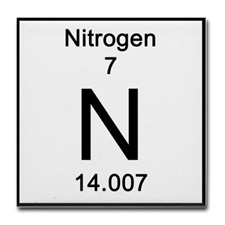
What is the number of protons that the element in this image contain?
a)
14
b)
7
c)
15
d)
18
21.

Which is an electron?

a)

A

b)

B

c)

C

d)

electrons are not labeled in the diagram

22.
How do you find out the number of neutrons in an atom?
a)
atomic number
b)
atomic mass
c)
charge
d)
atomic mass - atomic number
23.
The particles that are found in the nucleus of an atom are
a)
neutrons and electrons
b)
electrons only
c)
protons and neutrons
d)
protons and electrons
24.

the basic building block of matter that makes up everything

a)

Bohr Model

b)

Atom

c)

Electron Cloud

25.

the number of protons plus the number of neutrons contained in an atom’s nucleus

a)

Atomic Mass

b)

Atomic Number

c)

Valence Electrons

d)

Chemical Symbol

26.
The diagram below shows the element box for helium, which includes several pieces of information. The number 4.003 at the bottom of the box is the ___________________.
a)
chemical symbol
b)
atomic number
c)
atomic mass
d)
atomic speed
27.
In the diagram, the element box for oxygen is shown, which includes several pieces of information. The number 8 on the top of the box is the ___________________, which is how the modern day Periodic Table is organized.
a)
atomic mass
b)
atomic number
c)
atomic symbol
d)
name of the element
28.

What are valence electrons?

a)

The total number of electrons in an atom

b)

The number of electrons in the outermost shell

c)

The number of electrons in the second shell

d)

The number of protons in the outermost shell

29.
a)
2
b)
8
c)
3
d)
13
30.
How many Hydrogen are in 4H2O?
a)
6
b)
8
c)
2
d)
4
31.
2H2 + O2 ----> 2H2O What is the product?
a)
------>
b)
2H2O
c)
2H2+ O2
32.
How many elements are in C6H12O6?
a)
1
b)
2
c)
3
d)
4
33.

What is the little number after an element in a chemical equation called?

Example: H2

a)

Coefficient

b)

Atom

c)

Subscript

d)

Equation

34.
What is the Law of Conservation of Mass?
a)
It states that no matter can be created or destroyed.
b)
It states that no energy can be created or destroyed.
c)
It states that matter can be created or destroyed.
d)
It states that no sound can be created or destroyed.
35.

Balance this equation:

H2 + Cl2 ---> HCl

a)

It is balanced.

b)

H2 + Cl2 ---> 2HCl

c)

3H2 + Cl2 ---> 6HCl

d)

H2 + 3Cl2 ---> 6HCl

36.

Balance this equation:

HgO ---> 2Hg + O2

a)

It is balanced.

b)

2HgO ---> 2Hg + O2

c)

2HgO ---> Hg + O2

d)

HgO ---> Hg + 2O2

37.

The total energy of all the particles in a sample of matter is called —————

a)

Total Energy

b)

Thermal Energy

c)

Kinetic Energy

d)

Particle Energy

38.

The movement of thermal energy from a hotter object to a colder one is called

a)

Motion

b)

Kinetic energy

c)

Temperature

d)

Heat

39.

Heat transfers from an area of ________ temperature to an area of _______ temperature.

a)

high to low

b)

low to high

c)

high to high

d)

low to low

40.

The type of rock formed when heat and pressure change an old rock into a new

  type of rock.

a)

igneous

b)

metamorphic

c)

sedimentary

41.

The type of rock formed when old rocks are weathered and the pieces that 

 break off are cemented together into new rock.

a)

igneous

b)

metamorphic

c)

sedimentary

42.

The cycle of old rocks turning into new rocks is called_____.

a)

the mineral cycle

b)

the fossil cycle

c)

the sedimentary cycle

d)

the rock cycle

43.
What are the 3 main types of rocks?
a)
metamorphic, sedimentary, lava
b)
metamorphic, igneous, sedimentary
c)
metamorphic, magma, sedimentary
44.
Wind, water, and ice breaking down rock is called
a)
Erosion
b)
Deposition
c)
Compaction
d)
Weathering
45.

In the rock cycle, this is when sediments are placed into a new location to eventually become new sedimentary rock.

a)

melting

b)

crystallization

c)

deposition

d)

magma

46.
The process by which metamorphic rocks are formed...
a)
heat and pressure
b)
compaction and cementation
c)
melting and cooling
47.
The process by which igneous rocks are formed...
a)
heat and pressure
b)
melting and cooling
c)
compaction and cementation
48.
→2H2O
This number tells how many molecules are in a chemical equation.
a)
coefficient
b)
subscript
c)
compound
d)
element
49.

Which of these models can be described as a compound?

a)

water

b)

carbon dioxide

c)

amonia

d)

methane

e)

All of them are compounds

50.

Two oxygen atoms bond together, which vocabulary word best describes this type of matter?

a)

molecule

b)

compound

c)

element

d)

atom