
 Worksheets
7th grade review day 1
Total questions: 189
Worksheet time: 3hrs 16mins
If you melt a popsicle, it this a chemical or physical change?
physical
chemical
If you burn your marshmallow while making smores, is this a chemical or physical change?
physical
chemical
Your stomach digests a yummy cookie with enzymes. Is this chemical or physical digestion? Is it both?
physical
chemical
both
Researchers are investigating processes that happen during digestion. Which answer choice describes only a physical change during digestion?
Hydrochloric acid in the stomach breaks down proteins
Chewing in the mouth breaks food into small pieces
Enzymes in saliva start the digestion of starches before food is swallowed
Bacteria in the intestines convert dietary fiber into fats
Many processes occur in the digestive system. Which process is best classified as a physical change?
Saliva converting the starch molecules in crackers into simple sugars
Digestive enzymes breaking down proteins into smaller fragments
Bacteria converting lactose into simple sugars in the intestines
Teeth grinding an almond into smaller pieces in the mouth
Chewing food into smaller pieces.
Physical
Chemical
Saliva breaking down carbohydrates.
Physical
Chemical
Enzymes break down food nutrients.
Physical
Chemical
Chewing food into smaller pieces.
Physical
Chemical
Enzymes break down food nutrients.
Physical
Chemical
Food is mixed together.
Physical
Chemical
Peristalsis: a series of wave-like muscle contractions that moves food to different processing stations in the digestive tract.
Physical
Chemical
Enzyme action.
Physical
Chemical
Scissors cutting a piece of paper
Physical Change
Chemical Change
Natural gas buring to heat a home
Physical Change
Chemical Change
Water condensing on the side of a window
Physical Change
Chemical Change
Filling a balloon with natural air
Physical Change
Chemical Change
Corroding metal (rusting)
Physical Change
Chemical Change
Enzyme breaking down food
Physical Change
Chemical Change
Substances in the mouth breaking down fats and proteins
Physical Change
Chemical Change

Becca breaks Truett's pencil. What type of change has occurred?
physical
chemical
property


Breaking an Egg
Freezing a popsicle
Burning Wood
Cooking an egg
Rusting Iron

Choose the best description below for the image
physical change
chemical change

Choose the best description below for the image
physical change
chemical change

Choose the best description below for the image
physical change
chemical change

Choose the best description below for the image
physical change
chemical change

Choose the best description below for the image
physical change
chemical change

Did a chemical change take place?
yes
no

Did a chemical change take place?
yes
no

Did a chemical change take place?
yes
no

Did a chemical change take place?
yes
no

Did a chemical change take place?
yes
no
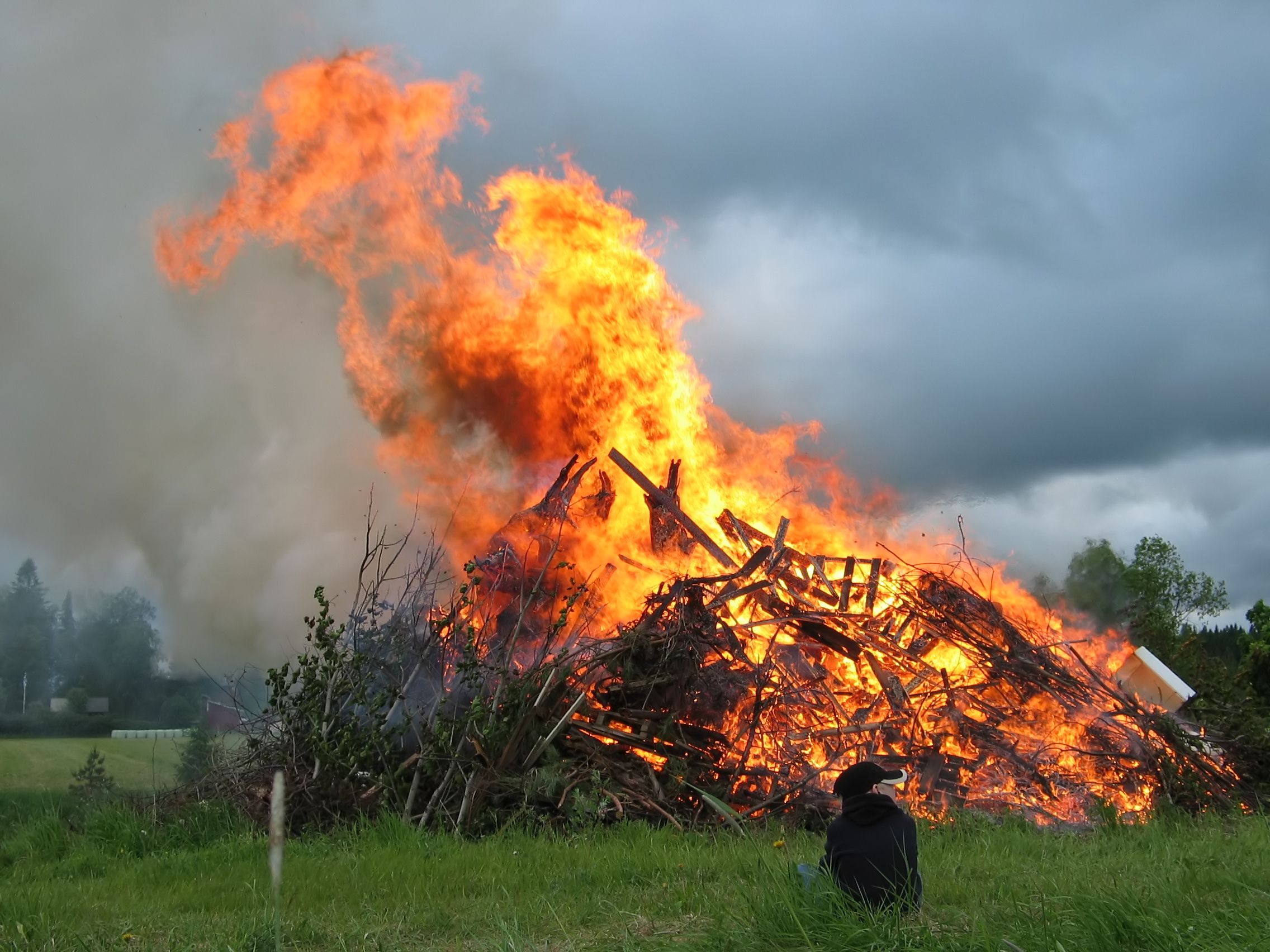
Is wood that is burning in a brush pile has heat, and produces ashes an example of a physical or a chemical change?
Physical
Chemical
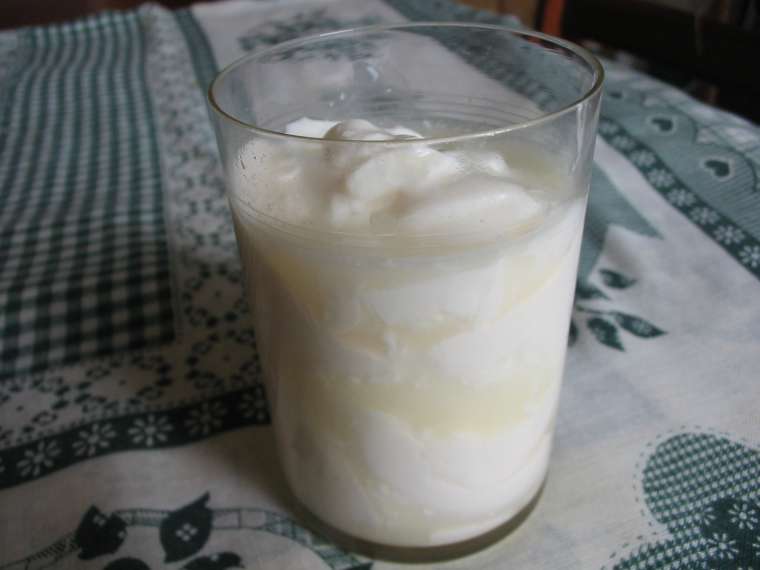
Is milk going sour a physical or chemical change?
Physical
Chemical
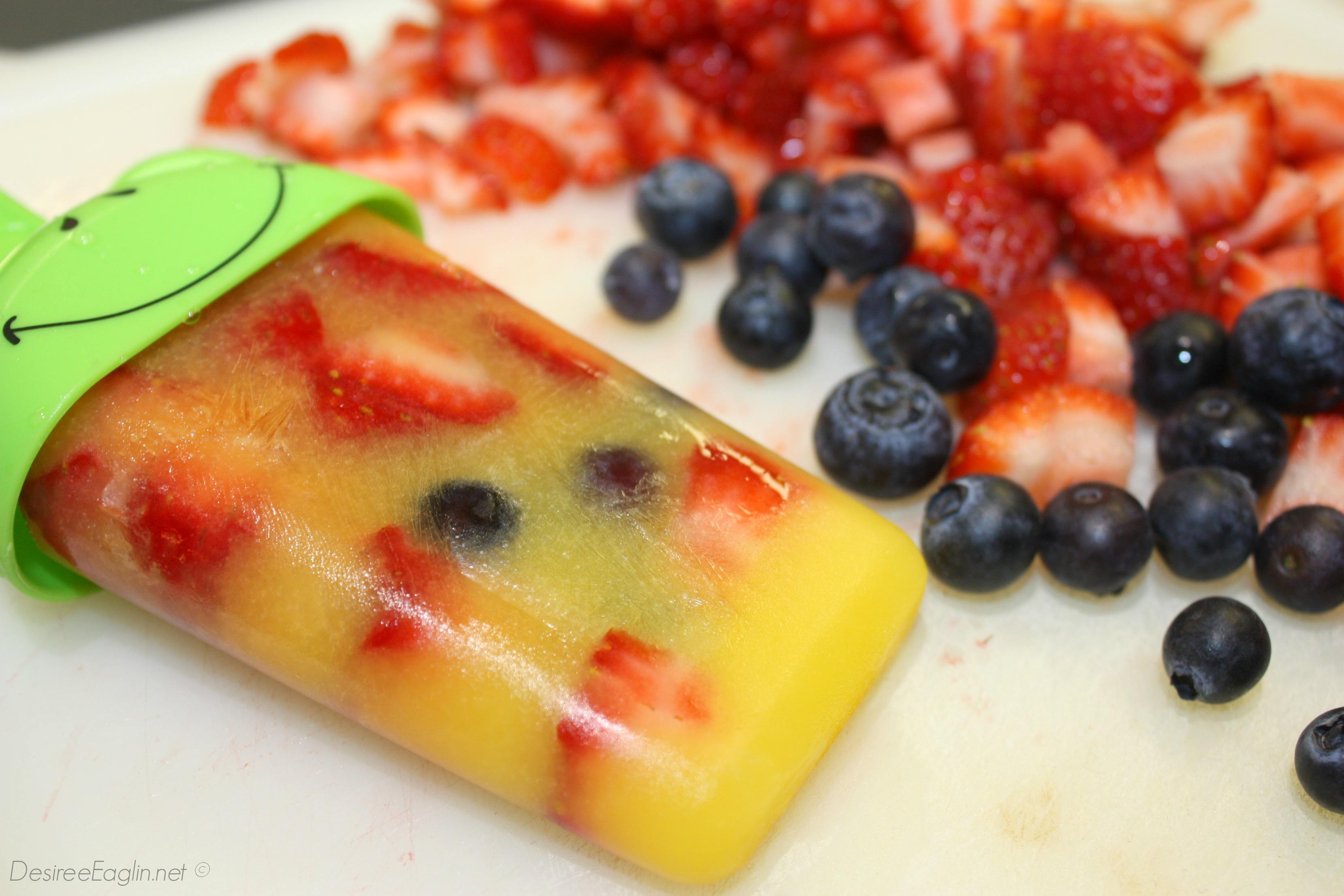
Is freezing juice an example of a physical change or a chemical change?
Physical Change
Chemical Change

When you break a cracker into pieces it is a...
Chemical change
Physical change
Is digesting your food is an example of a chemical change or a physical change?
chemical change
physical change
Which is an example of a chemical change?
paper cut into small pieces
chocolate melting in a pan
flour and sugar mixed in a bowl
cookies baking in an oven
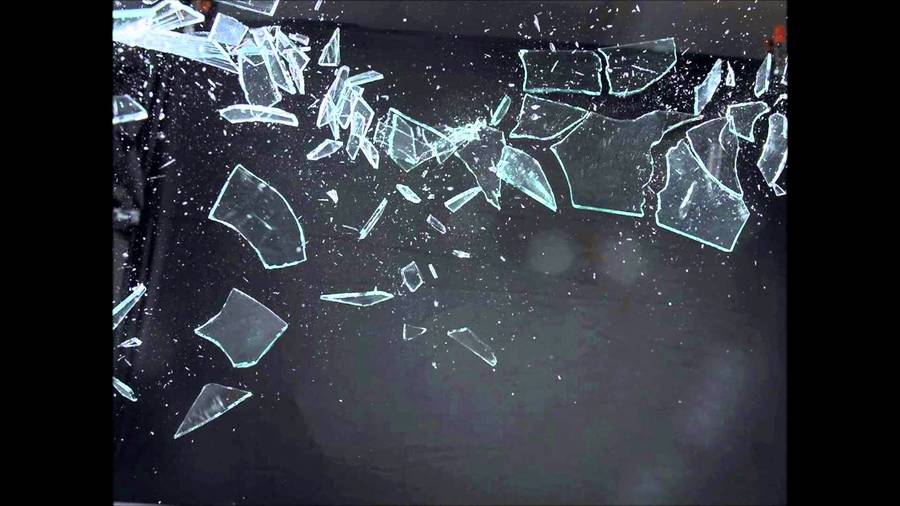
Is glass breaking into tiny shards an example of a chemical or physical change?
Chemical Change
Physical Change
Which is an example of a physical change?
Cooking
Buring Wood
Ripping paper
Digesting Food

Which of these four liquids is a mixture, made of parts, some of which can be separated?
salt water
skim milk
orange juice
distilled water (drinking water)
Which is a physical change?
burning wood
rusty nail
freezing water
baking cookies
Which is a chemical change?
rusted bike
cutting an apple
boiling water
tearing paper
What is the best way to separate a mixture of sugar, sand, and water?
Freeze the mixture, causing the water to be destroyed, then sift the sugar from the sand.
Filter the sand from the sugar and water, then heat the mixture, causing the water to evaporate.
Filter the mixture, causing the sugar and sand to get caught but not the water.
Stir the mixture, causing the water to move above the sugar and sand.

A student is investigating changes with common classroom materials. Which of the following BEST describes the conclusion the student can make about the investigations?
The paperclip shows evidence of a physical change by changing the shape of the object, whereas the pencil eraser and hole puncher show evidence of a physical change by changing the size of the object.
All three investigations show evidence of a physical change due to a change in the color of the original substance.
The paperclip and hole puncher shows evidence of a physical change by changing the chemical properties of the original object, whereas the pencil eraser shows evidence of a physical change by changing the size of the object.
All three investigations show evidence of a physical change due to a change in state of matter.
A 5th grade student places baking soda in a cup. The student then adds vinegar to the cup. The student collects the data below from the experiment. Based upon the results of the experiment, which statement BEST describes whether the change is a physical or chemical change.
The data concludes that a physical change has occurred because it had an increased change in temperature, which resulted in the liquid to start bubbling.
The data concludes that a physical change has occurred because the color of the liquid changed when you mixed two materials.
The data concludes that a chemical change has occurred because there was formation of bubbles when the materials reacted to each other.
The data concludes that a chemical change has occurred because mixing two substances together will always result in a reaction.
A 5th grade student places baking soda in a cup. The student then adds vinegar to the cup. The student collects the data below from the experiment. Based upon the results of the experiment, which statement BEST describes whether the change is a physical or chemical change.
The data concludes that a physical change has occurred because it had an increased change in temperature, which resulted in the liquid to start bubbling.
The data concludes that a physical change has occurred because the color of the liquid changed when you mixed two materials.
The data concludes that a chemical change has occurred because there was formation of bubbles when the materials reacted to each other.
The data concludes that a chemical change has occurred because mixing two substances together will always result in a reaction.

A teacher takes a tray of ice cubes out of the freezer. Each student takes an ice cube and holds it in their hands. They make the observations listed in the chart. The student claims that changing the temperature of the water causes a physical change that turns water into ice.
Which argument BEST supports the student’s claim?
The ice cube is melting in the student’s hand since the hands are much warmer than the ice. Heat is being added to the ice, which causes the particles to move faster.
The ice cube is freezing in the student’s hand since the hands are much warmer than the ice. Heat is being removed from the ice, which causes the particles to move slower.
The ice cube is melting in the student’s hand since state is changing from a solid to a liquid. Heat is being removed from the ice, which causes the particles to move faster.
The ice cube is melting in the student’s hand since state is changing from a liquid to a solid. Heat is being added to the ice, which causes the particles to move slower.
A mixture of sand and gravel can be separated by putting it in a container with holes that only the sand can pass through. This method works to separate the mixture because sand and gravel differ in which physical property?
texture
state of matter
color
size


Which statement BEST describes why the water vapor in the air formed liquid water on the outside of the glass?

The image shows what happens when cold medicine tablets are placed in room-temperature water. What evidence would indicate that a new substance is produced?
The tablet dissolves in water
The water becomes cloudy
The water level increases slightly
Bubbles are given off

stepping on a Coke can

sodium metal is cut with a knife

glucose dissolves in water

cooking an egg

baking cookies

mixing sand and water

sharpening a pencil

a nail rusting

burning wood
What is chemical change?
How two chemicals react with one another when combined
A property that we can measure or observe with our 5 senses or other tools
When two chemicals react with one another to form a new substance
When a change occurs but it does not result in the formation of a new substance
What is physical change?
How two chemicals react with one another when combined
A property that we can measure or observe with our 5 senses or other tools
When two chemicals react with one another to form a new substance
When a change occurs but it does not result in the formation of a new substance
Which of the following is an indication of chemical change
Melting
Freezing
Burning
Evaporating
Thermal energy (heat) is released or absorbed during the reaction explains the _________________
Change in color
Change in temperature
Change in gas

What kind of change an exploding firework?
physical change
chemical change

a banana rotting is what type of change?
chemical change
physical change

baking soda and vinegar chemically combine to make a new substance. What type of change is this?
chemical change
physical change

Ice cream melting is what type of change?
chemical change
physical change

Cutting a pizza into 8 separate slices is what type of change?
chemical change
physical change
In a physical change, a new substance is formed.
True
False
Baking a cake is an example of a physical change.
True
False
Which of the following is an example of a physical change?
a bike rusting
toast burning
butter melting
food spoiling
Which of the following examples is a physical change but NOT a change of state of matter?
logs burning
water freezing into ice cubes
candle wax melting
paper being cut
Which of the following is an example of a chemical change?
a penny tarnishing
a mirror being scratched
hair being cut
water being boiled
What is the best way to separate a mixture of sugar, sand, and water?
Freeze the mixture, causing the water to be destroyed, then sift the sugar from the sand.
Filter the sand from the sugar and water, then heat the mixture, causing the water to evaporate.
Filter the mixture, causing the sugar and sand to get caught but not the water.
Stir the mixture, causing the water to move above the sugar and sand.
A student is investigating changes with common classroom materials. Which of the following BEST describes the conclusion the student can make about the investigations?
The paperclip shows evidence of a physical change by changing the shape of the object, whereas the pencil eraser and hole puncher show evidence of a physical change by changing the size of the object.
All three investigations show evidence of a physical change due to a change in the color of the original substance.
The paperclip and hole puncher shows evidence of a physical change by changing the chemical properties of the original object, whereas the pencil eraser shows evidence of a physical change by changing the size of the object.
All three investigations show evidence of a physical change due to a change in state of matter.

Lighting a Match
Physical Change
Chemical Change

Rusting Nail
Physical Change
Chemical Change

Adding baking soda to vinegar
Physical Change
Chemical Change


a change that alters a substance without changing its chemical composition or its identity
Chemical Change
Physical Change
Chemical and Physical Change
Matter


Matter can change: the changes can be physical or chemical. When a physical change happens, nothing new is formed. During a physical change, matter changes form; it can be crushed or torn or change state. When a chemical change occurs, something new is formed. The reactant or reactants change and become something new. For example, a piece of iron can rust. The rust is the new substance that is formed. It is called iron oxide. How can you tell if a chemical change has taken place? There are certain observations you can make:1. temperature change2. color change3. gas or bubbles produced4. an odor is created5. combining two liquids forms a solid called a precipitate.
Ms. Brown asked her students to combine some regular cow's milk with white vinegar. Each group mixed 1 cup of warm milk with 4 tablespoons of vinegar in a glass measuring cup. After stirring the mixture, the students poured the liquids through a strainer into another beaker. The picture above shows the results of mixing warm milk with vinegar. What type of change is this? Explain.
It is a chemical change because two liquids mixed together something new and different.
It is a physical change because it is a mixture of two liquids.
It is a chemical change because there was a change in temperature of the milk.
It is a physical change because you can separate the parts with a strainer.

Boiling or cooking an egg is a ________________________ change.
reversible (physical) change
irreversible (chemical) change
Why does the rate of dissolving increase as the temperature increases?
The solute molecules move faster at higher temperatures
The solute particles become smaller at higher temperatures
The solvent molecules become slower at higher temperatures
What is the effect of agitation on the rate of dissolving?
What is the effect of agitation on the rate of dissolving?
It decreases the rate of dissolving
It has no effect on the rate of dissolving
It increases the rate of dissolving
It changes the color of the solute
How does agitation help in dissolving a solute more quickly?
It increases the temperature of the solvent
It increases the weight of the solute
It brings fresh solvent into contact with undissolved solid
It changes the shape of the solvent
Why does a solute with a larger surface area dissolve faster?
It has more solute surface area in contact with the solvent
It has fewer solute particles in contact with the solvent
It has a higher temperature compared to other solutes
It has a different color compared to other solutes

What is the difference in dissolving time between a sugar cube and a teaspoon of granular sugar?
The sugar cube dissolves faster
The teaspoon of granular sugar dissolves faster
Both dissolve at the same rate
The dissolving time depends on the temperature of the solvent
What can increase the rate of dissolving even further?
Using a solute with a larger particle size
Using a solute with a smaller particle size
Decreasing the temperature of the solvent
Decreasing the agitation of the mixture
The finer the particles or the more surface area that is exposed, the slower the rate of dissolving.
True
False
You want to make chocolate milk using Hershey's syrup. How could you speed up the rate of the syrup dissolving in your milk?
Put the syrup in the fridge to cool before putting it in the milk
Put the syrup in the milk and let it sit
Increase the amount of syrup you put into the milk
Warm up the syrup before putting it into the milk
What combination would dissolve a solid solute the fastest?
high temperature, no stirring
no heat, no stirring
sugar cube, no heat
high temperature, stirring
How does cold water affect the speed of dissolving?
Cold water slows down dissolving.
Cold water speeds up dissolving.
Cold water has no effect on dissolving.
Cold water has no effect on dissolving.
John has three cups of sugar particles. Cup 1 has large sugar particles, Cup 2 has medium-sized particles, and Cup 3 has small sugar particles. If John pours each cup in water, which cup of sugar particles will dissolve the fastest?
Cup 1 will dissolve the fastest.
Cup 2 will dissolve the fastest.
Cup 3 will dissolve the fastest.
They will dissolve at the same rate.
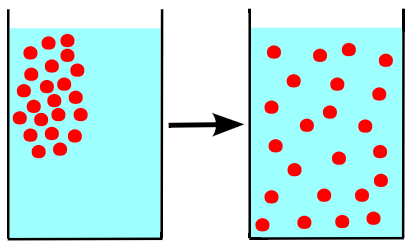
Which would dissolve faster?
stirring sugar and water 30 times per minute
stirring sugar and water 10 times per minute
What is the rate of dissolving?
How fast a solute dissolves in a solvent
The amount of solute that can dissolve in a solvent
The temperature at which a solute dissolves
The size of the solute particles

In a solution the _____ is dissolved.
solvent
solute

Look at the solution of tea and water. What do you think the terms diluted or concentrated could mean?
Diluted means more water, concentrated means less water
Diluted means less water, concentrated means more water
Diluted means more tea, concentrated means less tea
Diluted means less tea, concentrated means more tea

Which of the following actions increases the concentration of an aqueous solution?
decreasing the amount of the solute (tea)
increasing the amount of the solvent (water)
increasing the amount of the solute (tea)
increasing the solute (tea) and solvent (water) in equal amounts

What is the rate of dissolution?
how quickly a substance dissolves
How cold a substance is
How many particles are in a substance
The color of the substance

A saturated solution has reached its maximum _______ capacity.
Solvent
Solute
Pressure
Volume

Rank the glasses from most concentrated to least concentrated.
Glass D, Glass B, Glass A, Glass C
Glass A, Glass B, Glass C, Glass D
Glass D, Glass B, Glass C, Glass A
Glass B, Glass D, Glass A, Glass C

Which would NOT increase the rate of dissolution?
Ice
Heat
Agitation
Small Particle Size

In an aqueous solution the ___________ is water.
Solute
Solvent
Solution
What is agitation?
Heating
Size
Stirring
Color

The salt is the ________.
Solute
Solvent
Solution

Solvent OR Solution (Disolvente O Solución)?
Solvent (Dosolvente)
Solution (Solucion)

Solvent OR Solution (Disolvente O Solución)? Sand and Water
Solvent (Dosolvente)
Solution (Solucion)

Solvent OR Solution (Disolvente O Solución)?
Solvent (Dosolvente)
Solution (Solucion)

Solvent OR Solution (Disolvente O Solución)?
Solvent (Dosolvente)
Solution (Solucion)

Solvent OR Solution (Disolvente O Solución)?
Solvent (Dosolvente)
Solution (Solucion)

Solvent OR Solution (Disolvente O Solución)?
Solvent (Dosolvente)
Solution (Solucion)

Solvent OR Solution (Disolvente O Solución)?
Solvent (Dosolvente)
Solution (Solucion)
contains only 1 type of atom
element
compound
mixture
contains 2 or more elements that are chemically combined
element
compound
mixture
contains 2 or more substances that are physically combined
element
compound
mixture
carbon dioxide, CO2, is an example of a(n)
element
compound
mixture
gold, Au, is an example of a(n)
element
compound
mixture
chlorine gas, Cl2, is an example of a(n)
element
compound
mixture
bronze, an alloy of many different metals, is an example of a( n)
element
compound
mixture
Kool-aid is a example of a(n)
element
compound
mixture

diagram "a" is an example of a(n)
element
compound
mixture
diagram "b" is an example of a(n)
element
compound
mixture
diagram "c" is an example of a(n)
element
compound
mixture
diagram "d" is an example of a(n)
element
compound
mixture

Element, mixture, or compound?
element
mixture
compound

Element, mixture, or compound?
element
mixture
compound

What do you see in this picture?
A pure element
A pure compound
A mixture of two elements
A mixture of two compounds
A mixture of an element and a compound

What do you see in this picture?
A pure element
A pure compound
A mixture of two elements
A mixture of two compounds
A mixture of an element and a compound
Which is the best example of a pure substance?
pizza
gold
saltwater
air

Which substance is a compound?
copper
magnesium
saltwater
water
What kind of substance is composed of two or more elements that are chemically combined?
element
mixture
solution
compound

A combination of substances that are not chemically combined is called a
mixture
compound
element
Earth’s air is made up of molecules of different gases that are not joined chemically. Which term best describes air?
compound
mixture
pure substance
element

Structural differences between different chemicals can be represented in models of the particles. Which drawing BEST represents a compound?
Picture A
Picture B
Picture C
Picture D
Is salt (NaCI) a compound or an element?
Compound
element
What is the definition of a compound?
The smallest part of any substance which can exist on its own
Two or more atoms chemically joined together (can be the same or can be different)
A simple substance in which all the atoms are identical
Two or more different elements chemically joined together

Which of the above figures is/are considered a mixture
A. K only
B. M only
C. L and M only
D. K, L and M
Air is a ________ mixture in which different substances are _______ mixed.
A. heterogeneous - evenly
B. heterogeneous - not evenly
C. homogeneous - not evenly
D. homogeneous - evenly

Which of diagram represents(s) an element?
A. W only
B. Z only
C. X and Z only
D. X, Y and Z only
Matter is best described as anything that has _________________ only
A. masse
B. mass and velocity
C. mass and takes up space
D. mass, density and exerts pressure
A pure substance
elements
mixtures
compounds
elements and compounds
elements and mixtures

identify the model
element
compound
mixture of element
mixture of compounds
mixture of elements and compounds

identify the model
element
compound
mixture of elements
mixture of compounds
mixture of elements and compounds


What is the right part of a chemical equation called?
2H2 + O2 ---> 2H2O
Reactants
Yields
Products
Chemical Equation
What is the left part of a chemical equation called?
2H2 + O2 ---> 2H2O
Yields
Products
Chemical equation
Reactants
How many Mn atoms are found in the following compound?
2MnO4
2
4
6
8
What is the little number after an element in a chemical equation called?
Example: H2
Coefficient
Atom
Subscript
Equation
What is the number before a chemical formula called?
Example: 2H2 + O2 ---> 2H2O
Coefficient
Atom
Subscript
Equation

