
 Worksheets
P4 Review
Total questions: 86
Worksheet time: 43mins
Prior to and during the War of 1812, manufacturing increased. Why did manufacturing increase during this period?
Because trade with foreign nations was disrupted, leading to increased domestic production.
Because new technology from Europe was imported freely during the war.
Because the government banned all forms of agriculture.
Because the population rapidly decreased, requiring more goods.
The War of 1812 exposed problems in transportation and financial systems, including confusion over ______ value.
currency
land
gold
property
To address financial system problems after the War of 1812, Congress created the ______ Bank of the U.S.
Second
First
National
Federal
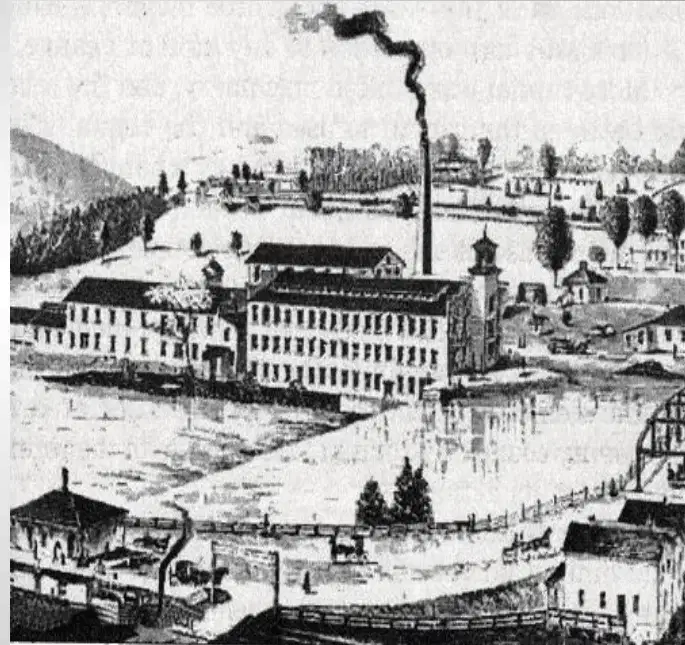
Who founded the first mill in America to weave and spin?
Francis Cabot Lowell
Samuel Slater
Eli Whitney
Robert Fulton
What was the purpose of the Tariff of 1816?
To protect 'infant industries' and limit competition from abroad.
To encourage free trade with European nations.
To reduce government spending on infrastructure.
To promote agricultural exports over manufactured goods.
The growth in which industry led Congress to act to protect America's new manufacturing industry?
Textile industry
Automobile industry
Steel industry
Electronics industry
Following the war, why did the U.S. need an updated transportation system?
To improve international trade
Manufacturers needed access to domestic markets
To reduce travel time to Europe
To increase military presence
What was the name of the road built in 1811 that helped improve transportation in the U.S.?
Lincoln Highway
National Road-Cumberland Road
Route 66
Erie Canal
Travelers on turnpikes had to pay high _______. Fill in the blank with the correct word.
tolls
fees
taxes
fines
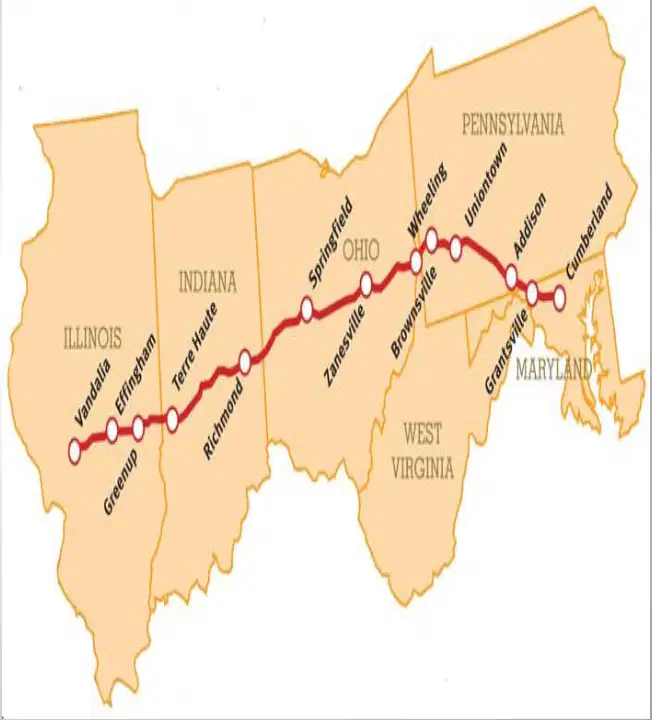
Refer to the map. Which states did the National Road pass through?
Illinois, Indiana, Ohio, Pennsylvania, Maryland
Texas, California, Nevada, Arizona
New York, New Jersey, Connecticut
Florida, Georgia, Alabama
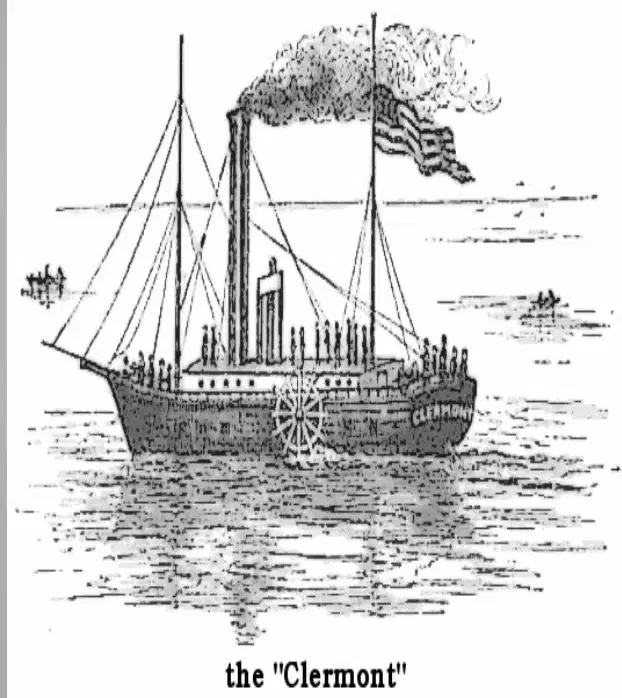
Who invented the steamboat 'Clermont'?
Eli Whitney
Robert Fulton
Samuel Morse
John Deere
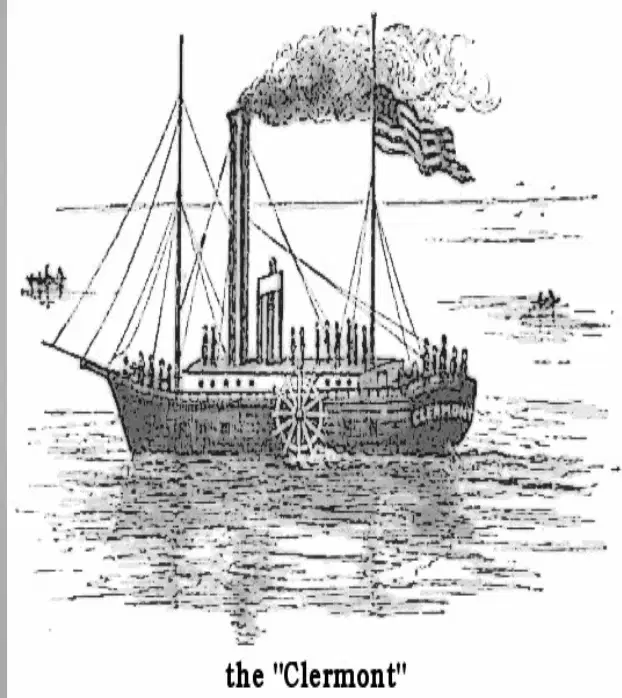
What was the name of the steamboat shown in the diagram?
Clermont
Monitor
Titanic
Enterprise
Steamboats stimulated agricultural growth in the ______ and South.
West
East
North
Midwest
Manufactured goods could be sent West because of steamboats.
True
False
Which of the following is NOT an effect of steamboats?
Stimulated agricultural growth in the West and South
Manufactured goods could be sent West
Invented the cotton gin
Improved transportation
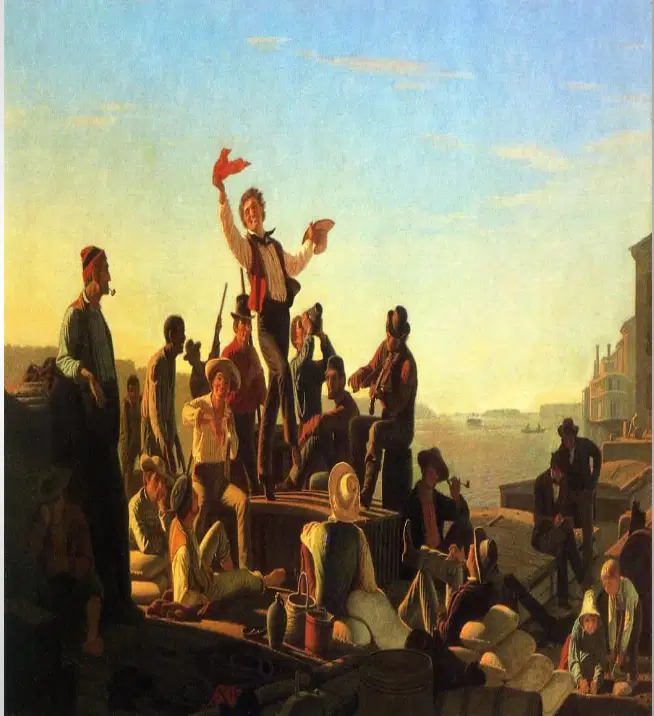
Which of the following were characteristics of the Era of Good Feelings?
Economic expansion
Growth of white settlement
Trade in the West
All of the above
Fill in the blank: The Era of Good Feelings saw the creation of new _______.
states
cities
monuments
wars
Rising nationalism was a feature of the Era of Good Feelings.
True
False
All of the following were reflected in national politics during the Era of Good Feelings except:
Economic expansion
Creation of new states
Decline in nationalism
Growth of white settlement
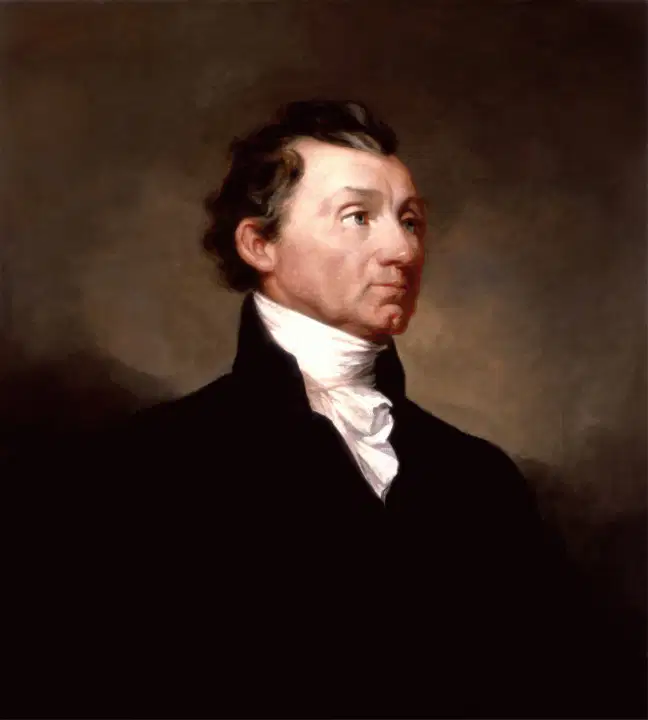
Who was Madison's Secretary of State?
James Monroe
Thomas Jefferson
John Quincy Adams
Henry Clay
Which state was James Monroe a planter in?
Virginia (VA)
Georgia (GA)
South Carolina (SC)
Maryland (MD)
The term 'Virginia Dynasty' refers to which group of U.S. Presidents?
Presidents from Virginia, including James Monroe
Presidents from New York, including Martin Van Buren
Presidents from Massachusetts, including John Adams
Presidents from Ohio, including William McKinley
Monroe appointed people from varied backgrounds to his cabinet.
True
False
Who did Monroe appoint as Secretary of State?
John Q. Adams
Henry Clay
William H. Crawford
John C. Calhoun
Under the Monroe Administration, who began negotiations with Spain in 1817 to gain Florida for the U.S.?
John Q. Adams
Andrew Jackson
John C. Calhoun
James Monroe
Fill in the blank: In 1817, Adams began negotiations with ______ to gain Florida for the U.S.
Spain
France
Britain
Portugal
The Seminole Indians were leading raids in American territory during the Monroe Administration.
True
False
Who gave orders to General Andrew Jackson to stop the Seminole raids in American territory?
John Q. Adams
John C. Calhoun
James Monroe
Spain
According to the Monroe Administration, who encouraged the US to take responsibility for Florida?
Monroe
Adams
Jackson
Spain
What did Jackson's raid demonstrate during the Monroe Administration?
The US could take Texas
The US could take Florida
Spain could keep Florida
The US could not expand
In what year was the Adams-Onis Treaty signed?
1819
1821
1803
1848
According to the Adams-Onis Treaty, Spain ceded all of ______ to the U.S.
Florida
Texas
California
Louisiana
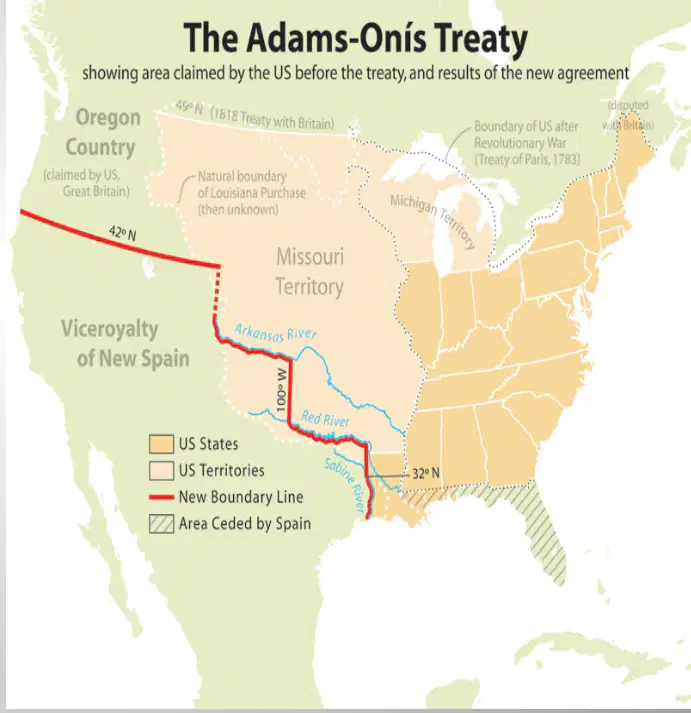
Refer to the map of the Adams-Onis Treaty. Which area was ceded by Spain to the United States?
Texas
Florida
Oregon Country
Missouri Territory
In what year did Missouri apply for statehood?
1819
1821
1817
1820
What did the Tallmadge Amendment propose regarding the Missouri territory?
The territory would be closed to slavery.
The territory would be open to all settlers regardless of status.
The territory would be divided into two separate states.
The territory would be given to Native American tribes.
If Missouri came into the Union as a free state, what would it upset?
The balance between free and slave states.
The power of the federal government.
The number of western territories.
The influence of northern states.
Which of the following best describes the Missouri Compromise of 1820?
Missouri was admitted as a slave state without restrictions.
The Tallmadge Amendment proposed closing the territory to slavery.
Missouri was denied statehood.
The balance between free and slave states was not a concern.
Who was a key figure in the Missouri Compromise during the Monroe Administration?
Andrew Jackson
Henry Clay
James Monroe
John Quincy Adams
According to the Missouri Compromise, Missouri would enter the Union as a ______, and Maine would enter as a ______.
Missouri would enter the Union as a slave state, and Maine would enter as a free state.
Missouri would enter the Union as a free state, and Maine would enter as a slave state.
Missouri would enter the Union as a free state, and Maine would enter as a free state.
Missouri would enter the Union as a slave state, and Maine would enter as a slave state.
What was the significance of the 36° 30' parallel in the Missouri Compromise?
It was the border between the US and Canada
It divided future free and slave states in the LA Territory
It marked the boundary of Missouri
It was the southern border of Maine
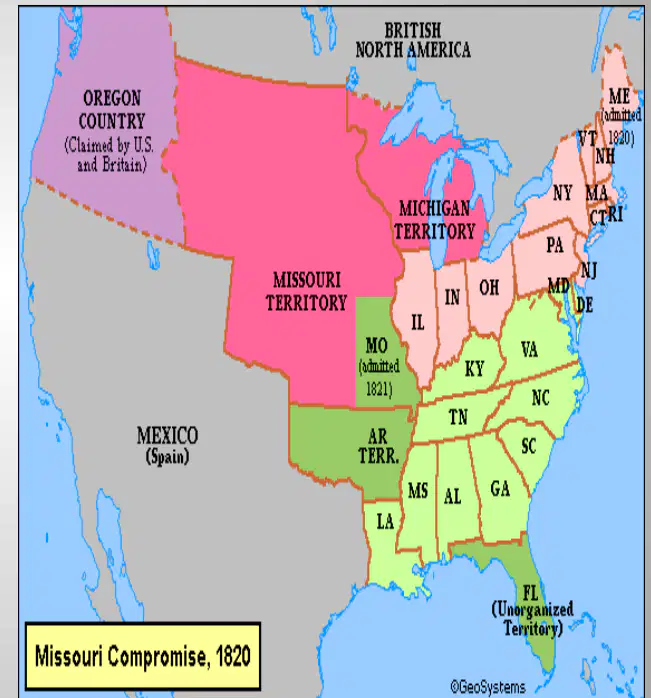
Refer to the map titled 'Missouri Compromise, 1820'. Which state was admitted to the Union in 1821 as a result of the Missouri Compromise?
Maine
Missouri
Arkansas
Michigan
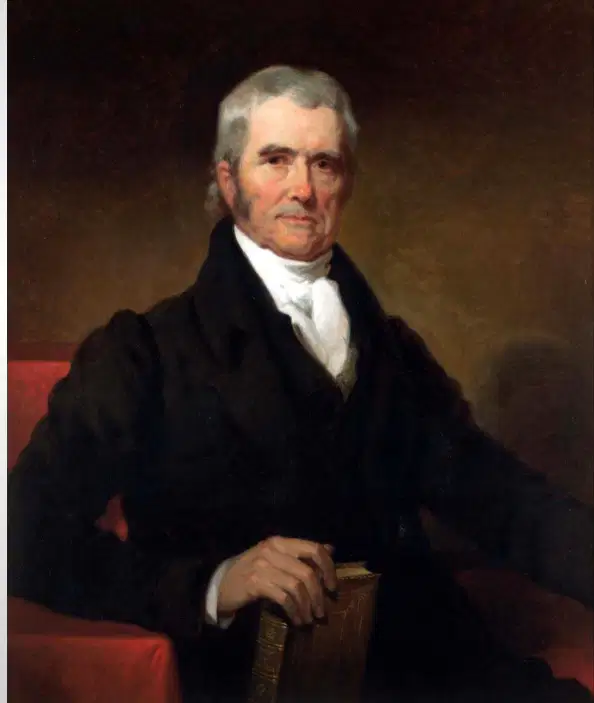
Who was the Chief Justice of the Supreme Court from 1801 to 1835?
John Marshall
Roger B. Taney
Oliver Ellsworth
Salmon P. Chase
John Marshall modeled the development of the ________.
Constitution
Bill of Rights
Declaration of Independence
Federal Reserve
John Marshall worked to strengthen which powers?
Federal powers
State powers
Judicial powers
Executive powers
John Marshall worked to strengthen the ________ branch.
Judicial
Executive
Legislative
Financial
What did Marshall confirm in McCulloch v. Maryland?
The right of states to regulate banks
The implied powers of Congress
The power of the President over Congress
The constitutionality of state banks
Which Supreme Court case strengthened Congressional power to regulate interstate trade?
Marbury v. Madison
McCulloch v. Maryland
Gibbons v. Ogden
Dred Scott v. Sandford
Fill in the blank: The rulings of the Marshall Court established the primacy of the ______ government over the states in regulating the economy.
federal
state
local
municipal
The rulings of the Marshall Court impacted the federal government's role in economic growth by:
limiting state interference in economic matters and strengthening federal power
reducing the federal government's influence over commerce
granting states more authority over interstate trade
decreasing the federal government's ability to regulate the economy
According to the Monroe Doctrine, what was happening in Spain's South American colonies?
Peaceful trade
Revolutions
Colonization by the US
Independence from Spain
In 1815, what position did the US proclaim in the wars between Spain and her rebellious colonies?
Support for Spain
Neutrality
Support for the rebels
No involvement
Fill in the blank: The US was not 100% neutral in the wars between Spain and her rebellious colonies because they ______ with the rebels.
traded
fought
negotiated peace
ignored
Which country was the first to recognize several new Latin American countries after the revolutions in Spain's colonies?
Great Britain
France
United States
Spain
Who wrote the Monroe Doctrine in 1823?
Thomas Jefferson
John Q. Adams
James Monroe
Andrew Jackson
What did the Monroe Doctrine declare about the American continent?
It was open to colonization
It was closed to further colonization
It was under British control
It was open for trade
Fill in the blank: The U.S. would see any attempt to challenge the Monroe Doctrine as an "______ act."
unfriendly
friendly
neutral
supportive
The Monroe Doctrine had an immediate impact when it was issued.
True
False
According to the Monroe Doctrine, which region did the U.S. become dominant in?
Eastern Hemisphere
Western Hemisphere
Southern Hemisphere
Northern Hemisphere
What is one expression shown by the Monroe Doctrine?
Imperialism
Nationalism
Isolationism
Federalism
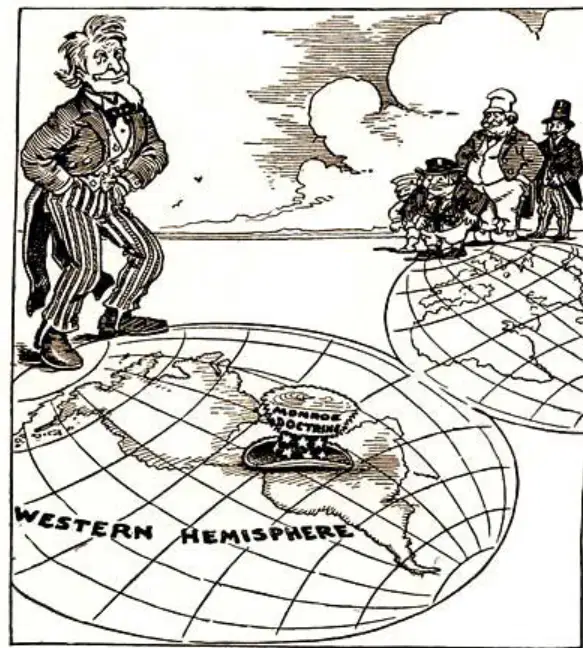
The cartoon suggests that the Monroe Doctrine had which effect on the Western Hemisphere?
It protected the Western Hemisphere from European interference.
It encouraged European colonization in the Americas.
It led to the division of the Western Hemisphere among European powers.
It weakened the influence of the United States in the region.
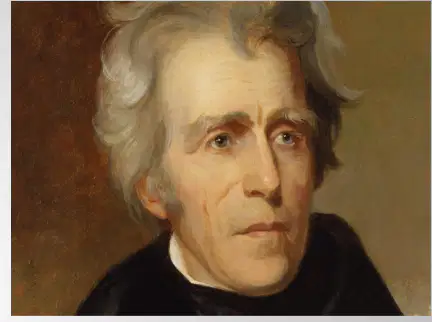
Who was a Democratic Republican in the Election of 1824?
Andrew Jackson
William Crawford
John Quincy Adams
Henry Clay
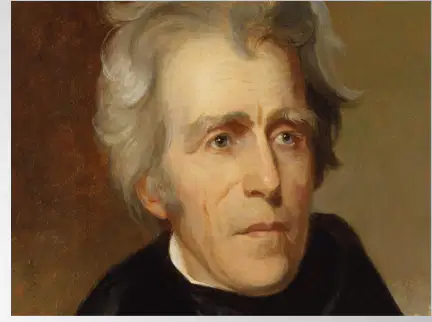
Who was a former general in the Election of 1824?
Andrew Jackson
William Crawford
John Quincy Adams
Henry Clay
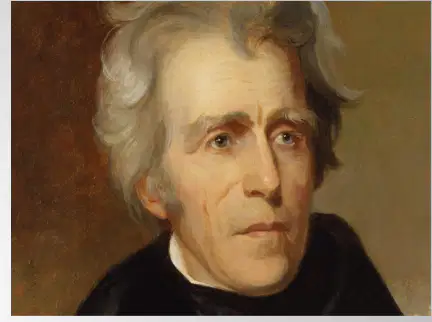
Who served as a Senator during the Election of 1824?
Andrew Jackson
William Crawford
John Quincy Adams
Henry Clay
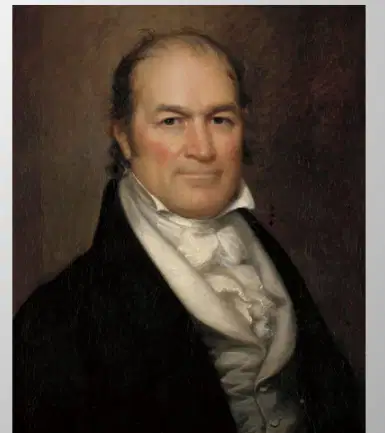
Who was the Secretary of Treasury in the Election of 1824?
A) Andrew Jackson
B) William Crawford
C) John Quincy Adams
D) Henry Clay
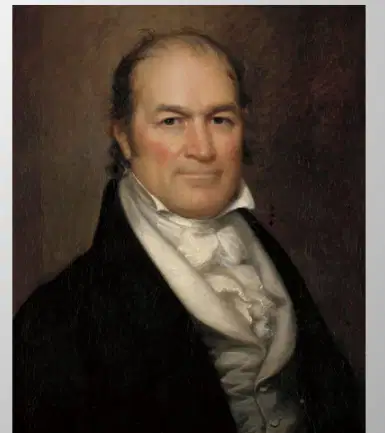
Who supported States Rights in the Election of 1824?
A) Andrew Jackson
B) William Crawford
C) John Quincy Adams
D) Henry Clay
Who was the Secretary of State under Monroe during the Election of 1824?
Henry Clay
John Q. Adams
Andrew Jackson
James Monroe
Which political party did John Q. Adams belong to during the Election of 1824?
Whig
Federalist
Democratic Republican
Democrat
Which political party did Henry Clay belong to during the Election of 1824?
Whig
Federalist
Democratic Republican
Democrat
Henry Clay was the _______ of the House during the Election of 1824.
Speaker
President
Treasurer
Secretary
Which system is associated with Henry Clay?
American System
British System
Federal System
Monroe Doctrine
Was Henry Clay considered very popular during the Election of 1824?
True
False
Which of the following was NOT a component of Clay's American System?
Expression of nationalism
Raise the protective tariff
Abolish the National Bank
Federal government finance internal improvements
One of the goals of raising the protective tariff in Clay's American System was:
Lowering prices for imported goods
Creating a home market for farm and manufactured goods
Reducing government spending
Abolishing tariffs altogether
Fill in the blank: A major goal of Clay's American System was to ______ the nation economically.
connect
divide
ignore
weaken
Which institution did Clay's American System aim to strengthen?
The National Bank
The Supreme Court
The Postal Service
The Department of Agriculture
The federal government was expected to finance internal improvements under Clay's American System.
True
False
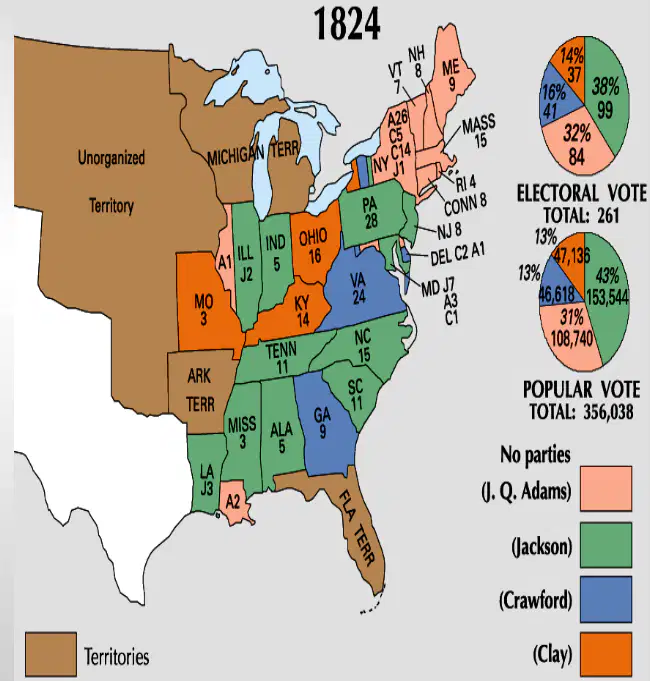
According to the information provided, who received more popular and electoral votes than any other candidate in the Election of 1824, but did not win a majority?
Andrew Jackson
John Quincy Adams
Henry Clay
William Crawford
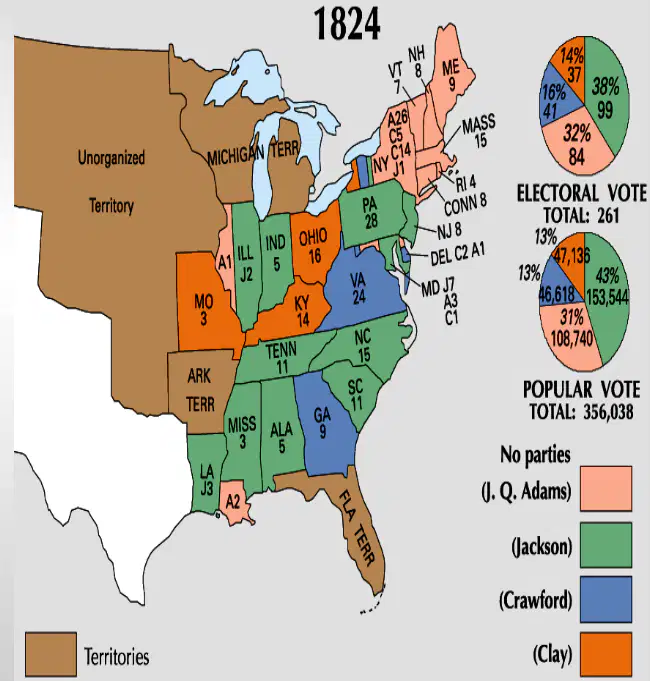
Why did the House of Representatives (H.O.R.) need to choose between the top 3 candidates in the Election of 1824?
Because no candidate received a majority of the electoral votes.
Because the Supreme Court ordered a re-vote.
Because one candidate withdrew from the race.
Because the Senate was deadlocked.

Who supported Adams in the House of Representatives, helping him win the Election of 1824?
Clay
Jackson
Calhoun
Webster
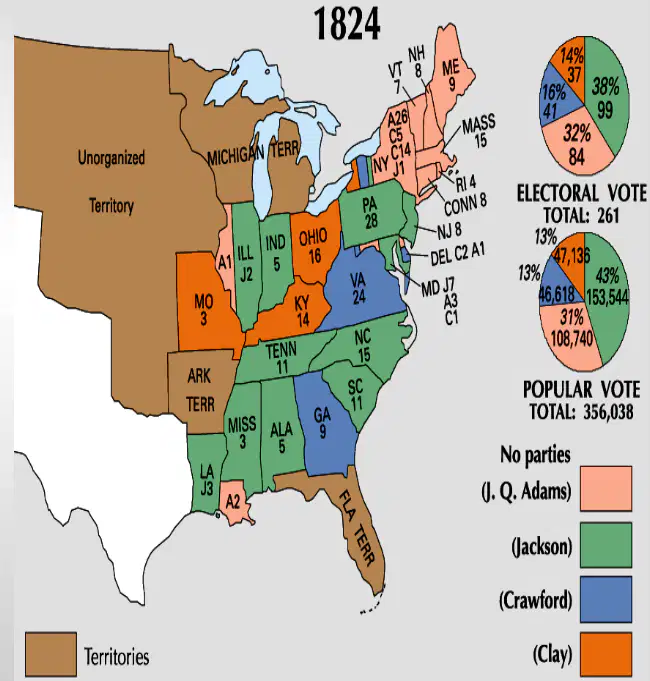
Which candidate won the Election of 1824 after receiving support from Clay in the House of Representatives?
Adams
Jackson
Crawford
Calhoun
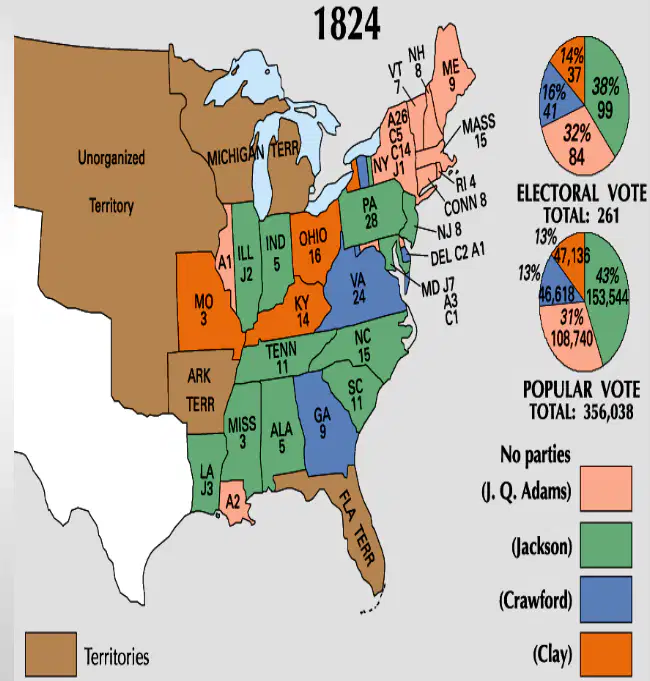
Based on the map and pie charts, which candidate received the highest percentage of the popular vote in the Election of 1824?
J.Q. Adams
Jackson
Crawford
Clay
Fill in the blank: Jackson’s supporters believed that their candidate was entitled to the election due to the way ______ had been cast.
votes
laws
speeches
petitions
What position was Henry Clay named to that angered Jackson’s supporters?
Vice President
Secretary of State
Speaker of the House
Chief Justice
What term did Jackson’s supporters use to describe the alleged deal between Adams and Clay?
Honest Election
Corrupt Bargain
Fair Play
Political Reform
Fill in the blank: These charges of a 'Corrupt Bargain' damaged the ______ presidency.
Adams
Jefferson
Jackson
Lincoln
What new political party formed as a result of the 'Corrupt Bargain' controversy?
Whigs
Federalists
Jacksonian Democrats
Republicans

