wayground logo

Free Printable Worksheets

Font size

S
M
L
XL
Worksheets

Fall 2025 Study Guide

Total questions: 90

Worksheet time: 46mins

Name
Class
Date
1.
How did the Magna Carta (1215) contribute to the development of the English government?
a)
It created a two-house parliament
b)
It provided for a bill of rights
c)
It extended voting rights
d)
it limited the power of the monarch
2.
What group broke away from the Roman Catholic Church?
a)
Jews
b)
Muslims
c)
Protestants
3.
Independence of a state combined with right & power of regulating itself without foreign interference
a)
Natural Rights
b)
Neutrality
c)
Natural Selection
d)
National Soverignty
4.
A procedure for collecting and analyzing evidence for the science of evolution is
a)
Rationalism
b)
Scientific Method
c)
Humanism
d)
Baroque
5.
The term sans-culottes, meaning “without breeches,” implied that the members of this political group were
a)
Women, because they wore skirts.
b)
Pacifists who did not use guns.
c)
Very poor and could not afford pants.
d)
Ordinary patriots without fine clothes.
6.
What was 1 similarity to the French Constitution of the Rights of Man and Citizen?
a)
Every man has the right to freedom of speech, religion and voting
b)
Every man and woman has the right to freedom of speech, religion and voting
c)
Every woman has the right to freedom of speech, religion and voting
7.
What were the basic ideas of the Declaration of rights of man and citizen?
a)
To give people suffrage and establish a national bank
b)
To give people a chance to make their own destiny
c)
To give people natural rights and resist oppression
d)
To give people a way to complain to their government
8.
Which of the following best describes The Consulate?
a)
The short lived government overthrown by Napoleon before he became Emperor
b)
Policies of the Committee of Public Safety to defend France from domestic threats
c)
a sudden overthrow of the government
d)
A restoration of the monarchy
9.
Socialism is
a)
where people gather at coffee houses and talk about social issues
b)
where the government owns and controls the means of production
c)
where a country's trade and industry are control by private owners
d)
where a dictator is telling people what to make and buy
10.
The SOCIAL change brought about by the Industrial revolution was evident in the...
a)
Emergence of the middle class and working class
b)
Growing death rates on the highways
c)
Thick air pollution that choked Britain
d)
Famines caused by peasants leaving the farms
11.
Which country had the largest colonial empire?
a)
United States
b)
France
c)
Germany
d)
Great Britain
12.
Which of the following best match for Direct Rule?
a)
Dictatorship
b)
Cooperation with the local authorities
c)
Conquest and Exploitation
d)
Massive immigration of European settlers
13.
Which of the following is the harshest example of Imperial Colonialism
a)
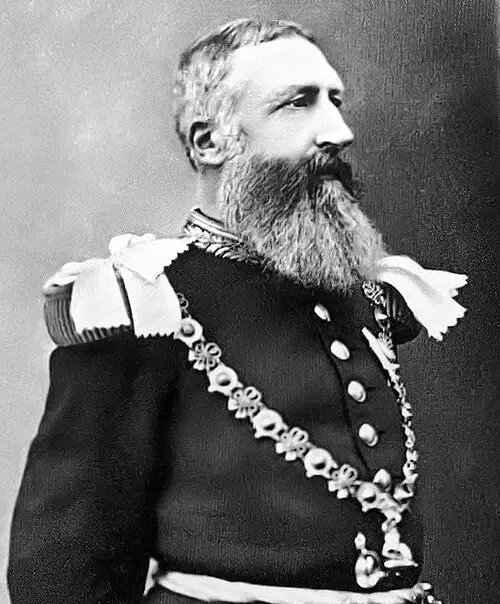
Belgian Congo
b)
Dutch East Indies
c)
Ethiopia
d)
Egypt
14.
What were the Indian soldiers hired by the East India Trading company known as?
a)
Diplomats
b)
Tribesmen
c)
Sepoys
d)
Boers
15.
Why did most western governments create a system of public education?
a)
New jobs required higher education
b)
Schools kept the kids out of a life of crime
c)
Schools were built to stop the spread of nationalism
d)
Public education was too expensive
16.
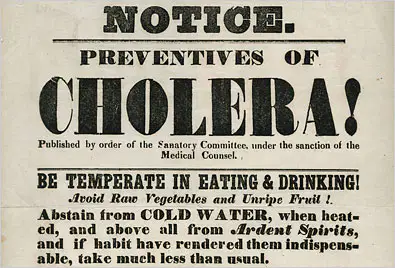
After the causes of Cholera were determined, what steps were taken to prevent further outbreaks?
a)
Infected bodies were burned
b)
New hospitals were built
c)
Public sanitation was improved
d)
Everyone got inoculated
17.
Why did workers in England and America form trade unions?
a)
They wanted to have common social activities
b)
Laws were passed requiring membership in unions
c)
Businessmen encouraged them to join
d)
They wanted fair wages and safe working conditions.
18.
How did Henry Ford change the car industry?
a)
Bourgeoise and factory reform
b)
Factory Acts and the assembly line
c)
Assembly line and mass production
d)
Mass production and child labor
19.
Whose invention led to the founding of AT&T and telephone lines?
a)
Thomas Edison
b)
Alexander Graham Bell
c)
Guglielmo Marconi
d)
Henry Bessemer
20.
____ sent the first radio waves across the Atlantic in 1901.
a)
Alexander Graham Bell
b)
Thomas Edison
c)
Guglielmo Marconi
d)
Joseph Swan
21.
a manufacturing method that allowed for a more efficient production of mass goods
a)
Suffrage
b)
Socialism
c)
Assembly Line
d)
Puddling
22.
The working class were known as:
a)
theorocrats
b)
republicans
c)
proletariat
23.
This invention, perfected by James Watt, was crucial to Britain’s Industrial Revolution.
a)
Windmill
b)
Flying Shuttle
c)
Water Powered Loom
d)
Steam Engine
24.
The SOCIAL change brought about by the Industrial revolution was evident in the...
a)
Emergence of the middle class and working class
b)
Growing death rates on the highways
c)
Thick air pollution that choked Britain
d)
Famines caused by peasants leaving the farms
25.
Why was Napoleon considered a child/product of the revolution?
a)
he was a child emperor raised by Marie Antoinette
b)
he was living in exile before being invited to take over France
c)
he was a distant cousin of the king an invited to take over France
d)
he overthrew the Directory and declared himself emperor of France
26.
What was the agreement Napoleon made with the Pope?
a)
Hinduism main form of religion, pope will not ask for land back
b)
Protestantism main form of religion, pope will not ask for land back
c)
Catholicism main form of religion, pope will not ask for land back
d)
Buddhism main form of religion, pope will not ask for land back
27.
What were 2 main reasons for Napoleon's empire to collapse?
a)
Germany's ability to resist Napoleon & Nationalism
b)
United States ability to resist Napoleon & Nationalism
c)
Britain's ability to resist Napoleon & Nationalism
d)
Canada's ability to resist Napoleon & Nationalism
28.
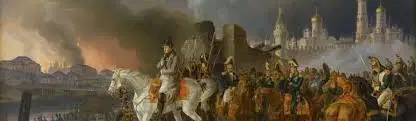
What caused Napoleon to invade Russia?
a)
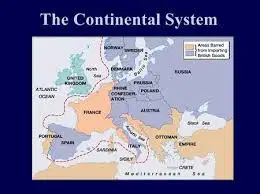
Russia began trading with England violating the continental system
b)
When he heard that the Russians were going to assassinate him.
c)
When France ran out of vodka and Russia would not sell them any.
d)
Napoleon wanted to make himself the Czar of Russia
29.
Who made up the Bourgeoisie?
a)
Rich people
b)
The most outspoken of the middle class
c)
Wealthiest of the middle class
d)
Both b and c
30.
an action relating to or originating within one's country
a)
dynamic
b)
element
c)
domestic
d)
emancipation
31.
Jean Jacques Rousseau proposed the idea of ____
a)
Social Darwinism
b)
Social Contract
c)
Social Renaissance
d)
Social Security
32.
What was Sir Isaac Newton's contribution in the Scientific Revolution?
a)
proposed the geocentric model
b)
proved the Earth was flat
c)
invented the rotating motor
d)
discovery of gravity & three laws of planetary motion
33.
What actions did Queen Elizabeth I take when she came to power?
a)
Act of Surrender - gave lands national sovereignty
b)
Act of Supremacy - declared head of church & state
c)
Act of Economics - established laissez-faire trade
34.
What was an outcome of the 30 years war?
a)
National Sovereignty is developed in the Holy Roman Empire
b)
National Sovereignty is developed in Russia
c)
Bill of Rights passed in England
d)
Bill of Rights passed in US
35.
Which Belief Systems in their early teaching have a monotheistic (1) god?
a)
Zoroastrianism, Buddhism, Hinduism, Christianity
b)
Zoroastrianism, Christianity, Judaism, Islam
c)
Zoroastrianism, Islam,Buddhism, Judaism
d)
Zoroastrianism, Daoism, Confusicm, Hinduism
36.
Which civilization introduced cuneiform ( early writing on clay tablets)
a)
Mesopotamia
b)
Rome
c)
China
d)
Incas
37.
What is the Mandate of Heaven about in China? (Think of belief system Confucism)
a)
allowed everyone be treated equally
b)
for servants to become bureaucrats
c)
gave kings a divine right to rule
d)
a new form of making iron
38.
What does an oligarchy stand for?
a)
"rule of few" - select group maintains control
b)
a dictatorship using fear and control
c)
everyone has one vote to elect a represetative
d)
where men are in charge
39.
In Jean-Jacques Rousseau’s concept of a social contract,
a)
an entire society agrees to be governed by its general will
b)
the government should not interfere in economic matters
c)
punishments are not exercises in brutality, and capital punishment is discarded
d)
women should be granted rights nearly equal to those of men
40.
The English Philosopher John Locke argued that life, liberty, and property are derived from the consent of the governed. Which idea below best reflects this belief?
a)
natural rights should be protected by the government
b)
economic rights earned in a capitalistic system
c)
political rights to granted and determined by the government
d)
social rights are not guaranteed by the government
41.
The Declaration of Independence illustrates what philosophical school of thought?
a)
Realism
b)
Absolutism
c)
Enlightenment
d)
Heliocentrism
42.
The foundation for a constitutional monarchy in England was laid by the
a)
Toleration Act of 1489
b)
Glorious Revolution.
c)
Declaration of Independence.
d)
Rump Parliament.
43.
Both the United States Declaration of Independence and the French Declaration of the Rights of Man emphasized the idea that governments must
a)
guarantee economic prosperity
b)
support established religious beliefs
c)
protect the right of people
d)
operate on a system of checks and balances
44.
According to Montesquieu, when a country’s constitution requires the branches of government to remain independent of each other, it is adhering to the constitutional principle of
a)
popular sovereignty
b)
separation of powers
c)
Federalism
d)
direct democracy
45.
The French National Assembly swore the Tennis Court Oath, which was
a)
a protest against the extravagant lifestyle of the nobility.
b)
an oath of loyalty to Louis XVI.
c)
a vow to continue to meet until they had produced a French constitution.
d)
a promise not to rest until all members of the clergy were tried and executed.
46.
The Committee of Public Safety, led by Robespierre, was given broad powers to
a)
drain all the canals.
b)
protect the Paris Commune from thieves.
c)
defend France from external and domestic threats.
d)
coordinate attacks on Great Britain.
47.
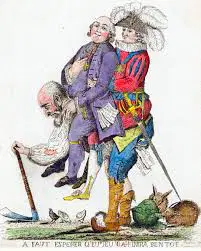
Which estate is depicted as carrying the burden of the French society prior to the French Revolution?
a)
first estate
b)
third estate
c)
second estate
d)
monarchy
48.
The Declaration of the Rights of Man and the Citizen proclaimed
a)
equal rights for all men, but no political rights for women.
b)
equal rights for all citizens, male and female.
c)
an end to the monarchy and the abolition of the National Assembly.
d)
an end to the National police force.
49.
The start of the French Revolution can be directly linked to what event?
a)
The Rise of Napoleon
b)
The Mexican Revolution
c)
The American Revolution
d)
The English Revolution
50.
What did Voltaire advocate that is the cornerstone of the American Bill of Rights?
a)
Freedom of Speech
b)
Trial by jury
c)
Freedom of Assembly
d)
Natural Rights of Man
51.
The Declaration of Independence and the American Constitution have their origins in what document?
a)
Petition of the Rights of Man
b)
Treaty of Versailles
c)
American Bill of Rights
d)
Magna Carta
52.
Adam Smith’s ideas of Laissez-Faire are most closely related to
a)
Religion
b)
Government
c)
Economics
d)
Military tactics
53.
Which of the following is the correct sequence?
a)
English Bill of Rights, American Constitution, Declaration of Independence
b)
Declaration of the Rights of Man, English Bill of Rights, American Bill of Rights
c)
Magna Carta, Declaration of Independence, American Constitution
d)
American Constitution, Magna Carta, English Bill of Rights
54.
The Russians defeated Napoleon’s superior Grand Army by
a)
retreating hundreds of miles and burning their own villages and countryside.
b)
splitting their meager forces in half and attacking from two sides.
c)
waiting to attack during the brutal Russian summer.
d)
making an alliance with Egypt, which launched an attack on Turkey to draw Napoleon out of Russia.
55.
Napoleon’s Civil Code was a great achievement, but which of the following is NOT true?
a)
Everyone was equal under the law
b)
Women could now vote in elections
c)
It included Enlightenment ideals of natural rights
d)
All citizens were required to pay taxes
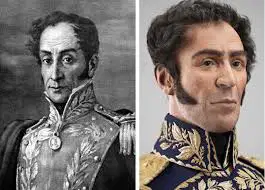
56.
Which leader was inspired by the ideas of the American Revolution and the Enlightenment to lead the liberation of much of South America from Spain?
a)
Simon Bolivar
b)
Padre Miguel hidalgo
c)
Jose Marti
d)
Antonio Lopez de Santa
57.
The agricultural changes which took place in England during the 1600s contributed to England’s later industrial development by
a)
Strengthening the importance or the family farm.
b)
Breaking large estates into smaller farms.
c)
Encouraging city dwellers to return to farming.
d)
Producing more food with fewer workers
58.
This invention perfected by James Watt was crucial to Britain’s Industrial Revolution.
a)
Windmill
b)
Flying shuttle
c)
Water powered loom
d)
Steam engine
59.
The social change brought about by the Industrial Revolution was evident in the
a)
Emergence of the middle class and the working class.
b)
Growing death rates, due to accidents on the highways.
c)
Thick air pollution that choked the British Isles.
d)
Widespread famines caused by families abandoning their farms.
60.
Who proposed the germ theory of disease?
a)
Farhid Molotof
b)
Michael Faraday
c)
Louis Pasteur
d)
Charles Darwin
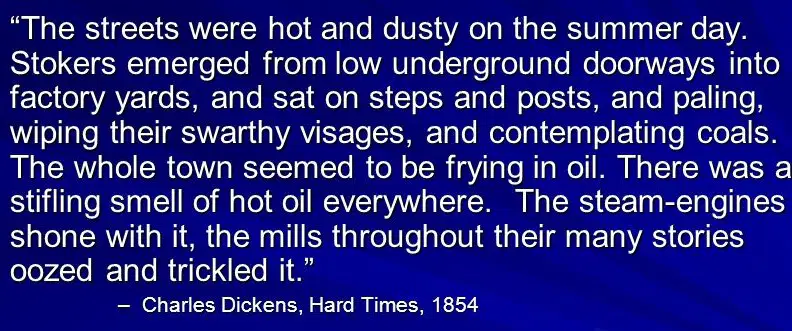
61.
The historical era most likely referred to in this quotation is the
a)
Industrial Revolution
b)
Great Awakening
c)
French Revolution
d)
Enlightenment
62.
What natural resources gave Britain an advantage in the Industrial Revolution?
a)
Water and forest
b)
Wildlife and precious gems
c)
Good harbors
d)
Coal and iron
63.
Adam’s Smith’s theory of laissez-faire economics can best be described as
a)
The government has a hands off or limited role of regulating the economy
b)
The government controls all means of production
c)
The government restricts workers’ wages
d)
The government discourages entrepreneurship
64.
In the philosophy called Social Darwinism, Charles Darwin’s theories were used to justify
a)
Imperialism and racism towards native peoples
b)
Psychoanalysis
c)
Secularization and modernism
d)
Theories set forth in the Communist Manifesto
65.
Mohandas Gandhi used his philosophy of civil disobedience in an effort to
a)
Form a Marxist government in India
b)
Convince his fellow Indians to support the Allies in World War II.
c)
Persuade Pakistanis to separate from India.
d)
Achieve India’s independence from Great Britain.
66.
Which of the following best describes the life of Africans under European rule?
a)
Life improved through education and skill training.
b)
Life improved because new farming methods improved crop yields.
c)
Africans saw little benefit of their hard work.
d)
Africans were forced to move to cities to prevent them from rising up against European rule.
67.
True or false? Women had the right to vote during Napoleon's reign and at the same time in the United States in 1804
a)
True
b)
False
68.
President Wilson said that his Fourteen Points would provide a framework for
a)
a lasting and just peace
b)
determining war reparations
c)
expanding colonial empires
d)
punishing aggressor nations
69.
A major goal of France and Great Britain at the Conference of Versailles following World War I was to:
a)
create a politically unified Europe
b)
keep Germany from rebuilding its military forces
c)
restore pre-war imperial governments to power
d)
help Germany rebuild its industrial economy
70.
In Germany after the war, the Weimar Republic would be forced to pay:
a)
Russia back for equipment taken
b)
the Ottoman Empire for loss of land
c)
Austrians for starting the war
d)
war reparations to France and Britain
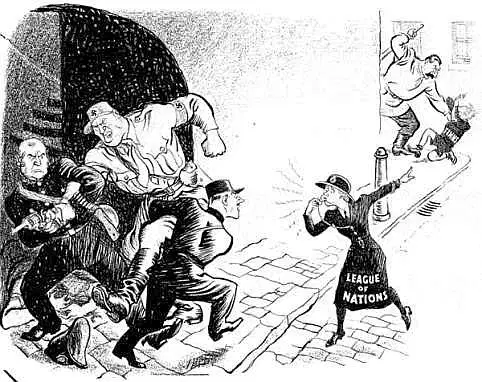
71.
Which of the following is NOT true about the League of Nation Mandates in the Middle East?
a)
France governed Syria
b)
England controlled Palestine and Iraq
c)
The Ottoman Empire kept some of its territories
d)
The mandates violated the principles of the '14 Points'
72.
Which of the following is NOT true about Article 231 the War Guilt Clause of the Versailles Treaty
a)
It punished Germany
b)
It required Germany to take the blame for the war
c)
It allowed Germany to rebuild it's economy
d)
It created massive resentment amongst the German population
73.
What effect did America's entry into the war have on the Western Front?
a)
American troops were actually sent to the Eastern Front
b)
The Fresh and numerous American troops helped drive back the Germans
c)
The inexperienced American soldiers lost many battles
d)
It had no real effect because the stalemate continued
74.
What was the final peace settlement of WWI?
a)
the Treaty of Versailles
b)
the “Fourteen Points”
c)
the Weimar Republic
d)
the reparation that Germany had to pay.
75.
What was the main purpose of the League of Nations?
a)
to prevent the use of nuclear weapons.
b)
to help feed the world.
c)
to prevent future wars.
d)
to help create a baseball league for women around the world.
76.
When did WWI officially come to an end?
a)
November 11th, 1918 at 11 am. (The 11th hour, 11th Day, 11th month)
b)
November 12th, 1918 at 12 am. (The 12th hour, 12th Day, 12th month)
c)
November 1st, 1918 at 1 am. (The 1st hour, 1st Day, 1st month)
d)
November 22nd, 1918 at noon
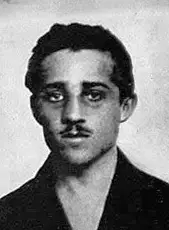
77.
What was the name of the group that conspired to assassinate Archduke Francis Ferdinand?
a)
the Serbian People’s Front
b)
the Red Band
c)
the Bosnian Militia
d)
the Black Hand
78.
The Schlieffen Plan was...
a)
Austria-Hungary’s attempt to negotiate a peaceful settlement with Serbia.
b)
Germany’s proposal for dividing up Serbia between Russia and Austria-Hungary.
c)
The Black Hand’s plan to assassinate the heir to the Austro-Hungarian throne.
d)
Germany’s plan for a two-front war with Russia and France, which had formed a military alliance.
79.
_________, the aggressive preparation for war, was growing along with nations’ armies.
a)
Pacifism
b)
Militarism
c)
Warmongering
d)
Imperialism
80.
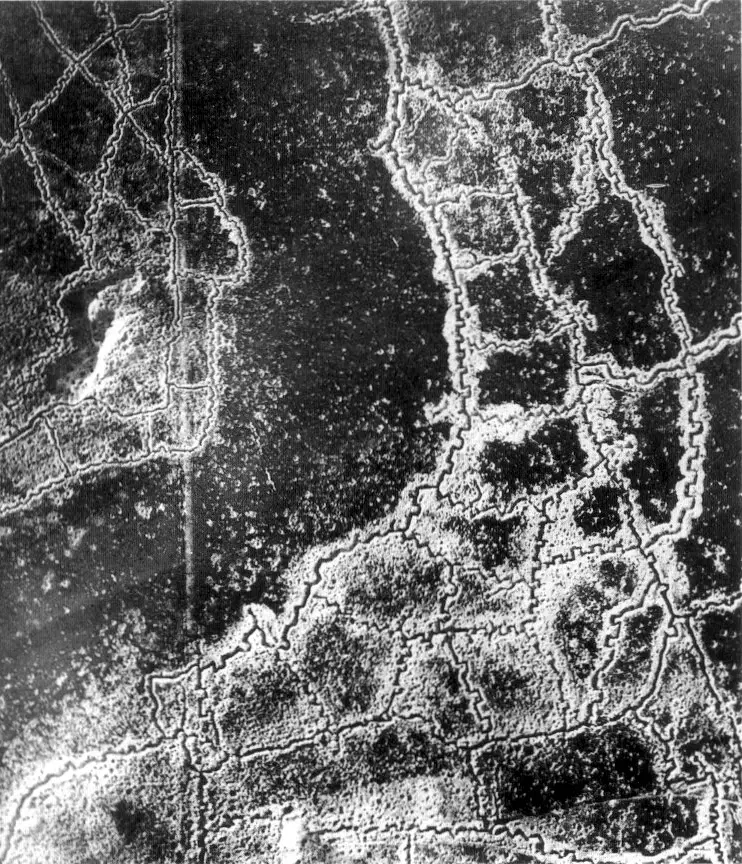
The Western Front was characterized by
a)
the slow but steady advance of the German army.
b)
trench warfare that kept both sides in virtually the same positions for four years.
c)
decisive victories by the French army, quickly driving back the German forces.
d)
innovative strategies and tactics that fully utilized the new technologies available to both armies.
81.
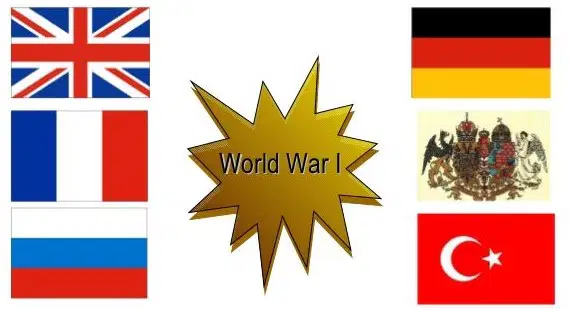
Austria-Hungary, Bulgaria, Germany, and the Ottoman Empire became known as
a)
the Allied Powers.
b)
the League of Nations.
c)
the Central Powers.
d)
the Eastern Powers.
82.
The Ottoman Empire tried to wipe out an entire ethnic group. Which of the following is true in that regard?
a)
Armenians were killed in large numbers
b)
This is called Genocide
c)
The victims were mostly innocent civilians
d)
All of the above are true
83.
What caused the United States to join the Allies in fighting World War I?
a)
the sinking of the Titanic
b)
the German embargo on gasoline
c)
the United States’s fear of the Austro-Hungarian powers
d)
the Germans’ use of unrestricted submarine warfare
84.
What was the area between the enemy trenches known as?
a)
Mud bog
b)
Crater city
c)
Kill Zone
d)
No Mans Land
85.

What is the name for thinkers who reflect on the meaning of life?

a)

Philosophers

b)

Scientists

c)

Historians

d)

Mathematicians

86.

Analyze the role of agriculture in the development of early human societies.

a)

It led to the decline of trade.

b)

It allowed for population growth and the establishment of cities.

c)

It caused a decrease in technological advancements.

d)

It resulted in the abandonment of permanent settlements.

87.
Greek achievements in philosophy, science, math, literature and the arts are significant in modern times because...
a)
They helped Greece become a military superpower.
b)
They demonstrate the size of Greek brains.
c)
They strongly effected the development of western civilization (where we live).
d)
They encouraged people to learn to speak and read the Greek language.
88.

Which of the following BEST describes a laissez-faire economic policy?

a)

The government should leave businesses alone.

b)

The government should heavily regulate businesses.

c)

The government should protect small businesses from failing.

d)

The government should prevent big businesses from expanding.

89.

Economic system which allows private property and encourage entrepreneurs to start businesses

a)

Capitalism

b)

Communism

c)

Command Market

d)

Busy Business-ness

90.

Exclusive possession or control of the supply or trade in a commodity or service.

a)

Political machine

b)

Corporation

c)

Monopoly

d)

Free enterprise system