
NEW
Font size
 Worksheets
Medical Law and Malpractice Fundamentals
Total questions: 73
Worksheet time: 37mins
Which statement best defines malpractice in a healthcare context?
Lawsuits claiming errors in diagnosis or treatment
Criminal charges for violating hospital policies
Administrative penalties for scheduling mistakes
Professional disputes over work assignments
Which example illustrates res ipsa loquitur in a malpractice case?
A delayed appointment due to weather
A patient missing a follow-up visit
A surgical instrument left inside the patient
A billing code entered incorrectly
A nurse leaves a woman in active labor because the shift ends and replacement is late. What negligence does this most closely represent?
Misfeasance during lawful treatment
Abandonment of care by the professional
Nonfeasance of a legal obligation
Malfeasance through unlawful misconduct
Which scenario best matches malfeasance?
Performing a lawful act done incorrectly
Failing to perform a required legal duty
Delaying care due to busy workload
Performing an unlawful act or misconduct
Following surgery, a patient shows internal bleeding because the surgeon did not close all severed capillaries. Which classification fits best?
Misfeasance: lawful act done incorrectly
Abandonment: stopping care
Malfeasance: unlawful misconduct
Nonfeasance: failure to act
A patient has symptoms that should be treated, but the doctor decides to wait without sufficient reason, and harm occurs. What claim might the patient make?
Defamation due to false statements
Battery due to unwanted touch
Fraud due to billing errors
Negligence due to delayed treatment
Which role responsibility aligns with medical law in clinical practice?
Set national insurance reimbursement rates
Write criminal codes for the community
Select hospital paint colors for safety
Follow federal, state, and local legal guidelines
Which element is NOT one of the Four Ds of negligence?
Direct cause
Derelict
Duty
Discovery
In a negligence claim, what does "derelict" refer to?
Failure to meet professional standards
Link between breach and damages
Proof of patient injury
Existence of physician-patient relationship
Which statement best distinguishes civil law from criminal law in malpractice contexts?
Civil law is unintentional; criminal law is intentional
Civil law punishes crimes; criminal law resolves private disputes
Civil law addresses private rights; criminal law addresses public offenses
Civil law uses juries; criminal law uses arbitrators
A tort in malpractice suits is best described as:
A subpoena issued by a court
A formal arbitration decision
A breach of federal criminal statute
An intentional or unintentional civil wrong causing harm
Arbitration in settling malpractice suits primarily involves:
A jury determining guilt beyond reasonable doubt
A judge ordering the physician to pay damages
A neutral expert hearing evidence and deciding the dispute
A prosecutor filing charges in criminal court
Under the law of agency, who can be held liable for a medical assistant’s negligence while performing professional tasks?
The arbitrator overseeing the case
Only the medical assistant personally
The doctor and possibly the employer’s insurer
Only the patient who consented
Which action is part of proper procedure when terminating patient care?
Discard prior records to avoid liability
Send a verbal notice during a call
Document the reason only in billing records
Send a letter and return receipt by certified mail
Which situation most reasonably justifies a physician withdrawing from a case?
Patient changes insurance provider
Patient moves to a nearby city
Patient requests a second opinion politely
Patient refuses to follow instructions repeatedly
Which action best demonstrates the standard of care for a medical assistant when handling patient information?
Maintaining confidentiality of patient records
Posting anonymized cases on social media
Sharing records with family without consent
Keeping only verbal notes of visits
A medical assistant writes in a patient’s chart. What requirement makes this entry legally important?
Charts must be stored for one year
Notes must be signed by patients
Entries must be in pencil only
Entries must be timely and accurate
Which task falls under administrative legal duties related to state reporting requirements?
Scheduling routine follow-up calls
Diagnosing influenza by symptoms
Reporting suspected child abuse to authorities
Ordering patient lab tests independently
A physician cannot see a patient and asks the medical assistant to arrange care. What is the legally sound plan?
Send the patient home without advice
Arrange for another physician in the same practice
Cancel all appointments that day
Tell the patient to call back next week
Which statement best explains why a letter of withdrawal from a case includes a time limit for continued care?
It legally ends malpractice insurance
It prevents billing disputes with insurers
It avoids any transfer of case records
It provides reasonable notice to find new care
In some states, which activity is illegal for medical assistants because it exceeds their scope of training and capabilities?
Preparing consent forms for procedures
Scheduling patients in the appointment book
Diagnosing conditions or prescribing treatment
Recording vital signs during intake
Which action best follows laws for controlled substances in a medical office?
Letting any staff refill narcotic prescriptions
Ignoring dosage complications for convenience
Keeping prescription pads secure at all times
Leaving prescription pads unlocked in a desk
What is the main purpose of sensitive, nonjudgmental communication with patients?
To allow visitors to discuss test results freely
To replace written instructions for all patients
To prevent misunderstandings that could lead to disputes
To decide which information they should receive
A living will most commonly states which preference?
Who inherits the patient’s property
What insurance plan the patient should choose
Which hospital the patient prefers to visit
Whether life-sustaining treatment should be used
What does a Durable Power of Attorney for health care authorize?
A nurse to sign the patient’s prescriptions
A chosen person to make medical decisions
A family friend to access all test records
A lawyer to manage hospital billing
What is the legal function of the Uniform Donor Card?
It allows minors to consent to all procedures
It certifies the patient’s living will witnesses
It states a person’s wish to donate organs
It records allergies for emergency responders
Which practice best maintains patient confidentiality in the office?
Share records only with appropriate staff
Discuss test results with visitors politely
Keep charts open on the front counter
Announce patient names in waiting areas
Why do OSHA regulations matter to medical assistants?
They set rules for patient billing disputes
They authorize organ donation card distribution
They protect workers from job-related health hazards
They provide instructions for living will signatures
Which regulation specifically addresses controlling occupational exposure to infectious diseases for healthcare workers?
EPA Hazardous Waste Framework
OSHA Bloodborne Pathogens Standard
NIH Clinical Safety Directive
CDC Standard Precautions guidelines
Universal Precautions require treating which materials as potentially infectious, regardless of the patient’s diagnosis?
Saliva and semen only
Blood and certain body fluids
Sweat and urine primarily
Tears and nasal mucus
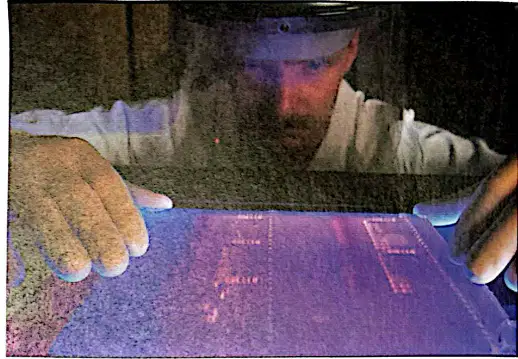
Which protective gear is appropriate for procedures that may expose the eyes, nose, or mouth to sprays or splashes?
Mask, goggles, or face shield
Respirator and sterile drapes
Cloth mask and cotton apron
Utility gloves and shoe covers
Which glove type is worn only once and then discarded, and should not be reused if torn or damaged?
Utility gloves for housekeeping
Disposable examination gloves
Sterile gloves for minor surgery
Reusable decontamination gloves
After a procedure, which action is part of proper decontamination of work surfaces?
Cover surfaces with paper towels
Air-dry surfaces overnight
Use a 10% bleach solution or EPA-approved germicide
Wipe with water and soap only
Which item is correctly disposed of in leakproof biohazard bags labeled with the biohazard symbol?
Office paper and food wrappers
Household trash and aluminum cans
Body fluids and materials contaminated with blood
Unused gauze and clean gloves
What handling rule helps prevent exposure from used disposable sharp instruments?
Bend or break sharps before disposal
Recap needles to avoid accidental sticks
Rinse sharps and place in regular trash
Do not bend, break, recap, or tamper with sharps
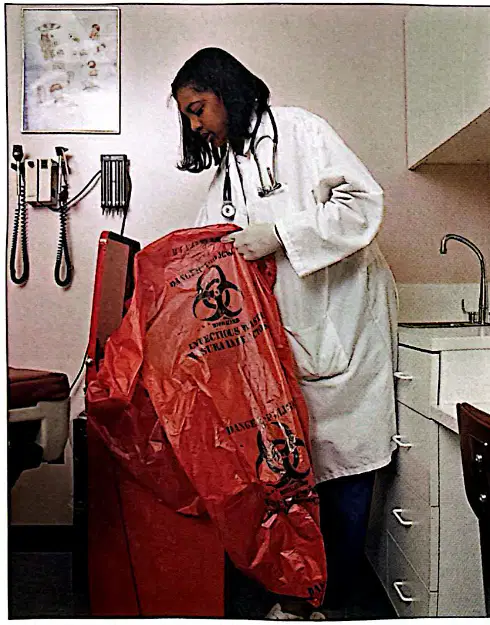
Which container is appropriate for disposing of wastes with body fluids such as gloves and gauze?
Leakproof puncture-resistant color-coded container
Reusable bucket labeled with office logo
Clear plastic bag without markings
Open-top bin lined with paper towels
What should be done with reusable sharp equipment after use in a medical office?
Left on tray until end of day
Wrapped in cloth and stored in cabinet
Rinsed and discarded in regular trash
Placed in puncture-resistant container for reprocessing
Sterilization of disposable instruments is commonly accomplished using which device?
Autoclave using pressurized steam
Ultraviolet light sanitizer
Chemical soak overnight
Dry heat oven for 3 hours
After an exposure incident like a needlestick, what is the first required action?
Wait to see if symptoms appear
Notify the physician/employer immediately
Post on a staff bulletin board
Finish the current patient before reporting
Within how many days must a new employee be offered the HBV vaccination at no cost?
10 days from start date
30 days from start date
60 days from start date
3 days from start date
If an employee is tested for HBV or HIV after exposure, how must the test results be handled?
Shared openly with coworkers
Kept confidential with right to refuse testing
Posted on the clinic notice board
Reported only to patients
Which statement best describes OSHA rules for handling infectious laundry in medical offices?
Laundry should be washed without labels to save time
Laundry can be mixed with regular office waste
Laundry must be bagged, labeled, and handled minimally
Laundry may be handled barehanded if bagged
Which document must be posted to specify hazards, risks, and exposure controls for workplace substances?
Material Safety Data Sheets for substances
Exposure Control Plans for clinics
Employee medical records for staff
OSHA Form 200 for incidents
What is a required component of OSHA training for workers exposed to blood-borne pathogens?
Advanced surgical sterilization techniques
Detailed pharmaceutical compounding methods
Radiation therapy equipment calibration
Causes and symptoms of blood-borne diseases
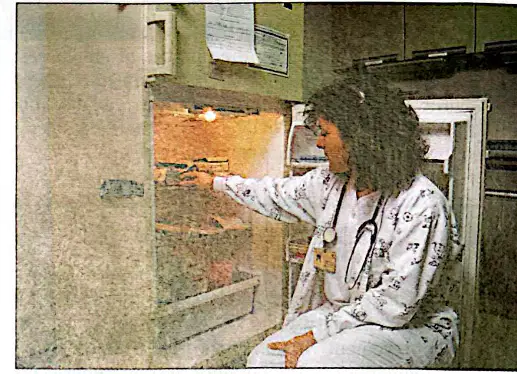
A refrigerator in a medical office stores blood samples. What OSHA-compliant feature must it have?
UV lights to sterilize the shelves
Built-in handwashing sinks nearby
Glass doors for visibility and audits
Working thermometers to monitor cooling
Which action violates general work area regulations intended to prevent contamination?
Filing patient charts quietly
Applying lip balm in the work area
Using labeled sharps containers
Wearing closed-toe shoes
Which records must be kept for 30 years after a worker leaves employment?
Employee medical and exposure records
Daily appointment schedules
Annual refrigerator maintenance logs
Training videotape checkout lists
An OSHA inspection finds assistants lacked gloves for two months due to employer shortage. What is the likely outcome?
More severe penalty than individual forgetfulness
Immediate clinic closure without appeal
Criminal charges for all assistants
No penalty because gloves are optional
Which item must a workplace hazardous materials inventory include?
Monthly patient vaccination counts
Employee vacation schedules
List of all hazardous substances used
Vendor pricing for office supplies
Which law established U.S. regulations for clinical laboratory testing in physician offices?
Occupational Safety and Health Act of 1970
Food and Drug Modernization Act of 1997
Clinical Laboratory Improvement Amendments of 1988
Health Insurance Portability and Accountability Act of 1996
Under CLIA ’88, which category includes the simplest tests that pose minimal risk if performed incorrectly?
Moderate-complexity tests with multiple steps
High-complexity tests requiring advanced analysis
Waived tests with minimal judgment needed
Research-only tests not for patient care
Which test is listed as a waived test under CLIA ’88?
Visual urine pregnancy comparison test
Manual differential white blood cell count
Crossmatch for blood transfusion compatibility
Comprehensive metabolic panel by analyzer
Who grants physician offices permission to perform tests on the waived list for billing to Medicare or Medicaid?
U.S. Department of Health and Human Services
State Boards of Pharmacy and Nursing
Centers for Disease Control and Prevention
Centers for Medicare and Medicaid Innovation
What is one element that must be included in a medical office’s quality assurance (QA) program?
Exclusive use of high-complexity analyzers
Weekly external audits by federal inspectors
Mandatory publication in peer-reviewed journals
Written policies on patient care and professional behavior
A medical assistant in a physician office is always allowed to perform which type of tests under CLIA ’88?
High-complexity molecular diagnostics
Crossmatching for packed red cells
Waived tests such as fecal occult blood
Moderate-complexity cholesterol analysis
Why is documentation emphasized in QA programs for medical laboratories?
It replaces training and education programs
It eliminates the need for instrument maintenance
It proves procedures exist during inspections or disputes
It ensures only physicians perform all testing
Which step best ensures correct patient identification during blood specimen collection?
Match the test to the specimen container color
Rely on the name written on requisition
Confirm with a coworker in the work area
Ask the patient to spell her name aloud
During pretest preparation for a fasting specimen, which instruction is most appropriate?
Stop all medications without guidance
Drink extra coffee to stay alert
Avoid eating after midnight before collection
Arrive any time during the afternoon
What is the correct labeling practice for blood specimens?
Label immediately after collection at bedside
Pre-label containers before the procedure
Attach a sticky note with initials
Label only the test name and date
Which action aligns with safe disposal of hazardous sharps?
Hand used needles to a supervisor
Store used needles in a desk drawer
Recap needles and throw in regular trash
Place used needles in a biohazard sharps container
A specimen with additives must be handled how to prevent clotting?
Store at room temperature for one hour
Shake vigorously for two minutes
Centrifuge before labeling to separate cells
Mix immediately after collection by gentle inversion
Which statement reflects the role of medical ethics in professional conduct?
Only applies when laws explicitly mandate
Guides right and wrong beyond legal requirements
Concerns patient comfort but not safety
Replaces all legal standards entirely
Which scenario illustrates a bioethical issue requiring ethical reasoning?
Choosing the correct tourniquet placement
Using fetal tissue treatments and abortion decisions
Selecting the appropriate needle gauge
Scheduling a morning appointment
Which promise in the Hippocratic Oath focuses on keeping patient information private?
Bill only for direct medical services
Respect colleagues and expose incompetence
Provide competent medical service to all
Maintain patient confidentiality at all times
Which statement best reflects the AMA Code of Medical Ethics expectation for medical assistants?
Prioritize hospital financial interests
Always defer decisions to physicians
Avoid reporting colleagues’ misconduct
Demonstrate ethical behavior in patient care
Which action aligns with the Patient’s Bill of Rights regarding treatment decisions?
Accept all recommended procedures without question
Allow doctor to choose associations for care
Refuse treatment participation and seek alternatives
Permit insurers to set mandatory time limits
What is a key principle of the AAMA’s Code of Ethics?
Testify freely in court about any patient
Share case details in journals without consent
Influence prescription choices for financial gain
Respect confidential information unless legally authorized
Which scenario requires mandatory disclosure by medical professionals?
Reporting certain incidents to state agencies
Discussing cases with friends for advice
Publishing patient names in articles
Releasing charts without written consent
Who owns the information in a patient’s chart, and what right does the patient have?
Insurer owns information and chart together
Hospital owns chart and sets disclosure rules
Physician owns chart; patient owns information
Patient owns information and gets free copies
Which is the safest practice when unsure about releasing medical information?
Provide details over the phone
Share with colleagues casually
Release to expedite care
Do not release until clarified
Which professional duty applies when a colleague acts unethically or cannot perform competently?
Report to protect patients and the profession
Let the supervisor decide privately
Ignore to maintain workplace harmony
Wait until proof is absolute and documented
What ethical billing practice should physicians follow?
Bill only for direct services like referrals
Charge for indirect services to offset costs
Influence prescriptions to boost income
Bill patients for research participation
Under what condition can confidential patient information be disclosed to other health professionals observing a case?
If the observer signs a general waiver
With physician’s verbal permission
Whenever training is considered necessary
With the patient’s written consent

