
 Worksheets
Midterm Exam
Total questions: 37
Worksheet time: 2hrs 51mins
Industrial Revolution: This was Karl Marx's term for the working class.
proletariat
Eli Whitney
laissez-faire
bourgeoisie
Scientific Revolution: The force that keeps the planets in motion around the Sun.
Gravity
Heliocentric
Scientific Revolution
Inertia

French Revolution: Who was the King of France during the French Revolution?
Louis XVI
Francis
John Legend
Louis XV

French Revolution: Who was the Queen of France during the French Revolution?
Marie Antoinette
Elizabeth
Laya
Catherine de Medici
French Revolution: Why was Marie Antoinette so unpopular?
She was a foreigner
She had big parties and spent a lot of money
Both A and B (She had big parties and she was foreign)
She supported reforms that helped the poor people of France
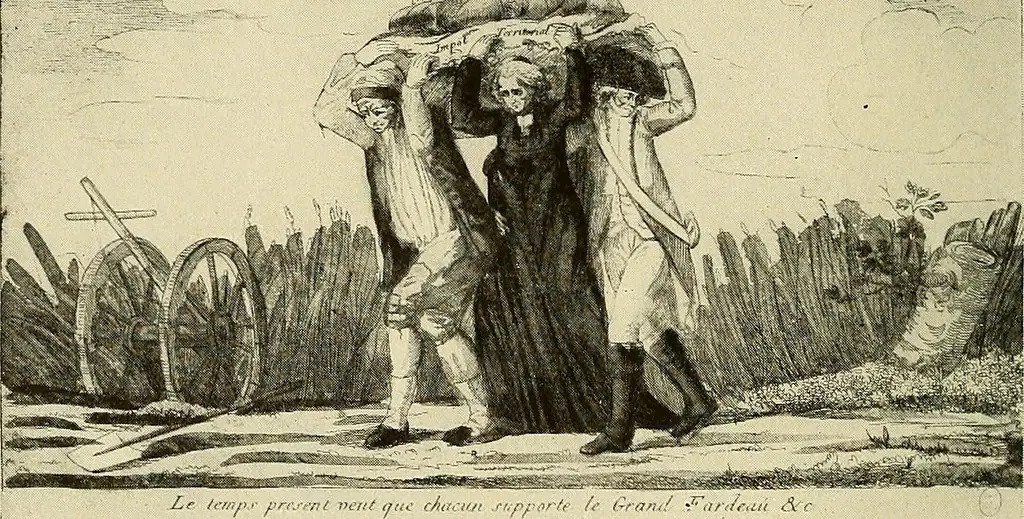
French Revolution: Who belonged in the third estate of France?
The clergy of the Roman Catholic Church
Wealthy nobles
Peasants and the bourgeoisie
Urban workers
French Revolution: How did King Louis permanently lose the faith of the French people?
He fired Necker
He attempted to flee
He recognized the National Assembly
He called foreign troops to suppress the revolution

French Revolution: What type of government did Napoleon create for France when he rose to power?
Democracy
Dictatorship
Autocracy
Consulate
French Revolution: Why did the people support Napoleon?
He strengthened the French economy
Restored order for the people
Improved the economy and created new industry
All of the above
He promoted equality before the law
Scientific Revolution: The belief that the earth is at the center of the universe.
Gravity
Geocentric
Scientific Revolution
Heliocentric
Scientific Revolution: Belief that the sun is at the center of the universe.
Gravity
Heliocentric
Scientific Revolution
Geocentric
Scientific Revolution: A new way of thinking about the physical world that led to modern science.
Gravity
Heliocentric
Scientific Revolution
Empiricism
Scientific Revolution: This person discovered the laws of motion, such as gravity.
Mr. Miller
Mr. Pig
Newton
Galileo
Kepler
Scientific Revolution: What powerful organization was threatened by the new discoveries of the Scientific Revolution?
The Church
Congress
The Ohio State Buckeyes
The Monarchy
Scientific Revolution: This word means to "get my name out of your mouth" or to take back something that you said.
Recant
Lie
Rapport
Retract
Industrial Revolution: This is a country where businesses can operate without the government having much of a say.
proletariat
Eli Whitney
laissez-faire
free market
Industrial Revolution: Economy where individuals, not the government, own and run the means of production.
bourgeoisie
Henry Ford
Alexander Graham Bell
Capitalism
Free market
Industrial Revolution: Economy in which the government owns and operates the factories and production.
Socialism
capital
farmers
Communism
Industrial Revolution: People leaving the countryside to live in cities and towns.
utilitarianism
entrepreneur
communism
urbanization
migration
Industrial Revolution: Which of the following helped Great Britain's farmers increase food production in the 1700s?
They learned about crop rotation.
They brought in a huge wave of immigrant farm workers.
They invented tractors and combines.
They began using new agricultural tools and techniques.
Industrial Revolution: Which of the following became an important source of power during the Industrial Revolution?
steam engine
animals
windmill
water wheel
Industrial Revolution: What about life during the Industrial Revolution supported Karl Marx's ideas?
There was a large amount of goods and resources available.
Just a few people were making all the money, but most people were still poor.
People had grown immunity to famine.
Working conditions in factories were harsh and unsafe for laborers.
Industrial Revolution: In the 1800s, where did the poor live in cities?
In tenements near the factories.
On the top floor of tall buildings. (Today this is sweet, but they had no elevators, so they had to use the stairs for everything!)
Outside the cities, in practically homeless camps.
In overcrowded boarding houses shared with multiple families.
Industrial Revolution: Most early factories were built near
rivers because they used the power of the current.
cities because they wanted the workers to be able to walk to work.
railways to move the products.
coal mines to have easy access to fuel for steam engines.
Industrial Revolution: What industry was the first to bring along the idea of the factory system?
Textile
glass production
steel
coal mining
Industrial Revolution: Who was most responsible for making changes in the workplace that benefited workers?
Politicians
City Planners
Unions
Social Reformers
Industrial Revolution: One problem the industrial working class poor had to face that we focused on was about the drinking water. What was it?
It was too expensive.
It was rarely available.
They had to collect their own water from gutters and rooftops.
The water was often contaminated because there were no rules in place to ensure safe water for the public.
Water sources were often located far from their homes, making access difficult.
Industrial Revolution: Which of the following is an effect of industrialization?
Rapid Urbanization
Gradual movement of people to the suburbs.
Shorter working days.
Increase in pollution levels.

Enlightenment: This was a place where people gathered to share ideas.
baroque
salon
social contract
coffeehouse
Enlightenment: an agreement where people give up some freedom to be a part of an organized society.
baroque
salon
social contract
constitution
Enlightenment: A group of leaders of the American Colonies had a big meeting to make decisions about the future of the Americas.
baroque
salon
social contract
Continental Congress
First Congress
Enlightenment: Main author of the Declaration of Independence.
John Lock
Thomas Jefferson
Denis Diderot
Benjamin Franklin
Enlightenment: Form of government where citizens rule through elected representatives.
Republic
Excommunication
Absolute Monarchy
Democracy
Enlightenment: The idea of checks and balances and separation of powers was put forward by...
Mary Wollstonecraft
Diderot
L. Miller
Montesquieu
John Locke
Enlightenment: The most drastic change in ideas expressed by women during this time was that women...
should not believe that mothering is the most important duty.
were not inferior to men.
should have equal pay for equal work.
should have access to education.
Enlightenment: French thinkers who believed that man could use reason to solve social problems.
Philosophes
Cesar Beccaria
Voltaire
Montesquieu
Enlightenment: Why did England need to raise taxes on the colonies?
The colonies were not raising enough income for England.
The King and his Queen were spending money like it was tax return season, getting new rims, new ink, and even some gold teeth!
The French & Indian War was costing lots and lots of money.
England needed to pay off debts incurred from previous wars.

