wayground logo

Free Printable Worksheets

Font size

S
M
L
XL
Worksheets

Biology Semester 1 Review

Total questions: 45

Worksheet time: 23mins

Name
Class
Date
1.

When does crossing-over occur?

a)

Prophase I of meiosis I

b)

Metaphase I of meiosis I

c)

Metaphase II of meiosis II

d)

Prophase II of meiosis II

2.

What is the result of crossing-over during meiosis?

a)

Infinite possibilities of genetic variation

b)

Random distribution of homologous chromosomes

c)

New combinations of genes on each chromosome

d)

Unique combinations of chromosomes in gametes

3.

What type of biomolecule is an enzyme?

a)

Carbohydrate

b)

Lipid

c)

Protein

d)

Nucleic Acid

4.

What is the primary function of enzymes in biological systems?

a)

To provide energy for reactions

b)

To speed up chemical reactions

c)

To store genetic information

d)

To transport molecules across cell membranes
5.
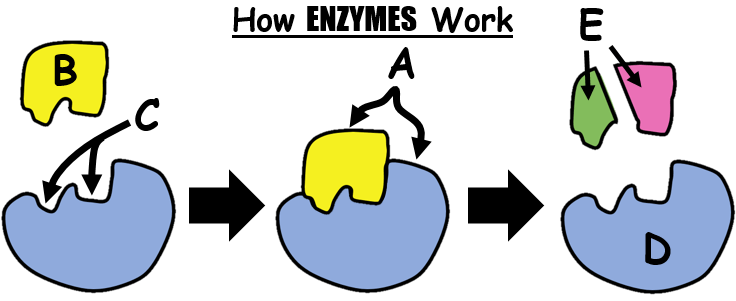
Letter E...
a)
active site
b)
enzyme
c)
substrate
d)
products
6.
Lipids are made up of which of the following?
a)
glycerol and fatty acids tails
b)
glycerol and monolipids
c)
fatty acids and phosolipids
d)
amino acids and nucleotides
7.
What is the monomer of nucleic acids?
a)
Glycerol
b)
Monosaccharides
c)
Amino Acids
d)
Nucleotides
8.
The monomer of a protein is called...
a)
an amino acid
b)
a monosaccharide
c)
a fatty acid
d)
a nucleotide
9.

Match the following functions to the biomolecule

a)

Act as hormones

1.

Lipid

b)

Build muscle

2.

Protein

c)

Carry genetic information

3.

Nucleic acid

d)

Energy source (cellular respiration)

4.

Carbohydrate

10.
What is the functions of lipids?
a)
Quick source of energy
b)
Builds muscles, skin, enzymes
c)
Stores genetic information
d)
Stores energy, insulation, protection
11.

Which of the following is the building block of Carbohydrates?

a)

Amino acids

b)

Fatty acids 

c)

Monosaccharides

12.

Viruses can only reproduce with the help of a ​ (a)   cell. This is another reason that viruses are not considered ​ (b)   things.

Choose from the below words
host
living
dead
13.
In what way are a virus and a bacteria similar?
a)
They contain antibodies
b)
They reproduce by mitosis
c)
They have identical genomes
d)
They lack membrane-bound organelles
14.
The process to go from DNA to mRNA is _______
a)
translation
b)
transcription
c)
replication
15.
The process to go from mRNA to a protein is called ____
a)
transcription
b)
rRNA
c)
replication
d)
translation
16.
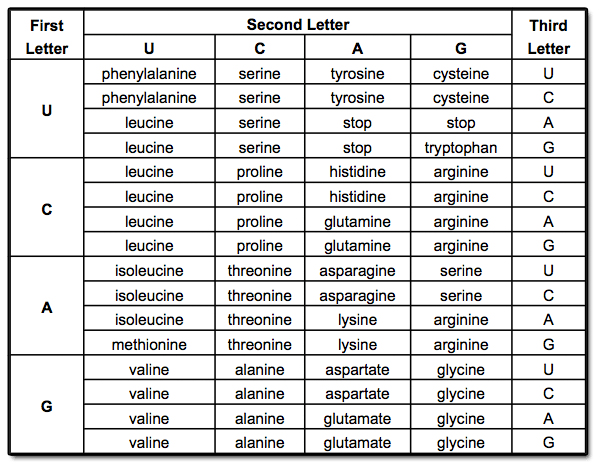
What amino acid is represented by the codon UUA?
a)
Phenylalanine
b)
Tyrosine
c)
Leucine
d)
Stop codon
17.
What is the location in the cell for translation?
a)
nucleus
b)
mitochondria
c)
ribosome
d)
chloroplast
18.

Where does TRANSCRIPTION occur?

a)

Nucleus

b)

Ribosome

c)

Cytoplasm

d)

Mitochondria

19.

In what phase of the cell cycle does DNA replication take place?

a)

G1

b)

S

c)

G2

d)

Prophase

20.

Why does DNA replicate?

a)

To create a duplicate copy in case the original gets damaged

b)

New cells will have a copy of the DNA

c)

To create a new copy to replace the damaged original

21.
This organelle creates energy.
a)
Nucleus
b)
Ribosome
c)
Mitochondria
d)
ER
22.
Where is DNA stored in a cell? 
a)
Lysosomes
b)
Golgi Complex
c)
Ribosomes
d)
Nucleus
23.
This organelle helps plants keep their rigid structure. 
a)
Cell wall
b)
Cell membrane
c)
Chloroplast
d)
Nucleus
24.
This organelle makes proteins. 
a)
Cell membrane
b)
Nucleus
c)
Ribosome
d)
ER
25.
Which organelle allows the cell to obtain items from outside the cell?
a)
Nuclear membrane
b)
Vacuole
c)
Cell Membrane
d)
Cell Wall
26.
Which is true of prokaryotic and eukaryotic cells?
a)
Prokaryotic cells are larger than eukaryotic cells.
b)
Eukaryotic cells do not have nuclei, and prokaryotic cells do have nuclei.
c)
Prokaryotic cells lack membrane-bound organelles, and eukaryotic cells contain membrane-bound organelles.
d)
Eukaryotic cells are simpler than prokaryotic cells.
27.

Which do BOTH prokaryotes and eukaryotes contain?

a)

nucleus

b)

mitochondria

c)

ribosomes

d)

cell wall

28.
Which of the following is not a characteristic of a Prokaryotic cell?
a)
unicellular
b)
floating DNA
c)
very small
d)
complex
29.
What is the longest stage of the cell cycle called?
a)
Cytokinesis
b)
M phase
c)
Interphase
d)
G1 Phase
30.
During what stage does the G1, S and G2 phases happen?
a)
Interphase
b)
M phase
c)
Mitosis
d)
Cytokinesis
31.
Put the following stages of mitosis in order: anaphase, prophase, metaphase, and telophase. 
a)
prophase, metaphase, telophase, anaphase
b)
prophase, anaphase, metaphase, telophase
c)
prophase, metaphase, anaphase, telophase
d)
prophase, telophase, metaphase, anaphase
32.
What phase is this cell in?
a)
Cytokinesis
b)
Mitosis
c)
Prophase
d)
Metaphase
33.
What phase is this cell in?
a)
Mitosis
b)
Interphase
c)
Anaphase
d)
Telophase
34.
What phase is this cell in?
a)
Mitosis
b)
Cytokinesis
c)
Prophase
d)
Telophase
35.
What part of the cell cycle is this cell in?
a)
Mitosis
b)
Interphase
c)
Telophase
d)
Cytokinesis
36.

A couple has three brown-eyed children. The parents are brown-eyed (Bb). The allele for brown eyes is dominant over the allele for blue eyes. They believe the fourth child they have will be blue-eyed. Which statement below explains what actually will happen?

a)

The couple will have a blue-eyed fourth child.

b)

The couple will have a brown-eyed fourth child.

c)

They have a 75% chance of having a blue-eyed child.

d)

They have a 25% chance of having a blue-eyed child.
37.

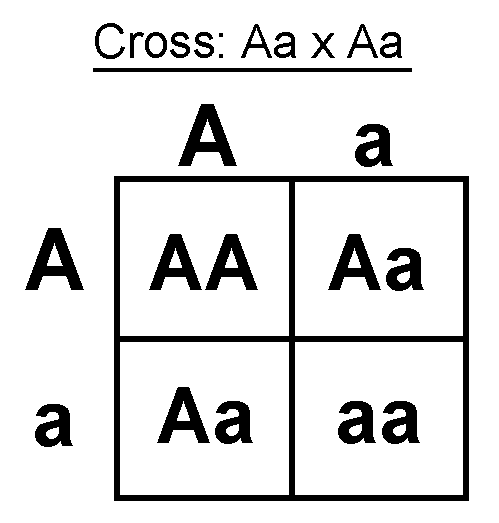
What is the genotypic ratio of the offspring?

a)

3 AA : 1 aa

b)

1 AA : 3 aa

c)

1 AA : 2 Aa : 1 aa

d)

2 AA : 2 aa

38.

Which organelle is responsible making food (Glucose) using sunlight?

a)

Cell Membrane

b)

Nucleus

c)

Chloroplast

d)

Mitochondria

39.

Select all that are products of Photosynthesis.

a)

Water

b)

Carbon Dioxide

c)

Oxygen

d)

Sunlight (Light Energy)

e)

Glucose (Sugar/food)

40.

Which of the following is the correct equation for PHOTOSYNTHESIS?

a)

light + carbon dioxide + water --> glucose + oxygen

b)

carbon dioxide + sugar + water --> oxygen + light

c)

oxygen + light + water --> carbon dioxide + sugar

d)

carbon dioxide + oxygen + water --> Light+ Sugar

41.

What mutation has occurred here?

T-G-A-C-C-A

T-G-A-G-C-A

a)

Substitution

b)

Deletion

c)

Insertion

d)

Frameshift

42.

DNA molecule segment is : TTACGCAAG

The mutated DNA segment is TTCGCAAG. This is an example of ___ mutation.

a)

Substitution

b)

Deletion

c)

Insertion

d)

Inversion

43.

Why are insertion and deletion (frameshift) mutations so harmful?

a)

They change all of the codons from the mutation on down the line, which changes the amino acid sequence

b)

They insert things that an organism doesn't need.

c)

They often delete things that organisms need.

d)

Insertion and deletions are not any more harmful than substitution mutations.

44.

Cancer is defined as the

a)

uncontrolled division of mutated cells

b)

normal division of cells

c)

normal DNA replication

d)

abnormal ATP synthesis

45.
Cancer creates abnormal cells by disrupting
a)
the cell cycle
b)
red blood cell formation
c)
DNA replication
d)
ATP synthesis