
 Worksheets
Company Auditor Qualifications Quiz
Total questions: 66
Worksheet time: 33mins
What is the mandatory qualification for a company auditor under Section 141 of the Companies Act, 2013?
Must be a qualified lawyer
Must be a qualified chartered accountant
Must be a certified financial analyst
Must be a registered company secretary
Who is defined as a Chartered Accountant under the Chartered Accountants Act, 1949?
A member of the Institute of Chartered Accountants of India with a valid certificate of practice
A member of the Bar Council of India
A graduate in commerce with a specialization in accounting
A certified financial planner
Who is authorized to act and sign on behalf of a partnership firm acting as a company auditor?
Any partner of the firm
Only partners who are chartered accountants
The senior-most partner of the firm
A partner with a degree in finance
What is the eligibility criterion for partners in an LLP to act on behalf of the LLP as a company auditor?
All partners must be lawyers
Only partners who are chartered accountants can act
Any partner with a degree in commerce can act
The LLP must have at least one partner who is a certified financial analyst
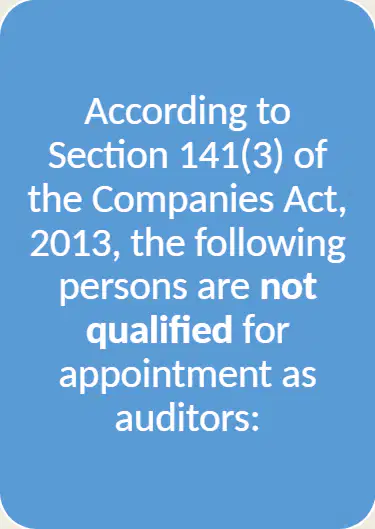
According to Section 141(3) of the Companies Act, 2013, which of the following is NOT qualified for appointment as an auditor?
An LLP registered under the LLP Act, 2008
A person indebted to the company for an amount exceeding ₹5,00,000
An officer or employee of the company
A person who has provided a guarantee exceeding ₹1,00,000 in relation to the indebtedness of a third person to the company

Which type of body corporate is exempted from disqualification under Section 141(3) of the Companies Act, 2013?
Any body corporate registered under the Companies Act, 2013
Any LLP registered under the LLP Act, 2008
Any private limited company
Any public limited company
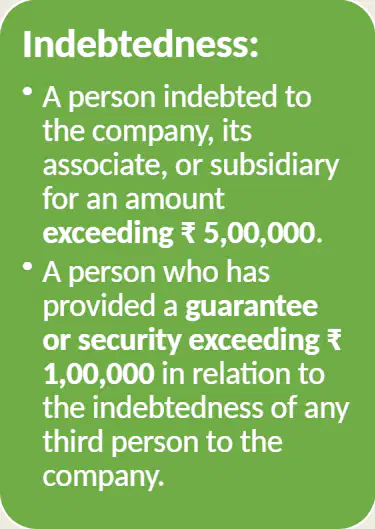
What is the monetary threshold for disqualification due to indebtedness under Section 141(3) of the Companies Act, 2013?
₹1,00,000
₹5,00,000
₹10,00,000
₹50,000
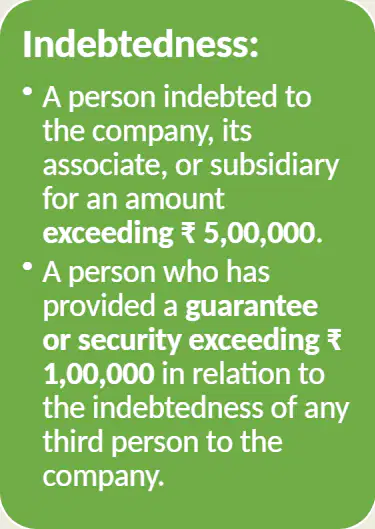
Under Section 141(3) of the Companies Act, 2013, a person providing a guarantee or security exceeding what amount is disqualified from being appointed as an auditor?
₹50,000
₹1,00,000
₹5,00,000
₹10,00,000
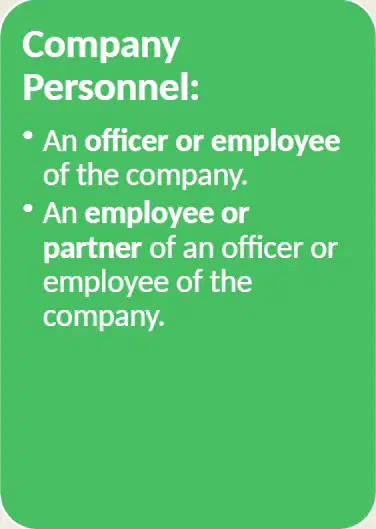
Which of the following personnel is disqualified from being appointed as an auditor under Section 141(3) of the Companies Act, 2013?
An employee or partner of an officer of the company
A shareholder of the company
A consultant hired by the company
A vendor providing services to the company

Which of the following is a disqualification for a company auditor under "Security/Interest Holding"?
Holding security or interest in the company or its subsidiaries.
Conviction of fraud within the last 5 years.
Being an auditor for more than 10 companies.
Disqualification due to reasons unrelated to the company.
What is the maximum number of companies an auditor can audit before being disqualified under "Exceeding Audit Limit"?
15 companies.
20 companies.
25 companies.
30 companies.

Under "Fraud Conviction," what is the minimum period that must elapse after a fraud conviction for a person to not be disqualified as an auditor?
5 years.
7 years.
10 years.
12 years.

Which of the following describes "Related Disqualification" for a company auditor?
Disqualification due to holding security in the company.
Disqualification due to exceeding the audit limit.
Disqualification due to reasons applicable to the holding company or its subsidiaries.
Disqualification due to fraud conviction within the last 10 years.
What happens to an auditor who becomes disqualified after their appointment?
They continue their role until the next audit cycle.
They are deemed to have vacated their office.
They are given a grace period to resolve the disqualification.
They are fined but allowed to continue auditing.

Who is responsible for the initial appointment of the first auditor of a newly started company?
Shareholders
Board of Directors
Government Authorities
External Auditors

Within how many days must the Board of Directors appoint the first auditor after the company's registration?
15 days
30 days
60 days
90 days

If the Board of Directors fails to appoint the first auditor, who is responsible for the appointment, and within what timeframe?
Shareholders, within 60 days
Shareholders, within 90 days
Board of Directors, within 90 days
Government Authorities, within 30 days

Until when does the first auditor hold office after their appointment?
Until the second Annual General Meeting (AGM)
Until the first Annual General Meeting (AGM)
Until the end of the financial year
Until the next Extraordinary General Meeting (EGM)

What is required from the auditor before every appointment under Section 141?
A verbal agreement
A written consent and a certificate confirming eligibility and qualifications
A letter of recommendation
A financial guarantee
Who appoints subsequent auditors in a company (other than a government company) as per Sec. 139(1)?
The Board of Directors
The shareholders of the company
The Chief Financial Officer
The Ministry of Corporate Affairs
What is the tenure of an auditor appointed at an Annual General Meeting (AGM)?
Until the next AGM
Up to the conclusion of the 6th Annual General Meeting
For a period of 3 years
Until the company decides otherwise
What must the company do regarding the appointment of subsequent auditors at every AGM?
Obtain approval from the Ministry of Corporate Affairs
Present the matter for ratification by members
Issue a public notice
Conduct a special audit
Which of the following is NOT a pre-appointment requirement for subsequent auditors?
The auditor must be eligible and not disqualified under the Act
The proposed appointment must be within the limit of 20 company audits
The proposed appointment must be within the permissible term
The auditor must have prior experience in government audits
What is the maximum number of company audits allowed for a proposed auditor under the pre-appointment requirements?
10 company audits
15 company audits
20 company audits
25 company audits

What is the permissible term for the proposed appointment of an auditor as per the pre-appointment requirements?
3 or 6 years
5 or 10 years
7 or 12 years
4 or 8 years

What is the maximum time frame within which an intimation of appointment must be given to the auditor?
10 days
15 days
20 days
30 days

Who must the notice of appointment be filed with, according to the document?
The Ministry of Finance
The Registrar of Joint Stock Companies
The Auditor General
The Board of Directors

What action must a new auditor take in case of a change in auditor?
File a report with the company
Communicate with the previous auditor to inquire about professional reasons for not accepting the appointment
Submit a certificate of appointment to the Registrar
Notify the shareholders of the company

What must be disclosed in the certificate regarding the auditor?
The auditor's qualifications
The list of proceedings against the auditor pending with respect to professional matters or conduct
The auditor's previous appointments
The auditor's salary details
At the conclusion of which Annual General Meeting (AGM) does an appointed auditor retire?
5th AGM
6th AGM
7th AGM
8th AGM
What is the maximum term an individual auditor can serve in the same company before becoming ineligible for re-appointment?
3 years
4 years
5 years
6 years
An audit firm is not eligible for re-appointment if it has completed how many terms of 5 consecutive years?
1 term
2 terms
3 terms
4 terms
What happens if a special resolution is passed at the meeting appointing another person?
The retiring auditor is automatically re-appointed.
The retiring auditor cannot be re-appointed.
The retiring auditor can still be re-appointed if they meet other conditions.
The retiring auditor must serve one more term.

What action must a company take if no auditor is appointed or re-appointed at an Annual General Meeting (AGM)?
The company must appoint an auditor itself.
The company must notify the Central Government.
The company must dissolve the AGM.
The company must hire an external consultant.

What happens if no auditor is appointed or re-appointed at an AGM due to some reasons?
The company must appoint a new auditor immediately.
The Central Government will appoint an auditor.
The existing auditor shall continue to be the auditor of the company.
The company must hold another AGM to appoint an auditor.

Who has the authority to appoint an auditor if the company fails to do so at an AGM?
The Board of Directors.
The shareholders.
The Central Government.
The company secretary.

Under what circumstances does the existing auditor continue to serve as the auditor of the company?
When the company decides to retain the auditor.
When no auditor is appointed or re-appointed at an AGM due to some reasons.
When the Central Government intervenes.
When the shareholders vote for the existing auditor.
What does a casual vacancy of an auditor mean?
A vacancy arising in the office of an auditor before the expiry of their term in the normal course.
A vacancy arising due to the resignation of the auditor only.
A vacancy arising after the expiry of the auditor's term.
A vacancy arising due to the appointment of a new auditor.
Who can fill a casual vacancy due to resignation of an auditor?
The shareholders.
The Board of Directors.
The members of the company.
The external auditors.
Within how many days must the Board of Directors fill a casual vacancy due to resignation?
15 days.
30 days.
45 days.
60 days.
What is required for the appointment of an auditor in a casual vacancy due to resignation?
Approval by the shareholders within 6 months.
Approval by the members within 3 months.
Approval by the Board of Directors within 1 month.
Approval by the external auditors within 2 months.
What is the tenure of an auditor appointed in a casual vacancy?
Until the conclusion of the next Annual General Meeting.
Until the end of the financial year.
Until the resignation of the next auditor.
Until the approval of the shareholders.
Who can fill a casual vacancy other than resignation?
The shareholders.
The Board of Directors.
The members of the company.
The external auditors.
Within how many days must the Board of Directors fill a casual vacancy other than resignation?
15 days.
30 days.
45 days.
60 days.

Who is primarily responsible for appointing the first auditor for a government company under Sec. 139(7)?
Comptroller and Auditor-General of India (CAG)
Board of Directors (BOD)
Members at an Extraordinary General Meeting
Central Government

Within how many days must the Comptroller and Auditor-General of India (CAG) appoint the first auditor for a government company?
30 days
60 days
90 days
45 days

If the Comptroller and Auditor-General of India (CAG) fails to appoint the first auditor, who is responsible for appointing the auditor within the next 30 days?
Members at an Extraordinary General Meeting
Board of Directors (BOD)
Central Government
State Government

If the Board of Directors (BOD) fails to appoint the first auditor, who is responsible for appointing the auditor within 60 days at an Extraordinary General Meeting?
Comptroller and Auditor-General of India (CAG)
Members
Central Government
State Government

What is the tenure of the first auditor appointed for a government company under Sec. 139(7)?
Till the conclusion of the first Extraordinary General Meeting
Till the conclusion of the first Annual General Meeting
Till the conclusion of the second Annual General Meeting
Till the conclusion of the first Board Meeting
Who is responsible for appointing auditors for government companies under Sec. 139(5)?
The Board of Directors of the company
The Comptroller and Auditor General of India
The Ministry of Finance
The shareholders of the company
What is the general ceiling limit for undertaking audit assignments under Section 141 of the Companies Act, 2013?
Not more than 10 companies per person
Not more than 20 companies per person
Not more than 30 companies per person
Not more than 50 companies per person
How is the ceiling limit for audit assignments calculated for audit firms under Section 141(3)(g)?
It is divided by the number of partners
It is multiplied by the number of partners
It is subtracted by the number of partners
It remains the same regardless of the number of partners
Which of the following companies are exempted from the ceiling limit for audit assignments?
Private Limited Companies with paid-up capital less than ₹ 50 crores
Small Companies with turnover up to ₹ 5 crore
One Person Companies
Public Limited Companies with paid-up capital less than ₹ 100 crores
What is the maximum turnover limit for a Small Company to be exempted from the ceiling limit for audit assignments?
₹ 1 crore
₹ 2 crore
₹ 5 crore
₹ 10 crore
What is the maximum paid-up capital limit for a Private Limited Company to be exempted from the ceiling limit for audit assignments?
₹ 50 crores
₹ 75 crores
₹ 100 crores
₹ 150 crores
Diagram showing the ceiling limit for audit assignments under Section 141(3)(g) of the Companies Act, 2013, including general limits, audit firm calculations, and exemptions for specific companies.
The diagram illustrates the ceiling limit for audit assignments as 20 companies per individual auditor, with exemptions for one person companies, dormant companies, small companies, and private companies having paid-up share capital less than Rs. 100 crore.
The diagram shows that an auditor can take unlimited audit assignments under Section 141(3)(g), with no exemptions for any company type.
The diagram indicates that the ceiling limit for audit assignments is 50 companies per audit firm, with no calculation for individual auditors and no exemptions.
The diagram presents that the ceiling limit for audit assignments is 10 companies per auditor, with exemptions only for listed companies.
Under Section 143 of the Companies Act, 2013, what right does an auditor have regarding access to books of accounts?
The right to partial access to books of accounts.
The right to free and complete access to books, accounts, and vouchers of the company.
The right to access only records kept at the Head Office.
The right to access books of accounts only during audits.
What does the right to obtain information and explanation from officers allow an auditor to do?
Request information only from the Head Office.
Demand any information and explanation necessary for performing their duties.
Access information only during financial audits.
Request explanations only from senior officers of the company.
Where can an auditor access records under the right of access to books of accounts?
Only at the Head Office.
Only at branch offices.
At the Head Office or elsewhere.
Only during annual audits.
What right does an auditor have regarding notices and communications related to General Meetings?
The right to ignore notices and communications related to General Meetings
The right to receive notices and communications related to General Meetings, similar to a company member
The right to delegate the receipt of notices to another person
The right to attend General Meetings without receiving notices
What is the auditor entitled to do during a General Meeting?
Leave the meeting without participating
Be heard on any business concerning them as an auditor
Only observe the meeting without speaking
Make decisions on behalf of the company
What right does an auditor have if they find the accounts prepared by the directors to be incorrect?
The right to ignore the incorrect accounts
The right to correct the accounts
The right to report the issue to shareholders only
The right to request a new meeting to discuss the accounts
What can an auditor do if a wrong statement is made by the directors in connection with the company's accounts during a General Meeting?
Ignore the statement
Correct the wrong statement
Request the directors to clarify the statement without correcting it
Postpone the meeting to address the issue later
What is the auditor's right regarding visiting branches of a company where the branch accounts are not audited by a duly qualified auditor?
The auditor has no right to visit the branches.
The auditor has the right to visit the branches and access the books of accounts and vouchers.
The auditor can only visit foreign branches.
The auditor can visit branches only with prior approval from the Head Office.
What is the exception to the auditor's right to visit branches?
The auditor can visit foreign branches of a banking company.
The auditor has no right to visit foreign branches of a banking company but can access all returns sent to the Head Office.
The auditor can visit foreign branches only with special permission.
The auditor has unrestricted access to foreign branches.
Under what condition can an auditor refuse to commence audit work?
If the management fails to provide legal advice
If the management does not balance the books of accounts
If the auditor does not receive remuneration
If the auditor is not provided technical advice

