
 Worksheets
Health and Safety Training Quiz
Total questions: 37
Worksheet time: 19mins
When should induction training in health and safety be taken?
On commencement or transferring departments.
Only once at the start of employment.
Whenever spare time is available.
Once a year if time permits.
Which of the following are environmental causes of accidents?
Overcrowding, inadequate ventilation and badly-lit workplace.
Badly-lit workplace, lack of training and faulty tooling.
Unguarded machines, lack of experience and dirty benches.
Inadequate ventilation, housekeeping and faulty machinery.
What is the main legislation relating to wellbeing of all employees?
British Standards.
Factories Act.
Health and Safety at Work Act.
Public Health Acts.
Where can the appropriate first aid procedures for a hazardous substance always be found?
An invoice.
A job card.
A data sheet.
A delivery note.
Hazardous substances can be eliminated on which of the following occasions?
If it is the last line of defence.
If it is the best possible option.
If they are affecting production.
If they are not necessary.
What must a company do before introducing a hazardous substance into the workplace?
Carry out a risk assessment
Service the fire extinguishers
Use it in small amounts to begin with
Ensure there is a COSHH storage area
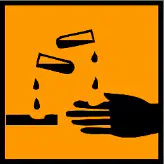
What is the symbol shown identifying/alerting the worker to about a substance?
It is corrosive
It is harmful
It is toxic
It is explosive
What is the best means of preventing exposure to a harmful substance in the workplace?
Enclose the process
Provide correct PPE
Isolate the worker
Remove the source
What is the role of a health and safety representative in a furniture company?
Discipline staff who fail to work safely
Raise staff concerns about health and safety issues
Find ways to avoid health and safety legal requirements
Always disagree with management policy on health and safety
Who has the responsibility of an employee whilst they are at work?
Only the manager
Only the Supervisor
Just the owners of the business
Everyone working at the company
Which is the safest way to extinguish an electrical fire?
Sprinkler system
Water extinguisher
Foam extinguisher
Carbon dioxide extinguisher
What must employees do when they hear the fire alarm?
Lock all doors behind them
Move calmly to the assembly point
Collect all your personal belongings
Isolate all electrical equipment
Which of the following people must be given special attention under Manual Handling Regulations?
Left-handed
Self-employed
Pregnant
Uninsured
Companies analyse accident statistics to?
Show every accident that occurs
Highlight areas that require action
Calculate cost incurred on loss of production
Report to rate of injuries to management
What is the current stopping time under PUWER for a woodworking machine?
8 seconds
10 seconds
12 seconds
15 seconds
What is the correct way to store COSHH substances?
In a labelled container
Left out within the workshop
In a cabinet within the workshop
Any type of container will suffice
What is the correct method an operator should adopt to lift materials using a pallet truck?
Push one leg under the pallet
Tie the components to the legs
Position it centrally under the pallet
Rest the components between the legs
When must defects in work equipment be reported?
Immediately after they are discovered
By the end of each day
At routine safety committee meetings
Following an accident
What is the first step to be taken when dealing with an electric shock?
Pull the person away from the danger
Switch off the power supply
Apply first aid
Report the accident
In which of the following situations must personal protective equipment/clothing be worn?
An individual needs to be kept warm
An individual wants to wear it
If specified by a risk assessment
If not specified by a risk assessment

Which one of the following signs means that eye protection must be worn?
Head protection sign
Helmet sign
Foot protection sign
Eye protection sign
What types of fire extinguishers are safe to use on electrical type fires?
Water & Foam
Carbon dioxide, water and powder
Powder and carbon dioxide
Foam, carbon and water
Which of the following is not the correct procedure when cleaning machines?
Isolate and lock off
Display signage
Use proper cleaning tools
Operate the machine while cleaning
Which one of the following must not be used to remove dust from overalls?
Vacuum cleaner
Soapy water
Dry cleaning
Compressed air
What action must be taken regarding portable electrical tools that have a damaged cable?
Be used with care
Be taped over
Be labelled and removed from operation
Be used until the job is finished
Whose responsibility is it to conduct the risk assessments?
The fire authority
The insurance companies
The employer
The fire wardens
Which legislation relates to the reporting of injuries?
RIDDOR
HASAWA
PPE
COSHH
Which one of the following signs means that smoking is prohibited?
No smoking sign
Smoking area sign
Fire exit sign
Hazard warning sign
On identifying a hazard, what should be the correct procedure to follow?
Discuss with colleagues
Deal with the incident
Report it to a senior person
Leave for someone else to sort out
Which of the following combinations and regulations covers the use of powered machinery?
Health & Safety at Work Act and Portable Appliance Testing Regulations
Health & Safety at Work Act and Provision and Use of Work Equipment Regulations
Electricity at Work Regulations and Portable Appliance Testing Regulations
Provision and Use of Work Equipment Regulations and Control of Substances Hazardous to Health
When should respirators be worn when using hazardous substances?
At all times
Only when informed by the supervisor
As per data sheet
When working in confined spaces
Which of the following is affected by occupational asthma, which can end working life?
Breathing
Moving
Hearing
Seeing
Under the Fire Safety Regulations, what is not the responsibility of the employer?
Provide safe means of escape
Fire risk assessments
Nominate competent people
Issuing a fire certificate
How do operators receive Personal Protection Equipment? They must
Be provided with an allowance
Receive training in the use of the equipment
Sign to show they have received the equipment
Sign to show they know how to use the equipment
Why is a risk assessment carried out on equipment?
To ensure equipment is well maintained
To determine the ‘wear and tear’ of equipment
To ensure equipment is safe and meets requirement
To check the equipment is in working order
With reference to a risk assessment, which one of the following could be described as a hazard?
Failure to display safety signs
Anything with the potential that could cause harm
Possessing no nearby canteen facilities
Keeping flammable materials in a locked store
What is an employer **not** required to do by law?
Undertake risk assessments
Undertake manual handling assessments
Undertake COSHH assessments
Undertaking reporting of all injuries to HSE

