
 Worksheets
Week 1
Total questions: 100
Worksheet time: 50mins
Which of the following molecules acts as an opsonin to enhance phagocytosis but is not an antibody?
C3b
C5a
IL-1
TNF-alpha
A defect in NADPH oxidase in phagocytes leads to which of the following conditions, characterized by susceptibility to catalase-positive organisms?
Chediak-Higashi syndrome
Chronic Granulomatous Disease (CGD)
Leukocyte Adhesion Deficiency
Severe Combined Immunodeficiency (SCID)
Which Toll-like Receptor (TLR) is located in the endosome and specifically recognizes unmethylated CpG DNA typical of bacteria and viruses?
TLR-2
TLR-4
TLR-5
TLR-9
In the Alternative Pathway of the complement system, which molecule stabilizes the C3 convertase (C3bBb) complex on microbial surfaces?
Factor H
Factor I
Properdin
C1 inhibitor
Which cytokine is primarily responsible for inducing the differentiation of naive T cells into Th1 cells?
IL-4
IL-12
IL-10
IL-17
Natural Killer (NK) cells are inhibited from killing a target cell when their killer-cell immunoglobulin-like receptors (KIRs) bind to:
Viral antigens on the surface
MHC Class I molecules
MHC Class II molecules
Phosphatidylserine
Somatic hypermutation occurs in which region of the antibody gene loci?
Constant (C) regions of heavy chains only
Variable (V) regions of heavy and light chains
Recombination signal sequences (RSS)
The hinge region
Which transcription factor is the "master regulator" for the development of Regulatory T cells (Tregs)?
T-bet
GATA-3
ROR-gamma-T
FoxP3
The process of "Positive Selection" in the thymus ensures that T cells:
Do not recognize self-antigens with high affinity
Recognize MHC molecules with moderate affinity
Express both CD4 and CD8 surface markers
Undergo apoptosis if they bind self-peptide too strongly
Class switching of antibodies requires the interaction of CD40 on the B cell with CD40L (CD154) on the T cell. A defect in this interaction results in:
Hyper-IgM Syndrome
IgA Deficiency
DiGeorge Syndrome
Wiskott-Aldrich Syndrome
Which complement component forms the pore-forming subunit of the Membrane Attack Complex (MAC)?
C5b
C8
C9
C6
Endogenous antigens (e.g., viral proteins synthesized within the cell) are primarily processed by the _________, and presented on _________.
Lysosome; MHC Class II
Proteasome; MHC Class I
Proteasome; MHC Class II
Lysosome; MHC Class I
Which of the following cells is a Professional Antigen Presenting Cell (APC) that is unique in its ability to activate naive T cells?
Macrophage
B cell
Dendritic Cell
Neutrophil
The diversity of the T-cell receptor (TCR) is generated by V(D)J recombination. Which enzymes are directly responsible for the DNA cleavage at Recombination Signal Sequences (RSS)?
TdT (Terminal deoxynucleotidyl transferase)
Artemis
RAG1 and RAG2
DNA Ligase IV
Th17 cells are distinct from Th1 and Th2 lineages and are primarily involved in the defense against:
Intracellular bacteria and viruses
Helminthic parasites
Extracellular bacteria and fungi
Tumor cells
Which immunoglobulin isotype acts as the primary defense at mucosal surfaces and exists primarily as a dimer in secretions?
IgG
IgM
IgA
IgE
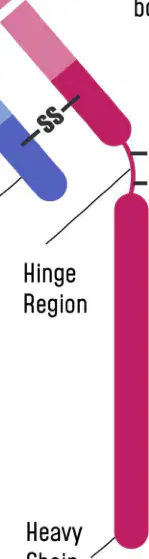
The "Hinge Region" of an antibody is most prominent in which isotypes, providing flexibility for binding antigens?
IgM and IgE
IgG, IgA, and IgD
IgM and IgA
IgE and IgG
Which phenomenon explains why the secondary immune response produces antibodies with higher affinity for the antigen than the primary response?
Isotype switching
Clonal expansion
Affinity maturation
Allelic exclusion
A "Hapten" is defined as:
A molecule that can induce an immune response on its own.
A small molecule that is antigenic but not immunogenic unless bound to a carrier protein.
A viral superantigen that activates T cells nonspecifically.
An adjuvant used in vaccines.
Which antibody isotype can cross the placenta and provide passive immunity to the fetus?
IgA
IgM
IgG
IgE
The idiotype differences between antibodies are located in the:
Constant domains of the heavy chain
Constant domains of the light chain
Hypervariable regions (CDR) of the variable domains
Hinge region
Pepsin digestion of an IgG molecule yields:
Two Fab fragments and one Fc fragment
One F(ab')2 fragment and fragmented Fc peptides
Two heavy chains and two light chains
One Fab fragment and one Fc fragment
Which of the following forces is NOT involved in the non-covalent binding of an antigen to an antibody?
Disulfide bonds
Hydrogen bonds
Van der Waals forces
Electrostatic forces
The J chain is a polypeptide found in which polymeric immunoglobulins?
IgG and IgA
IgM and IgE
IgM and IgA
IgD and IgM
The term "Avidity" refers to:
The strength of a single antigen-antibody bond.
The specificity of an antibody for its antigen.
The accumulated strength of multiple affinities of individual binding interactions.
The rate of association between antigen and antibody.
Which immunoglobulin is present in the lowest concentration in normal serum?
IgD
IgE
IgM
IgA
Monoclonal antibodies are produced by hybridoma cells, which are a fusion of:
A normal B cell and a cancerous myeloma cell
A normal T cell and a B cell
A macrophage and a myeloma cell
Two different plasma cells
Superantigens (like TSST-1) cause a massive cytokine storm by:
Binding to the peptide-binding groove of MHC Class I.
Cross-linking the MHC Class II molecule and the TCR variable beta (Vβ) region outside the peptide groove.
Strongly activating B cells without T cell help.
Mimicking the CD28 co-stimulatory signal.
Which part of the antibody molecule dictates its biological function (e.g., complement fixation, binding to cell surface receptors)?
Fab region
Fc region
Variable region
CDRs
Allotypes represent:
Differences in the constant regions of antibodies between individuals of the same species.
Differences between antibody classes (e.g., IgG vs IgM).
Differences in the variable regions specific to an antigen.
Differences between species.
The H antigen is the precursor for A and B antigens. Which sugar is added to the H substance to create the A antigen?
D-Galactose
L-Fucose
N-acetylgalactosamine
N-acetylglucosamine
A patient with the "Bombay Phenotype" (Oh) lacks the FUT1 gene and cannot make H substance. What is their ABO status?
They type as Group O but have potent anti-H antibodies.
They type as Group AB but cannot receive AB blood.
They type as Group O and can receive standard O negative blood.
They express weak A and B antigens.
The "D" antigen in the Rh system is highly immunogenic. Which of the following genotypes would result in a D-negative phenotype?
RHD / RHD
RHD / rhd (deletion)
rhd (deletion) / rhd (deletion)
RHDpseudogene / RHD
In Hemolytic Disease of the Newborn (HDN), ABO incompatibility protects against Rh sensitization because:
A. A/B antibodies suppress the mother's immune system.
B. Fetal RBCs are destroyed by maternal anti-A/anti-B before the mother's immune system
The lectin Dolichos biflorus is used to distinguish between:
Group A1 and Group A2 red cells
Group O and Group A red cells
Rh positive and Rh negative cells
Secretors and Non-secretors
Intravascular hemolysis in an acute hemolytic transfusion reaction is most commonly mediated by:
IgG antibodies and splenic sequestration
IgM antibodies activating complement to C9
IgA antibodies causing anaphylaxis
T-cell mediated cytotoxicity
The "Secretor" status (Se gene) determines the presence of ABH antigens in body fluids. The Se gene codes for which enzyme?
Alpha-2-L-fucosyltransferase (FUT1)
Alpha-3-N-acetylgalactosaminyltransferase
Alpha-2-L-fucosyltransferase (FUT2)
Beta-1-3-galactosyltransferase
Which of the following Rh antigens is generally considered the most immunogenic after D?
A. C
B. c
C. E
D. e
A patient has the genotype DCe/dce. Using Weiner nomenclature, how is this expressed?
A. R1r
B. R2r
C. R0r
D. RzR1
Forward grouping in ABO typing determines ________, while reverse grouping determines ________.
Antibodies in serum; Antigens on RBCs
Antigens on RBCs; Antibodies in serum
Rh status; ABO status
Genotype; Phenotype
Why are ABO antibodies (Anti-A, Anti-B) generally clinically significant while many other naturally occurring antibodies are not?
They are IgG and cross the placenta.
They are IgM, activate complement at body temperature (37°C), and cause rapid intravascular hemolysis.
They are only active at cold temperatures (4°C).
They are formed only after transfusion.
The "Partial D" phenotype is significant because:
These patients type as D-negative but can receive D-positive blood.
These patients type as D-positive but can form anti-D antibodies if transfused with D-positive blood.
It is the same as "Weak D" and requires no special considerations.
It causes spontaneous agglutination.
Which antibody is most often implicated in severe delayed hemolytic transfusion reactions?
Anti-A
Anti-Jk(a) (Kidd system)
Anti-D
Anti-Le(a) (Lewis system)
To prevent Rh sensitization, Rh-immune globulin (RhoGAM) is administered to:
Rh-positive mothers carrying an Rh-negative fetus.
Rh-negative mothers carrying an Rh-positive fetus.
Rh-negative mothers carrying an Rh-negative fetus.
All pregnant women regardless of blood type.
Which of the following is true regarding the weak D phenotype?
It implies a qualitative difference in the D antigen structure.
It is caused by a quantitative reduction in the number of D antigen sites.
These individuals frequently make anti-D.
It is always detected by immediate spin testing.
Mixed Field Agglutination in ABO typing is most characteristically seen in:
A. A Group O patient transfused with Group O red cells.
B. A Group A patient recently transfused with Group O red cells.
C. A newborn baby.
D. A patient with autoimmune hemolytic anemia.
The Fisher-Race theory of Rh inheritance proposes:
One gene codes for an agglutinin with three factors.
Three closely linked loci (D, C, E) are inherited as a haplotype.
Rh antigens are independent and on different chromosomes.
Only the D antigen is genetically determined.
An individual with Group AB blood:
Has Anti-A and Anti-B in their plasma.
Has no ABO antigens on their red cells.
Lacks ABO antibodies in their plasma.
Is the "universal donor" for packed red blood cells.
Which of the following antibodies typically reacts best at room temperature or lower (Immediate Spin)?
Anti-D
Anti-K (Kell)
Anti-M
Anti-Fy(a) (Duffy)
If a mother is Group O and the baby is Group A, why is ABO Hemolytic Disease of the Newborn usually mild compared to Rh HDN?
Fetal RBCs have poorly developed A antigens and other tissues absorb the antibody.
Maternal Anti-A is always IgM and cannot cross the placenta.
The fetus does not express A antigens until birth.
Group O mothers do not produce high titers of Anti-A.
Which intracellular Pattern Recognition Receptor (PRR) is specifically responsible for sensing viral RNA in the cytoplasm and triggering Type I Interferon production?
NOD-like receptors (NLRs)
RIG-I-like receptors (RLRs)
C-type Lectin receptors (CLRs)
Toll-like receptor 4 (TLR-4)
The interaction between LFA-1 on the T cell and ICAM-1 on the Antigen Presenting Cell (APC) is stabilized by:
The binding of the T-cell receptor to MHC.
Chemokine signaling changing LFA-1 from a low-affinity to a high-affinity state.
Release of IL-2.
Downregulation of CD28.
Complement regulatory proteins act by preventing the formation of the Membrane Attack Complex (MAC) on host cells by binding to the C5b-8 complex?
Decay Accelerating Factor (DAF/CD55)
Membrane Cofactor Protein (MCP/CD46)
CD59 (Protectin)
C4 binding protein
Cross-presentation allows Dendritic Cells to:
Present extracellular antigens on MHC Class I molecules to CD8+ T cells.
Present intracellular antigens on MHC Class II molecules to CD4+ T cells.
Activate B cells without T cell help.
Present lipids via CD1 molecules.
A mutation in the FOXP3 gene results in IPEX syndrome. The primary immunological defect in this condition is:
Inability to generate IgG antibodies.
Absence of Natural Killer cells.
Lack of functional Regulatory T (Treg) cells leading to autoimmunity.
Failure of T cell positive selection in the thymus.
Which cytokine is the signature cytokine of Th2 cells and is essential for B cell class switching to IgE?
IFN-gamma
IL-4
IL-17
TGF-beta
DiGeorge Syndrome results from a defect in the development of the third and fourth pharyngeal pouches. This leads to immunodeficiency primarily due to:
Aplasia or hypoplasia of the thymus.
Lack of bone marrow stem cells.
Defective B cell maturation in the spleen.
Absence of complement components.
The "Respiratory Burst" in neutrophils produces reactive oxygen species (ROS). The enzyme myeloperoxidase (MPO) uses hydrogen peroxide and chloride ions to specifically generate:
Superoxide anion
Hypochlorous acid (bleach)
Nitric oxide
Hydroxyl radicals
Follicular helper (Tfh) cells are required for germinal center formation. Which chemokine receptor do they characteristically express to migrate into the B-cell follicles?
A. CCR7
B. CXCR5
C. CXCR4
D. CCR5
In the classical complement pathway, C1q binds to which portion of the antibody molecule?
The Fab region
The CH2 domain of the Fc region
The Hinge region
The Variable region
M1 Macrophages (classically activated) differ from M2 Macrophages (alternatively activated) in that M1 cells:
Promote tissue repair and fibrosis.
Secrete high levels of IL-10.
Utilize Arginase to metabolize arginine.
Produce high levels of iNOS and pro-inflammatory cytokines like IL-12.
Defects in the TAP1 or TAP2 transporter proteins would most severely affect:
MHC Class II antigen presentation.
MHC Class I surface expression and antigen presentation.
Antibody secretion by plasma cells.
Phagocytosis by neutrophils.
Which molecule serves as the "surrogate light chain" during the Pre-B cell stage of B cell development?
A. VpreB and lambda-5
B. Ig-alpha and Ig-beta
C. RAG-1 and RAG-2
D. TdT
The phenomenon of "Allelic Exclusion" ensures that:
A B cell expresses both maternal and paternal antibody alleles.
A B cell produces immunoglobulin with only one specificity (one heavy chain, one light chain).
T cells express both CD4 and CD8.
MHC molecules are expressed from only one parent.
Which integrin pair is known as VLA-4 (Very Late Antigen-4) and binds to VCAM-1 to facilitate leukocyte recruitment to inflamed tissue?
A. CD11a/CD18
B. CD49d/CD29 (α4β1)
C. CD11b/CD18 (Mac-1)
D. CD103/CD29
During the selection of hybridomas in HAT medium, myeloma cells die because:
They lack the HGPRT enzyme and cannot use the salvage pathway blocked by Aminopterin.
They are killed by the thymidine in the medium.
They cannot fuse with B cells.
They are sensitive to Hypoxanthine.
Which antibody isotype contains four constant domains (CH1-CH4) in its heavy chain?
IgG and IgA
IgM and IgE
IgD and IgG
IgA and IgM
The "Prozone Effect" in serological testing refers to:
A false negative result due to antibody excess.
A false positive result due to non-specific binding.
A false negative result due to antigen excess.
Enhanced agglutination due to optimal proportions.
The high-affinity Fc receptor for IgG (FcγRI/CD64) is unique because:
It binds monomeric IgG.
It only binds IgG complexed with antigen.
It is found exclusively on NK cells.
It induces ADCC more effectively than FcγRIII.
Which of the following best describes "Epitope Spreading"?
The immune response shifts from a dominant epitope to subdominant epitopes on the same antigen over time.
An antibody cross-reacts with a similar epitope on a different pathogen.
The physical spreading of antigen throughout a tissue.
The rapid proliferation of B cell clones.
The secretory component (SC) attached to secretory IgA is derived from:
The J chain.
The Poly-Ig Receptor (pIgR) on the basolateral surface of epithelial cells.
The heavy chain constant region.
The plasma cell producing the IgA.
Antibody-Dependent Cellular Cytotoxicity (ADCC) is primarily mediated by NK cells recognizing antibody-coated targets via which receptor?
CD16 (FcγRIII)
CD32 (FcγammaRII)
CD64 (FcγammaRI)
CD89 (FcαalphaR)
Which subclass of IgG is least capable of activating the classical complement pathway?
IgG1
IgG2
IgG3
IgG4
Bence Jones proteins, often found in the urine of Multiple Myeloma patients, consist of:
Free heavy chains.
Free monoclonal light chains (Kappa or Lambda).
Whole IgG molecules.
Amyloid fibrils.
The term "Isotype Switching" involves DNA recombination at the heavy chain locus. Which enzyme is essential for this process by deaminating cytidine to uracil?
TdT
RAG-1
Activation-Induced Cytidine Deaminase (AID)
DNA Polymerase
Which of the following is considered a "T"-independent Antigen Type 2" (TI-2 antigen)?
Bacterial Lipopolysaccharide (LPS)
Capsular polysaccharides with highly repetitive structures.
Viral capsid proteins.
Tetanus toxoid.
Waldenström's Macroglobulinemia is a malignancy characterized by the uncontrolled production of:
Monoclonal IgG
Monoclonal IgM
Monoclonal IgA
Polyclonal Free Light Chains
An "Abzyme" is:
An antibody fused with an enzyme for ELISA testing.
An antibody that possesses catalytic activity.
An enzyme that digests antibodies.
A recombinant antibody drug conjugate.
Which heavy chain domain is responsible for the transport of IgG across the placenta via FcRn?
A. CH1 and CL
B. CH2 and CH3 interface
C. Hinge region
D. Variable region
When using proteolytic enzymes like papain in blood banking, which antigens are typically destroyed or their reactivity enhanced?
Kell is enhanced; Rh is destroyed.
Duffy is destroyed; Rh is enhanced.
Kidd is destroyed; MNs is enhanced.
Lewis is destroyed; P is enhanced.
The "Acquired B" phenotype is most commonly associated with:
Bacterial enzymes (deacetylases) in patients with GI disorders/sepsis.
Leukemia modifying the A antigen.
High levels of soluble B substance in plasma.
A genetic mutation in the ABO locus.
Which of the following genotypes represents the "Rz" haplotype in Weiner nomenclature?
DCe
DcE
DCE
dce
The Donath-Landsteiner test is diagnostic for Paroxysmal Cold Hemoglobinuria (PCH). The autoantibody involved (anti-P) is unique because:
It is an IgG biphasic hemolysin (binds cold, lyses warm).
It is a cold-reacting IgM agglutinin.
It only reacts at 37°C.
It causes lysis only in the presence of drugs.
Which blood group system is known for antibodies that drop in titer rapidly below detectable levels, leading to delayed hemolytic transfusion reactions?
A. Kidd (Jk)
B. Kell (K)
C. Duffy (Fy)
D. MNS
The McLeod Phenotype, characterized by acanthocytic red cells and chronic hemolysis, is associated with a lack of Kx antigen and the "null" phenotype of which system?
Rh null
Kell null (Ko)
Duffy null
Kell (specifically weak expression of Kell antigens)
Which of the following regarding the "Lewis" system (Le) is TRUE?
Lewis antigens are intrinsic to the RBC membrane.
Lewis antigens are adsorbed onto the RBC membrane from the plasma.
Lewis antibodies commonly cause Hemolytic Disease of the Newborn (HDN).
Le(a+b+) is the most common phenotype in Caucasians.
A patient types as Group A, but their serum reacts with A1 cells. This suggests the presence of:
Anti-A1 lectin.
Anti-A1 antibody in a subgroup A patient (e.g., A2).
The Bombay phenotype.
Rouleaux formation.
In the Kleihauer-Betke acid elution test, fetal cells appear ________ because they contain ________.
Ghost-like; HbA
Dark pink/Red; HbF
Blue; HbA2
Colorless; HbF
The Duffy null phenotype, Fy(a-b-), confers resistance to which pathogen?
Plasmodium falciparum
Plasmodium vivax
Babesia microti
Trypanosoma cruzi
Which Rh phenotype is found in individuals whose red cells lack all Rh antigens?
D-- (D deletion)
Rh null
Rh_mod
Partial D
The "Dosage Effect" (stronger reaction with homozygous cells than heterozygous cells) is most characteristically seen in which systems?
A. Rh, Kidd, Duffy, MNS
B. ABO, Lewis, P
C. Kell, ABO
D. Lewis, I, P
Glycophorin A and Glycophorin B are the carrier molecules for the antigens of which blood group system?
Kell
Duffy
MNS
Kidd
A patient has a positive Direct Antiglobulin Test (DAT) due to IgG. To identify the antibody attached to the red cells, you must perform:
An antibody screen on the serum.
An elution.
An adsorption.
A crossmatch.
Which antibody is classically associated with Mycoplasma pneumoniae infections and Cold Agglutinin Disease?
Anti-i
Anti-I
Anti-P
Anti-M
Which of the following is the correct order of immunogenicity for the major Rh antigens (from most to least)?
A. D > c > E > C > e
B. D > C > E > c > e
C. D > E > c > e > C
D. c > D > E > C > e
Anti-U is a rare antibody that can be formed by individuals who lack:
Glycophorin D
Glycophorin B (S- s- phenotype)
The Kell protein
Band 3
Hemolytic Disease of the Newborn caused by Anti-K (Kell) differs from Rh HDN because:
It is always mild.
It causes suppression of erythropoiesis (anemia) with less hemolysis/hyperbilirubinemia.
It is IgM mediated.
It only affects the first pregnancy.
Massive transfusion can lead to coagulopathy primarily due to:
Dilution of coagulation factors and platelets.
Transfusion of too many platelets.
Citrate toxicity causing hypercalcemia.
Increased fibrinogen levels in stored blood.
Which reagent is used to resolve ABO discrepancies caused by cold autoagglutinins?
LISS (Low Ionic Strength Saline)
2-Mercaptoethanol (2-ME) or DTT (to destroy IgM)
Albumin
PEG
The "cis-AB" phenotype results in:
The inheritance of both A and B genes on the same chromosome.
The expression of weak A and B antigens.
A type O phenotype with A and B transferases in serum.
An inability to secrete A or B substance.

