
 Worksheets
STS _PRELIM
Total questions: 100
Worksheet time: 1hrs 9mins
It refers to a system of acquiring knowledge based on the scientific method, as well as the organized body of knowledge gained through such research
Science
Society
Technology
STS
Where does the word technology come from?
Latin words ‘techne’ and ‘logia’
Greek words ‘techne’ and ‘logia’
Spanish words ‘techne’ and ‘logia’
German words ‘techne’ and ‘logia’
It involves the design or products, systems, and processes that affect the quality of life:
Science
Technology
Society
STS
It is the interdisciplinary study of the interaction of science and technology with society and culture:
Science
Technology
Society
STS
The invention of television in the late 1950s and early 1960s are important means of filling leisure time. This describes:
science - society relation
science - technology relation
technology - society relation
all of these
Anton van Leeuwenhoek developed the microscope and Robert Hooke successfully described the crystal structure of snowflakes. This describes:
science - technology relation
technology - society relation
science - society relation
all of these
Google makes searching for answers more convenient and faster than finding answers to library. Which of the following best describes this interaction?
technology-society interaction
science-technology interaction
science-society interaction
no interaction
1. Scientia means..
Predict
Explain
Knowledge
Understand
He improved the telescope and invented the thermometer
Johannes Gutenberg
Isaac Newton
Galileo Galilei
Nicolaus Copernicus
This is the period where the transformation of new machine processes arise
17th Century
18th Century
19th Century
2oth Century

He was conferred the rank of National Scientist of the Philippines for contributions to the study of tropical marine phycology, focusing on seaweed biodiversity.
Paulo Campos
Angel Alcala
Ame Garong
Gavino Trono

He discovers LUNASIN, a peptide found in the seeds of common crops that have an uncommon function to prevent cancer.
Raymundo Punogbayan
Gavino Trono
Proceso Alcala
Benito Lumen

First Filipino scientist to engage incomprehensive studies concerning Philippine reptiles and amphibians.
Paulo Campos
Proceso Alcala
Angel Alcala
Alfredo Galang

Father of Nuclear Medicine in the Philippines
Paulo Campos
Dioscoro Umali
Diosdado Banatao
Raymundo Punongbayan

He was the first to report the occurrence of "ice-ice" disease which has caused tremendous loss of biomass in seaweed farms.
Gavino Trono
Ricardo Sigua
Raymundo Punongbayan
Proceso Alcala

He created the first radioisotope laboratory in the Philippines.
Angel Alcala
Raymundo Punongbayan
Dioscoro Umali
Paulo Campos

He was known by many as the "Bill Gates of the Philippines."
Diosdado Banatao
Dioscoro Umali
Ame Garong
Ricardo Sigua

He is known for his exceptional research knowledge and skills in mitigating natural hazards involving volcanoes and earthquakes, and in helping save thousands of lives during the explosive eruption of Mount Pinatubo in 1992.
Diosdado Banatao
Ricardo Sigua
Gavino Trono
Raymundo Punongbayan

He pursued relentlessly on his advocacy for and dedication to agricultural development, particularly organic agriculture in the Congress.
Ricardo Sigua
Proceso Alcala
Alfredo Galang
Baldomero Umali

Investigates the use of banana flour as a wheat flour extender in pandesal and doughnut.
Ame Garong
Maria Ligaya Braganza
Diosdado Banatao
Benito Lumen

A Filipino chemist who discovers many cone snail toxins is important for neuroscience.
Paulo Campos
Baldomero Olivera
Dioscoro Banatao
Benito Lumen
He was recognized for his "vision and continuing effort to transformmindsets towards a wholesome, orderly, and sustainabletransportation and mobility by having implemented the path-breakingprinciple of road-sharing in the Academic Oval of the UP Diliman, whichhas ignited hope and has opened the imagination of the people to thepossibilities in re-shaping urban design for a better Filipinocommunity."
Ricardo Sigua
Dioscoro Umali
Ame Garong
Diosdado Banatao
Published a book called "Ancient Filipino Diet".
Alfredo Galang
Ame Garong
Angel Alcala
Maria Ligaya Braganza

Developed the first 10-Mbit Ethernet CMOS with silicon coupler data-link control and transceiver chip
Ame Garong
Dioscoro Umali
Baldomero Olivera
Diosdado Banatao
He also established the largest phycological herbarium in the country.
Ame Garong
Proceso Alcala
Rigardo Sigua
Gavino Trono
What is the Latin word for 'science'?
technologia
scientia
societas
scire
Which of the following is an example of technology?
Biology
Chemistry
Physics
Smartphones
What does the term 'society' refer to?
A collection of tools and machines
The application of scientific knowledge
A systematic enterprise that builds knowledge
A group of individuals involved in persistent social interaction
Which of the following best describes the relationship between science and technology?
Technology drives scientific research
Science and technology are the same
Technology has no impact on science
Science is independent of technology
What is the primary focus of the Industrial Revolution?
Scientific research
Digital technology
Agricultural advancements
Industrial advancements
Which of the following is a contemporary issue related to technology?
Biological classification
Scientific experimentation
Digital divide
Quantum computing
What does the Latin word 'socius' mean?
Knowledge
Innovation
Association
Craft
Which of the following is NOT an example of science?
Physics
Biology
Smartphones
Chemistry
What is the meaning of the Greek word 'techne'?
Knowledge
Experimentation
Art, craft, skill
Community
Which of the following figures is associated with the Digital Age?
Charles Darwin
Steve Jobs
Marie Curie
Isaac Newton
What is a key aspect of the relationship between society and technology?
Technology shapes societal norms
Society and technology are unrelated
Society has no influence on technology
Technology is irrelevant to society
What is one of the future prospects mentioned in the previous discussion?
Industrial machinery
Quantum computing
Agricultural tools
Traditional crafts
What does the term 'environmental impact' refer to?
The effect of technology on society
The effect of technology on the environment
The effect of society on science
The effect of science on technology
What is the primary purpose of education in the context of future prospects?
To promote traditional crafts
To address societal challenges
To limit technological advancements
To enhance scientific knowledge
Which of the following is a significant challenge in the field of artificial intelligence?
Historical analysis
Data privacy
Quantum mechanics
Biological diversity
is the study of how society, politics, and culture affect scientific research and technological innovation, and how these, in turn, affect society, politics and culture
Science, technology and society studies
Mathematics
Social Studies
Psychology
It refers to a system of acquiring knowledge which uses observation and experimentation
Education
Mathematics
Science
Social Studies
Science will try to discover facts and relationships and then tries to create theories that makes sense of these facts and relationships.
True
False
TECHNOLOGY is the application of scientific knowledge to the technical aims of human life.
True
False
Science is THEORY and technology is PRACTICE.
True
False
Science is the pursuit of knowledge about the natural world through systematic observation and experiments. Through science, we develop new technologies.
True
False
Which term is used when we attempt to explain pattern?
Law
Hypothesis
Theory
Conclusion
Which explanation best describes why theories can change?
Scientist are always learning new things
More money is needed for research
Scientist like to make kids learn new things
Textbooks need to be uploaded
What step does every scientific experiment begin with?
hypothesis
question/problem
procedures
conclusion
_______ involve using your five senses to gather data and information about the world around you.
Predictions
Inferences
Observations
_______ are statements that forecast what might happen in the future.
Predictions
Inferences
Observations
_______ are explanations that use observations to draw conclusions.
Predictions
Inferences
Observations
The "Cherry with Pit" of the atom model was created by -
Bohr
Millikan
Schrodinger
Rutherford
The "Billiard Ball" of the atom model was created by -
Bohr
Dalton
Schrodinger
Rutherford
The "Plum Pudding" model of the atom was created by -
Bohr
Dalton
Thomson
Rutherford
The "Cotton Ball" model of the atom was created by -
Bohr
Schrodinger
Thomson
Rutherford
The "Planetary" model of the atom was created by -
Bohr
Schrodinger
Thomson
Rutherford


This model added on to previous models by showing electrons existed at certain "energy levels". It is often called the Planetary Model.
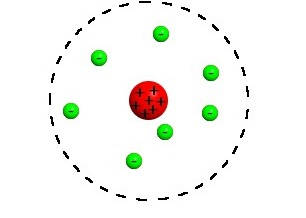
The "Cherry with a Pit Model" by Rutherford
The "Plum Pudding Model" of the atom by Thomson
The "Quantum Mechanical Modell" of the atom by Heisenberg

Who proposed the idea was of an indivisible particle of matter he called "atomos"?
Who determined that the atom had a nucleus?
Who determined that the center of the atom was positive and named it the "nucleus"?
Democritus
Dalton
Thomson
Rutherford
Who proposed that electrons move around the nucleus in circular orbits?
Dalton
Thomson
Rutherford
Bohr
Technology makes our work....
Easy and Fast
Slow and difficult

A robot sensors work like ____________
act like eyes and ears
act like muscles
act like torso
act like arms

Controller act like ______________
eyes and ears
muscles
brain of a robot
arms
Who made significant contributions to the discovery of DNA's structures?
A.) Ada Lovelace
B.) Rosalind Franklin
C.) Carl Linnaeus
D.) Nikola Tesla
He is known as the "Father of Modern Taxomy"
A.) Nikola Tesla
B.) Isaac Newton
C.) Charles Darwin
D.) Carl Linnaeus
Who is considered the first computer programmer?
A.) Charles Darwin
B.) Rosalind Franklin
C.) Ada Lovelace
D.) Pythagoras
Albert Einstein developed the theory of relativity
TRUE
FALSE
Galileo Galilei is know as the Father of Physics
TRUE
FALSE
Marie Curie was a polish born scientist who conducted pioneering research on radioactivity
TRUE
FALSE
An inventor is someone who
cooks in a restaurant
creates something new to solve problems
is a teacher
makes good decisions
Thomas Edison is best known for
inventing the lightbulb.
inventing crayons.
inventing peanuts.
making $40,000
Who invented the telephone?
Thomas Edison
Alexander Graham Bell
George Washington Carver
Who invented soap?
Thomas Edison
Alexander Graham Bell
George Washington Carver
Who invented the phonograph?
Thomas Edison
Alexander Graham Bell
George Washington Carver
Who invented the lightbulb?
Thomas Edison
Alexander Graham Bell
George Washington Carver
Who invented ink?
Thomas Edison
Alexander Graham Bell
George Washington Carver
Who is famous for his experiments with electricity and is known for inventing the lightning rod and bifocals?
Alexander Graham Bell
Isaac Newton
Benjamin Franklin
Thomas Edison
Who is famous for the Theory of Relativity ?
Isaac Newton
Albert Einstein
Galileo Galilei
Edwin Hubble
Nicolaus Copernicus
thought that the sun was the centre
of the Solar system, not earth.
invented electrical batteries.
is best known for discovering radioactivity
which is used medically in x-rays.
studied gravity and developed three laws of motion.
This famous scientist is best known for discovering radioactivity which is used medically in x-rays, gamma rays, electron beams and to destroy cancer cells.
Stephen Hawking
Marie Curie
Thomas Edison
Mary Anning
Timothy Berners-Lee
invented the World Wide Web.
invented the telephone.
invented the light bulb.
invented the telescope.
Printing shops had become very numerous and the number of printed books had increased.
Babylonian Civilization
Greek Civilization
Intellectual Revolution
Renaissance Period
They can determine whether a hunting expedition would be successful, whether a marriage would be a happy one, whether a battle would be won, etc.
Babylonian Civilization
Greek Civilization
Roman Civilization
Renaissance Period
They had a little taste for basic science in its application.
Greek Civilization
Romantic Era
Renaissance
Roman Civilization
They had no calendar but counted years by the period of moon and from one harvest to another.
Stone Age
Iron Age
Pre-Spanish Era
Spanish Era
Which scientist is credited with the discovery of penicillin?
Alexander Fleming
Louis Pasteur
Marie Curie
Gregor Mendel
Which scientist is known for the laws of motion and universal gravitation?
Albert Einstein
Isaac Newton
Galileo Galilei
James Clerk Maxwell
Which scientist is known for the laws of planetary motion?
Johannes Kepler
Galileo Galilei
Isaac Newton
Tycho Brahe
Who is known for the discovery of the electron?
J.J. Thomson
Ernest Rutherford
Niels Bohr
James Chadwick
Who is known for the discovery of the neutron?
James Chadwick
Ernest Rutherford
Niels Bohr
J.J. Thomson
Which ancient Greek philosopher is known for his early contributions to the scientific method?
Aristotle
Plato
Socrates
Pythagoras
Who proposed the heliocentric model of the solar system, challenging the geocentric model?
Nicolaus Copernicus
Johannes Kepler
Galileo Galilei
Tycho Brahe
Who is known for the theory of evolution by natural selection?
Charles Darwin
Gregor Mendel
Jean-Baptiste Lamarck
Alfred Russel Wallace
Which scientist is known for his work on electromagnetism and the invention of the electric motor?
Michael Faraday
James Clerk Maxwell
Nikola Tesla
Thomas Edison
How did Paul Bigsby change the word of music in 1947?
He invented speakers.
He invented the electric guitar.
He invented the electronic keyboard.

