
Font size
 Worksheets
Biology Fall Final Exam Units 1-3
Total questions: 75
Worksheet time: 39mins
Joe needs 25mL of motor oil to test his combustion engine. Which tool would give him the most precise measurement?
beaker
flask
test tube
graduated cylinder.
When designing an experiment, scientists will test a relationship between a "cause" and an "effect." The "effect," also represented by what the scientist measures and records, is known as the
dependent variable
constant
independent variable
control group
When writing a conclusion, what should you always refer back to?
procedure
hypothesis
your textbook
the materials list
What is usually located on the x-axis of a graph?
dependent variable
hypothesis
independent variable
All of these
Which is usually located on the y-axis of a graph?
independent variable
conclusion
dependent variable
hypothesis

Which piece of glassware is used for making measurements that are precise?
Graduated cylinder
Beaker
Erlenmeyer flask
Beaker

Which piece of glassware is used for making measurements that are precise?
Graduated cylinder
Beaker
Erlenmeyer flask
Beaker
The four main types of macromolecules found in organisms are carbohydrates, lipids, nucleic acids, and
starches
fatty acids
monosaccharides
proteins
If available, the body will always digest which macromolecule for energy first.
lipids
proteins
enzymes
carbohydrates
The class of macromolecule that would most likely be involved in contracting muscles would be:
lipids
proteins
enzymes
carbohydrates
In a hypothesis, the ____________ variable is what is being tested (the cause), while the ____________ variable is the one being measured in response (the effect).
A. independent; dependent
B. dependent; independent
C. controlled; manipulated
D. manipulated; controlled
The class of macromolecule that has many jobs in your body and is generally not used for energy is:
lipids
proteins
enzymes
carbohydrates
Which organelle controls the passage of materials into and out of a cell?
Cell Membrane
Flagella
Lysosomes
Mitochondria
Which organelle produces energy (ATP) for the cell?
Cell Membrane
Flagella
Lysosomes
Mitochondria
Which organelle digests foreign substances and worn-out cell parts?
Cell Membrane
Flagella
Lysosomes
Mitochondria
Which organelle acts as a whipping propeller, moving a cell through its environment?
Cell Membrane
Flagella
Lysosomes
Mitochondria
Which of the following is found in a eukaryotic cell, but is not found in a prokaryotic cell?
Cytoplasm
Cell membrane
Nucleus
Flagella
Which principle of cell theory best supports the idea that new cells will replace damaged cells in a scraped knee?
All living things are made of one or more cells.
Cells are the basic unit of life.
All cells come from other cells.
The nucleus of cells in animals reproduces when exposed to air.
This process occurs when the cell uses energy to bring something in from outside the cell.
Endocytosis
Exocytosis
Osmosis
Diffusion
Which of the following types of cellular transport does not require extra energy?
Endocytosis
Exocytosis
Molecular Pumps
Facilitated Diffusion
What type of cellular transport requires a cell to use energy?
facilitated diffusion
active transport
diffusion
osmosis
What makes stem cells different from other cells in the body?
They are larger than other cells, and can absorb broken cells to repair them
They repair cells by breaking pen and making their cell parts available for absorption into other cells
They are undifferentiated cells that can turn into a number of different kinds of cells as needed
They are cells that grow uncontrollably.
The activation energy needed for a chemical reaction is lowered by a
catalyst/enzyme
reactant
product
substrate
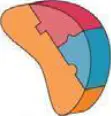
In the lock-and-key model of enzyme function below, what is happening during Step 2?
The catalyzed reaction is releasing a product.
The enzyme is keeping the bonds the same in the substrate.
The enzyme is breaking bonds in the substrate.
The substrate is beginning to bind to the enzyme.
If the activation energy of a biochemical reaction is lowered, then
the reaction will happen faster
this will not affect the rate of the reaction
the reaction will happen more slowly
both A and B
Which phrase best describes the function of the ATP molecule?
stores energy
release energy
increases energy
converts energy
Overall, photosynthesis is a reaction that
absorbs energy, and is exothermic.
releases energy, and is exothermic.
absorbs energy, and is endothermic.
releases energy, and is endothermic.
Plant cells make their own food through photosynthesis by taking in
oxygen and water.
carbon dioxide and water.
oxygen and hydrogen.
carbon dioxide and oxygen.
What will MOST LIKELY happen if a new producer is introduced into a food web?
The omnivores will decrease.
The carnivores will decrease.
The herbivores will increase.
The decomposers will decrease.
In general, which trophic level has the LEAST energy available to it?
producer/autotroph
primary consumer
secondary consumer
tertiary consumer
Chemical reactions that absorb more energy than they release are called
exothermic
catalyzed
endothermic
activated
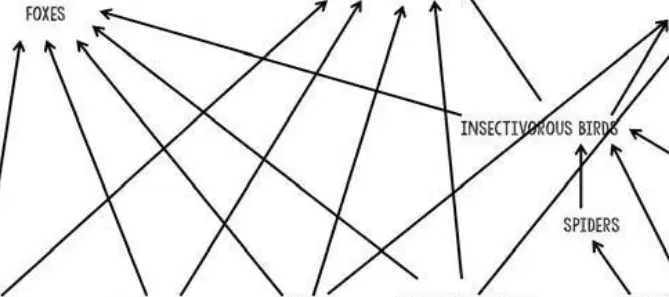
In the food web above, the insectivorous (eat insects) birds would be classified as
carnivores
decomposers
herbivores
omnivores
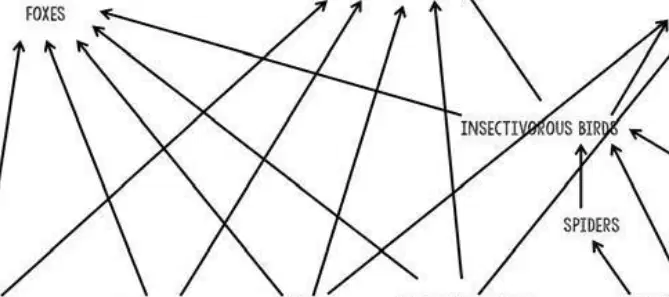
In the food web above, what would be a direct impact of an increase in the population of toads in the ecosystem?
an increase in the population of squirrels
a decrease in the population of owls
an increase in the population of snakes
a decrease in the rabbit population
A student is measuring the effect of temperature on the rate of an enzyme reaction. In an experiment, she will put equal-sized pieces of cow liver into test tubes, chill each piece of liver to a different temperature, introduce equal amounts of the enzyme to each test tube, and then measure how long it takes the reaction to run its course.
Microscope, thermometer, metric ruler
Thermometer, pipette or dropper, stopwatch
Stopwatch, digital balance, pipette or dropper
Digital balance, metric ruler, graduated cylinder
Which of the following is an example of an incorrect laboratory procedure?
testing whether a clear, odorless liquid is water by tasting it
telling a teacher of a spill before cleaning it up
pointing a heated test tube away from other students
disposing of an unused chemical instead of returning it to its container
Dr. Aikman tested the effectiveness of a cholesterol-reducing drug on humans. He gave the drug to 50 test subjects, each of whom had high cholesterol. After two months on the drug, the cholesterol of the subjects decreased. Dr. Aikman's study was flawed. What did it lack?
An independent variable
A dependent variable
A sample
A control group.
Suppose that a group of scientists accepts a theory as offering a convincing explanation of observable data. Ideally, how should those scientists react to new data that appear to contradict the theory?
they should ignore the new data because the new data is most likely incorrect.
they should investigate whether the new data are accurate because every theory is open to analysis.
they should accept the new data because data are facts and facts are more certain than theories.
they should let the public decide whether the new data are convincing because science should be democratic.
Plant and animal cells have many structures in common. Which of the following structures do plant and animal cells NOT have in common?
ribosomes
chloroplasts
plasma membranes
Golgi apparatus
How does a plant cell differ from an animal cell?
A plant cell can make its own glucose; an animal cannot.
A plant cell cannot synthesize proteins; an animal cell can.
A plant cell can undergo mitosis; an animal cell cannot.
A plant cell cannot perform cellular respiration; an animal cell can.
What key scientific principle stemmed, in part, from the experiments of Needham and Spallanzani?
Only cells can give rise to other cells.
Plants and animals are composed of cells.
An organism’s attributes are passed on through genes.
Cytoplasm is essentially the same for all organisms.
What was the dependent variable in the experiments of both Needham and Spallanzani?
the length of time that the broth boiled.
the exposure of the broth to air
the appearance of cells in the broth
the type of seal on the flask
Use the information below to answer questions 44-46. Growing Cells in Broth In the 18th century, scientists argued about whether cells could form spontaneously from nonliving materials. In 1749, a scientist named John Needham performed several experiments in which he boiled a broth solution in a container that was then sealed with a cork. After a while, living cells appeared in the broth. Needham concluded that cells could arise from nonliving materials. Lazzaro Spallanzani performed similar experiments in the 1760s. However, he boiled his broth for a longer time and sealed the neck of the container by melting the glass. Living cells were never generated in his solutions. What characteristic of scientific knowledge does this passage illustrate?
A. If scientific ideas are very old, they are probably wrong.
B. The results of experiments must be confirmed by other researchers.
C. Most scientific discoveries are not important to society.
D. When experimenting with cells, it is vital to use high temperatures
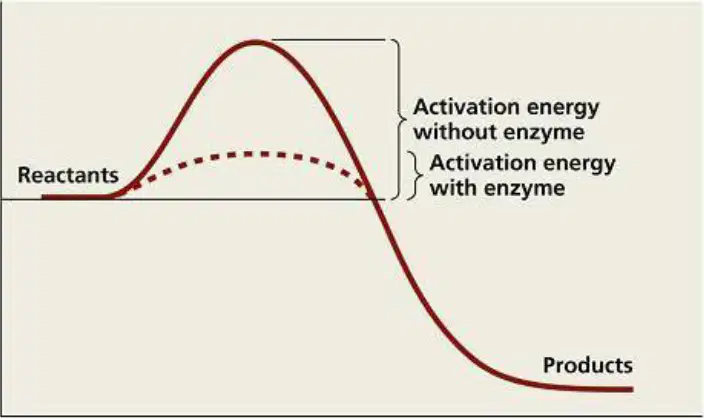
Which of the following BEST describes the effect of the enzyme on the chemical reaction?
A. It caused different products to form.
B. It increased the effects of the reaction.
C. It allowed the reaction to release more energy into the system.
D. It reduced the energy needed to complete the reaction.
The process of cellular respiration produces energy and carbon dioxide. What else does cellular respiration produce?
glucose
water
oxygen
sulfur
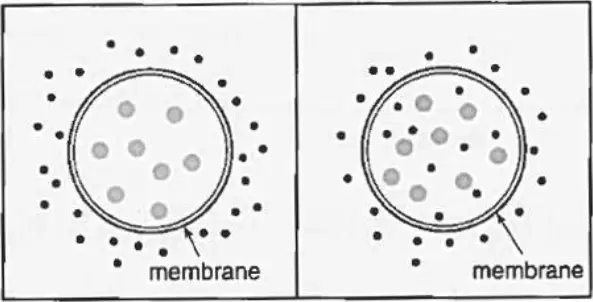
A container was separated into two parts by an artificial membrane. A sugar solution was placed inside the membrane. Water is poured around the outside of the membrane. The diagrams show the sugar and water molecules at the beginning of the experiment (left) and after 1 hour (right). No energy was added to the system during the experiment. What process within living cells does this experiment model?
osmosis
protein channeling
active transport
facilitated transport
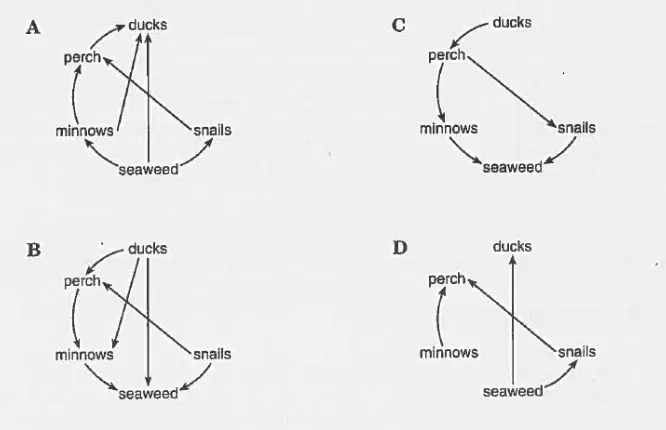
Which food web represents this freshwater ecosystem?
[Diagram A]
[Diagram B]
[Diagram C]
[Diagram D]
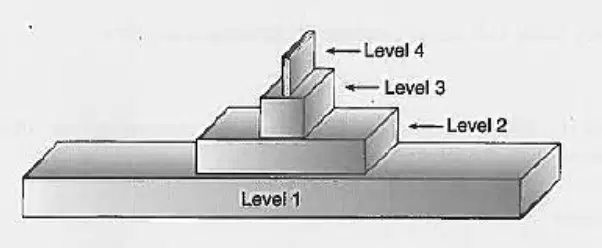
An energy pyramid for an ecosystem is shown below: The organisms in Level 2 of the ecosystem have available to them 500,000 kilocalories per year. About how much energy enters the ecosystem at the level of the producers?
50,000 kilocalories per year
500,000 kilocalories per year
5,000,000 kilocalories per year
50,000,000 kilocalories per year
Which of the following is NOT a CORRECT laboratory procedure?
heating liquid in a test tube covered by a cork.
taking off jewelry before beginning a lab experiment
wearing safety goggles while using a Bunsen burner
using tongs to pick up a recently heated test tube.
Which cell structure facilitates the locomotion of some cells?
centromeres
cytoplasm
flagella
ribosomes
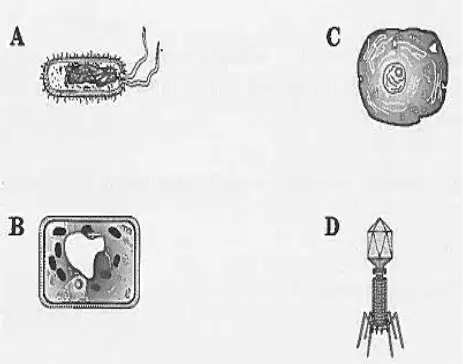
Which of the following illustrations represents a prokaryotic cell?
A. [Image of a bacterium]
B. [Image of a eukaryotic cell]
C. [Image of another eukaryotic cell]
D. [Image of a virus]
An animal cell is placed into a salt solution. The concentration of salt is higher in the salt solution than inside the cell. What will happen?
Water will flow into the cell by active transport.
Water will flow out of the cell by active transport.
Water will flow into the cell by passive transport.
Water will flow out of the cell by passive transport.
Dr. Smith reads two research papers that present different conclusions about the same question. He knows the researcher who wrote Paper A, but does not know the authors of Paper B. When asked which paper he thinks has more merit, Dr. Smith replies, “Paper A.” Because of Dr. Smith’s personal connection to some of the researchers, he could be exhibiting:
bias.
inference.
observation.
skepticism.
After her run, Aisha felt thirsty. Thirst was her body’s way of telling her she needed more water to maintain
growth.
metabolism.
development.
homeostasis.
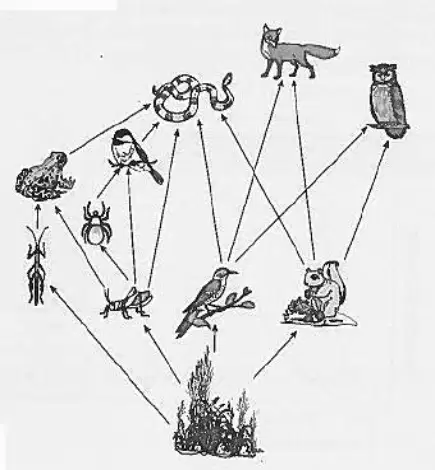
Which population would likely increase if the frogs were removed from the following ecosystem?
plants
snakes
spiders
grasshoppers
Biologists consider multicellular organisms to have several levels of organization. Which level of organization is most complex?
Cell
Organ system
Organ
Tissue
When leaving a movie theater, a person notices that the sidewalk is now wet. If the person assumes it rained during the movie, the person is making
a hypothesis
an inference
an observation
a prediction
Tamar is talking about evolution with a friend. The friend says, “It’s just a theory, so I don’t believe it. When they prove it and it becomes the law of evolution, then maybe I’ll change my mind.” Which of these possible replies best describes scientific principles or the work of scientists?
Scientific theories do not become scientific laws; they are explanations for natural phenomena based on evidence.
Science always finds the right answer, the answers that scientists and researchers discover never change.
He should be wary of science because it is based on research and evidence, not bias and opinion.
Scientists take each other at their word regarding experimental results, and the public should, too.
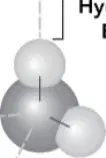
What property of a water molecule allows hydrogen bonds to form among adjacent molecules?
the strong covalent bonds that hold the oxygen atom to each hydrogen atom
the ionic bonds that form after the molecule separates into a hydroxide ion (OH — ) and hydrogen ion (H + )
the small size of the two hydrogen atoms compared to the oxygen atom
the polarity of the molecule, which involves a slightly negative oxygen atom and slightly positive hydrogen atoms
Which two types of particles are present in equal numbers in an atom, but not in an ion?
protons and electrons
protons and neutrons
inner-shell electrons and outer-shell electrons
protons and inner-shell electrons
A duck is affected by many factors in its environment. What distinguishes the biotic factors from the abiotic factors?
location in the water or out of the water
plant or animal
living or nonliving
food or not food
How do greenhouse gases act to increase air temperatures near Earth’s surface?
They transmit visible light that enters the atmosphere.
They trap heat that is radiated from the surface.
They reflect heat that enters the atmosphere.
They emit heat when they undergo chemical reactions.
Brianna is mapping trees in a section of land. She observes that some of the trees are clumped together, some are uniformly separated, and some appear to be spaced randomly. What is she describing?
the population density
the population distribution
the population growth
the population outline.
A hurricane blows across a Caribbean Island. The storm flattens trees, and it drowns or washes away a large number of plants and animals. As a result of the storm, the carrying capacity of the island is temporarily reduced for many of the island species. How is the storm classified as a limiting factor?
The storm is a density-independent limiting factor because population size and density do not alter the storm’s effect.
The storm is a density-independent limiting factor because its effect depends on the size and density of a population.
The storm is a density-dependent limiting factor because its effect depends on the size and density of a population.
The storm is a density-dependent limiting factor, because its effect depends on the strengths of its wind and rainfall.
Termites are able to digest wood because of microbes that live in their gut. The relationship between a termite and the microbes inside it is an example of what type of symbiosis?
parasitism
commensalism
mutualism
a predator-prey relationship
The cells of all organisms contain DNA. In cells of which of the following groups is the cellular DNA enclosed in a nucleus?
bacteria
eukaryotes
prokaryotes
viruses
Microscopes can be used to explore cells. Which of the following types of microscopes can produce a three-dimensional image of the surface of a cell?
simple light microscope
compound light microscope
scanning electron microscope
transmission electron microscope
A number of scientists made contributions to cell theory. Which scientist used a light microscope to observe cells in a slice of cork?
Anton van Leeuwenhoek
Matthias Schleiden
Robert Hooke
Theodor Schwann
Lysosomes are organelles that contain enzymes. Which of the following is a function of lysosomes?
Lysosomes build lipids, carbohydrates, and proteins.
Lysosomes package lipids, carbohydrates, and proteins.
Lysosomes break down lipids, carbohydrates, and proteins.
Lysosomes store lipids, carbohydrates, and proteins.
Which of the following structures are present in both plant and animal cells?
cell walls
centrioles
chloroplasts
mitochondria
Label the energy pyramid
Where do you have the MOST energy?
Listed in the Item Bank are some important labels for sections of the image below. Drag and drop each label to the corresponding area it identifies in the image
0.1%
1%
Producer
Consumer
100%
10%
Click on the apex predator. Also, click on the level with the most available energy.

A producer gets energy from the (a)

Match the following
Has the most energy
Producers
Receives the MOST energy from the producers
rabbits that eat grass
Receives the LEAST energy from the producers
hawk that eats the snakes

