
NEW
Font size
 Worksheets
Coralogy Spesial Edition
Total questions: 30
Worksheet time: 15mins
Which statement best describes Aspergillosis in sea fan corals (gorgonian sp.)?
A fungal infection damaging coral tissues and causing necrosis
A bacterial bloom improving coral growth and pigmentation
An algal symbiosis enhancing coral photosynthetic efficiency
A viral pathogen increasing coral recruitment and resilience

Identify the most plausible primary source and transport mechanism introducing Aspergillus sydowii spores to marine environments.
Deep-sea hydrothermal vents emitting fungal spores upward
Terrestrial origin carried by windborne dust from Africa
In-situ coral symbionts mutating under low pH conditions
Aquaculture facilities releasing spores through fish feed
Which pathway most directly spreads infection between adjacent sea fan colonies during strong water movement?
Larval fish vectors transporting spores during spawning
Physical contact between neighboring colonies in close proximity
UV radiation altering spore viability near the surface
Nutrient enrichment reducing coral mucus defenses
If Aspergillosis continues unchecked on a reef dominated by gorgonian sea fans, which outcome most directly disrupts the food web?
Loss of habitat for small zooplanktivores leading to fewer prey
Enhanced calcification rates increasing reef structural complexity
Increased recruitment of juvenile fish improving fisheries yield
Expansion of herbivorous algae stabilizing trophic interactions

Which intervention most directly reduces Aspergillosis risk in coral ecosystems by addressing disease spread rather than habitat structure?
Installing artificial reef modules for habitat complexity
Community education on biosecurity for field activities
Long-term monitoring of coral lesion progression
Transplanting healthy coral fragments into degraded sites

Which statement best describes White Plague in corals?
A disease causing rapid coral tissue loss
A symbiosis that enhances coral growth
A bleaching recovery process in polyps
A predator-driven grazing on coral skeleton
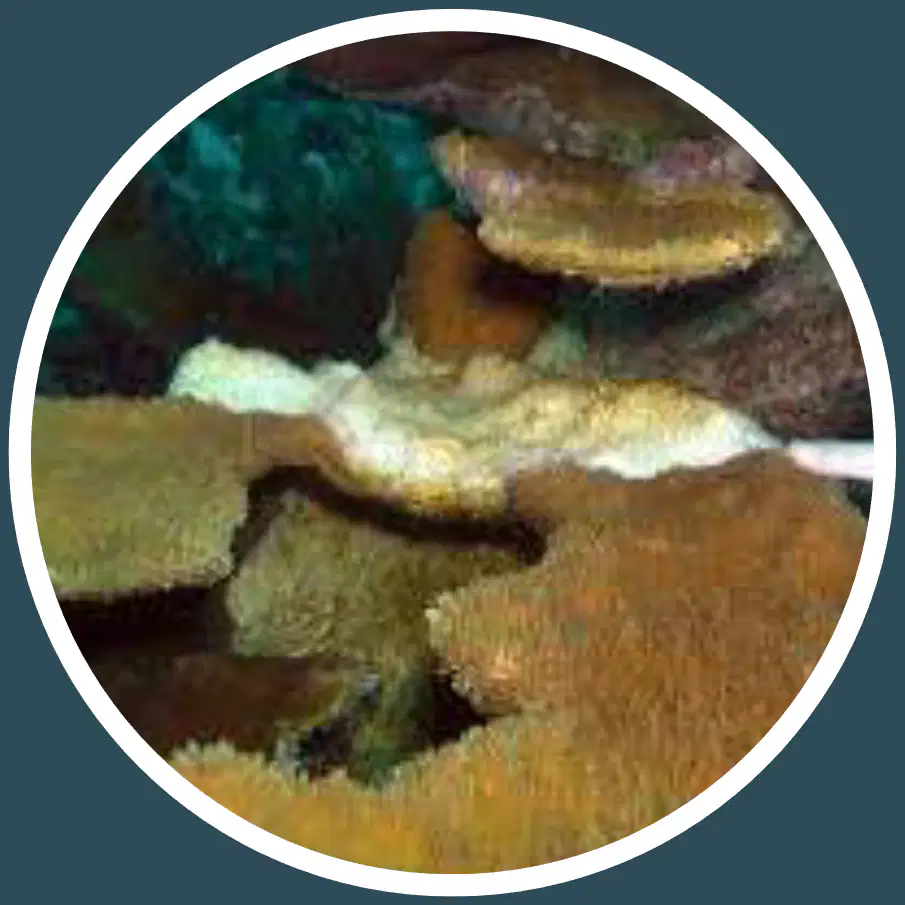
Which bacterial group is most often implicated as an agent of White Plague?
Cyanobacteria producing harmful toxins
Proteobacteria including Vibrio species
Actinobacteria forming filamentous mats
Firmicutes causing spore-like infections
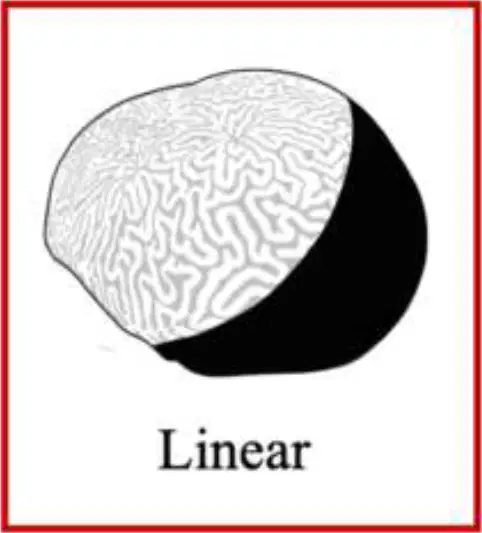
Which visual sign best distinguishes White Band Disease lesions on corals?
Randomly scattered dark speckles across polyp mouths
Uniform bleaching with intact tissue and zooxanthellae
A sharp boundary between live tissue and bare skeleton
A fuzzy transition from pale tissue to algal film
Which coral genus is primarily affected by White Band Disease Type II?
Montipora plates on reef slopes
Acropora species with branching forms
Porites colonies in shallow reefs
Favia brain corals in lagoons
Which bacterial group has been implicated as a pathogen in White Band Disease Type II?
Rickettsia-like intracellular organisms
Cyanobacteria forming algal mats
Dinoflagellate zooxanthellae symbionts
Actinomycetes producing antibiotics
Which factor best describes an environmental stressor that can trigger White Band II outbreaks in corals?
Persistent upwelling of nutrient-poor waters
Prolonged thermal anomalies during marine heatwaves
Consistently cool waters with stable salinity
High-latitude winters with weak irradiance
A reef manager must prioritize one action to reduce human-driven risks of White Band II. Which option most directly lowers disease transmission pathways?
Increase artificial lighting for night reef patrols
Install new mooring buoys over branching corals
Expand reef tourism with guided snorkel routes
Implement strict decontamination of dive and research gear
What condition occurs under the black band that kills coral tissue?
Anoxic microenvironment beneath the layer
Alkaline shock from seawater mixing
Hyperoxic flow increasing oxidation
Thermal shock from cold upwelling
The black band forms a distinct boundary between which two zones on a coral?
Newly settled larvae and old polyps
Healthy zooxanthellae and bleached tips
Pigmented living tissue and white dead skeleton
Mucus-covered area and sediment patch
Which temperature pattern is associated with higher Black Band Disease frequency?
Rapid night cooling below 10°C
Warmer waters above roughly 28°C
Cooler waters below around 18°C
Stable temperatures near 22°C
Which strategy directly targets public behavior toward reefs?
Artificial reef deployment offshore
Genetic editing of coral symbionts
Deep-water blast fishing restrictions
Community education on reef importance
What is the purpose of periodic reef monitoring in disease management?
Detect changes in water and coral condition
Increase coral calcification artificially
Harvest coral spawn for aquaculture
Reduce wave energy around the reef
Conservation actions for coral reefs primarily aim to do what?
Lower seawater alkalinity near reefs
Convert reefs to fish farming zones
Maximize short-term tourism revenues
Protect and sustain reef ecosystems long-term
What does the white area trailing the black band represent on corals?
Sediment accumulation over living tissue
Healthy bleached tissue recovering fast
Calcareous algae overgrowing healthy polyps
Exposed dead skeleton lacking tissue
Which description best fits the physical thickness of the black band?
Several centimeters thick uniformly
Over ten millimeters thick routinely
Approximately one millimeter thickness
Micrometers thick and invisible
Which process explains tissue death beneath the band?
Mechanical abrasion by parrotfish
UV radiation causing DNA crosslinking
Hyper-salinity causing osmotic bursting
Oxygen depletion producing toxic sulfide
Which seasonality pattern has been documented for BBD cases?
Increase in warm seasons and decline in cold
Unrelated to seasonal temperature shifts
Highest during monsoon rains only
Peak during full moon phases exclusively
Which statement about light in BBD progression aligns with research findings?
Light intensity interacts with temperature effects
Ultraviolet alone fully determines outbreaks
Light has no measurable influence at reefs
Only darkness triggers band formation
What is the most accurate role of cyanobacteria in the black band?
Dominant filaments structuring the microbial mat
Sole producers of coral skeletal aragonite
Minor contaminants from nearby seagrass beds
Parasites directly invading coral nuclei
Why is community education vital for coral disease mitigation?
It accelerates ocean acidification processes
It reduces harmful human activities near reefs
It increases heat tolerance of pathogens
It replaces the need for ecological monitoring
In the context of BBD, what does 'anoxic' specifically mean?
Moderate levels of dissolved oxygen
Presence of high nitrate concentrations
Excess of dissolved calcium carbonate
Absence of dissolved oxygen in microzones
Which practical indicator differentiates BBD from general bleaching?
Uniform whitening without clear borders
Localized polyp expansion near lesions
A migrating dark band with sharp boundary
Green film forming over entire surface
What is a plausible site-selection criterion for coral transplantation?
Stable temperature and suitable light regimes
Proximity to dredging and ship traffic lanes
Areas with chronic sewage outfalls nearby
Strong sedimentation from river plumes
How does conservation reduce climate and human impacts on reefs?
By increasing nearshore nutrient dumping
By promoting coral mining for construction
By eliminating all herbivorous fish species
By protecting habitats and regulating activities
What boundary condition inside the black band most threatens coral tissue?
Stable salinity across the thin black film
Steep oxygen to sulfide gradient microprofile
Slow pH increase toward the outer water
Gradual temperature decline at nightfall

