
 Worksheets
Airplane Flight and Control Systems Quiz
Total questions: 17
Worksheet time: 9mins
What are the stability and control characteristics of an airplane referred to as?
The airplane's aerodynamic efficiency.
The airplane's handling or flying qualities.
The airplane's propulsion system.
The airplane's structural integrity.

Why is it important for a pilot that the airplane possesses satisfactory handling qualities?
To ensure the airplane can fly faster.
To reduce the risk of accidents and make the airplane easier to fly.
To improve the airplane's fuel efficiency.
To allow the airplane to carry heavier loads.
What is the property of an equilibrium state in the context of airplane stability?
Stability
Trim condition
Dynamic motion
Aerodynamic force
What is the key difference between stable and unstable equilibrium points in the context of static stability?
Stable equilibrium points cause the object to move away from its original position, while unstable points restore it.
Stable equilibrium points restore the object to its original position, while unstable points cause it to move away.
Stable equilibrium points maintain the object at a constant speed, while unstable points accelerate it.
Stable equilibrium points oscillate the object indefinitely, while unstable points stop it.
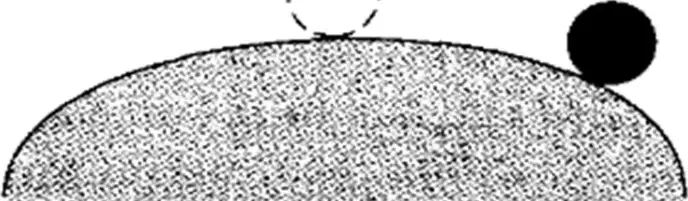
Which of the following best describes the behavior of a statically unstable system?
The system moves further away from its equilibrium position after being displaced.
The system returns to its equilibrium position after being displaced.
The system remains stationary regardless of displacement.
The system oscillates around its equilibrium position indefinitely.
Which type of dynamic stability is characterized by a decrease in displacement over time, eventually returning to equilibrium?
Subsidence
Divergence
Neutral Stability
Oscillatory Stability

What is the primary factor that the stability and control characteristics of a helicopter depend on?
Atmospheric disturbances
Mechanical design of the helicopter
Rotor speed
Pilot skill
What does it mean for a helicopter to be trimmed in steady flight?
The helicopter is flying at maximum speed.
The resultant force and moments on the helicopter are equal to zero.
The helicopter is flying at a constant altitude.
The helicopter is undergoing rapid maneuvers.
What does it mean for a helicopter to be dynamically stable?
It remains in its disturbed flight mode permanently.
It shows a tendency to return to its original flight mode but does not actually return.
It returns to its original flight mode after showing a tendency to do so.
It oscillates indefinitely without returning to its original flight mode.
Based on the diagram, which of the following statements best describes the flight path in a stable mode?
The flight path diverges over time.
The flight path remains constant over time.
The flight path converges to a stable point over time.
The flight path oscillates indefinitely.
What does the graph labeled "I" in the diagram represent in terms of oscillation stability?
Stable (static and dynamic)
Neutrally stable
Unstable (Divergence)
Critically damped
What does the graph labeled "II" in the diagram indicate about the oscillation?
Stable (static and dynamic)
Neutrally stable
Unstable (Divergence)
Overdamped
In the context of the diagram, what does "unstable (divergence)" mean?
The oscillation remains constant over time.
The oscillation grows over time without bound.
The oscillation decreases and stabilizes over time.
The oscillation stops immediately.
What happens when a helicopter experiences an angular displacement without producing a restoring moment?
It remains stationary due to balanced forces.
It results in a translational velocity due to the unbalanced horizontal component of the thrust force.
It starts rotating in place without any translational movement.
It becomes unstable and crashes immediately.
In the context of helicopter oscillations during hovering, what does the variable "V" represent in the diagrams provided?
Angular velocity
Linear velocity
Torque
Rotor speed
What is the primary factor being neglected in the oscillations of helicopters following an angular displacement in hovering?
Damping
Angular velocity
Linear velocity
Torque
What is the significance of the force labeled "T" in the diagram?
It represents the gravitational force acting on the helicopter.
It represents the thrust force maintaining the helicopter's hovering stability.
It represents the drag force opposing the helicopter's motion.
It represents the lift force generated by the helicopter's rotor blades.

