
 Worksheets
Economic Systems and Mixed Economy Quiz
Total questions: 88
Worksheet time: 44mins
Which of the following is a basic economic question that every country must answer?
What is the population size?
How to produce?
What is the climate?
Who is the president?
What is a traditional economy based on?
Government control and regulations
Supply and demand in the market
Traditional customs and values
Technological advancements
In a market economy, what determines what goods and services are produced?
Government regulations
Supply and demand in the market
Traditional customs
Military decisions
Which economic system answers questions through strict governmental control and regulations?
Traditional economy
Market economy
Command economy
Mixed economy
What is a mixed economy?
An economy based only on government control
An economy based only on market supply and demand
An economy that lies between pure command and pure market systems
An economy with no rules or regulations
On the mixed economic continuum, what does it mean if a country is closer to Pure Command?
The government has less control over the economy
Consumers and private businesses make all decisions
The government has a higher level of control over the economy
There are no economic rules
If a country allows consumers and private businesses to make more economic decisions for themselves, where does it fall on the mixed economic continuum?
Closer to Pure Command
Closer to Pure Market
Exactly in the middle
Outside the continuum
Why do most countries have a mixed economy?
Because they want to avoid using money
Because they combine elements of command and market economies
Because they only follow traditional customs
Because they do not produce goods and services
Which vocabulary term describes an economic system in which consumers and producers can buy and sell what they want?
Traditional economy
Command economy
Market economy
Mixed economy
How does a country decide where it falls on the mixed economic continuum?
By the amount of government control versus consumer and producer decision-making
By the number of people living in the country
By the amount of natural resources
By the climate and weather patterns
Which type of economy is most common in European countries according to the text?
Mixed economy
Command economy
Pure market economy
Traditional economy
What role does the government of the United Kingdom play in its economic system?
It owns all businesses and resources
It plays a limited role, collecting taxes and regulating trade
It does not interfere in the economy at all
It controls all prices and production
During World War II, what did the British government do to many businesses?
Sold them to foreign investors
Took ownership to ensure best use of resources
Closed them down
Made them all private immediately
Since the 1970s, what has the British government done with many government-owned companies?
Increased government control
Turned them over to private businesses
Closed them permanently
Merged them with foreign companies
What was a major problem with East Germany’s command economy under Soviet rule?
Too much economic freedom
Unemployment and poor government planning
Excessive competition
High levels of private ownership
What happened to East and West Germany after the collapse of the Soviet Union in 1991?
They remained separate countries
East Germany became a command economy again
They reunited and Germany invested in updating East Germany’s infrastructure
West Germany adopted a command economy
In Germany’s mixed economy, who owns most of the nation’s land, factories, and resources?
The government
Foreign investors
Individual citizens and private businesses
The military
How does the German government support its poorer citizens?
By providing no welfare
By collecting high taxes and providing welfare services
By allowing only private businesses to operate
By reducing regulations on all industries
Which industries does the German government heavily regulate?
Entertainment and fashion
Agriculture, energy, and telecommunications
Sports and tourism
Transportation and education
Why did the British government turn over companies like British Steel and British Airways to private businesses after the 1970s?
To reduce competition
To create greater competition and a stronger market economy
To increase government control
To eliminate private ownership
Before 1991, what type of economy did Russia have as part of the Soviet Union?
Market economy
Command economy
Mixed economy
Traditional economy
What change did Russia make to its economic system after the collapse of the Soviet Union?
Changed to a traditional economy
Changed to a market economy
Changed to a barter system
Changed to a pure command economy
Which of the following is still controlled by the Russian government, even after economic reforms?
All small businesses
Major industries like shipping, oil, and aerospace technology
Only agricultural products
Only private companies
What is one way the Russian government influences the economy today?
By setting prices for all goods
By making laws to regulate the prices of goods and services
By owning all businesses
By banning private property
What economic practice do some traditional tribes in northern Russia still use?
Investing in the stock market
Bartering with other tribes
Using credit cards
Exporting goods internationally
Compare the role of citizens and businesses in the economies of the United Kingdom, Germany, and Russia. Which country allows citizens to own property, run businesses, and decide what to buy and sell?
United Kingdom
Germany
Russia
All of the above
Which country’s government controls many resources, owns or controls some industries, and makes laws to regulate prices?
United Kingdom
Germany
Russia
France
Based on the chart, which country’s government collects high taxes to pay for services, regulates certain industries, and sets prices for certain services?
United Kingdom
Germany
Russia
Italy
On the economic continuum from pure command to pure market, where does Russia fall compared to the United Kingdom and Germany?
Russia is closer to pure market than Germany
Russia is between pure command and Germany
Russia is at the pure market end
Russia is at the pure command end
Why might some indigenous tribes in Russia choose to continue traditional economic practices instead of joining the mixed economy?
They prefer using modern technology
They want to maintain their cultural traditions
They are required by law to do so
They have no access to markets
What does GDP stand for?
Gross Domestic Product
General Domestic Price
Great Domestic Policy
Global Development Plan
Which of the following best describes GDP per capita?
The total market value of goods and services produced in a year divided by the population
The total number of people living in a country
The total exports of a country in a year
The total amount of money spent by citizens in a year
What is meant by "standard of living"?
Level of wealth and material comfort available in a country
The number of people living in a country
The amount of goods produced in a country
The number of services offered in a country
European countries with a high GDP usually have which of the following?
A higher standard of living
A lower population
Fewer goods and services
Less international trade
If a country’s GDP is $1,000,000 and its population is 100, what is its GDP per capita?
$10,000
$100,000
$1,000
$100
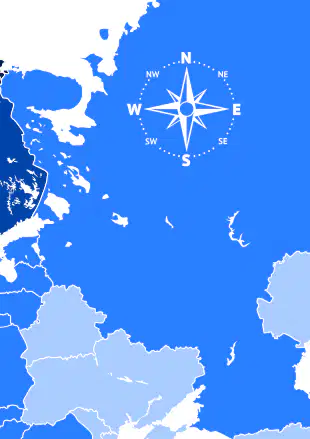
In which region of Europe do most countries have higher GDP per capita?
Western Europe
Eastern Europe
Northern Europe
Southern Europe
In which region of Europe do most countries have lower GDP per capita?
Western Europe
Eastern Europe
Northern Europe
Southern Europe
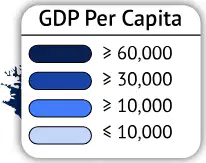
In which region of Europe do countries most likely have a very high standard of living?
Western Europe
Eastern Europe
Northern Europe
Southern Europe
Was the 2016 U.S. GDP per capita ($57,000) higher or lower than in most European countries?
Higher
Lower
The same
Cannot be determined
Which of the following is a factor that drives economic growth in Europe?
Natural resources
Climate
Population size
Currency exchange rates
What does "human capital" refer to in the context of economic growth?
Raw materials from Earth
Skills, knowledge, and education of workers
Factories, machinery, and technology
Organization of ideas and resources for production
Which term matches the definition: "Factories, machinery, and technology"?
Natural resources
Human capital
Capital goods
Entrepreneurship
Entrepreneurship is best defined as:
Raw materials from Earth
Skills, knowledge, and education of workers
Factories, machinery, and technology
Organization of ideas and resources for production
Explain how the presence or absence of the four factors of economic growth can impact a country's economy.
The presence of these factors helps maintain and strengthen economies, while their absence can hinder economic success.
Only natural resources matter for economic growth.
Human capital is not important for economic growth.
Capital goods are the only factor that impacts the economy.
Which of the following is a reason why natural resources are important to the economies of European countries?
They are used to make goods and services.
They are only used for decoration.
They are not traded with other countries.
They have no impact on income.
Which mineral resource is commonly found in European countries?
Gold
Diamonds
Oil
Copper
What is one way European countries benefit from trading natural resources?
They can obtain resources they do not have.
They lose all their resources.
They stop producing goods.
They become isolated from other countries.
Which of the following is an example of a biological resource mentioned in the text?
Timber
Coal
Iron ore
Uranium
Why have many European countries organized themselves into the European Union?
To make it easier to trade with each other
To stop trading with other countries
To increase competition among themselves
To limit the use of natural resources
Imagine a European country has a lot of coal but very little timber. What might this country do to get more timber?
Trade coal with another country for timber
Stop using coal completely
Only use coal for energy
Ignore the need for timber
Which country is best suited for producing agricultural goods?
United Kingdom
Germany
Russia
In which country are fishing and shipping most likely major industries?
United Kingdom
Germany
Russia
Which economic activity is important to all three countries?
Transportation
Mining
Farming
According to the text, what is one reason Germany and the United Kingdom have high GDP per capita?
They have large populations.
They invest in capital goods and technology.
They have more natural resources than Russia.
They have warmer climates.
What is the literacy rate in Germany and the United Kingdom?
75 percent
80 percent
99 percent
60 percent
Why does Russia have a lower GDP per capita compared to Germany and the United Kingdom, despite a high literacy rate?
Russia has fewer natural resources.
Russia has not invested as much in capital goods and workforce training.
Russia has a smaller population.
Russia has a warmer climate.
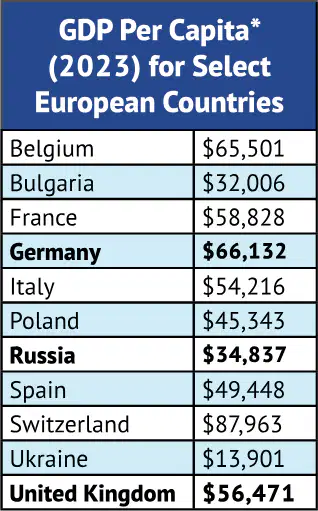
Based on the GDP per capita table, which country listed has the highest GDP per capita?
Germany
Switzerland
United Kingdom
France
What is one way universities and vocational schools help the economy in Germany and the United Kingdom?
By increasing the number of factories
By training people to be productive workers
By exporting goods
By building more roads
After the collapse of the Soviet Union, what was one challenge Russia faced in improving its economy?
Too many natural resources
Poorly maintained manufacturing plants and outdated technology
Too many universities
High population growth
If a country wants to increase its GDP per capita, which of the following strategies would be most effective based on the information in the text?
Reducing investment in education
Investing in capital goods and workforce training
Limiting access to technology
Focusing only on natural resources
How have investments in capital and human capital contributed to high GDP per capita in Germany and the United Kingdom?
By focusing only on natural resources
By improving public education and training the workforce through universities and vocational schools
By reducing investments in technology
By limiting access to education
What challenges did Russia face after the collapse of the Soviet Union in 1991, and what changes is Russia making to improve its economy and increase GDP per capita?
Lack of natural resources; investing in agriculture
Old and outdated technology from Communist rule; investing to update factories and train workforce
Overpopulation; reducing workforce
High literacy rates; decreasing education funding
Which two countries listed in the chart have the lowest GDP per capita?
Germany and United Kingdom
Russia and Poland
Ukraine and Bulgaria
France and Italy
What can you infer about these countries’ investments in education and capital goods?
High investments
Moderate investments
Low investments
No investments
According to the Russian professor’s plan, what is the impact of investing in human capital?
It will decrease the country’s overall GDP.
It will increase the country’s overall GDP.
It will have no effect on the country’s GDP.
It will only benefit entrepreneurs.
According to the Russian professor’s plan, what is the impact of investing in capital goods?
It will increase the country’s overall GDP.
It will decrease the country’s overall GDP.
It will only benefit natural resource exporters.
It will have no effect on the economy.
What is the relationship between literacy and having a high standard of living?
Literacy has no impact on standard of living.
Higher literacy rates can lead to a higher standard of living.
Literacy only affects entertainment options.
Literacy decreases job opportunities.
What is an entrepreneur?
Someone who has an idea for a good or service and takes the risks to produce it
Someone who only works for a large company
Someone who studies the economy but does not start businesses
Someone who manages government regulations
Which of the following is a reason why European countries may have less entrepreneurial activity compared to the United States?
Lower business taxes
Fewer regulations
Higher taxes and more regulations
More government support for entrepreneurs
What are European countries doing to encourage entrepreneurship?
Increasing business taxes
Cutting regulations and reducing the time to start a new business
Making it harder to start a business
Limiting the number of new businesses
Why do entrepreneurs say higher taxes and more regulations reduce their freedom to operate businesses?
Because it makes it easier to start a business
Because it increases their costs and limits their choices
Because it gives them more government support
Because it helps them avoid risks
Imagine you are an entrepreneur in Europe. What should you consider when designing your business plan?
The resources of your country
Ignoring business taxes
Only focusing on products from other countries
Not considering regulations
What does the term "specialize" mean in the context of trade?
To become an expert in a particular subject, skill, or trade; to produce a limited variety of goods and services
To produce all goods and services needed by a country
To trade only with neighboring countries
To avoid trading with other countries
What is the definition of "opportunity cost"?
The price paid for goods and services
The value of what is given up when one choice is made over another
The amount of goods produced by a country
The cost of trading with other countries
Why do countries in Europe choose to specialize?
Because they have all the resources needed to produce everything
To produce a limited variety of goods and services efficiently
To avoid trading with other countries
To increase opportunity costs
How does specialization affect opportunity cost?
It increases opportunity cost
It lowers opportunity cost
It has no effect on opportunity cost
It eliminates opportunity cost
Which of the following is an example of a country specializing in a particular good or service?
Russia specializing in fuel resources
Italy specializing in factory machines
Switzerland specializing in automobiles
Russia specializing in banking services
Based on the chart, which country would benefit from trading automobiles?
Russia
Italy
Switzerland
Germany
If Switzerland specializes in banking services and needs automobiles, which country should it trade with?
Russia
Italy
France
Germany
Why is voluntary trade considered essential among European countries?
Because every country can produce all goods and services it needs
Because it allows countries to get goods and services they do not produce themselves
Because it increases the cost of goods and services
Because it prevents specialization
What is the effect of countries specializing in certain goods or services?
They produce all goods and services needed by their citizens
They produce goods or services at a lower opportunity cost than other nations
They stop trading with other countries
They increase their opportunity cost
What is the end result when countries trade with each other after specializing?
They only produce what they need
They get other goods and services they do not produce themselves
They stop producing goods and services
They increase their opportunity cost
Which phrase best describes the purpose of the European Union?
Every country for itself!
Competition brings innovation!
Cooperation for the benefit of all!
Isolation from other nations
The EU is a loose alliance among several European nations. This relationship between member nations is best described as a ____________.
Autocracy
Democracy
Confederation
Federation
All European countries are required to join the EU.
True
False
Which of the following is NOT a goal of the European Union?
To maintain peace and stability in Europe
To promote trade and economic growth
To allow free movement of people and goods among member nations
To create a single military for all member nations
What is a confederation?
A strong central government that controls all member states
A loose alliance of countries, states, and other political units in which the individual units maintain most or all power
A single country with many provinces
A group of countries ruled by a king
What is a tariff?
A tax that is placed on goods brought into one country from another
A law that bans trade between countries
A fee for traveling between countries
A currency used in Europe

