
 Worksheets
WWI/Russian Revolution Test Review
Total questions: 28
Worksheet time: 14mins
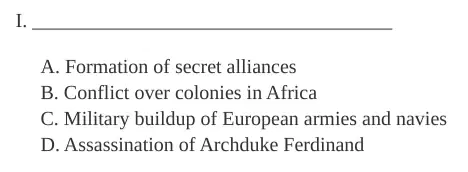
David is studying the causes of World War I in his history class. Based on the historical background of World War I, which generalization about the origin of war is best supported?
Years of continuing international tension often lead to war.
A policy of appeasement can delay, but not prevent the outbreak of war.
War results from reliance on advances in technology.
Religious hatreds often lead to war.
Which consequence followed the signing of the Treaty of Versailles after World War I?
It led to lasting peace and stability in Europe.
It resulted in immediate economic recovery for all European nations.
It imposed harsh penalties on Germany, contributing to future unrest.
It encouraged close cooperation between all major world powers.
Many Germans were dissatisfied with the Treaty of Versailles after World War I mainly because it
allowed Germany to keep all its colonies
forced Germany to accept blame for the war
permitted Germany to expand its military
required Germany to join the League of Nations
Which event is often considered a consequence of the Treaty of Versailles according to many historians?
The rise of the Ottoman Empire
The start of World War II
The industrialization of Japan
The formation of the League of Nations
One reason the Bolsheviks gained popular support during the Russian Revolution of 1917 was their promise to
withdraw Russia from World War I
increase taxes on the wealthy
expand the power of the monarchy
promote religious freedom
Which similarity was shared by the French Revolution (1789) and the Russian Revolution (1917)?
Both resulted in the immediate establishment of stable democracies.
Both led to the rise of leaders who ruled with absolute power.
Both revolutions were led by religious leaders.
Both revolutions were supported by foreign monarchies.
Which factor contributed most to the outbreak of the Russian Revolution in 1917?
Russia's victory in World War I
The influence of Western European democracies
Widespread poverty among peasants and workers
Support for the monarchy by the lower classes
An analysis of the American, French, and Russian Revolutions reveals that major political upheavals often happen when the
economic system is based on agriculture
government refuses to address social and political grievances
nation is influenced by neighboring countries
upper classes lose their wealth
What was the main goal of Lenin’s slogan "Peace, Land, Bread" during the Russian Revolution of 1917?
to encourage Russian expansion into Europe
to win the support of workers and peasants
to support the return of the monarchy
to promote industrialization in rural areas
How did World War I contribute to the outbreak of the Russian Revolution?
It weakened Russia politically and economically, leading to unrest.
It strengthened the monarchy and delayed revolutionary movements.
It united the Russian people behind the Czar, preventing revolution.
It provided resources that helped the government suppress opposition.
Which provision of the Treaty of Versailles demonstrated the Allies' desire to hold Germany accountable for World War I?
All countries will have equal access to trade.
The League of Nations will be established.
Germany must pay reparations for war damages.
National boundaries will be determined by self-determination.
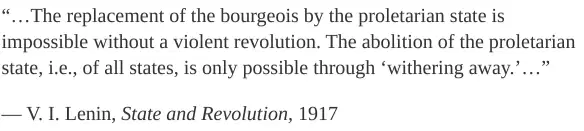
This excerpt reflects the ideas of which political ideology?
imperialism
capitalism
communism
militarism
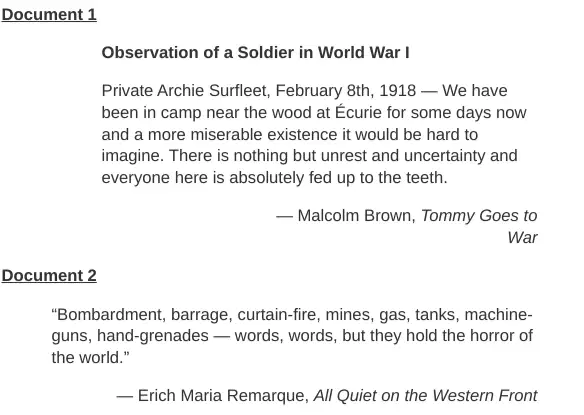
Base your answer to the question on the passages below and on your knowledge of social studies.
A historian is researching the experiences of soldiers during World War I. These documents would be most useful for studying which method of combat?
Guerilla
Nuclear
Biological
Trench
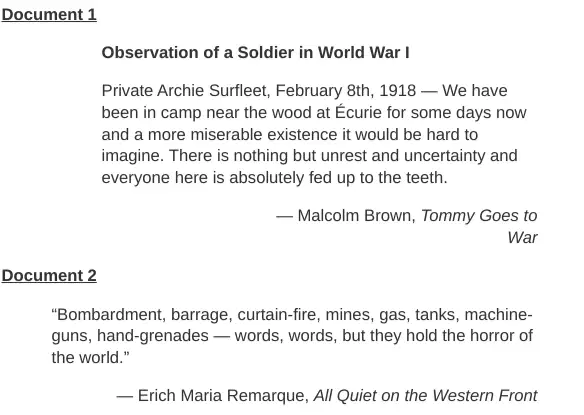
Base your answer to the question on the passages below and on your knowledge of social studies.
Which conclusion is most strongly supported by these passages?
Soldiers experienced great hardship and uncertainty.
Military technology led to quick victories.
Troop morale was consistently high.
Allied forces faced little resistance.
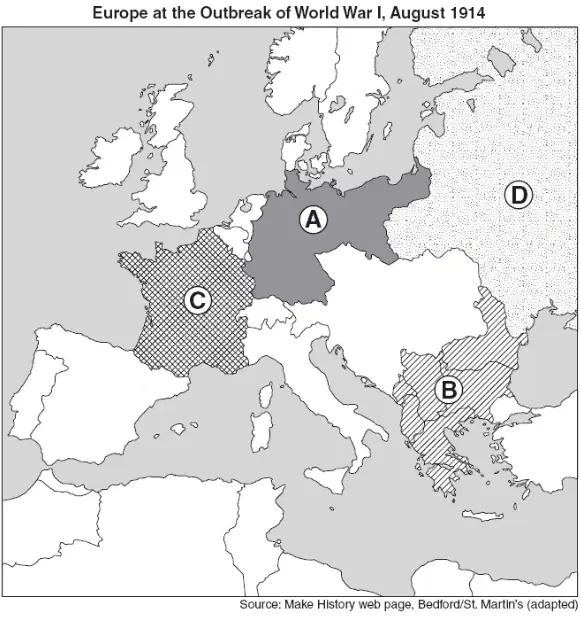
Base your answer to the question on the map below and on your knowledge of social studies.
Which area labeled on the map was the site of intense nationalist tensions that contributed to the start of World War I?
A
B
C
D


Which international treaty required Germany to accept responsibility for damages caused during World War I, as described in the excerpt?
United Nations Charter
Treaty of Portsmouth
Atlantic Charter
Treaty of Versailles
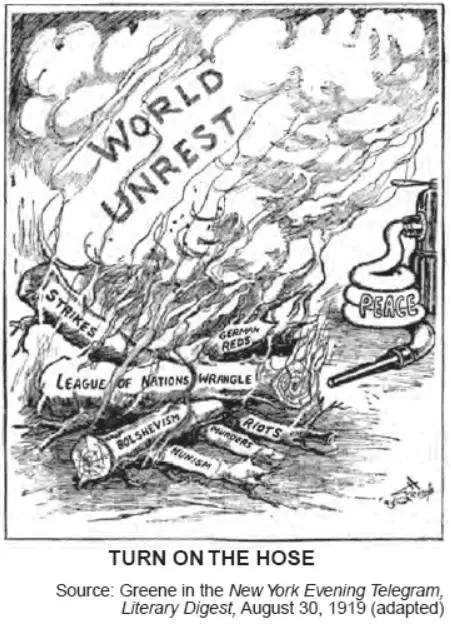
Base your answer to the cartoon below and on your knowledge of social studies.
Which issue is most clearly illustrated by the events shown in this 1919 cartoon?
the challenges of maintaining peace after World War I
the rise of industrialization in Europe
the expansion of colonial empires
the spread of democratic governments

Base your answer to the questions on the passage below and on your knowledge of social studies.
What does this passage about World War I mainly illustrate about combat conditions?
the reliance on traditional battle tactics
the significance of rapid technological adaptation
the influence of leadership decisions
the importance of supply lines
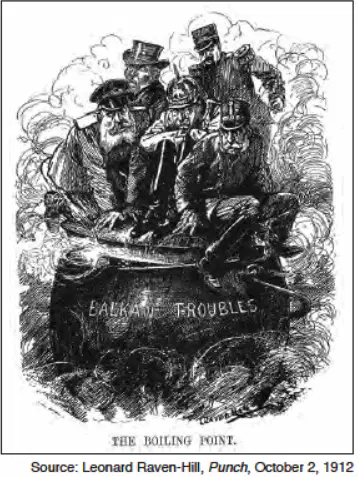
Base your answer to the question on the cartoon below and on your knowledge of social studies.
This 1912 cartoon most clearly illustrates
the impact of imperialism in Africa
the growing instability in the Balkans
the spread of communism in Eastern Europe
the formation of the League of Nations
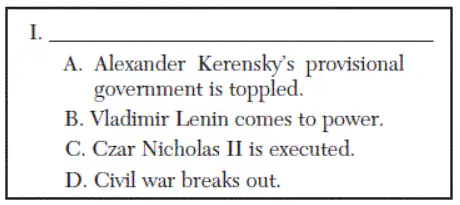
Which event is most closely associated with the developments listed below? A. Alexander Kerensky’s provisional government is toppled. B. Vladimir Lenin comes to power. C. Czar Nicholas II is executed. D. Civil war breaks out.
The Russian Revolution of 1917
The signing of the Treaty of Brest-Litovsk
The Crimean War
The assassination of Archduke Franz Ferdinand
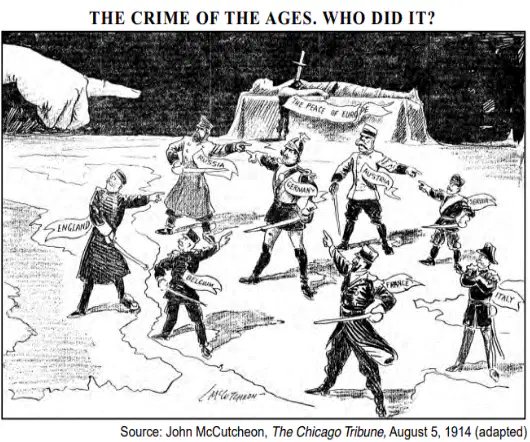
Base your answer to this question on the cartoon below and on your knowledge of social studies.
What message is the cartoonist conveying about responsibility for the situation in Europe?
All nations share responsibility for the crisis in Europe.
Germany is solely responsible for the crisis in Europe.
Italy played no part in causing the crisis in Europe.
Peace in Europe can be restored if one nation takes the lead.
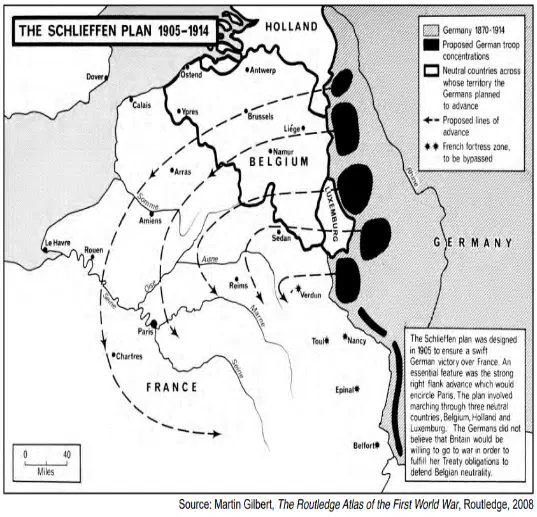
Base your answer to this question on the map below and on your knowledge of social studies. Which consequence resulted from Germany's implementation of the Schlieffen Plan at the start of World War I?
A prolonged stalemate developed on the Western Front.
Germany quickly captured Paris and ended the war.
Italy joined Germany in a rapid advance through Belgium.
The United States immediately entered the war against Germany.

Base your answer to this question on the poem below and on your knowledge of social studies.
What does the poem suggest about the experience of soldiers in modern warfare?
They faced less danger than in previous wars.
They relied heavily on advanced machinery and weapons.
Religious faith was the main source of comfort.
Scientific progress made battles easier for soldiers.

Base your answer to this question on the passage below and on your knowledge of social studies.
Which conclusion is best supported by information in this passage?
Advancements in military technology increased the dangers faced by soldiers.
Soldiers were rarely affected by new weapons during battle.
Military strategies focused mainly on hand-to-hand combat.
Environmental conditions had little effect on warfare.
Which belief was commonly shared by Karl Marx, Vladimir Lenin, and Fidel Castro?
Maintaining traditional monarchies
Encouraging private ownership of businesses
Promoting revolutionary change
Advancing religious values
One reason for the outbreak of the Russian Revolution in 1917 was
the signing of the Treaty of Brest-Litovsk
the abdication of Czar Nicholas II
the widespread discontent caused by food and fuel shortages
the implementation of Stalin’s Five-Year Plans

