
 Worksheets
World/US History Final Exam Review
Total questions: 77
Worksheet time: 1hrs 17mins
Which statement best describes the Columbian Exchange?
A religious movement that challenged Catholic Church authority in Europe
The transfer of plants, animals, people, and diseases between hemispheres
A treaty that divided the Americas between Spain and Portugal
A trade war between European empires over Atlantic colonies
A key impact of the Columbian Exchange on the Americas was
Immediate independence for American colonies from Europe
Population decline of Indigenous peoples due to disease
The abolition of global trade networks in Europe
The end of European colonization across the Atlantic
What idea was central to the Renaissance in Europe?
Humanism emphasizing human potential and achievements
Strict obedience to medieval feudal obligations
Expansion of absolute monarchs without limits
Isolation from classical Greek and Roman learning
Which event began with Martin Luther’s criticism of church corruption and led to Protestant Christianity?
Scientific Revolution in seventeenth-century Europe
Reformation in early modern Europe
Enlightenment in eighteenth-century Europe
Renaissance in Italian city-states
The English Civil War primarily centered on the conflict between
Protestants and Catholics over church rituals
King Charles I and Parliament over political power
Merchants and peasants over taxation policies
France and Britain over overseas territories
Which development is most closely associated with the Scientific Revolution?
Return to geocentric explanations without testing
Use of the scientific method for understanding nature
Revival of chivalric codes for medieval knights
State censorship of all printed scientific works
Enlightenment thinkers most strongly promoted
Reason, individual rights, and questioning authority
Divine-right monarchy and inherited privilege
Religious uniformity as the basis of order
Mercantilist trade restrictions and tariffs
Which sequence connects the French Revolution and the Reign of Terror?
Overthrow of monarchy led to radical phase with mass executions
Colonial independence movement created a new overseas empire
Religious reform expanded papal power across French society
Scientific discoveries immediately ended all political violence
Which pair is correctly ordered from earlier to later?
Printing Press then Columbus’s first voyage
Napoleonic Wars then American Revolution
Reign of Terror then Napoleonic Wars
Martin Luther’s 95 Theses then Printing Press
A student claims Pizarro’s conquest of the Incas occurred before Columbus’s first voyage. What is the best evaluation of this claim?
Incorrect, because Pizarro sailed with Columbus
Correct, because Spain first colonized South America
Correct, because the Incas predated the Aztecs
Incorrect, because Columbus voyaged decades earlier
Which definition best matches the GRAPES category of Geography?
Ways people are ranked by roles and status
Physical features of a place and their effects
How rulers, laws, and decisions are organized
Belief systems and religious practices of a society
Which example best fits the GRAPES category of Achievements?
Islam shaping cultural traditions
Gunpowder innovations developed in China
Feudal obligations between lords and vassals
Rivers providing water and fertile soil
A historian wants to analyze absolute monarchy and decision-making in medieval Europe. Which GRAPES category should they focus on?
Political Structures of governance
Religion of beliefs and practices
Economic Systems of trade and wealth
Social Structure of class roles
Merchants use triangular trade to acquire goods and build wealth. Which GRAPES category does this describe?
Economic Systems using resources and trade
Geography influencing settlement and defense
Social Structure organizing classes and roles
Religion shaping traditions and rituals
Which present-day country best matches the core territory of the Ottoman Empire at its height?
China and Manchuria
India and the Deccan
Iran and Central Asia
Turkey and nearby Balkans
Humanism during the Renaissance is best described as which focus?
Military conquest and expansion
Exclusive study of religious doctrine
Strict obedience to feudal lords
Value and potential of human beings
Which feature most clearly distinguishes Renaissance art from Middle Ages art?
Absence of human figures
Use of realism and perspective
Reliance only on flat icons
Total rejection of religion
A cartographer wants to label early modern land-based empires on a map. Which pairing is accurate?
Mughal Empire — India
Safavid Empire — Japan
Ming Dynasty — Mexico
Aztec Empire — China
Which statement best describes the Catholic Church’s influence in 14th–15th century Europe?
It controlled education, law, and daily life widely
It had little political power compared to monarchs
It was poorer than most kingdoms and nobles
It focused only on spiritual matters and charity
What was a major criticism Martin Luther made about Church leaders?
They rejected all forms of religious authority entirely
They were corrupt and too focused on wealth and power
They supported ending all church rituals immediately
They wanted peasants to read the Bible more often
What is an indulgence in the context of the Catholic Church?
A ceremony welcoming new members into the clergy
A document sold that claimed to reduce punishment for sins
A prayer recited to ask saints for special help
A tax paid yearly to support local parish buildings
Which pairing correctly identifies New World and Old World regions before 1492?
New World: Asia; Old World: Africa and the Pacific
New World: Africa; Old World: Europe and the Arctic
New World: Europe; Old World: the Americas only
New World: the Americas; Old World: Europe, Africa, Asia
What best defines the Columbian Exchange?
The spread of Christianity from Europe to Asia alone
A one-time voyage that connected Spain and the Caribbean
A trade agreement signed by European monarchs only
The massive transfer of plants, animals, people, goods, and diseases across the Atlantic
Which European power controlled the largest empire in the New World during colonization?
England controlled all islands in the Caribbean
France dominated Central America and Andes
Portugal ruled most lands north of Mexico
Spain held most of Central and South America
What was the encomienda system designed to do in Spanish colonies?
Create elected councils for local Indigenous self-rule
Replace slavery with fully voluntary paid labor
Grant settlers the right to demand Indigenous labor or tribute
Provide equal wages and land to all Indigenous workers
Which group held the highest status in the Spanish colonial social hierarchy?
Peninsulares, people born in Spain with top posts
Creoles, American-born Spanish with royal titles
Mestizos, mixed ancestry with elite land rights
Indigenous peoples, protected rulers of towns
Which statement best describes mercantilism in the 1600s–1700s?
An economic theory where colonies enriched the mother country
A political movement promoting elected parliaments everywhere
A religious revival rejecting wealth from overseas trade
A social system focused on equality between all colonies
How did mercantilism most directly affect colonies’ economies?
They specialized in a few cash crops and stayed dependent
They banned plantations to support small family farms
They freely traded with rival empires for better prices
They rapidly industrialized and exported finished goods
Which factor increased demand for enslaved labor in the Americas?
Large sugar plantations requiring intensive labor
Declining European taste for sweetened foods
Mechanized harvesters replacing field workers
Strict bans on cash crop exports to Europe
Where was sugar primarily produced in the New World during the 17th–18th centuries?
Inland regions of the Andes Mountains
Canadian provinces along the St. Lawrence
Northern colonies like Massachusetts Bay
Caribbean islands such as Jamaica and Barbados
What was the Middle Passage?
An inland migration path for early American settlers
A naval corridor used only for military convoys
The brutal Atlantic voyage transporting enslaved Africans
A peaceful trade route for European luxury goods
Why did absolutist monarchs gain greater authority during the Age of Absolutism?
They controlled church and state, limiting rival power centers
They ceded taxation powers to independent nobles
They dissolved standing armies to reduce coercion
They expanded voting rights for common citizens
What belief underpinned the Divine Right of Kings?
Parliament alone holds supreme earthly power
A king’s authority came directly from God
Rule must derive from consent of the governed
Church leaders should appoint the monarch
Which outcome followed the English Civil War and the English Bill of Rights (1689)?
England abolished Parliament and expanded royal power
England became a theocracy led by religious authorities
England returned to absolute monarchy with unchecked royal power
England became a constitutional monarchy with limited royal power
Which statement best explains how Enlightenment ideas led to the Age of Revolutions?
They focused only on art and ignored political ideas
They discouraged political change and protected traditions
They promoted obedience to monarchs and church leaders
They encouraged people to question authority and demand rights
What is the best definition of the social contract?
A military alliance between rulers to prevent rebellions
A trade treaty between rival nations to increase commerce
A church decree that sets moral duties for citizens
An agreement between people and government exchanging freedoms for order
According to Enlightenment political thought, what should governments be like?
Organized by church leaders and sacred law
Centered on royal power and divine right
Limited by laws and protecting people’s rights
Guided by tradition and hereditary privilege
Which set lists what Enlightenment thinkers wanted for the people?
Stronger nobles and weaker commoners
More freedoms and protection of natural rights
Higher taxes and fewer legal protections
More censorship and restricted participation
Which development most helped Enlightenment ideas spread widely?
The printing press and growth of literacy and salons
The closure of universities and book bans
The end of coffeehouses and public debates
The decline of cities and return to rural isolation
What are natural rights as described by John Locke?
Duties owed to the state during wartime
Rights people are born with, like life, liberty, property
Privileges granted by rulers for good behavior
Benefits earned through church membership
Which philosopher most strongly promoted religious tolerance?
John Locke
Voltaire
Thomas Hobbes
Oliver Cromwell
Which statement best summarizes Thomas Hobbes’s view of the social contract?
People are born equal with perfect moral virtue
People are naturally selfish so a strong ruler is needed
People are reasonable and can govern themselves
People should always overthrow leaders they dislike
Which idea is central to John Locke’s social contract?
Religious leaders should control civil government
Subjects owe unconditional obedience to monarchs
Property exists only by permission of kings
Governments must protect natural rights or be replaced
Which idea best summarizes Mary Wollstonecraft’s core belief about women?
Women should focus on domestic roles primarily
Women deserve equal education and civic equality
Women’s education should be limited by tradition
Women have natural rights but fewer than men
Adam Smith argued that economies work best when which principle guides policy?
Price controls set by royal ministries
State planning to manage all markets
Protective tariffs and strict mercantilism
Laissez-faire with limited government interference
Which statement reflects Adam Smith’s view of markets and wealth creation?
Gold reserves alone determine a nation’s wealth
Free competition and self-interest can increase wealth
Monopolies ensure stability and steady growth
Government wage-setting prevents market failures
Which was a long-term cause of the American Revolution?
British mercantilist limits on colonial trade
British abolition of all colonial taxes
Colonial representation in Parliament
Open western settlement without restriction
Which Enlightenment idea is clearly present in the Declaration of Independence?
Kings rule by divine right granted by tradition
Rights are privileges granted by Parliament
Equality applies only to property-owning elites
Government power comes from the consent of the governed
Why is the American Revolution considered a major turning point in world history?
It inspired other independence and democratic movements
It restored monarchies across the Atlantic world
It ended European wars for the next century
It eliminated all colonial empires immediately
Which long-term economic issue most strained France before 1789?
Rapid industrial growth and surpluses
Profits from colonies reducing taxes
Balanced budgets and low borrowing
War debt and reckless royal spending
Under the Estates System, which group paid most taxes?
First Estate of clergy and bishops
Second Estate of nobles and lords
Royal family and palace officials
Third Estate of peasants and bourgeoisie
Which Enlightenment idea challenged absolute monarchy most directly?
Primogeniture and noble privileges
Natural rights and consent of the governed
Divine right and royal infallibility
Mercantilist controls on colonial trade
Why did many in France resent voting at the Estates-General?
Only nobles and clergy could attend
The Third Estate always supervised counts
Votes were counted by head nationwide
Each estate had one vote despite sizes
Select the best example of economic mismanagement that fueled unrest.
Eliminating all grain tariffs
Expanding poor relief nationwide
Reducing military aid to allies
Heavy taxes on the Third Estate
How did Louis XVI’s leadership contribute to the crisis?
Indecision and failure to fix finances
Authoritarian reforms restoring order
Popular austerity that cut palace costs
Military victories lowering expenses
Which chain of events shows Enlightenment influence leading to revolt?
Colonial trade rises, mercantilism praised, estates cooperate
Ideas on rights spread, people question authority, demand equality
Nobles gain tax breaks, peasants celebrate, monarchy stabilizes
Bread prices fall, markets calm, support for king increases
What social inequality most fueled calls for equality and reform during the French Revolution?
Overworked, overtaxed, underrepresented Third Estate
Privileged merchants dominating colonial ports
Clergy forced to labor on noble estates
Royal family banned from political decisions
Which immediate cause most directly sparked popular anger leading to the French Revolution?
Religious unity reducing traditional local tensions
Rapid industrialization creating factory employment
Colonial victories bringing sudden French prosperity
Bread prices doubled causing urban starvation
What was the Declaration of the Rights of Man and of the Citizen primarily designed to do in 1789?
Reinstate noble privileges and feudal dues
Guarantee natural rights and legal protections
Create a permanent military dictatorship
Authorize absolute power for the monarchy
Which action marked the symbolic beginning of the French Revolution’s violent phase in Paris?
Storming a fortress-prison called the Bastille
Signing a peace with neighboring monarchs
Marching peacefully to the royal gardens
Electing a new provincial tax collector
During the Reign of Terror, which policy best illustrates suspension of due process?
Tax reductions for peasant landowners
Voluntary town meetings for debate
Open elections with secret ballots
Arrests without fair trials across France
Which group gained dominant power under Robespierre’s leadership during the Terror?
Foreign diplomats supervising elections
Paris artisans forming local guilds
Committee of Public Safety controlling policy
Royalist nobles negotiating reforms
What was one major governmental outcome of the French Revolution before Napoleon’s rise?
Restoration of Bourbon absolutist rule
Permanent confederation of provinces
Abolition of the monarchy and new republics
Establishment of a lasting theocracy
Why did many French people support Napoleon at the end of the Revolution?
He promised stability and national pride
He abolished armies and military ranks
He restored church control over laws
He rejected all Enlightenment reforms
Which factor most contributed to the failure of Napoleon’s invasion of Russia in 1812?
Rapid reinforcements from Spain
Early peace agreement with Britain
Successful French supply and logistics
Harsh winter and scorched-earth tactics
Which pair best contrasts Napoleon’s democratic and autocratic elements?
Feudal dues vs elected local assemblies
Birth privilege vs open aristocratic debate
Napoleonic Code vs censorship of newspapers
Secret police vs universal press freedom
What was a central goal of the Congress of Vienna after Napoleon’s defeat?
Restore old monarchies and balance power
Spread republicanism across all Europe
Punish France with territorial collapse
Create a single European superstate
Why is the Congress of Vienna often considered a success by historians?
It abolished every monarchy within Europe
It allowed one empire to dominate Europe
It permanently ended all local revolts forever
It secured decades without continent-wide wars
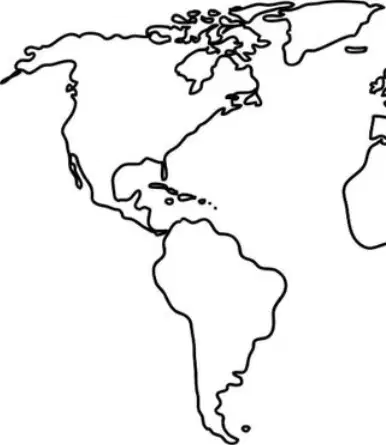
On a blank world map like the one shown, which labeled region best matches the historical location of the Inca Empire?
Along the Andes Mountains on South America’s west coast
Across the Amazon Basin in central South America
On the Yucatán Peninsula in southeastern Mexico
In the Caribbean islands north of South America
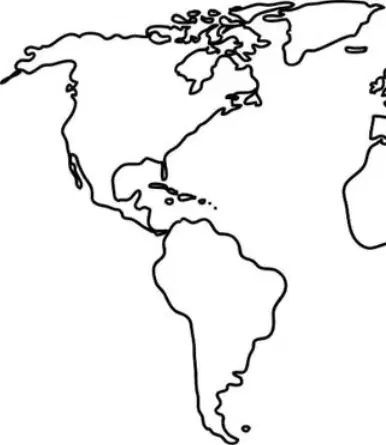
Which ocean borders the eastern coast of North America on the map?
Arctic Ocean
Atlantic Ocean
Pacific Ocean
Indian Ocean
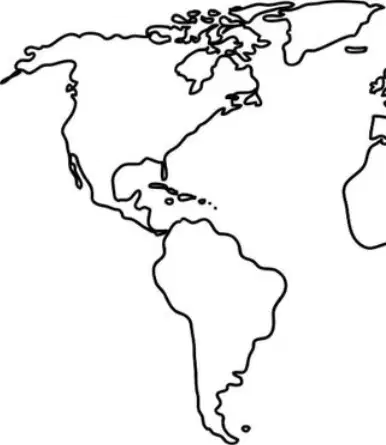
On this map, where would you place the Aztec Empire at its height around 1500?
Central Mexico in the Valley of Mexico region
Great Plains region of central North America
Northern Andes around modern Colombia
Coastal Brazil near the Atlantic lowlands
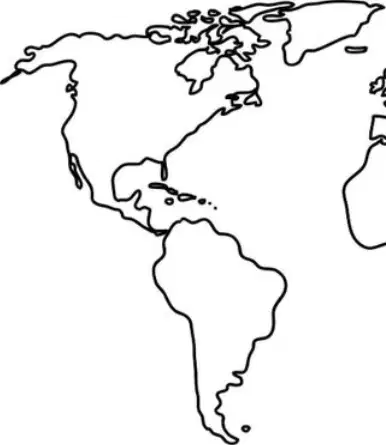
Which continent lies entirely in the Southern Hemisphere except for a small northern tip?
Africa
South America
Australia
Antarctica
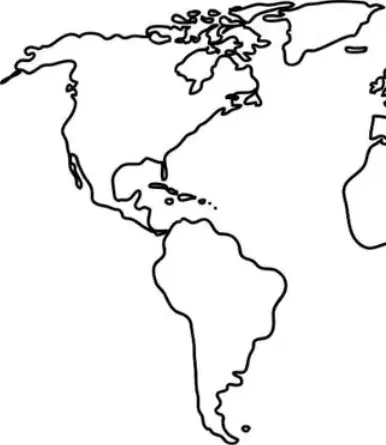
You are asked to label the 13 Original Colonies. Which area on the map should be marked?
Pacific Northwest along the Columbia River valley
Interior Great Plains of central North America
Atlantic coast of North America from Georgia to New England
Gulf Coast of Mexico from Yucatán to Veracruz
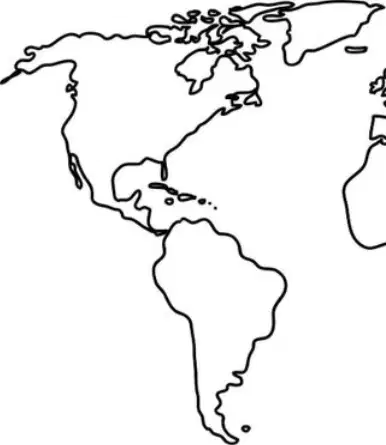
Which route arrangement best represents the Triangle Trade across the Atlantic?
Americas to the Pacific Islands to Europe and back
Africa to the Indian Ocean to East Asia and back
Asia to Australia to Antarctica and back to Asia
Europe to Africa to the Americas and back to Europe
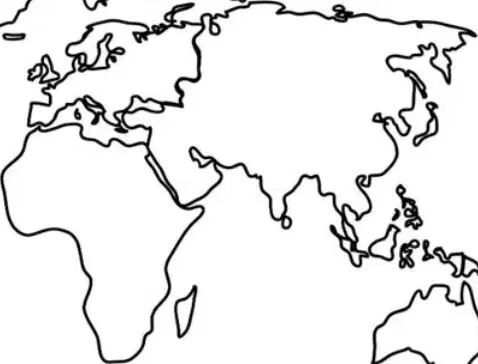
Where should the Ming Empire be labeled on the world map for the 15th century?
East Asia centered on China’s eastern heartland
Central Asia across the steppe grasslands
South Asia across the Indian subcontinent
Southeast Asia centered on the Indonesian islands
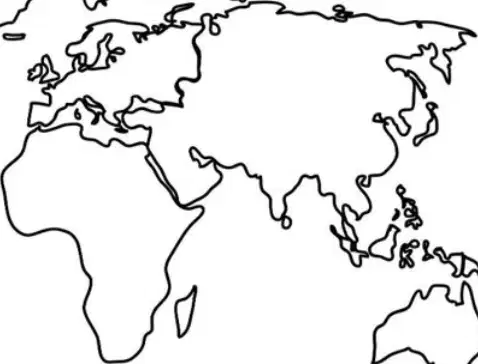
Which ocean lies south of Asia and west of Australia on the map?
Indian Ocean
Southern Ocean
Atlantic Ocean
Pacific Ocean
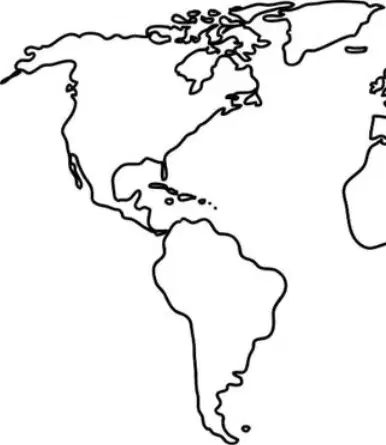
The Caribbean should be labeled in which location on the map?
Islands along the Aleutian arc in the North Pacific
Island region between North and South America in the Atlantic
Large island south of India in the Indian Ocean
Chain of islands off northern Europe in the Arctic

