
 Worksheets
General Chem Test on Bohr and Hunting Elements
Total questions: 53
Worksheet time: 53mins

How many protons does this element have?
20
40
8
2

How many electrons does this element have?
11
23
12
1

How many neutrons does this element have?
45
80
35
7

How many valence electrons does this element have?
17
35
13
7
How many electrons on the 2nd energy level does this element have?
20
40
8
2
How many subatomic particles does does this element have in the nucleus?
45
80
35
7

What element does this bohr model represent?
Si
S
Ni
H

What element does this bohr model represent?
Si
S
Ni
H

What is the mass of this atom?
9
10
19
28
If the atomic number of sodium (Na) is 11 and sodium (Na) has 10 neutrons and 11 electrons,
what is the mass of sodium (Na) ? _ amu
(a)
Atoms of an element will always have the same number of:
Neutrons
Protons
Ions
Atoms
What are spectral lines?
Dark or bright lines in a spectrum that correspond to specific wavelengths of light emitted or absorbed by an atom or molecule.
Lines that indicate the density of a liquid
Lines that indicate the pressure of a gas
Lines that indicate the temperature of a star
What is emission spectra?
The emission spectra is the unique pattern of light emitted by an atom or molecule when it transitions from a higher energy state to a lower energy state.
The emission spectra is the process of converting light energy into heat energy by an atom or molecule.
The emission spectra is the unique pattern of light emitted by an atom or molecule when it transitions from a lower energy state to a higher energy state.
The emission spectra is the absorption of light by an atom or molecule when it transitions from a higher energy state to a lower energy state.
How are spectral lines formed?
Atoms or molecules absorb or emit light at specific wavelengths.
Spectral lines are formed by the reflection of light off of objects.
Spectral lines are formed by the refraction of light through a prism.
Spectral lines are formed by the interference of light waves.
What is the relationship between spectral lines and energy levels?
Spectral lines are produced when photons transition between different energy levels in an atom.
Spectral lines are produced when neutrons transition between different energy levels in an atom.
Spectral lines are produced when electrons transition between different energy levels in an atom.
Spectral lines are produced when protons transition between different energy levels in an atom.
Why is atomic emission spectroscopy important in analytical chemistry?
Atomic emission spectroscopy is not important in analytical chemistry.
Atomic emission spectroscopy is important in analytical chemistry because it allows for the identification and quantification of elements in a sample.
Atomic emission spectroscopy is only important for qualitative analysis, not quantitative analysis.
Atomic emission spectroscopy is only important for organic chemistry, not inorganic chemistry.

For an electron to change from ground state to an excited stated it must...
Absorb energy
Release energy

Emission of light from an atom occurs when an electron
drops from a higher to a lower energy level.
jumps from a lower to a higher energy level.
moves within its atomic orbital.
falls into the nucleus.

The unknown emissions spectra belongs to the element
Hydrogen
Mercury
Neon
Sodium

The unknown emissions spectra belongs to the element
Hydrogen
Mercury
Neon
Helium
Gold - Au: Write the number of subatomic particles in gold: a. Protons:
79
82
76
74
Gold - Au: One property of gold is:
It is a good conductor of electricity.
It is magnetic.
It is soluble in water.
It is brittle.
Gold - Au: The amount of gold in one ton of mined rock is:
1 gram
10 grams
100 grams
0.1 gram
How much is each truckload of ore worth, once the gold is extracted?
$10,000
$5,000
$1,000
$500
What determines how reactive an element is?
The number of valence electrons
The atomic mass
The number of neutrons
The melting point
Gold is heavy because:
it has a high density
it is very shiny
it is a soft metal
it is rare
Write the number of subatomic particles in copper:
a. Protons: 29 b. Neutrons: 35 (for the most common isotope) c. Electrons: 29
a. Protons: 28 b. Neutrons: 35 c. Electrons: 28
a. Protons: 29 b. Neutrons: 34 c. Electrons: 29
a. Protons: 30 b. Neutrons: 35 c. Electrons: 30
Three uses of copper are:
Electrical wiring, plumbing, making coins
Making glass, writing books, growing plants
Building roads, making paper, baking bread
Painting walls, making shoes, growing rice
One property of copper is:
It is a good conductor of electricity.
It is magnetic.
It is brittle.
It is transparent.
What alloy does tin make when mixed with copper?
Bronze
Brass
Steel
Pewter
Atoms in pure metals are arranged in which way?
In a regular, repeating pattern
Randomly scattered
In isolated clusters
In a spiral formation
Why isn’t pure copper used for bells instead of bronze?
Because bronze produces a better sound quality than pure copper.
Because pure copper is more expensive than bronze.
Because pure copper is heavier than bronze.
Because bronze is easier to melt than pure copper.
How much would you have to zoom in on a map of the United States to replicate the power of an electron microscope?
You would have to zoom in until the map was magnified about 10 million times.
You would have to zoom in until the map was magnified about 100 times.
You would have to zoom in until the map was magnified about 1,000 times.
You would have to zoom in until the map was magnified about 1 million times.
Why is the microscope wrapped in acoustic blankets?
To reduce noise and vibrations that can affect observations
To keep the microscope warm
To protect the microscope from dust
To make the microscope look more attractive
What part of the atom is actually visible under the microscope?
The electron cloud
The nucleus
The protons
The neutrons
Protons determine which of the following about an element?
Its atomic number
Its mass number
Its number of neutrons
Its chemical reactivity
The number of protons is called:
Atomic number
Mass number
Isotope number
Electron number
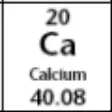
Label the atomic number, symbol, and atomic mass of calcium below:
Which of the following correctly identifies the atomic number, symbol, and atomic mass of calcium?
Atomic number: 20, Symbol: Ca, Atomic mass: 40.08
Atomic number: 12, Symbol: Ca, Atomic mass: 24.31
Atomic number: 20, Symbol: C, Atomic mass: 12.01
Atomic number: 40, Symbol: Ca, Atomic mass: 20.18
A family of elements is:
a group of elements with similar chemical properties
a group of elements with different atomic numbers
a group of elements found in the same period
a group of elements that are all gases
The noble gases got their name from:
their lack of reactivity, similar to noble metals
their bright colors in discharge tubes
their abundance in the atmosphere
their ability to form compounds easily
Electrons determine:
the chemical properties of an atom
the number of protons in an atom
the atomic mass of an atom
the color of an atom
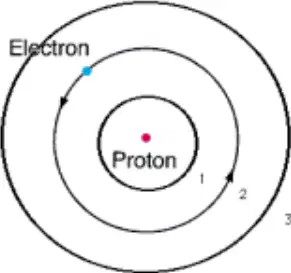
Refer to the diagram of the atom above. Give the number of atomic particles in chlorine:
a. Protons – 17 b. Neutrons – 18 c. Electrons – 17
a. Protons – 16 b. Neutrons – 17 c. Electrons – 16
a. Protons – 18 b. Neutrons – 17 c. Electrons – 18
a. Protons – 17 b. Neutrons – 17 c. Electrons – 18
Chlorine wants to ( ) one electron, becoming an ( ) .
take
give away
ion
isotope
Why do alkali metals and halogens react so strongly with other elements?
Because they have nearly full or nearly empty outer electron shells, making them highly reactive.
Because they are noble gases and do not react with other elements.
Because they have stable electron configurations and do not need to react.
Because they are transition metals with variable oxidation states.
What do sodium and chlorine make when combined?
Sodium chloride (NaCl) or table salt.
Sodium carbonate (Na2CO3)
Chlorine gas (Cl2)
Sodium hydroxide (NaOH)
Compare the properties of each of the following: State of Matter for Sodium (Na), Chlorine (Cl), and Sodium Chloride (NaCl). Fill in the blanks in the table.
Sodium (Na): Solid Chlorine (Cl): Gas Sodium Chloride (NaCl): Solid
Sodium (Na): Gas Chlorine (Cl): Solid Sodium Chloride (NaCl): Gas
Sodium (Na): Liquid Chlorine (Cl): Solid Sodium Chloride (NaCl): Liquid
Sodium (Na): Gas Chlorine (Cl): Gas Sodium Chloride (NaCl): Liquid
Compare the properties of each of the following: Reactive or Stable for Sodium (Na), Chlorine (Cl), and Sodium Chloride (NaCl). Fill in the blanks in the table.
Sodium (Na): Reactive Chlorine (Cl): Reactive Sodium Chloride (NaCl): Stable
Sodium (Na): Stable Chlorine (Cl): Reactive Sodium Chloride (NaCl): Reactive
Sodium (Na): Reactive Chlorine (Cl): Stable Sodium Chloride (NaCl): Reactive
Sodium (Na): Stable Chlorine (Cl): Stable Sodium Chloride (NaCl): Stable
ANFO is:
a mixture of ammonium nitrate and fuel oil
a type of fertilizer
an explosive made from TNT
a chemical used in water treatment
Each of the spikes on the ion chromatograph represents:
the concentration of ions present in the sample
the temperature changes during analysis
the pressure variations in the system
the flow rate of the mobile phase
Explain what happens during this reaction to release so much heat energy.
The reaction breaks chemical bonds, releasing energy as heat.
The reaction absorbs heat from the surroundings.
The reaction forms new bonds without releasing energy.
The reaction cools down the environment.
Compare the speed and explosive force of gunpowder, emulsion-gel, and C4. Which is the fastest?
Gunpowder is the fastest among the three.
Emulsion-gel is the fastest among the three.
C4 is the fastest among the three.
All have the same speed and explosive force.
What two things is Fritz Haber known for?
What worldview most describes Fritz Haber's viewpoint?
Christian
Utilitarianism

