
 Worksheets
Solid-State Chemistry Trivia!
Total questions: 50
Worksheet time: 35mins
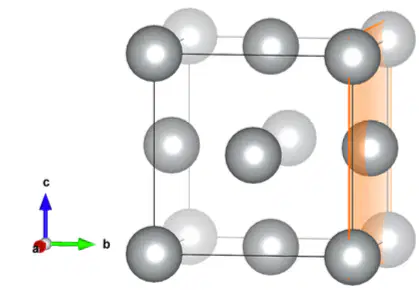
What is the Miller index of the plane?
(a)
Imagine a face-centered cubic Bravais lattice with an atom at (0,0,0). What is the multiplicity of that site? (e.g., how many atoms total are generated in the unit cell)?
(a)
Named for the father-son dynamic duo, this geometric description of the diffraction condition won the Nobel prize in 1915.
Ewald Sphere
Bragg's Law
Madelung's Constant
Born-Haber cycle
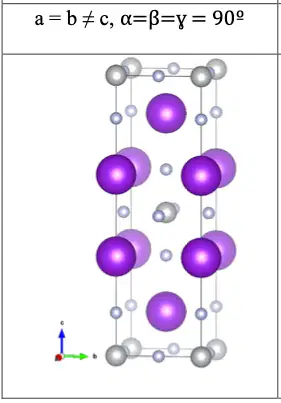
What is the Bravais lattice (centering operation + Crystal System) of this structure?
Body-centered tetragonal
Primitive cubic
Side-centered orthorhombic
Primitive tetragonal
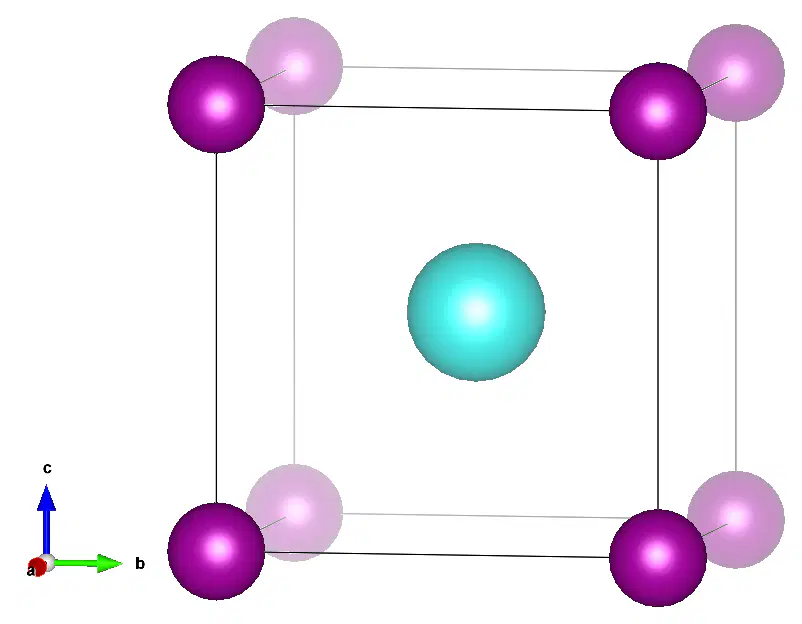
What is the Bravais Lattice (centering operation + Crystal System) of this crystal structure?
(a = b = c; α = β = γ = 90º)
Primitive Hexagonal
Body-centered cubic
Primitive cubic
Face-centered cubic
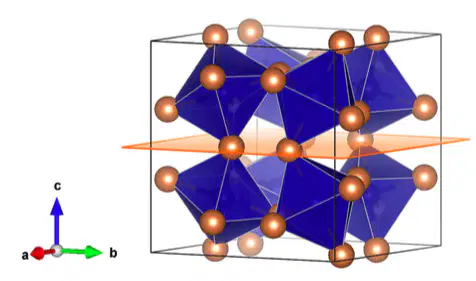
What is the Miller Index of the plane?
(a)
This thermodynamic cycle is used to estimate lattice enthalpy.
Ewald sphere
Haber-Bosch process
Bragg's law
Born-Haber cycle
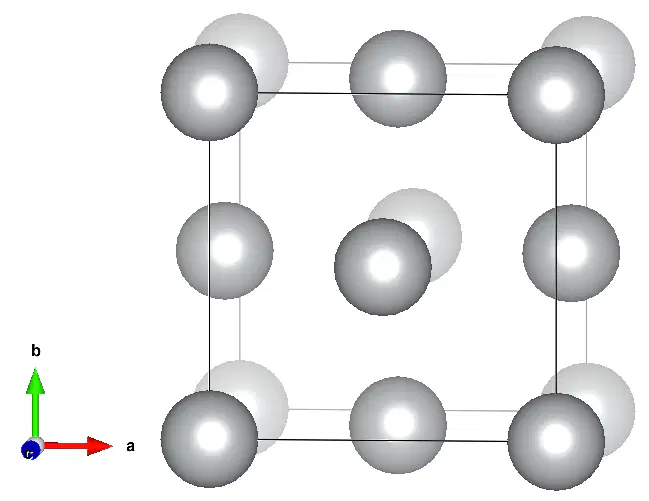
What centering operation is present in this crystal structure?
(a)
What is the stacking sequence for cubic close-packing?
(a)
Which symmetry operation is denoted by a lowercase, italicized letter (a, b, c, n, d)?
(a)
In 3D, all unit cells must be:
Hexagons
Pentagons
Cubes
Parallelpipeds
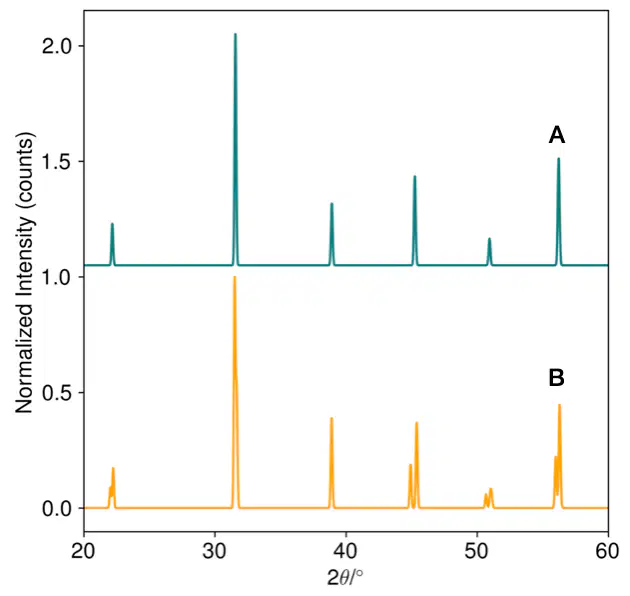
Which diffraction pattern corresponds to a crystal structure with higher symmetry?
(a)
"In reciprocal space, everyone can hear you (a) ."
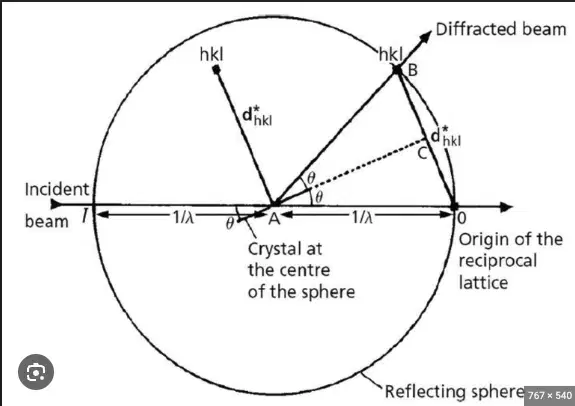
The diffraction condition can be described several ways. Which construction is shown here?
Born-Haber cycle
Ewald sphere
Bragg's law
Destructive interference
What is the stacking sequence for hexagonal close-packing?
(a)
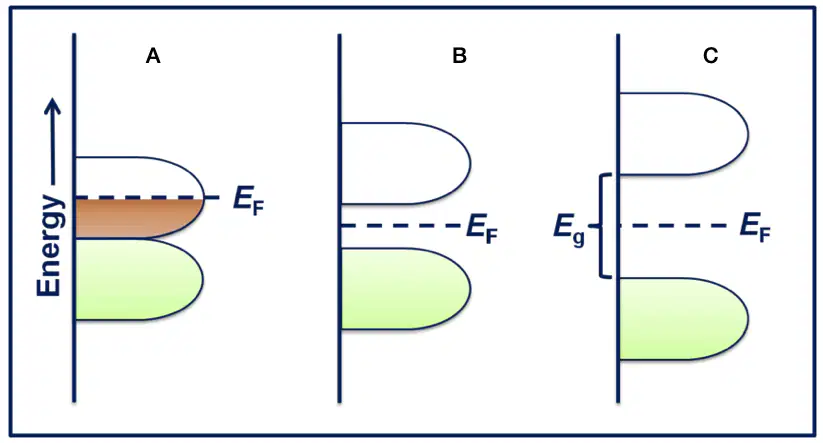
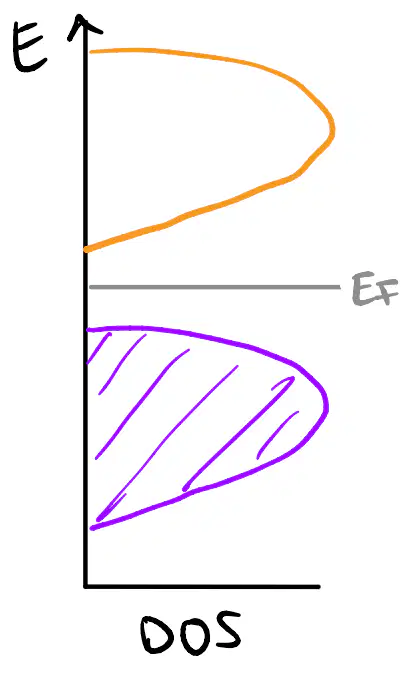
Which density of states corresponds to a semiconductor?
(a)
Which symmetry operation is denoted by a lowercase, italic "m"?
(a)
In a face-centered cubic structure, which family planes is cubic close-packed?
(a)
Many cubic space groups have 3 or -3 (3-bar) in the space group notation. Along which crystal direction are these 3-fold rotation axes?
(a)
Which symmetry operation is denoted by the convention "NM (N and M are integers)?
(a)
LiCl, NaCl, KCl, and RbCl all adopt the rocksalt structure, with cations in octahedral coordination. However, CsCl adopts a different structure (coordination number = 8). Which of Pauling's empirical "rules" best describes this observation?
Radius Ratio Rule
Madelung Energy Rule
8-N Rule
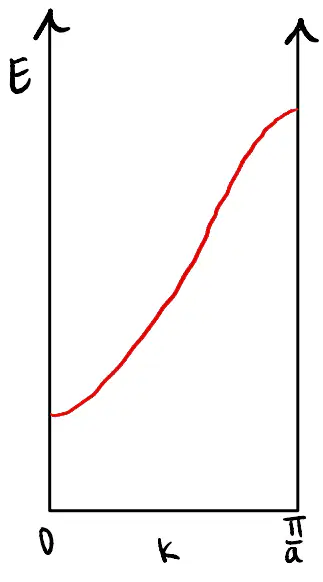
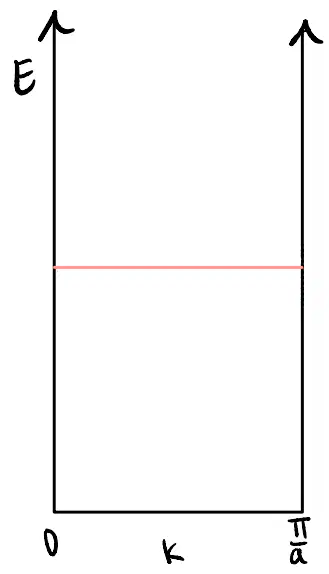
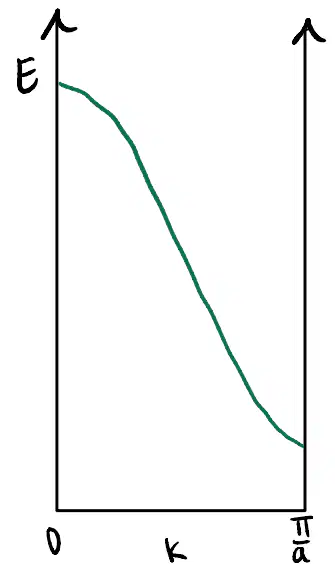
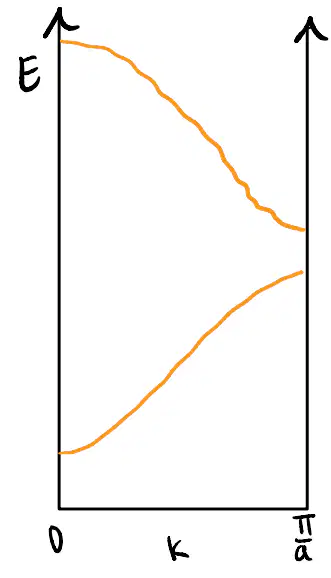
Which of these band diagrams corresponds to a 1D chain of equally-spaced s orbitals?
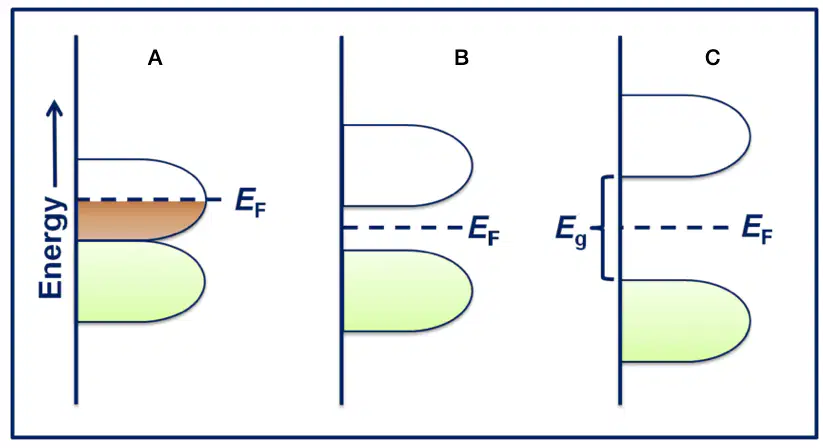
Which density of states corresponds to a metal?
(a)
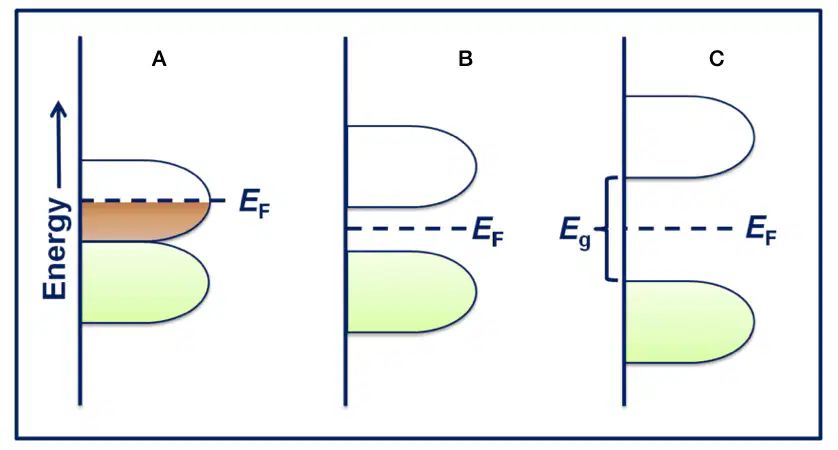
Which density of states corresponds to an insulator?
(a)
Which density of states diagram corresponds to a p-type semiconductor?
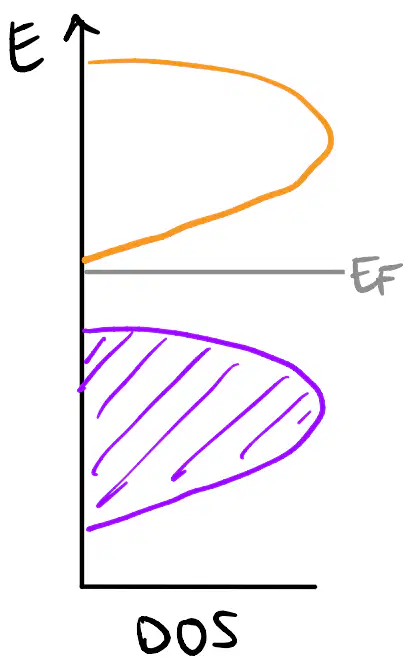
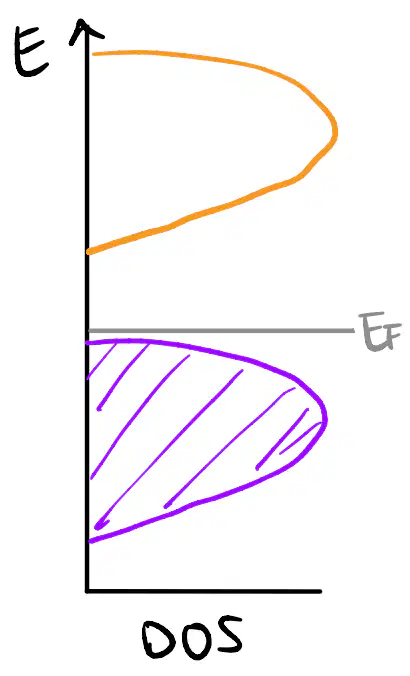
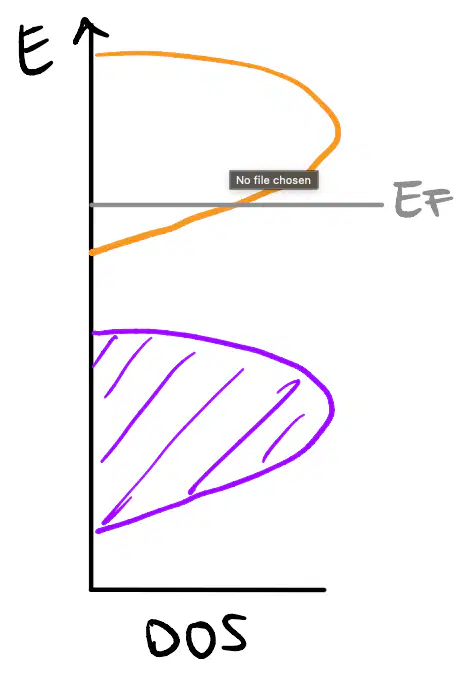
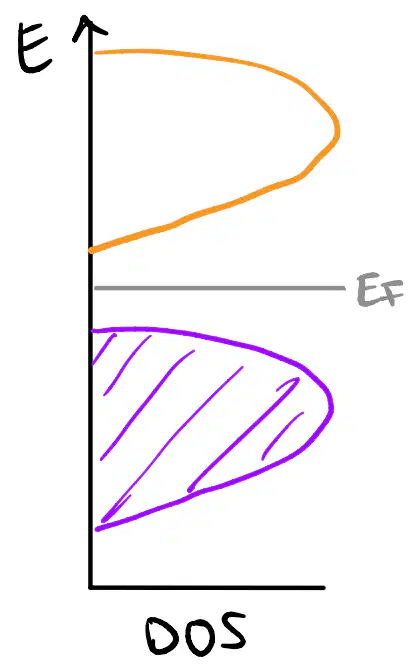
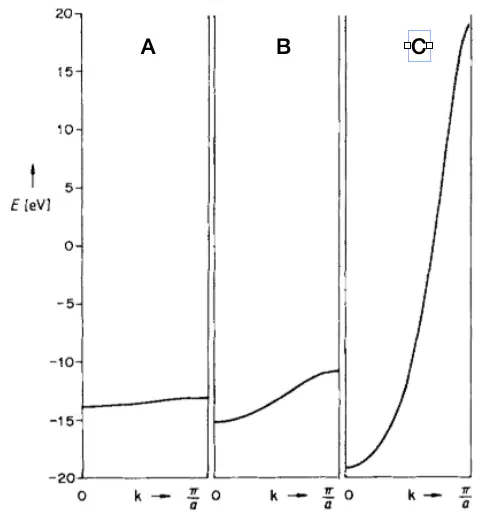
All other things being equal, which band diagram likely corresponds to a material with high mobility of electrons?
A
B
C
This synthesis method relies on strongly exothermic reactions to drive solid-state reactivity.
Reflux
Explosion
Metathesis
Schlenk synthesis
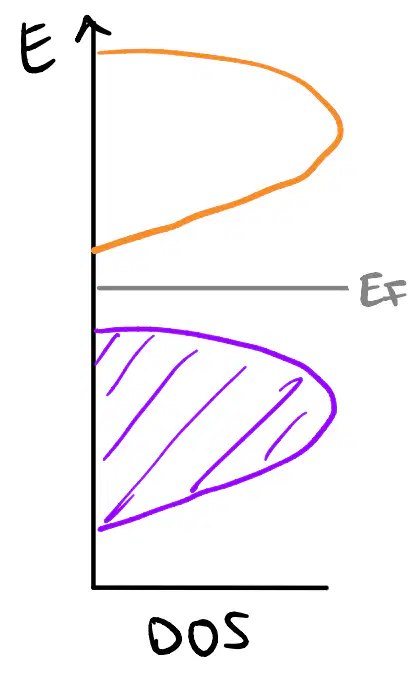
Which density of states diagram corresponds to an n-type semiconductor?
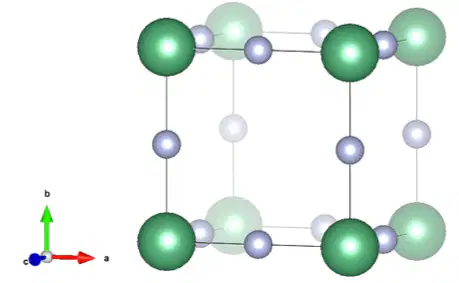
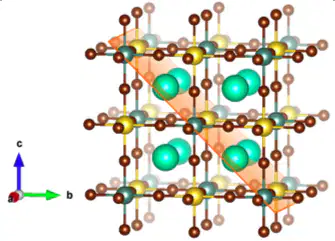
How many total small, blue atoms are enclosed in the unit cell?
(a)
What is an extinction condition?
Set of hkl values that result in maximum diffraction intensity
Cataclysmic event where species start to die off
Set of hkl values that result in 0 diffraction intensity
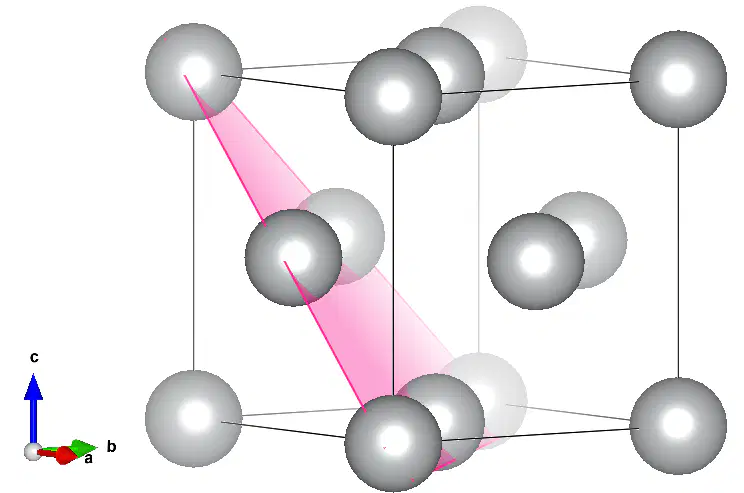
Which Miller index corresponds to a plane along the body diagonal of a unit cell?
(a)
Which symmetry operation describes a rotation plus translation?
Screw axis
Roto-transition
Glide plane
Rotoinversion
Which of these band structures corresponds to an indirect bandgap?
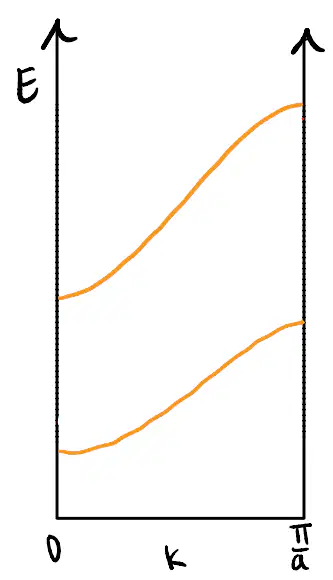
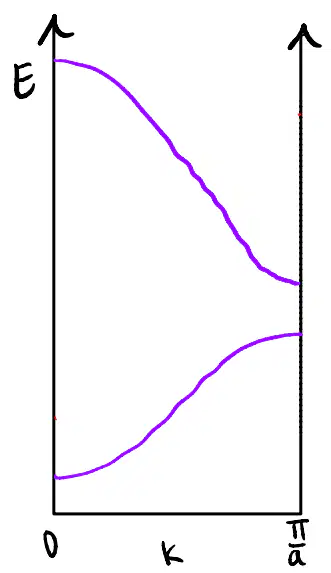
How many total large green atoms are enclosed in the unit cell?
(a)
What is the Miller index of the plane?
(a)
In a diffraction pattern (with spots), each point/spot corresponds to: (select all that apply)
A point on the reciprocal lattice
A point where the diffraction condition is fulfilled
A single atom
A set symmetry-equivalent planes in real space
What are the units of the scattering vector, Q?
Angstroms
Inverse Angstroms
Degrees
Inverse Degrees
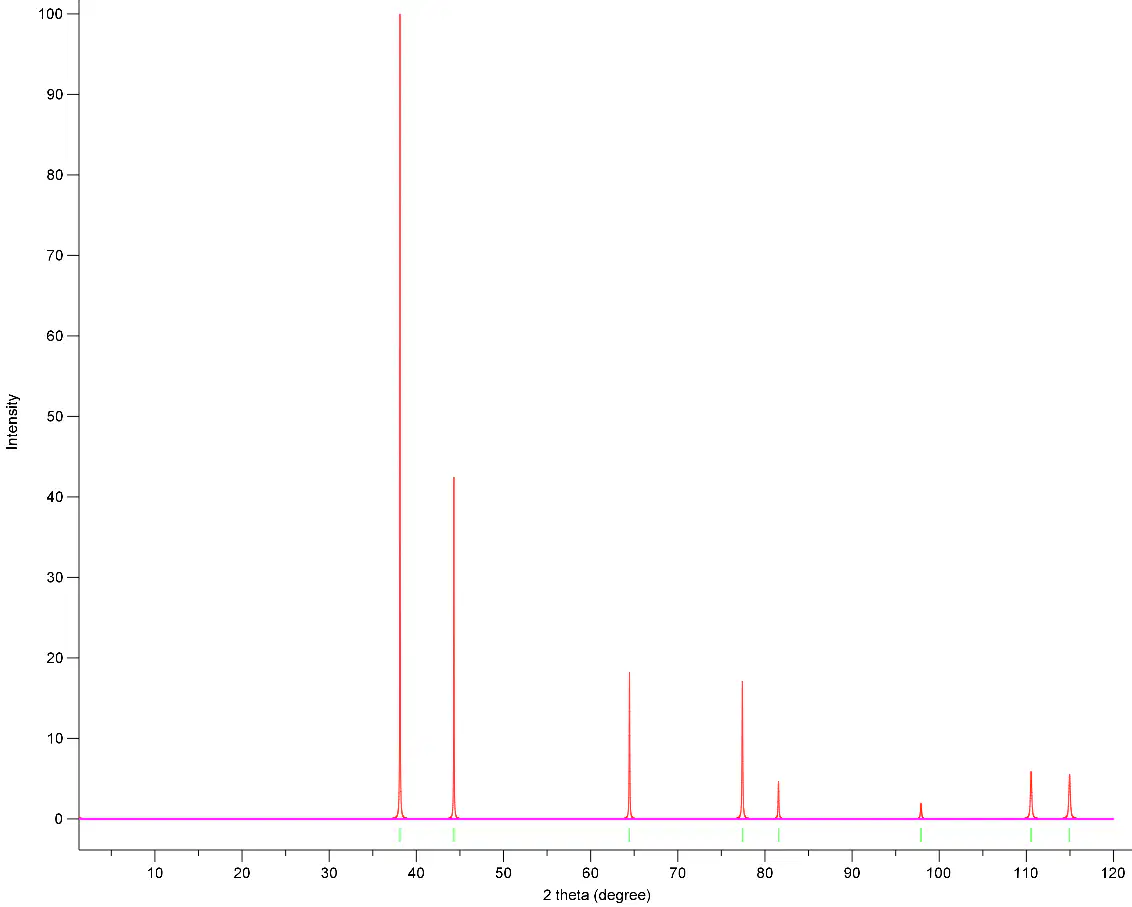
Imagine a 1D powder diffraction pattern of a primitive cubic structure. If the structure expands isotropically (e.g., the lattice parameters get larger equally), what will happen to the peaks in the diffraction pattern?
The peaks will become more intense (taller).
They will shift to higher 2theta/Q.
The peaks will split.
They will shift to lower 2theta/Q.
What is the name of the most superior crystal structure visualization program?
(a)
Which density of states diagram corresponds to an intrinsic semiconductor?
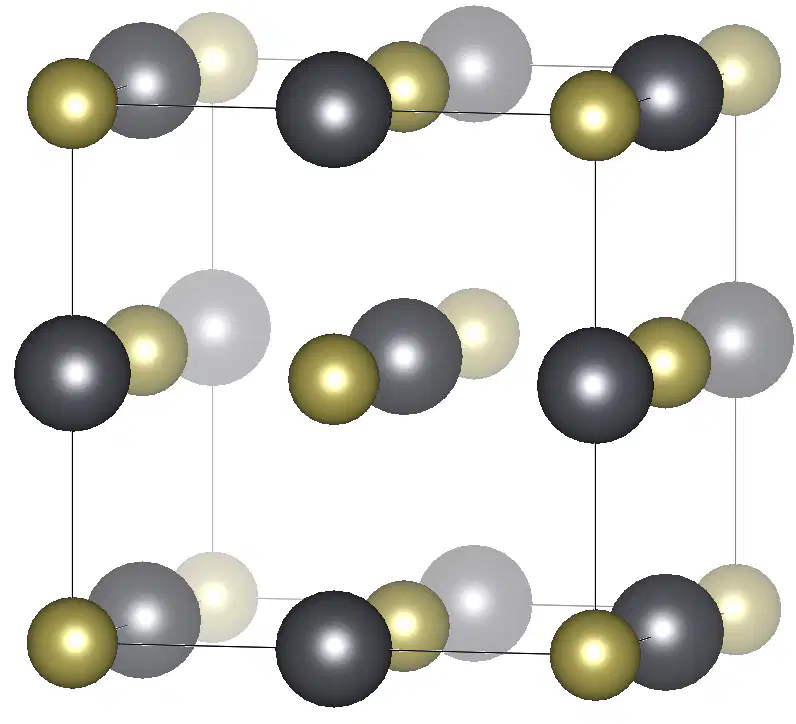
What is the chemical formula of this crystal structure?
(A = large grey; B = smaller gold)
A3B2
AB
A2B4
A2B3
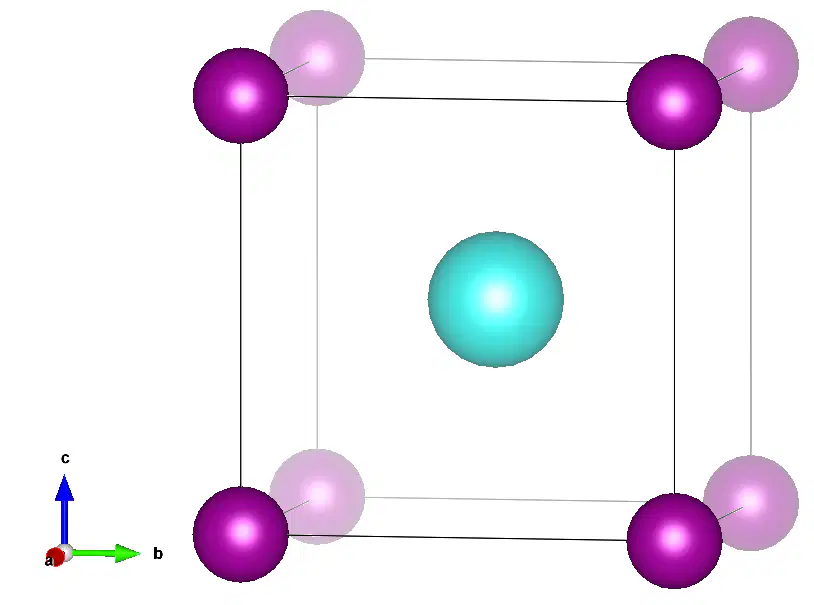
How many of each atom time are fully in the unit cell?
1 teal, 4 purple
2 teal, 2 purple
1 teal, 1 purple
1 teal, 2 purple
Which density of states diagram corresponds to a degenerately-doped semiconductor?
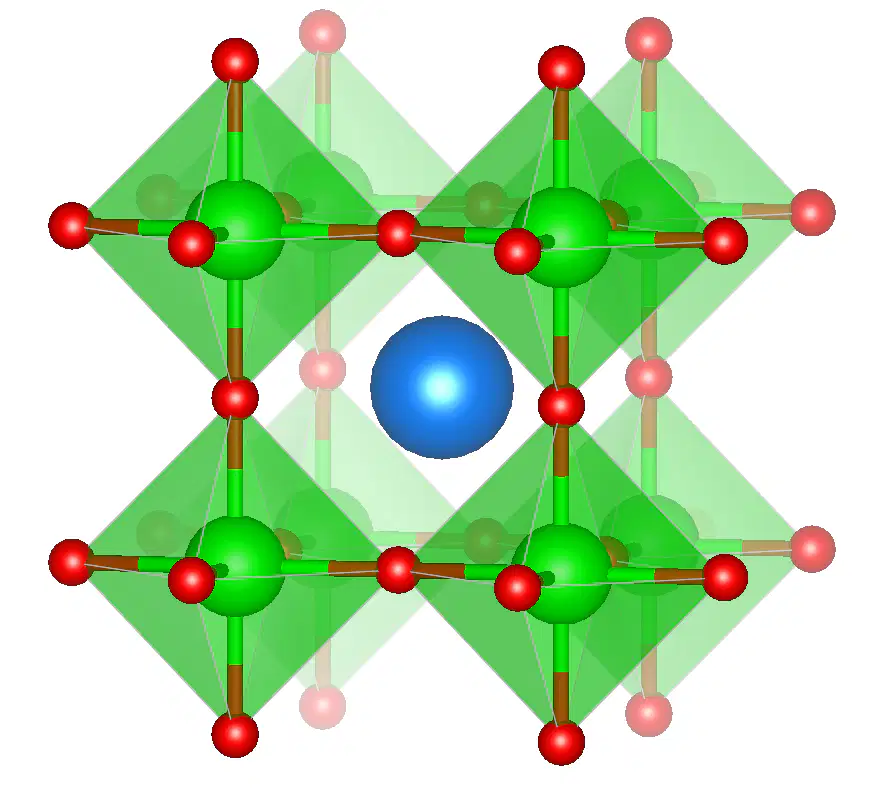
How are the green polyhedra connected? (Which polyhedral features are shared)?
Corners/vertices
Faces
Edges
Isolated
Which symmetry operation describes a reflection plus a translation?
Rotoinversion
Trans-mirror-ation
Screw axis
Glide plane
Which is the correct expression for Bragg's law?
Q = λ4πsin(Θ)
nλ=2dsin(Θ)
e{ix} = cos(x)+isin(x)
a2+b2=c2
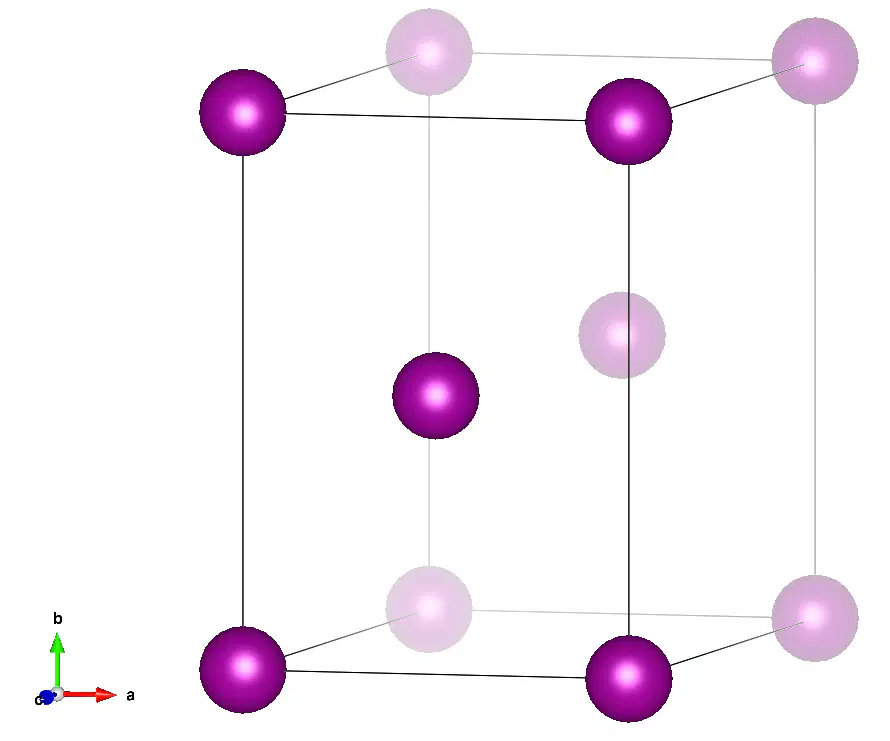
What centering operation is present in this crystal structure?
Face-centering
Side-centering
Body-centering
Edge-centering
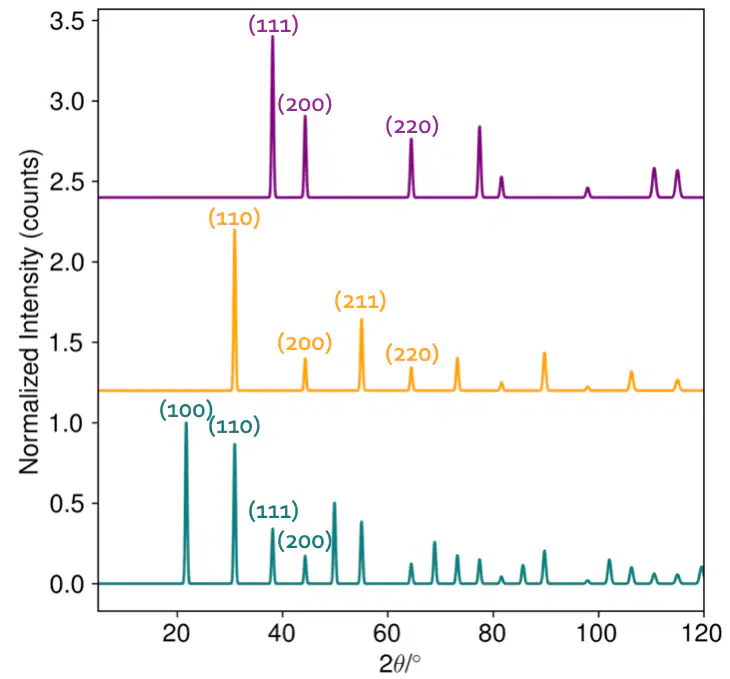
These three diffraction patterns correspond to three cubic structures: Primitive cubic, body-centered cubic, and face-centered cubic. Choose the answer that matches the color of the diffraction pattern (purple, orange, teal) to the space group symmetry.
Purple: Face-Centered
Orange: Body-Centered
Teal: Primitive
Purple: Face-Centered
Orange: Primitive
Teal: Body-Centered
Purple: Primitive
Orange: Face-Centered
Teal: Body-Centered
Purple: Body-Centered
Orange: Primitive
Teal: Face-Centered
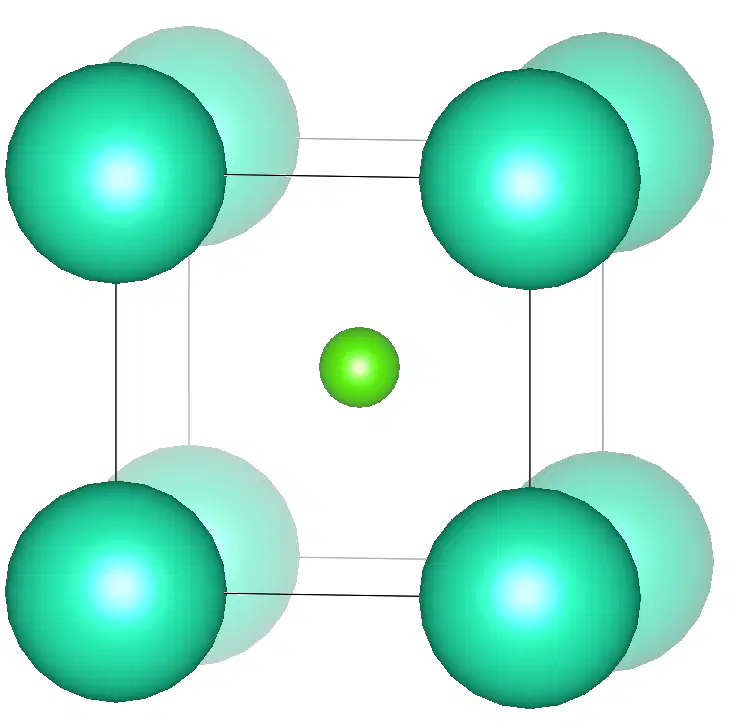
What is the chemical formula of this structure?
(A = large teal; B = small green)
AB
AB3
A2B
AB2
What is your favorite class of all time? (Select all that apply)
Solid-state chemistry!
Solid-state!
CHGN 423/523
Solid-state chem!

