
NEW
Font size
 Worksheets
BIG Q2 Exam Review
Total questions: 60
Worksheet time: 2hrs 55mins
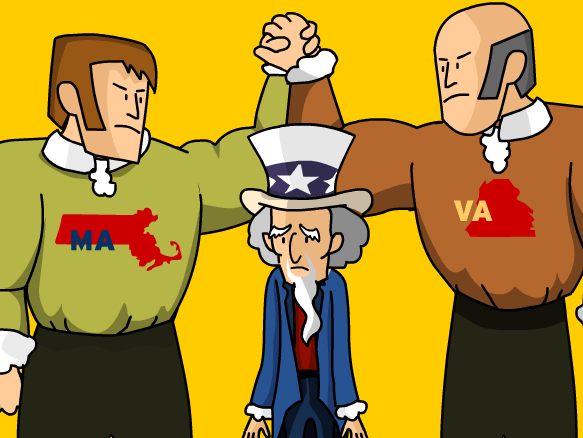
We thought the Constitution needed a list of protected rights.
Federalists
Anti-Federalists
We feared a strong central government.
Federalists
Anti-Federalists
We opposed/were against the Constitution’s first draft, without a list of rights.
Federalists
Anti-Federalists
We supported removing power from states & giving more to a national government.
Federalists
Anti-Federalists
“We the People of the United States, in Order to form a more perfect Union, establish Justice, insure domestic Tranquility, provide for the common defense, promote the general Welfare, and secure the Blessings of Liberty to ourselves and our Posterity, do ordain and establish this Constitution for the United States of America.”
The passage from the United States Constitution above is known as:
The Elastic Clause
The Bill of Rights
The Preamble
The Supremacy Clause
Who were the “framers” or “founding fathers” of the United States?
the men who wrote the US Constitution
the men who wrote the “Star Spangled Banner”
the men who fought in the war against England
the men who built the Statue of Liberty
According to the Preamble, the authority of the federal government comes from the ___.
electoral college
states
people
President
Where in the Preamble of the United States Constitution does it mention the idea of, "peace in our country?"
Justice
Common Defense
General Welfare
Domestic Tranquility
Match with the meaning
Establish justice
to gain and keep peace in the United States
set up a fair system of laws
in order to begin a better national government
to create a strong military for protection of all US citizens
for the United States of America
to gain and keep peace in the United States
for ourselves and future generations
for all citizens throughout the United States of America
in order to begin a better national government
How many branches of government does the United States have?
2
3
4
1
What is the purpose of the Executive Branch of government?
To interpret the laws and decide if they are unconstitutional
To carry out and/or enforce the laws
To make or create the laws
To rule over the United States of America
What is the purpose of the Legislative Branch of government?
To interpret the laws or decide if they are unconstitutional
To enforce and/or carry out the laws
To make or create the laws
To rule over the United states of America.
What is the purpose of the Judicial Branch of government?
To interpret laws or decide if the laws are unconstitutional/fair
To enforce and/or carry out the laws
To make or create the laws
To rule over the United States of America
The legislative branch is divided into two houses. What are they called?
The House of Representatives and the Senate
Congress and the Cabinet
The Justices and the Jury
The General Assembly and Congress
Bicameral means
1 house.
2 houses.
3 houses.
4 houses.
Who approves presidential appointments, like ambassadors, judges, and cabinet members?
Senate
House of Representatives
What is a Bill?
A law
An idea for a new law
The introduction to the Constitution
The Legislative Branch
The two chambers of ________ are the Senate and the House of Representatives
The President
Congress
a bill
committee action
To bring formal charges against a high official in government is called:
removal from office
impeachment
high crime
infraction
Powers explicitly granted to Congress by the Constitution are called:
Concurrent Powers
Inherent Powers
Enumerated (Expressed) Powers
Implied Powers
Powers NOT explicitly granted to Congress by the Constitution are called:
Expressed Powers
Inherent Powers
Delegated Powers
Implied Powers
Which of the following is an enumerated power of Congress?
The power to declare war
The power to issue driver's licenses
The power to establish public schools
The power to grant titles of nobility
In which role does the President act as the head of the nation's armed forces?
Chief Executive
Chief Diplomat
Commander-in-Chief
Chief Citizen
Which role involves the power to make treaties with other nations?
Chief Diplomat
Chief of State
Chief Executive
Chief of Party
Who is responsible for appointing cabinet members and federal judges?
Chief Diplomat
Chief Executive
Chief of State
Chief Legislator
What is it called when the U.S. Supreme Court decides whether something is legal or illegal (unconstitutional)?
supreme court review
due process
segregation
judicial review
How are federal judges selected?
Named by the President, confirmed by the Senate.
Named by the President.
They are elected.
Named by the previous judge.
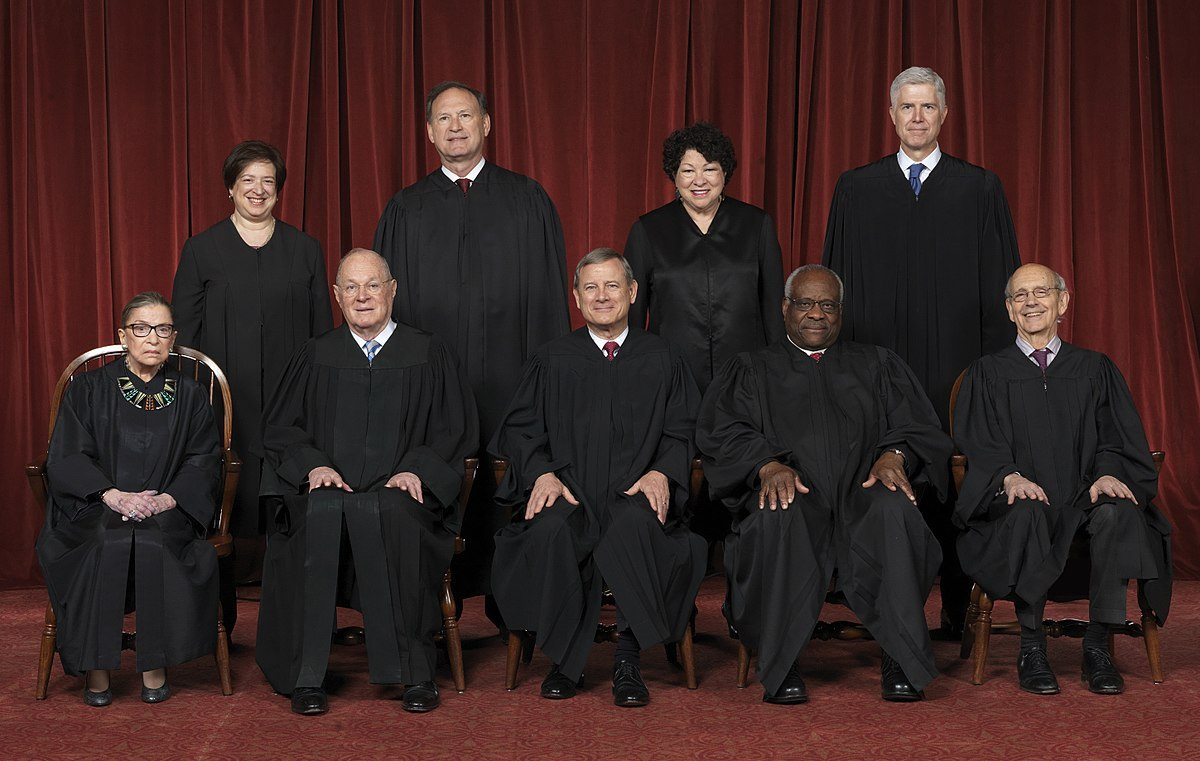
How many Supreme Court Justices sit on the Supreme Court?
7
9
5
12
What court is the only level of federal court to be created by the Constitution?
Military Court
District Court
Court of Appeals
Supreme Court
What is the correct order of the federal court system from highest to lowest?
Court of Appeals, District Court, Supreme Court
Supreme Court, Court of Appeals, District Court
District Court, Court of Appeals, Supreme Court
What is the term limit for Supreme court justices?
4 years
6 years
They serve for life
2 years

A newspaper that writes about the problems of the government is protected by the freedom of
Speech
Press
Assemble
Protest


Ken is struggling to pay his bills since he got hurt at work. He is thankful that when he goes to vote this November, he doesn’t have to pay a poll tax.
15th Amendment
19th Amendment
23rd Amendment
24th Amendment
Derek is a Black man going to vote in the election this November. He wants to make his opinion matter through voting!
15th Amendment
19th Amendment
23rd Amendment
24th Amendment
26th Amendment
Sienna stands in line at her polling place to vote in the election. She is happy that women were granted the right to vote so she can voice her opinion!
15th Amendment
19th Amendment
23rd Amendment
24th Amendment
26th Amendment
Damian just turned 18 years old in May. He can’t wait to cast his vote for the first time in the election this year.
15th Amendment
19th Amendment
23rd Amendment
24th Amendment
26th Amendment
What does the 14th Amendment do?
Protected the civil liberties of recently freed slaves
Granted citizenship to freed slaves
Defines citizenship in the United States
All of the above

What are the first ten amendments to the Constitution called?
The Big Ten
Bill of Rights
Articles of Confederation
Declaration of Independence
Magna Carta
Use the quotation to answer the question.
“In all criminal prosecutions, the accused shall enjoy the right to a speedy and public trial, by an impartial jury. ”
—excerpt from the U.S. Constitution
Which amendment is this quotation from?
First Amendment
Fourth Amendment
Sixth Amendment
Thirteenth Amendment

