
 Worksheets
Semester 1 final review for Chem- part 1
Total questions: 75
Worksheet time: 1hrs 13mins
Describes a pattern or event in nature that is always true.
Hypothesis
Problem
Scientific Theory
Scientific Law
An explanation based on repeated experimentation and observation.
law
theory
hypothesis
experiment
A law describes what happens while a theory explains why it happens.
True
False
If a theory is tested enough, it will eventually become a law.
True
False
An educated guess based on observations
Law
Theory
Hypothesis
Explanation
The one variable you change is called the
Control
Dependent (outcome) Variable
Independent (test) Variable
Experiment
What is the dependent (outcome) variable in the following experiment? What effect does an increase in temperature have on the melting rate of an ice cube?
Temperature
Size of ice cube
Shape of ice cube
Melting rate of ice cube
What is NOT an intensive property?
(Intensive means to stay the same.)
color
Temperature
Mass
luster
Homogeneous mixtures…
Are solutions
Are liquids
What is the difference between a liquid and a gas?
Gas particles have less energy
Liquid particles have more energy
Gas particles have more energy
Gas and liquid particles have the same energy
A mixture…
Cannot be physically separated into components
Can be separated into components
Sometimes can be separated onto components
Have no components
What is a physical change?
Milk souring
Rust forming
Burning wood
Crushing rocks
What is NOT a chemical change?
Milk souring
Cooking a steak
Rust forming
Boiling water
Which is NOT a physical change?
Water sitting
Carrots on a plate
steak cooking
Chalk breaking
Which is evidence of a chemical change?
Rust forms
Chalk breaking
Water boiling
Crushing rocks
A mixture that is NOT blended smoothly?
Homogeneous
Heterogeneous
Conservative
Sublimation
What is NOT a heterogeneous mixture?
Concrete
Wood
Koolaid
Dirt
What is NOT a homogeneous mixture?
Noodle soup
Water
Liquid
Koolaid


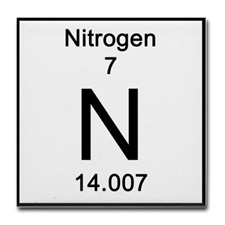
An atom has an atomic number of 15 and a mass number of 31. How many protons are there in the atom?
15
31
16
47
The electron cloud model is made up of mostly....
electron cloud
empty space
neutrons
protons

Which subatomic particle is used to identify the atom, as it never changes?
protons
neutrons
electrons
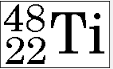

How many neutrons does this bromine atom have?
35
45
80
How many electrons are in an atom with atomic number 34 mass number of 74, and a charge of -2?
34
36
2
40

The number of protons + neutrons in an atomic nucleus is referred to as what?
Atomic number
Atomic mass
Mass number

Atoms of the same element with differing number of electrons are called ________.
elements
atoms
ions
isotopes

Atoms of the same element with differing numbers of neutrons are _______________.
isotopes
ions
elements
nucleus
Which is the correct symbol for Fluorine-18?


What were Ernest Rutherford's three contributions to atomic theory?
Discovered that the atom is mostly empty space
Discovered the nucleus- did the gold foil experiment
Used the cathode ray tube in his discovery
Discovered the electron
Discovered that the proton had a positive charge
What is the name of group number 1?
halogens
noble gases
alkali metals
alkaline earth metals
What is the name of group number 2?
transition metals
halogens
metaloids
alkaline earth metals
where are the metaloids found
far left, vertical
stair step/diagonal
far right horizontal
at the bottom
What group number are the halogens found?
18 (8A)
1
2
17 (7A)
Periodic law states that the elements are arranged according to their atomic ________ so that elements with similar chemical properties are in the same ________ and properties repeat periodically.
numbers, rows
masses, rows
masses, column
numbers, column
A row on the Periodic Table of Elements
family
period
row
isotope
Metals (select all that apply)
are found on the right side of the periodic table.
are found on the left side of the periodic table.
are good conductors of heat and electricity.
are brittle.
are malleable and ductile.
Nonmetals (select all that apply)
are found on the right side of the periodic table.
are found on the left side of the periodic table.
are good conductors of heat and electricity.
are brittle.
can be solid, liquids, or gases at room temperature.

Which element is found in group 2, period 6?
Oxygen (O)
Barium (Ba)
Selenium (Se)
Carbon (C)
Which halogen is found in period 4?
Krypton (Kr)
Xenon (Xe)
Bromine (Br)
Iodine (I)
Which element has similar chemical properties as sodium but has 7 energy levels?
Francium (Fr)
Cesium (Cs)
Rubidium (Rb)
Potassium (K)
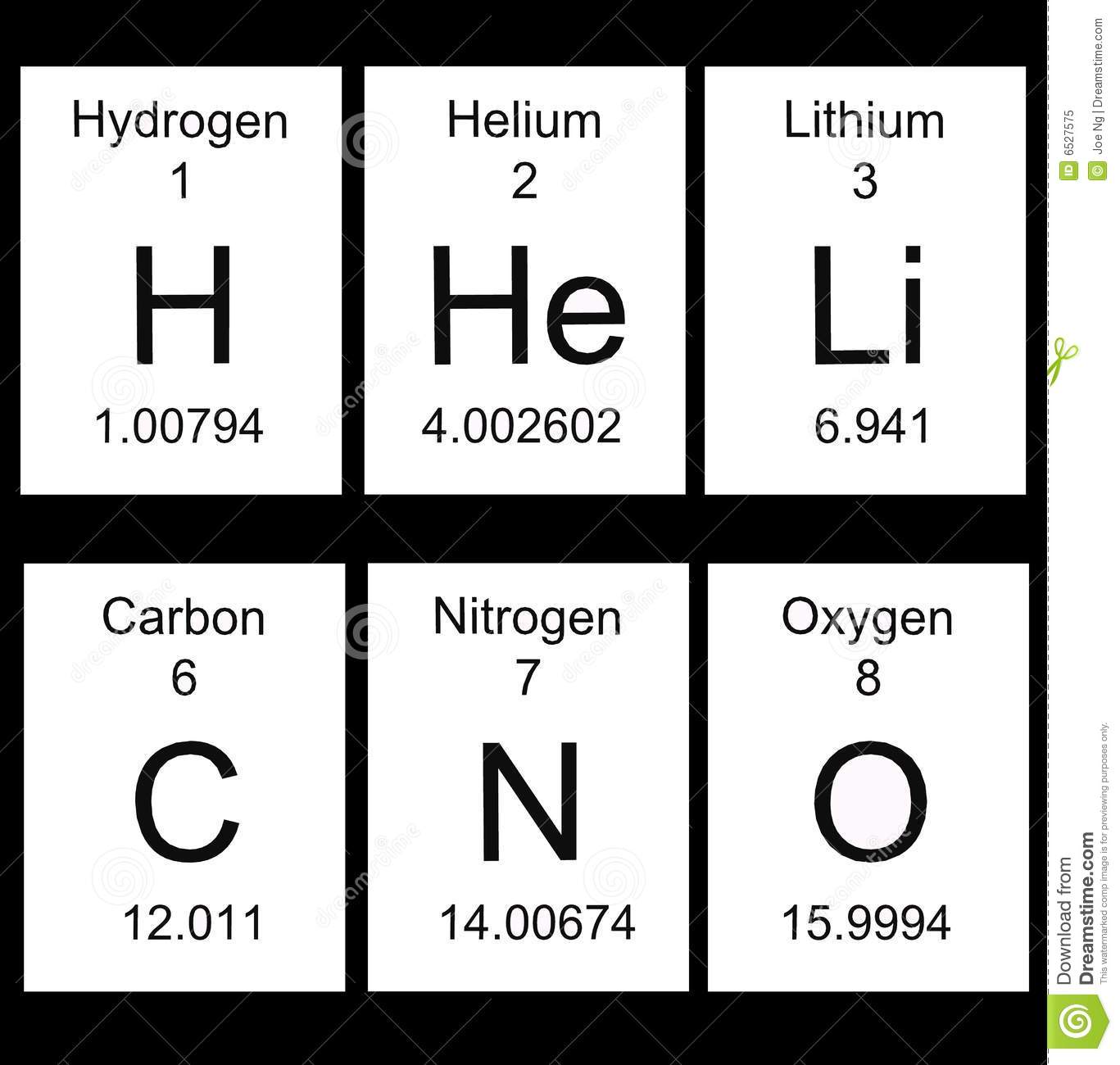
Which family on the periodic table is very stable due to the fact that they have a full outer shell
Noble gases
Alkali metals
Halogens
Alkaline earth metals
Rare earth elements
Hydrogen is grouped with the alkali metals because it
Is a gas
Has one electron in its outer energy level
Is a metal
Does not readily form compounds
A family that contains the most reactive metals is the
Transition metals
Alkaline earth metals
Alkali metals
Noble gases
Which family is group 2 elements that have 2 outer (valence) electrons
Noble gases
Alkali metals
Halogens
Alkaline earth metals
Rare earth elements
Which of the following is a nonmetal?
Aluminum
Hydrogen
Silicon
Uranium
Which family has reactive elements in group 17 that are poor conductors?
Noble gases
Alkali metals
Halogens
Alkaline earth metals
Rare earth elements
Which statement best describes the relationship between Helium, Neon, Argon and Xenon?
They are all in the same period
They are all in the same group
They are all liquids
They are all man-made
Atoms of elements that are in the same group have the same number of
Neutrons
Valence Electrons
Protons and neutrons
Protons
Which family on the periodic table is very stable due to the fact that they have a full outer shell
Noble gases
Alkali metals
Halogens
Alkaline earth metals
Rare earth elements

