
 Worksheets
IPC Fall Semester Exam Review
Total questions: 60
Worksheet time: 29mins
Which of the following statements about the metric system is correct?
The metric system uses meters, seconds, liters, and grams as units.
The metric system uses only meters and grams, but not seconds or liters.
The metric system uses liters, seconds, and grams, but not meters.
The metric system does not use any of the mentioned units.
Which of the following lists the units of measurement, the base unit and conversion factor correctly for a kilogram?
Time, meter, 1m = 100cm
Mass, gram, 1kg = 1000g
Time, second, 1s = 1000ms
Length, gram, 1km = 1000m
Which of the following lists orders the units from smallest to largest?
Millimeter, Centimeter, Meter, Kilometer
Centimeter, Millimeter, Meter, Kilometer
Millimeter, Meter, Centimeter, Kilometer
Centimeter, Meter, Millimeter, Kilometer
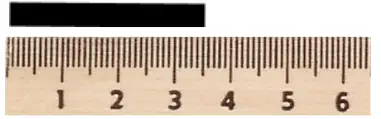
Refer to the image of the meter stick: a ruler marked in centimeters from 0 to 6 with millimeter subdivisions, and a black line that extends to the 3.5 cm mark. What is the length of the line in millimeters?
3.5 millimeters
35 meters
35 millimeters
3.5 centimeters
An Olympic gold medal has a mass of 500 grams. What is this mass expressed in milligrams?
50,000 milligrams
500 milligrams
5,000 milligrams
500,000 milligrams
Which of the following is NOT a step in the scientific method?
Hypothesis
Persuasion
Conclusion
Question
Which of the following is the purpose of the scientific method?
To prove theories are correct beyond any doubt
To conduct experiments that lead to new technologies
To systematically investigate questions and solve problems
To confirm existing beliefs and opinions
Which of the following has the steps of the scientific method in the correct order from beginning to end?
Question, Hypothesis, Procedure, Results, Conclusion
Question, Procedure, Hypothesis, Results Conclusion
Hypothesis, Question, Procedure, Conclusion, Results
Procedure, Question, Hypothesis, Results, Conclusion
Expand 2.001x10⁷ (standard form)
20000001
20010000000
20010000
200100
Write 23.65 in scientific notation.
2.365×10⁻¹
2.365×10²
2.365×10⁴
23.65×101
Why is it important to tie back long hair and secure loose clothing in the lab?
To maintain a professional appearance.
To prevent from catching fire or getting caught in equipment.
To keep your clothes clean and free from stains.
To avoid distracting others during the experiment.
What is the first step you should take if you accidentally break a piece of glassware?
Attempt to clean up the glass yourself without telling anyone.
Notify your teacher immediately and follow their instructions for cleaning up.
Leave the broken glass on the floor until the end of the lab session.
Use a broom and dustpan to sweep up the glass and dispose of it in a regular trash can.

A dog walks the path shown below. If he starts at the star, follows the arrows, and ends at the X, what is the dog’s distance? The diagram shows a triangular path with segments labeled 6 km (from the starting star upward), 10 km (across the top toward X), and 8 km (along the bottom to the right), with a compass rose indicating North at the top.
6 km
14 km
18 km
24 km
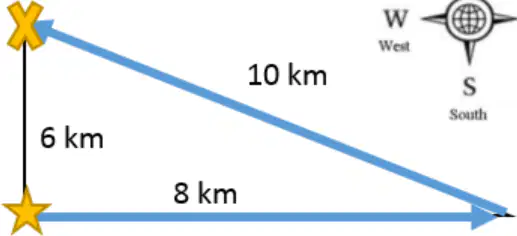
What is the dog’s displacement? The diagram shows the same triangular path with segments labeled 6 km, 10 km, and 8 km, starting at the star and ending at X, with a compass rose indicating directions.
6 km North
6 km South
24 km North
24 km South
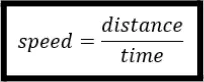
How long does it take a car to drive 300 km if it is traveling at 50 km/hr?
4 hours
5 hours
6 hours
7 hours
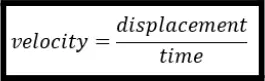
What is the velocity of a jet plane that flies 7,200 miles East in 9 hours?
720 miles per hour East
800 miles per hour East
640 miles per hour East
900 miles per hour East
What is the final velocity of a car after 2 seconds if it started from rest and accelerated at 9m/s2?
5 m/s^2
12 m/s^2
18 m/s^2
What is the acceleration when the car goes from 3 m/s to 18 m/s in 5 seconds?
3 m/s^2
13 m/s^2
15 m/s^2
If an object's distance-time graph starts at the origin and has a line that goes up and then flattens out, what does the flattening part represent?
The object is moving faster
The object has stopped moving
The object is accelerating
The object is moving backwards
Which is true about a velocity-time graph that has a horizontal line above the zero mark?
The object is accelerating
The object is moving at a constant velocity
The object is at rest
The object is slowing down
What does a horizontal line on a distance-time graph indicate?
The object is moving at a constant speed
The object is at rest
The object is accelerating
The object is changing direction
If a distance-time graph shows a line sloping upwards, what can you say about its motion?
The object is moving away from the starting point
The object is moving towards the starting point
The object is not moving
The object is moving in a circular path
If a speed-time graph shows a flat line at 0 m/s, what does that tell you?
The object is moving at a constant speed
The object is accelerating
The object is not moving
The object is changing direction
When forces on an object are balanced, the net force is…
zero
greater than zero
less than zero
downward because of gravity
Which of the following forces is acting on a leaf as it falls from a tree?
gravity
rolling friction
fluid friction
static friction
When an unbalanced force acts on an object, the object…
stays at rest
accelerates
changes its mass
changes its weight
What is the acceleration due to gravity here on Earth?
0.42 m/s^2
3.14 m/s^2
9.8 m/s^2
11.2 m/s^2
As you push a cereal box to your right across a tabletop, sliding friction acts…
to the right
to the left
upwards
downwards
What is the only thing that can start or stop an object from moving?
velocity
mass
weight
force
What does a force diagram represent?
The shape of an object in motion.
The forces acting on a single object.
The path of an object in free fall.
The energy transformations of an object.
In a force diagram, which of the following arrows indicates the direction of gravitational force acting on an object?
An upward arrow.
A horizontal arrow.
A downward arrow.
A diagonal arrow.
Inertia is the natural tendency for objects to remain at rest or in motion. The objects that tend to stay in motion or stay motionless have more
mass and speed
mass and energy
mass only
speed only
Which of the following is a non-contact force?
Frictional force
Normal Force
Gravitational Force
Space Force

The average weight of an adult male is 870 N. What is the average mass of an adult male?
70 kg
80 kg
90 kg
100 kg
How does increasing the mass of an object affect its acceleration if the force applied remains the same?
Acceleration increases
Acceleration decreases
Acceleration stays the same
Acceleration becomes negative
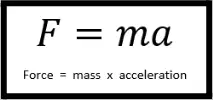
A forklift pushes with a force of 900 N to move a crate across the floor. If the crate has a mass of 45 kg, what is the crate’s acceleration while it is pushed?
5 m/s²
10 m/s²
20 m/s²
25 m/s²
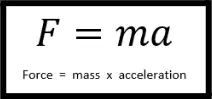
A small engine causes a 0.20-kg model airplane to accelerate at 12 m/s². What is the force exerted on the plane by the engine?
1.0 N
2.4 N
3.0 N
4.0 N
What are action-reaction pairs according to Newton's Third Law of Motion?
Forces that act in the same direction
Forces that cancel each other
Forces that are equal in magnitude and opposite in direction
Forces that are unrelated
Your teacher holds a pumpkin at the edge of the roof. If the pumpkin has a mass of 6.5 kg and the roof is 17 m high, how much potential energy does the pumpkin have?
1,082.9 J
1,095.5 J
1,102.2 J
1,175.6 J
What is the kinetic energy of a 65 kg diver moving at 19 m/s?
585 Joules
1,235 Joules
11,733 Joules
23,275 Joules
Objects have potential energy because of their:
Motion
Speed
Height
Color
Objects have kinetic energy because of their:
Height
Motion
Mass
Shape
An object’s mass affects which type of energy?
Potential energy
Kinetic energy
Both A and B
Neither A nor B
What is the unit used to measure energy?
Newtons
Joules
Kilograms
Meters
What is temperature a measure of in an object?
Total potential energy of particles
Average kinetic energy of particles
Total thermal energy of particles
Heat capacity of particles
How does heat transfer occur?
From lower to higher temperature
Between objects of same temperature
From higher to lower temperature
Without temperature difference
Which process involves thermal energy transfer through particle collisions?
Radiation
Convection
Conduction
Combustion
Which material is considered the best insulator?
Copper
Aluminum
Foam insulation
Silver
How does energy from the Sun reach Earth?
Through convection
As radiant energy
Through conduction
By combustion
What are examples of good thermal conductors?
Plastic and wood
Silver and copper
Foam and fiber
Air and water
Which of the following best describes the amplitude of a wave?
The distance from crest to trough
The height from the rest position to the crest
The speed at which the wave travels
The number of waves passing a point per second
What happens to the wavelength of a wave if its frequency increases, assuming the speed remains constant?
The wavelength increases
The wavelength decreases
The wavelength becomes zero
The wavelength stays the same
Which type of wave requires a medium to travel through?
Electromagnetic waves
Mechanical waves
Both A and B
Neither A nor B
Which part of a wave is the highest point above the rest position?
Wavelength
Amplitude
Crest
Trough
What is the distance between two consecutive crests or troughs called?
Frequency
Wavelength
Amplitude
Speed
What is the wavelength of a wave with a frequency of 5 Hz and a speed of 20 m/s?
4 m
0.25 m
100 m
15 m
If a wave travels 60 meters in 3 seconds, what is its speed?
20 m/s
180 m/s
15 m/s
63 m/s
Which of the following correctly describes the relationship between frequency and wavelength for waves traveling at the same speed?
As frequency increases, wavelength stays the same
As frequency increases, wavelength increases
As frequency increases, wavelength decreases
Frequency and wavelength are unrelated
Label the parts of the wave.
Choose the wave with the highest frequency

