
 Worksheets
Astronomy Fall Semester Final Exam Review
Total questions: 208
Worksheet time: 3hrs 28mins
Captures and magnifies light to make faraway objects seem closer.
Telescope
Compass
Sextant
Astrolabes

What is this?
Compass
Astrolabe
Telescope
Sextant

What is this?
Compass
Telescope
Sextant
Astrolabe
Can be used for navigation, to tell time, and locate the sun and stars.
Compass
Astrolabe and Sextant
Astrolabe and Compass
Sextant


An imaginary dome of the sky onto which all celestial objects such as stars, moons and planets can be plotted.
Sun
Celestial Sphere
Apparent Motion
Real Motion
How a celestial object seems to move.
Real motion
Rotation
Revolution
Apparent motion
The highest point the Sun can be in the sky.
Sunrise
Sunset
Solar noon
Midnight
Polaris will always be in this direction.
North
South
East
West
An object's __________ will always point in the opposite direction of the Sun.
Zenith
Altitude
Shadow
Solstice
An observer's shadow will be shortest when the Sun is at ________.
Sunrise
Sunset
Midnight
Solar noon
An observer's shadow will be longest during which season?
Summer
Winter
Fall
Spring
On ___________, the Sun will be directly overhead on solar noon during March 21 and September 21.
Equinoxes
Summer Solstice
Winter Solstice
Polaris
On June 21st, the direct rays of the sun will be at ________.
Tropic of Cancer
Tropic of Capricorn
Equator
North Pole
On March 21st, NYS will receive _________ hours of daylight.
9
15
0
12
On which day will the Sun be out the longest in NYS?
June 21
March 21
September 23
December 21
The apparent motion of the Sun will have it rising in the ______ and setting in the _______.
north/south
east/west
west/east
south/north
What name is given to the array of constellations that the ecliptic plane passes through?
Horoscopes
Constellations
Array of constellations
Zodiac
Polaris will always be in this direction.
North
South
East
West
What is the Sun's path through the celestial sphere called?
meridian
declination
ecliptic
right ascension
Which of the following correctly explains the plane of the ecliptic?
The location on Earth where you can find all the constellations of the Zodiac
The spot on the Equator where an observer can see all the stars over the course of a year
A great circle on the celestial sphere representing the sun's apparent path during the year. It contains the constellations of the Zodiac.
The projection of Earth's equator into Space
Which statement correctly describes the rising and setting of the Sun?
the Sun rises in the east and sets in the west
the Sun rises in the west and sets in the east
the Sun rises in the north and sets in the south
the Sun rises in the west and sets in the north
the sun, stars, and moon rise in the east and set in the west each day because
the sun is revolving
the earth is rotating
the celestial sphere is revolving
the ecliptic is rotating
Match the following Constellations

Aquarius

Aries

Cancer

Capricorn

Gemini

Leo

Libra

Pisces

Sagittarius

Scorpius

Taurus

Virgo

Cassiopeia

Orion

Ursa Minor

Ursa Major

Ophiuchus

Draco

Cepheus

Sagittarius
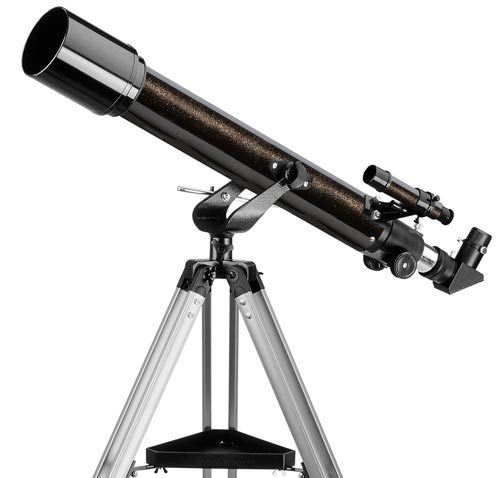
A refracting telescope uses _______ to focus light.
Lenses
Mirrors
Lasers
Water
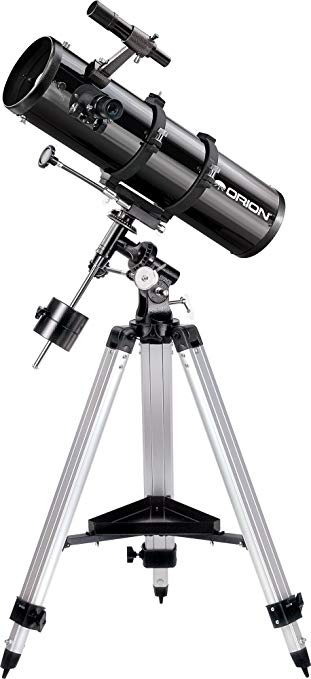
Reflecting telescopes use _______ to focus light.
Lenses
Glass
Mirrors
Lasers
One reason that reflective telescopes are more commonly used in space technology is that
they avoid the problem of chromatic aberration
refractive lenses will not work in space because there is no air
refractive lenses melt in space because they absorb energy
they use mirrors, which produce perfect image
An arrangement of stars as seen from Earth.
constellation
model
star
sun
Something we observe to be similar over and over again.
constellation
data
model
pattern
Earth’s revolution around the sun affects what we see in the sky at different times of day.
True
False

Which explanation matches the reasoning why different constellations are visible from Earth during different seasons?
Why are the constellations visible to earth when it is at position 7 different from the constellations visible from earth when it is at position 3?

The diagram below represents our solar system. This system is best classified as....
heliocentric, with the sun at the center
heliocentric, with the earth at the center
geocentric, with the sun at the center
geocentric, with the earth at the center
The longest day of the year occurs during the...
Spring equinox
Fall Equinox
Winter Solstice
Summer Solstice

Which letter best corresponds to a Lunar Eclipse?
A
B
C
D
One which days does the length of daylight = length of the night?
Summer Solstice
Winter solstice
Autumnal or Spring Equinox
Halloween

Which letter best corresponds to a Solar Eclipse?
A
B
C
D
When is the Sun closest to the Earth?
Early July
Early January
Sept 21/22
March 21/22
What is the primary cause of seasons on the Earth?
distance from the Sun
Earth's rotation on the axis
Earth's axial tilt
Phases of the Moon

Using the diagram, what kind of eclipse is represented?
lunar
annular
solar
partial
The dark shadow part of an eclipse is called the ....
penumbra
ring of fire
umbra
inner halo
The lightly shadowed part of an eclipse.
penumbra
light-umbra
umbra
ecliptic
Which of the following best describes the field of Astronomy?
Applying math and science to understand the universe
The practice of studying objects in space to better understand them
Applying myth and legend to understand how the stars influence human lives
BOTH applying math and science and the practice of studying space
Which of the following best describes Astrology?
Applying math and science to understand the universe
The practice of studying objects in space to better understand them
Applying myth and legend to understand how the stars influence human lives
BOTH applying math and science and the practice of studying space
Which statement holds true about ancient astronomers (before 1500 AD)?
Ancient astronomers could accurately track the movement of stars and planets
Ancient astronomers lacked the modern-day tools to study the heavens
Ancient astronomers were a bunch of hacks that didn't understand science or reason
Which of the following is the correct definition for the GEOCENTRIC model of the universe?
Earth is the center of the universe
Earth is the center of the solar system
The Sun is the center of the universe
Which of the following is the correct definition for the HELIOCENTRIC model of the solar system, as Copernicus described it?
Earth is the center of the universe
Earth is the center of the solar system
The Sun is the center of the solar system
Which of the following correctly describes Copernicus's contribution to modern Astronomy?
He was one of the first to propose the geocentric model
He developed a series of laws to describe the motion of planets
He cataloged hundreds of stars and their movement
He defied the Catholic Church and proposed the heliocentric model of the universe
Which of the following correctly describes Kepler's contribution to modern Astronomy?
He was one of the first to propose the geocentric model
He developed a series of laws to correctly describe the motion of planets
He cataloged hundreds of stars and their movement
He defied the Catholic Church and proposed the heliocentric model of the universe
Choose 2. Which of the following reasons is why Astronomers still study constellations today?
Constellations can be used as a form of navigation
Constellations help mark the location of deep space objects
Constellations help scientists to tell Greek myths
Constellations can be used to draw pictures in the night sky
What is a zodiac and why is it significant?
It is a group of constellations near the path the Sun takes
It is a group of mythical monsters
They define your major life events

What is the presumed purpose of Stonehenge
To see when there will be an alien invasion
To determine your location on Earth
To measure the position of the stars
To tell people the season of the year
There have been many different types of calendars created throughout history. What have almost all of them had in common?
They have the same number of days in a week
They all have the same names for months
They all rely on the movements of the Earth, Moon, and/or Sun
They all rely on the tidal patterns of the ocean
Historically, what is the most main reason all people have observed and charted things in space?
To predict solar eclipses
For farming purposes
To worship their gods
To tell stories about the stars
What is the primary function of a sundial?
To tell time using the stars
To measure the phases of the moon
To tell time based on the position of the sun
To track the position of the planets
Which of the following is a key limitation of sundials?
They cannot work during daylight hours
They are accurate only on cloudy days
They do not work at night or when the sky is overcast
They can only measure time in minutes

What did Johannes Kepler contribute to astronomy/physics?
What is the biggest difference between the Geocentric Model and the Heliocentric Model?
the shape of the planets' orbits
the movement of the moon
the center of the solar system

What is the name of this model?
Heliocentric Model
Kepler Model
Galileo Model
Geocentric Model

What is the name of this model?
Heliocentric Model
Geocentric Model
Circle Model
Aristotle Model
What is at the middle of a Heliocentric system?
Mars
Moon
Sun
Earth
What is at the middle of a Geocentric system?
Sun
Neptune
Earth
The Universe
What does the word "Helio" mean?
Earth
Mars
Sun
Juputer
What does the word "Geo" mean?
Sun
Earth
Milky way
Back
Which constellation is the Big Dipper asterism located within?
(a)
Select the correct order of waves on the Electromagnetic Spectrum
Radio, Microwave, Infrared, Visible, Ultraviolet, X-ray, Gamma ray
Gamma ray, X-ray, Ultraviolet, Visible, Infrared, Microwave, Radio
Visible, Microwave, Infrared, Ultraviolet, X-ray, Gamma ray, Radio
Microwave, Radio, Visible, Infrared, Ultraviolet, X-ray, Gamma ray
Why may have ancient cultures studied astronomy?
For timekeeping purposes
For timing agriculture (planting and harvesting)
For astrology or religion
For historical record keeping

Astrology can be defined as
the idea that the positions of the stars and planets at the time of our birth determine our personalities and influence our future.
the scientific study of celestial objects such as planets, moons and stars.
the scientific study of astrological phenomena such as the Big Bang Theory.
the observation of the heavens using telescopes and other instruments.
A collection of ideas and beliefs that sound like science but not supported by evidence, such as astrology, is known as...
Pseudoscience
Fact
Theory
Law
Fill in the blank:
The Scientific Revolution happened ___________ the Renaissance.
before
during
after
The scientific method is a procedure for...
following teachings of Aristotle
navigation and discovery
creating new inventions
gathering and testing ideas

Which moon phase is shown?
Waxing Crescent
Waning Gibbous
Full Moon
First Quarter

Which moon phase is shown?
New Moon
First Quarter
Waning Gibbous
Waning Crescent

Which moon phase is shown?
First Quarter
Waxing Crescent
Full Moon
Waning Crescent

Which moon phase is shown?
New Moon
Third or Last Quarter
Waxing Gibbous
Full Moon

Which moon phase is shown?
First Quarter
New Moon
Waning Crescent
Waxing Crescent

Which moon phase is shown?
Waxing Gibbous
Waxing Crescent
New Moon
Third or Last Quarter

Which moon phase is shown?
Waxing Crescent
Waning Crescent
Waning Gibbous
Waxing Gibbous

Which moon phase is shown?
Third or Last Quarter
First Quarter
New Moon
Waxing Crescent
When the moon is waning it is __________________.
Growing, or getting bigger
Shrinking, or getting smaller
When the moon is waxing it is ____________________.
Growing or getting bigger
Shrinking or getting smaller

How many Earth days are in a lunar month?
27.5 days
30 days
28 days
29.5 days
Which term is used to describe the phase of the moon in which the visible surface of the moon is completely illuminated?
new moon
full moon
waning crescent
waxing gibbous

When the moon passes into the shadow that is being cast by the Earth, a
(a) occurs.

When the Moon passes directly in front of the Sun from your position on Earth, a (a) happens.

If a celestial body like a planet or a moon is covered completely from receiving the Sun’s light, and the body is perfectly in line with the Sun, a (a) occurs.

Generally, any beach location will have (a) each day.

Tides are caused by...
the rotation of the Earth
the orbit of the Moon
the gravitational pull of the Sun and Moon
wind currents

When do Spring Tides occur?
During the new moon and full moons
During the crescent moons
During the Spring
During the gibbous moons

What moon phase comes after this?


One Day
One Week
Two Weeks
One Month


Use the calendar to predict the moon phase on March 30th.
New Moon
Full Moon
Third Quarter
First Quarter

Which tide would be the highest and lowest?
Tide 1 would be highest
Tide 1 would be lowest
Tide 2 would be lowest
Tide 2 would be highest

What phase is number 4?
Waning crescent
Waning gibbous
Waxing crescent
Waxing gibbous

What kind of eclipse is created when the moon blocks the sun casting a shadow on the earth?
Lunar
Geo
Solar
Annual
Why don’t we have a solar eclipse every new moon?
The Earth is too big
The moon is too small
The moon’s orbit is tilted 5 degrees in respect to the earth
The moon only orbits the earth 2 -5 times a year
Shadow when the sun is partially blocked
umbra
penumbra
overshadow
undershadow
Shadow when the sun is totally blocked
overshadow
ultishadow
penumbra
umbra

Solar eclipse
Lunar eclipse
Transit eclipse
Earth eclipse

Astral eclipse
Lunar eclipse
Solar eclipse
medial eclipse

Which tide would be caused by the positions of the sun and moon in the picture?
High Tide
Low Tide
Spring Tide
Neap Tide

Which tide would be caused by the positions of the sun and moon in the picture?
High Tide
Low Tide
Spring Tide
Neap Tide
Which tide results in the LARGEST movement of water?
Spring Tide
Neap Tide
Rip TIde
Ebb Tide
Which of the following has the GREATEST gravitational effect on the tides?
Earth
Moon
Sun
Which of the following has the LEAST gravitational effect on the tides?
Earth
Moon
Sun
What causes the high tide area that is opposite the moon?
the centrifugal force of the earth
the moon
the sun
high wind speeds
The sun influences the tides just as much as the moon.
True
False
Spring tides are when the sun and moon are lined up and working together.
True
False
Which response best explains changing tides on Earth:
The Moon circles the Earth and creates a bulge as it sweeps around. The bulge is high tide.
The Earth rotates and different regions are pulled into the bulge created by the Moon's gravitational pull.
The periodic earthquakes from the mid-ocean ridge send micro-tsunami twice per day to coastlines around the world.
Powerful thunderstorms form twice a day in the middle of the oceans, these send powerful waves to coastlines.


The REVOLUTION around the Sun and the TILT on the Earth's axis cause what?
Seasons
Rain
Tidal Waves
Moon Phases.

Which part of the Earth is receiving the most direct Sunlight?
Northern Hemisphere
Southern Hemisphere
Polar Hemisphere
MidAtlantic Hemisphere
What two factors determine the apparent path of the sun?
season and longitude
date and longitude
season and latitude
rotation and revolution
How many hours of daylight does the equator get when the Earth is tilted towards the sun?
24
0
12
16

On this day, which location has the greatest number of hours of daylight?
E
B
C
D
Which color has the longest waves?
red
orange
yellow
green
Which color has the shortest wavelengths?
yellow
green
blue
violet
The portion of the electromagnetic spectrum that humans can see is called:
radio waves
visible light
gamma rays
x-rays
Light is a kind of....
matter
heat
reflection
energy
Light is considered to be
all of the above
particles
electromagnetic waves
transverse waves

Which degree of latitude receives the GREATEST INTENSITY of Insolation based on the Season Shown?
0 °
23.5 °N
23.5 °S
90 °S

At which degree of latitude are perpendicular sun rays striking Earth in the diagram?
Equator
Tropic of Cancer
North Pole
Tropic of Capricorn
The degree to which a planet's axis is slanted
phase
orbit
tilt
revolve
What would happen on Earth if there was not an axial tilt?
The Earth would make more revolutions.
There would be no seasons.
The Earth would rotate on a faster pace.
There would be more seasons.
If Earth's axial tilt were to increase to 30 degrees, what would be the likely impact on seasonal variations?
Seasons would become less distinct with milder temperature changes.
Seasons would become more distinct with more extreme temperature changes.
There would be no impact on seasonal variations.
Seasons would occur more frequently with shorter durations.

Which EM waves have the longest wavelength?
radio
x-rays
ultraviolet
gamma rays
Which EM waves have the shortest wavelength?
radio
x-rays
ultraviolet
gamma rays
Which EM waves are invisible? (more than one correct answer)
radio
visible
ultraviolet
gamma rays

Which electromagnetic waves are used in devices such as heat lamps & TV remote controls?
Ultraviolet Rays
Microwaves
Infrared Rays
Gamma Rays

What type of wave is associated with TV and DVD remotes?
Radio
Microwaves
Infrared
Light
UV

What type of wave is associated with TV satellite dishes?
Radio
Microwaves
Infrared
Light
UV

Spectra can be used to determine the composition of stars and planets. What form of light is used for spectra analysis?
Los espectros se pueden utilizar para determinar la composición de estrellas y planetas. ¿Qué forma de luz se utiliza para el análisis de espectros?
Radio Waves
Microwaves
Infrared Waves
Visible Light

This type of EM wave was used to create this image of the planet Mercury.
Este tipo de onda EM se utilizó para crear esta imagen del planeta Mercurio.
Radio Waves
Microwaves
Infrared Waves
Visible Light

This type of EM wave is used to study energetic bursts from pulsars, black holes, and high energy galaxies.
Este tipo de onda EM se utiliza para estudiar estallidos energéticos de púlsares, agujeros negros y galaxias de alta energía.
Ultraviolet
X-rays
Gamma rays

This type of EM wave is used to look back in time when the universe was only 3 billion years old.
Este tipo de onda EM se usa para mirar atrás en el tiempo cuando el universo tenía solo 3 mil millones de años.
Ultraviolet
X-rays
Gamma rays

This type of EM wave is used to study areas interstellar gas near black holes, neutron stars, and colliding galaxies.
Este tipo de onda EM se utiliza para estudiar áreas de gas interestelar cercanas a agujeros negros, estrellas de neutrones y galaxias en colisión.
Ultraviolet
X-rays
Gamma rays
A refracting telescope uses _______ to focus light.
Lenses
Mirrors
Lasers
Water
Reflecting telescopes use _______ to focus light.
Lenses
Flat mirrors
Curved Mirrors
A lens and lasers
What are some disadvantages refracting telescopes?
expensive
large lens can be deformed by its own weight.
flaws in glass
chromatic aberration
What do Earth telescopes suffer from that space telescopes don't?
ground based technology
infrared waves
atmospheric turbulence
birds

What types of telescopes have to be placed in space? (Choose all that apply)
X-ray Telescopes
Gamma ray Telescopes
Optical Telescopes
Radio Telescopes
Why must Ultra-Violet observing be done in space?
The ozone blocks most of the UV rays in the surface.
It’s hard to know exactly where the ozone hole will be to find UV images
It’s hard to use UV telescopes and radio telescopes together on the surface.
So that the astronomers using it won't get a sunburn.

One of the issues created by the air surrounding us is:
Interferometry
Reflection
Interference
Atmospheric blurring
What are some of the characteristics of a good location for building a telescope?
Calm air
Clear skies (few clouds for most of the year)
Dark skies (far from cities)
Dry

When sunlight is split by a prism or diffraction grating it appears to emit a ___ spectra.
absorption
dark-line
continuous
bright-line

The analysis of the way matter emits and absorbs radiation is called ___.
astronomy
chemistry
spectroscopy
atomic theory

Define spectroscopy
a device used to measure spectra
the study of spectra
breaking light into wavelength components
formed from a hot luminous object.
Define spectrum
a device used to measure spectra
the study of spectra
breaking light into wavelength components
formed from a hot luminous object.
Very hot objects appear __________ in color.
red
green
white
blue
Very cool objects appear __________ in color.
red
green
white
blue
What is the primary characteristic of a black body in terms of radiation?
It reflects all incoming radiation
It absorbs all incoming radiation
It only emits infrared radiation
It only absorbs ultraviolet radiation
What does the light-gathering power of a telescope primarily affect?
The ability to observe during daytime
The telescope's resistance to atmospheric interference
The ability to observe faint and distant objects
The telescope's magnification power
Which of the following best describes the relationship between a telescope's size and its light-gathering power?
Smaller telescopes gather more light
Telescope size has no impact on light-gathering power
Larger telescopes gather more light
Only space-based telescopes have significant light-gathering power
Which telescope would be the best?
A telescope with a 2-inch mirror.
A telescope with a 10-inch mirror.
A telescope with a 20-inch mirror.
A telescope with a 40-inch mirror.
What advantage do space telescopes have over telescopes used on Earth?
They are much cheaper to build
They are not affected by Earth's atmosphere & weather
They do not use lenses or mirrors to gather light
They last longer
Modern telescopes are reflecting because: (Choose all that apply)
Lenses are difficult to manufacture
Lenses are heavy and fragile
lenses absorb light that passes through them
Lenses require only 1 perfect surface
What are disadvantages of refracting telescopes (choose all)
images are wrong color
images are more blurry
gravity can distort the lens
images may be too big

What is parallax?
the average distance between a celestial object and Earth
the angle formed by Earth and two celestial bodies located in different directions from Earth
the apparent difference in the position of an object when viewed at the same time each year
the apparent difference in the position of an object when viewed from different lines of sight
A light-year is a measure of
time
distance
speed
velocity
Which of the following best describes the difference between two different units of distance in space?
An AU is useful for measuring distances within the solar system; a light-year is useful for measuring distances beyond the solar system.
An AU is calculated by dividing kilometers by 150 million; a light-year is calculated by determining how long it takes an object to travel 150 million AUs.
An AU is useful for measuring objects fewer than 300 light-years from Earth; a parsec is useful for measuring objects more than 300 light-years from Earth.
An AU equals the distance between Earth and the Sun; a parsec equals the angle between an object’s apparent positions when viewed from two different locations.
Parallax is used to determine a star’s
distance from Earth.
brightness.
During a stargazing night, Liam, Arjun, and Grace were discussing how parallax is used in astronomy. Can you help them understand its application?
Parallax is used to study the composition of planets.
Parallax is used to measure the distance to nearby stars.

Which statement best describes "stellar parallax" when measuring star distance?
as a term used for "parsec"
as another term used for "light year"
the geometric term for stellar angles
the apparent shifting of a star's position over a year
Most effective way to measure distances in the Solar System
Radar
Parallax
Main-Sequence Fitting (HR diagram)
Cepheid variable stars
Type 2a (white dwarf) supernovae
Most effective way to measure distances to nearby stars
Radar
Parallax
Main-Sequence Fitting (HR diagram)
Cepheid variable stars
Type 2a (white dwarf) supernovae
Parallax works because
closer stars appear to move more when compared to distant background stars
farther stars appear to move more when compared to distant background stars
stars are variable in brightness
the moon passes through the Earth's shadow
If an object is 7.4 light years away from Earth, what does this tell you?
It would take 7.4 minutes for the light to get to Earth.
Traveling at the speed of light it takes 7.4 yrs to get to the earth.
The object is very close to Earth.
It would take 7.4 seconds for the light to get to earth.

