
 Worksheets
IA 2 Review
Total questions: 211
Worksheet time: 2hrs 6mins
(a) was a supercontinent that existed during the late Paleozoic and early Mesozoic eras.
(a) plate boundary is also a constructive plate boundary.
Which theory supports sea-floor spreading?
Dragging Theory
Convection Current Theory
Fold Mounting Building
Plate Tectonics
Which process creates volcanic island arcs?
seafloor spreading
fold-mounting building
subduction
faulting
A theory which states that continents have moved slowly to their current locations.
Plate Tectonics
Continental Drift
Seafloor Spreading
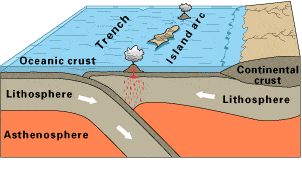
Observe this diagram of a plate boundary. One statement BEST describes what is happening. It is that
the oceanic crust is melting.
the denser ceanic crust is subducting under the less dense oceanic crust
volcanic islands are forming.
the tectonic plates are moving away from each other.
Stress in earth science is part of what topic?
Tectonic Forces
Tectonic Processes
Plate Boundaries
Convection Currents
The movement of the tectonic plates is caused by
the rotation of the Earth.
convection currents in the Asthenosphere
the gravity of the iron-nickel core.
the Moho discontinuity.
In some areas of the world, like California and Japan, earthquakes are a common occurrence. How can this best be explained?
The strong ocean currents are undermining both areas causing earthquakes.
Both areas are located near the edge of the Pacific Ocean, the unstable sand causes earthquakes.
Both areas are subjected to strong ocean wind and waves that causes earthquakes.
Both areas are on the boundary of active plates, the motion of the plates causes earthquakes.
What causes the movement of the tectonics plates on Earth's surface?
Thermal Convection of the mantle
Thermohaline circulation
Hadley Cell
Upwelling
What are the two types of crust
continental and oceanic
lower and upper
ocean and upper
pizza and subway
The movement of the tectonic plates is caused by
the rotation of the Earth.
the gravity of the iron-nickel core.
convection currents in the Asthenosphere
the Moho discontinuity.
Continental drift theory suggests that a single supercontinent called Pangaea existed millions of years ago. What do you mean by the Greek word "Pangaea"?
all lands
both lands
same lands
How did Wegener arrive at the idea of "Continental Drift Theory"?
He presented evidences which are continents are near to each other, share different languages and culture and having the same beliefs.
He presented evidence which are continents have unities in trading system, same rules or laws which they impost and they share same oceans to have resources.
He presented evidences which are continents fit together like a jigsaw puzzle, there are some identical fossils in the different continent and they share common geological features.
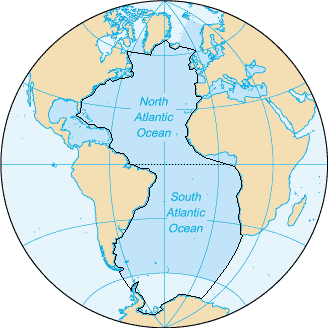
Seafloor spreading occurs because ____.
new material is being added to the asthenosphere
earthquakes break apart the ocean floor
sediments accumulate at the area of spreading
molten material beneath Earth's crust rises to the surface
Which of the following supports the theory of seafloor spreading? (Choose ONE)
Correlation of rock layers
Continents fitting together like puzzle pieces
Magnetic Reversal recorded in the rocks on both sides of the mid-ocean ridge
Continuous Mountain Chains
What 3 kinds of evidence were used to prove that the seafloor spread?
Rock formations, age of rocks, WWII shipwrecks
Age of rocks, magnetic seafloor stripes, WWII ship logs
Rock formations, magnetic seafloor stripes, age of rocks

How do scientists figure out the age of the seafloor?
They research it from ancient sea maps that trading vessels would use in the 1700s
They use the moon phases and eclipses to calculate the age
They use seismographs and the depth as well as location of earthquakes to calculate the age
They take drill ships to many locations in the oceans and collect, then date, rock samples.
The mid-ocean ridge occurs along a
convergent boundary where new crust is formed
transform boundary where crust is subducted
divergent boundary where sea floor spreading takes place
divergent boundary where subduction takes place
Type of fold: downfolds or troughs
anticlines
synclines
monoclines
benchmarks
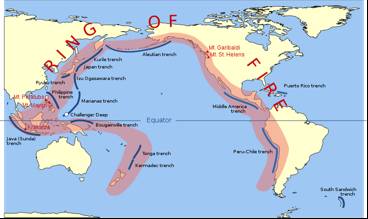
It is the home of many active volcanoes.
Ring of Fire
Earthquake Belt
Subduction Zone
Ocean Ridge
It is the way how seismic wave gives information about the Earth’s inner structure.
through analyzing the behavior of wave in different medium
by measuring the damage caused by a wave
in mapping epicenters of earthquakes and volcanic activities
thru releasing manmade wave and analyzing its magnitude
The hanging wall is moving upward:
Strike slip fault
Normal fault
Reverse fault
None of the above
Degradation process:
Weathering
Mass Wasting
Erosion and Transportation
All of the above
Aggradation process happens when the deposit is found mostly in:
fluvial
eolian
glacial
all of the above
Physical weathering:
Hydrolysis
carbonation
geomorphic agents like plant roots
Lichens removing mineral content
important in iron-rich
rocks – reddish coloration like rust:
oxidation
carbonation
hydrolysis
exfoliation
Characteristics of intrusive igneous rock:
Rapid cooling
glassy texture
coarsed grain
Fine grain
What type of forces are associated with Folding?
Erosional Forces
Compressional Forces
Tensional Forces
Shearing Forces

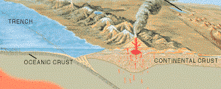
Which landform is being formed in this diagram?
Island arc volcano
Ocean trench
Rift valley
Folded mountains
Seismic waves are vibrations generated by earthquakes. Which type of seismic wave travels through the Earth's surface?
Body Waves
Surface Waves
Tidal Waves
Transverse Waves
Which of the following statements are true about the theories of continental drift and plate tectonics?
I. The continents continue to move even today.
II. Plate tectonics is a refinement of continental drift theory.
III. Tectonic activities are confined to continental boundaries.
IV. The movement of continents is caused by the constant shifting and sliding of tectonic plates.
I and II
II and III
I, II, and III
I, II, and IV
Which animal fossil helped support the theory of continental drift?
Glossopteris
Glossosaurus
Mesosauraus
Teriphthanus
Paleontologists infer that the earth is approximately how many years old?
4.5 billion years old
4.5 million years old
450 billion years old
450 million years old
The “calendar” for events in Earth history. It subdivides all time into units of abstract time called eons, eras, periods, epochs, and ages.
Gregorian calendar
Geologic time scale
Precambrian
Time period
The “calendar” for events in Earth history. It subdivides all time into units of abstract time called eons, eras, periods, epochs, and ages.
Gregorian calendar
Geologic time scale
Precambrian
Time period
Fossils provide evidence of __________.
how life and the environment has remained stable over time
how the climate and weather has remained stable over time
how life and the environmental conditions have changed over time
how animals adapt to their changing environment
It is the Earliest Age of Earth's Geologic History and the longest as it includes approximately 80-90% of Earths Entire History.
precambrian
paleozoic
mesozoic
cenozoic
Which of the following is an example of a hazard associated with earthquake?
eutrophication
ground shaking
flooding
pyroclastic density currents
What is the main reason why the Philippines has suffered from numerous geologic processes and calamities?
its economic status
its location (Ring of fire)
Philippines is 3rd a world country
something to do with human population
Which of the following hazards undermine the foundations and supports of buildings, bridges, pipelines, and roads, causing them to sink into the ground, collapse, or dissolve?
eutrophication
ground shaking
liquefaction
pyroclastic density currents
What causes an earthquake?
glacier
very large storm
landslide
a movement along fault
What natural hazard has the effects of reshaping new land, debris avalanche, destroyed forests, and death to many animals?
volcanic eruption
earthquake
hurricane
tsunami
What refers to the sliding down of a mass of earth or rock from a mountain or cliff?
ground shaking
landslides
liquefaction
tsunami
Dinosaurs, small mammals, and birds are found in this time period.
Precambrian
Paleozoic
Mesozoic
Cenozoic
What are fossils that are abundant, easily recognizable, short lived, and widespread called?
Preserved fossils
Index fossils
Imprints
Radioactive dating
When classifying time using the Geologic Time Scale which unit is the largest unit of time?
Period
Eon
Epoch
Era

What Epoch of the Geological Time scale are we currently in?
Holocene
Paleocene
Hadean
Jurassic
During which time segment of the Geologic Time Scale did life first appear?
Cenozoic Era
Mesozoic Era
Paleozoic Era
Precambrian Time
During which time segment of the Geologic Time Scale did life first appear?
Cenozoic Era
Mesozoic Era
Paleozoic Era
Precambrian Time
The law in science that states newer rock layers are formed on top of older layers is called:
Law of Inertia
Newton's Law
Law of Superposition
Law of the land
The act of putting events in chronological order without using actual dates or ages is called:
age guessing
actual dating
relative dating
blind dating
In which time period are we currently living in?
Precambrian Era
Paleozoic Era
Mesozoic Era
Cenozoic Era
In what time period did Pangaea, the super continent, appear?
Precambrian Era
Paleozoic Era
Mesozoic Era
Cenozoic Era
What does "relative age" tell about a rock layer or fossil?
The "exact age of a fossil determined by radiometric dating or the half life of radioactive elements.
Easily recognizable
Live a short time
The age of one rock layer or fossil compared to another. (example: one is older or younger than the other)
What evidence do scientists use to determine the age of the earth?
Absolute and relative dating of rocks and fossils, and the fossil record.
4.6 billion years old
relative age
The rocks are probably the same age.
If the same index fossils are found in different rock strata miles apart, what is probably true about the rock layers?
Rock layers are pretty.
The rocks are different age.
Fossils
The rocks are probably the same age.
Preserved remains of plants and animals from the remote past are called _____.
Plants
Fossils
Animals
Insects
The end of life for a group of organisms, usually a species, is called a _____.
Trouble
Evaporation
Mass extinction
Evolution
Appearance of placental mammals (marsupials, insectivores, creodonts)
Paleocene epoch
Eocene epoch
Oligocene epoch
Miocene epoch
Dinosaurs of the Mesozoic era abruptly became extinct
Triassic Period
Jurassic Period
Cretaceous Period
Permian period
A marked adaptive radiation among dinosaurs. (diversified into carnivorous and herbivorous forms)
Triassic Period
Jurassic Period
Cretaceous Period
Permian period
The end of life for a group of organisms, usually a species, is called a ___________.
wipeout
mass extinction
meteorite
dying off
Fossils are abundantly found in these types of rocks:
Sedimentary
Metamorphic
Igneous
Chris
An index fossil meets all of the criteria except:
Unique
found across a few areas on Earth
located in one rock layer
lived for a brief period of time
What does relative age tell us about a rock layer or fossil?
The age of one rock layer or fossil compared to another.
The relative age of a fossil determined by radiometric dating
Younger rock layers sit on top of older rock layers
Older rock layers sit on top of younger rock layers
It is a type of force which pushes the crust inwards
Tensional
Compressional
It refers to a type of stress which is usually seen in transform boundaries.
Tensional
Shear
It is a type of fault that are produced by compressional forces which causes the hanging wall to move ip relative to the firewall.
Reverse
Strike and slip
What are endogenic processes in geology?
Geological phenomena originating from external factors
Geological phenomena originating from within the Earth's interior
Geological phenomena caused by meteorites
Geological phenomena related to weathering
Which endogenic process is characterized by the eruption of molten rock onto the Earth's surface?
Earthquakes
Mountain building
Volcanism
Geothermal activity
What is the driving force behind volcanism?
wind
rainfall
accumulation of molten rock pressure
solar radiation
How are rift valleys primarily formed?
By volcanic eruptions
By the collision of tectonic plates
By the divergence of tectonic plates
By the subduction of tectonic plates
What is the driving force behind geothermal activity?
Solar energy
Natural gas deposits
Earth's internal heat from radioactive decay
Ocean currents
Which of the following is NOT an endogenic process?
Formation of mid-ocean ridges
Crustal deformation
Soil erosion
Volcanism
What type of stress can cause rocks to fold into anticlines and synclines?
Magnetic stress
Tectonic stress
Solar stress
Atmospheric stress
Alfred Wegener used __________ to prove that Pangea once existed ?
graham crackers and frosting
math
a metal detector
fossils
What happens to a tectonic plate once it subducts under another?
It merges with the other plate to make a thicker plate
It melts back into the mantle
It creates a mountain.
It creates an island chain.
Deformation and fold mountain building can occur along transform faults where:
a. Motion along the fault is very slow
b. Motion along the fault is relatively fast
c. The fault curves, causing the rocks on either side to extend
d. The fault curves, causing the rocks on either side of the fault to compress
Which of the following statements about rock deformation is false?
a. deep crustal rocks are more likely to deform ductility than shallow crustal rocks
b. hotter rocks are more likely to deform ductility than cooler rocks
c. most sedimentary rocks are more deformable than igneous rocks
d. rocks under low confining pressure are more likely to deform ductility than rocks under high confining pressure
Which of the following will not make a fossil?
Animal footprints
Loose animal bones
Plant impression
Decomposed organic matter
Which of the following statements about rock deformation is false?
deep crustal rocks are more likely to deform ductility than shallow crustal rocks
hotter rocks are more likely to deform ductility than cooler rocks
most sedimentary rocks are more deformable than igneous rocks
rocks under low confining pressure are more likely to deform ductility than rocks under high confining pressure
We cannot accurately measure time in years with stratigraphy for several reasons. Which of the following is FALSE.
sediments accumulate at different rates in different sedimentary environments
low temperatures and high confining pressures
high temperatures and low confining pressures
high temperatures and high confining pressures
Which of the following hazards undermine the foundations and supports of buildings, bridges, pipelines, and roads, causing them to sink into the ground, collapse, or dissolve?
eutrophication
ground shaking
liquefaction
pyroclastic density currents
Wavy bands of light and dark minerals visible to gneiss bedrock probably formed from the
Cementing together of individual mineral grains
Cooling and crystallization of magma
Evaporation of an ancient ocean
Heat and pressure during metamorphism
___________ is any waste that is a risk to the health of humans or other living things.
hazardous waste
politics
sewage
water runoff
A dark brown, crumbly material made from decomposed matter is called _____________.
compost
brown sugar
saw dust
non-biodegradable
A ____________ is a waste disposal facility where wastes are put in the ground and covered each day with a layer of dirt, plastic, or both.
landfill
incinerator
compost heap
aquifer
Solid waste includes all of the following except;
newspaper and soda bottles
food scraps and yard clippings
ozone and carbon dioxide
junk mail and milk cartons
If your shirt is partly cotton and partly polyester, what part is biodegradable?
cotton
polyester
both a and b
none of the above
Microorganisms are unable to break down plastics because plastics
are made from oil
are too abundant
are made of unknown elements
do not occur in nature
Municipal solid waste is approximately what percentage of all solid waste?
2%
20%
60%
90%
Leachate is a substance that
is produced in a compost pile
is a byproduct of bacterial digestion
is produced by incinerators
contains dissolved toxic chemicals
Which of the following is NOT a benefit of incinerating waste?
It reduces the material sent to landfills
It produces energy in the form of heat
It can be used to produce electricity
It neutralizes all of the toxic materials
Manufacturers could reduce waste and conserve resources by making products that
use more materials
are more durable
are difficult
are disposable
Which of the following is one way to reduce an over-supply of recyclable materials?
build more recycling plants
increase the types of recyclable materials
increase the demand for products made from recycled materials
put the excess materials in landfills
Most of the municipal solid waste in the United States is
stored in landfills
recycled
incinerated
none of the above
Which among the following is not a classification of Solid wastes?
Muncipal waste
Household waste
Industrial waste
Hazardous wastes
Biomedical wastes comes under the classification of
Muncipal waste or urban waste
Household waste
Industrial waste
Hazardous wastes
3R comprises of
Reduce, Resist & Recycle
Reduce, Reuse & Replenish
Reduce, Reuse & Reject
Reduce, Reuse & Recycle
Which one is not a benefit of recycling ?
It reduces pollution .
It conserves natural resources.
It saves energy.
It may cause diseases.
What is the purpose of a leachate collection system in landfills?
To provide a habitat for local wildlife.
To collect and manage leachate to prevent environmental contamination.
To increase the volume of waste in the landfill.
To enhance the aesthetic appeal of the landfill.
What is the role of cover material in landfill management?
Cover material is primarily for aesthetic purposes.
Cover material helps control odors, pests, and fires, stabilizes waste, and promotes decomposition.
Cover material is used to increase landfill size.
Cover material prevents all types of waste from decomposing.
Which one of the following is NOT a method for handling non-biodegradable solid waste?
burning
burying
recycling
composting
Which of the following is NOT a benefit of incinerating waste?
It reduces the material sent to landfills
It produces energy in the form of heat
It can be used to produce electricity
It neutralizes all of the toxic materials
using a product or material that was intended to be discarded.
Reconfigure
Recycle
Reduce
Reuse
What is the process of converting organic waste into a valuable soil amendment called?
1. Incineration
2. Land filing
3. Composting
4. Shredding
A liquid that has passed through compacted solid waste
oil
leachate
fertilizer
battery acid
The solid waste from hospital is classified as:
Hazardous
Non-hazardous
Compostable
More than one of the above.
Which of the following is false
Energy is not needed for recycling
Recycling encourages responsibility to sort out garbage
Recycling reduces costs of processing solid waste
You can get profits from selling recycled materials
Select the three (3) types of fossil fuels.
Coal
Crude Oil
Castor Oil
Natural Gas
Which two (2) colours can we find coal in?
Red
Brown
Black
Yellow
What does viscosity mean?
Thickness of Liquid
Acidity of Liquid
Temperature of Liquid
Colour of Liquid
Natural gas is mainly made up of which gas?
Oxygen
Hydrogen
Methane
Ozone
Select the three (3) options below that crude oil can be used to make.
Petrol
Plastic
Diesel
Olive Oil
Fossil fuels are my up of which two elements?
Carbon and Nitrogen
Carbon and Hydrogen
Oxygen and Hydrogen
Oxygen and Nitrogen
What are two environmental problems directly caused by burning fossil fuels?
Global Warming
Flooding
Acid Rain
Soil Erosion
Solar Energy is obtained from which source?
Moving Water
Sun
Wind
Underground Heat
Hydroelectric Energy is obtained from which source?
Sun
Wind
Moving Water
Underground Heat
Geothermal Energy is obtain from which source?
Wind
Underground Heat
Wind
Moving Water
Coal, oil, and natural gas are fossil fuels.
FACT
BLUFF
Fossil fuels are presently the world’s primary energy source.
FACT
BLUFF
Mining is the process of extracting coal, oil, and natural gas from the ground.
FACT
BLUFF
Lignite is the highest-grade coal.
FACT
BLUFF
Fossil fuels are formed in an oxygen-rich environment.
FACT
BLUFF
Oil is an organic material mostly made from algae.
FACT
BLUFF
Natural gas is produced from sedimentary rock formation by forcing chemicals, water, and sand down a well under high pressure.
FACT
BLUFF
Anthracite coal has the lowest fixed carbon content compared to other types of coal.
FACT
BLUFF
Low pressures and temperature facilitate the formation of fossil fuel.
FACT
BLUFF
Natural gas is the Earth’s cleanest fossil fuel
FACT
BLUFF
In the recent past, humans have been looking for and trying out alternative sources of renewable energy to reduce dependence on fossil fuels. How can the energy from volcanoes be tapped for human use?
The lava can be used for cooking.
The energy from the magma can be used to heat water.
Geothermal energy can be used to generate electricity.
Geothermal energy can be tapped to produce steam used for heating showers.
Which refers to the process of producing energy by utilizing heat trapped inside the earth surface?
Hydrothermal energy
Geothermal energy
Solar energy
Wave energy
Where does geothermal energy come from?
wind
river
sunlight
heat from the earth
What does it mean when we say that geothermal energy is sustainable?
That it generates greenhouse gases
That it will not be used up.
That there is a limited supply.
That it may cause global warming.
What is the main disadvantage to building geothermal energy plants?
pollution
cost
nuclear fallout
global warming
What potential environmental issue can occur when building a geothermal energy plant?
the burning of fossil fuels
water pollution from the chemicals
toxic gases can be released when drilling
all of the above
What natural disaster could be potentially caused by geothermal power plants?
earthquakes
forest fire
tornado
flood
Why is it that not all countries can benefit from geothermal energy?
not all countries have enough water
not all countries have volcanic activity
geothermal plants produce a lot of pollution
very few countries can afford to build geothermal plants
Which of the following is/are advantage(s) of a geothermal plant?
I. It does not rely on imported fuel.
II. It uses the kinetic energy of running water.
III. It helps release sulfur dioxide back to the atmosphere.
IV. Compared to a coal-powered plant, a geothermal plant is less polluting to the environment.
I only
III only
I and II
IV
Which is NOT a geothermal steam field in the Philippines?
Makban Geothermal Complex
Tiwi Geothermal Complex
Malitbog Geothermal Power Station
Larderello Geothermal Steam Field
Volcanic Energy is related to which type of energy?
hydrothermal energy
geothermal energy
nuclear energy
solar energy
About 18% of the energy in the Philippines is harnessed using volcanic energy. Which of the following characteristics makes the country a good location in harnessing volcanic energy
it has a lot of rainforests
it is near the equator
it is near the Pacific Ocean
it has a lot of volcanoes
Which of the following places in the Philippines can produce geothermal energy?
Aurora, Baler
Mak-Ban, Laguna
Coron, Palawan
Carmen, Bohol Island
From the Greek word "geo" means Earth, thermal means (a) .
Which of the following best describes geothermal energy?
It is the energy from the sun
It is the heat coming from the body
It is the heat or thermal energy that is stored deep within the Earth
It is a non-renewable source of energy
Which of the following is/are importance of geothermal energy?
generates electricity
great help for plantation
provides heating for homes
generates electricity and provides heating for homes
Why is the Philippines considered as one of the world's top producer of geothermal energy?
The Philippine archipelago is rich in natural resources
The Philippine archipelago lies along the Pacific Ring of Fire
The Philippine archipelago is rich in geothermal energy
The Philippine archipelago lies along near the equator
In which areas we can find the high geothermal energy?
more volcano activities
more beaches
more plantations
more factories
Use the heat coming from close to the Earth’s surface to heat water or provide heat for buildings
Geothermal Power Plants
Geothermal Turbine
Geothermal Heat Pumps
Nuclear Turbine
Heat from deep inside the Earth is used to produce steam to generate electricity
Geothermal Power Plant
Geothermal Turbine
Geothermal Heat Pumps
Nuclear Turbine

Which of the following statements about a closed system is not true?
The resources used are regenerated.
The amount of matter within a closed system is fixed.
The waste produced cannot really be disposed.
Which of the following refers to the sequence of transfers of matter and energy in the form of food from organism to organism in a single path?
Food web
Food cycle
Fodd chain
Which of the following is just a part of a sub system?
Atmosphere
Lithosphere
Cryosphere
Hydrosphere
Which of the following gases contributes to the 21% of the earth's atmosphere?
Argon
Nitrogen
Carbon dioxide
Oxygen
How do the biosphere and the atmosphere interact?
Air contains water.
Volcanic ash can enter the atmosphere.
Living things need air to survive.
Which of the following is not a photosynthetic organism?
Algae
Molds
Cyanobacteria
Plants
Which of the following is not true about chemo-synthetic organisms?
They use energy from sunlight to perform chemosythesis.
They use of energy released by inorganic chemical reactions to produce food.
They use energy from hydrothermal vents or methane seeps.
What percentage of the Earth is covered with water?
50%
60%
70%
80%
How do the geosphere and the hydrosphere interact?
The geosphere stores parts of the hydrosphere.
The geosphere erodes (shapes) the hydrosphere.
The hydrosphere stores parts of the geosphere.
How do the geosphere and the biosphere interact?
Soil contains living parts.
Water rains onto the geosphere.
Bacteria is in the air.
How do the biosphere and the hydrosphere interact?
Air contains water.
Living things need water to survive.
Volcanic ash can enter the atmosphere.
These two spheres do not interact.
Which of the following represents nonpoint-source pollution?
polluted wastewater from a chemical plant
leaking oil tanker
runoff from city streets
Polluted groundwater is difficult to clean because
pollutants cling to the materials that make up the aquifer and contaminate the clean water.
the recycling process of groundwater can take hundreds of years.
both of theses answers
Most of the pollutants in the ocean come from
commercial boats and personal watercraft.
spills from oil tankers.
activities on land.
When neighborhood residents noticed a large number of dead fish in a local creek, they traced the problem to a nearby gas station. It turned out that a tank of gasoline had developed a leak. This is an example of
point-source pollution.
thermal pollution
nonpoint-source pollution
The effects of water pollution on ecosystems
are always immediate and highly lethal
result mostly from point-source pollution sources.
can magnify over time within food chains.
A true statement about aquifers is that
their water levels remain stable because they recharge so rapidly
they are hard to purify because the water collects in sand and rocks
they are formed by underground rivers and leakage from deep lakes.
Water pollution that washes into storm sewers from many places, such as parking lots and lawns, is known as ____________.
point-source
nonpoint-source
pathogens
Pollution discharged from a single source is called _________ pollution.
organic
pathogens
point source
Which of these ways to wash the car saves the most water?
Wash it in the driveway with the garden hose
Let the hose run on it for days
Take it through a car wash that recycles water
Make your little brother wash it

How can we get to the groundwater so we can use it to drink and grow plants?
We can't! The water is too deep.
We can dig or drill a pipe into the aquifer.
What percentage of the world's water is found in the Oceans?
25%
50%
75%
97%
99%
Any area that is a combination of land and water.
Wetland
Estuary
Salt marsh
Mudflat
Many people who live on the Coastal Plain depend on what 2 things?
sea
weather
bay
plants

