
 Worksheets
MAIN CHEMISTRY REVIEW 2025
Total questions: 75
Worksheet time: 38mins
Name
Class
Date
1.
HS.P1U1.2
Which of the following compounds would you expect to be ionic?
a)
SF₆
b)
H₂O
c)
CO₂
d)
CaO
2.
HS.P1U1.2
Which of the following represents an ionic compound?
a)
CO₂
b)
NaOH
c)
H₂O
d)
CH₄
3.
HS.P1U1.2
What is the formula for magnesium sulfate?
a)
MgSO₄
b)
Mg₂SO₄
c)
MgS₂O₄
d)
MgSO₃
4.
HS.P1U1.2
Which of the following compounds contains a polyatomic ion?
a)
NaCl
b)
KNO₃
c)
MgO
d)
Al₂O₃
5.
HS.P1U1.2
What is the formula for strontium phosphate?
a)
Sr₃(PO₄)₂
b)
Sr(PO₄)₂
c)
Sr₂PO₄
d)
Sr₄(PO₄)₃
6.
HS.P1U1.2
Predict the formula of the ionic compound that forms from Calcium and Fluorine.
a)
CaF₂
b)
C₂F
c)
Ca₂ F₂
d)
Ca₂F₃
7.
HS.P1U1.2
Which of the following pairs will form an ionic bond?
a)
Na and Cl
b)
C and O
c)
H and H
d)
N and O
8.
HS.P1U1.2
Which of the following elements typically forms a cation?
a)
Oxygen
b)
Nitrogen
c)
Sodium
d)
Chlorine
9.
HS.P1U1.2
What type of ion is formed when an atom gains electrons?
a)
Cations
b)
Anions
c)
Neutral
d)
Ions
10.
HS.P1U1.2
What is the formula for carbon dioxide?
a)
CO
b)
CO₂
c)
CH₄
d)
C₆H₁₂O₆
11.
HS.P1U1.2
Which of the following is the correct name for N₂O?
a)
Nitrogen oxide
b)
Dinitrogen monoxide
c)
Nitrogen dioxide
d)
Dinitrogen dioxide
12.
HS.P1U1.2
What is the formula for sulfur trioxide?
a)
SO
b)
SO₂
c)
SO₃
d)
S₂O₃
13.
HS.P1U1.2
How do you name the compound PCl₅?
a)
Phosphorus chloride
b)
Phosphorus pentachloride
c)
Pentachloride phosphorus
d)
Chloride phosphorus
14.
HS.P1U1.2
What is the name for the compound CCl₄?
a)
Carbon tetrachloride
b)
Carbon chloride
c)
Tetracarbon chloride
d)
Carbon dichloride
15.
HS.P1U1.2
What is the formula for dinitrogen tetroxide?
a)
N₂O₂
b)
N₂O₆
c)
NO₂
d)
N₂O₄
16.
HS.P1U1.2
Which of the following correctly represents a covalent bond?
a)
NaCl
b)
H₂
c)
CaO
d)
MgF₂
17.
HS.P1U1.2
Which of the following is NOT a covalent compound?
a)
H₂O
b)
CO₂
c)
NaCl
d)
CH₄
18.
HS.P1U1.2
Which pair of elements is most likely to form an ionic compound with each other?
a)
barium, Chlorine
b)
calcium, sodium
c)
oxygen, fluorine
d)
sulfur, carbon
19.
HS.P1U1.2
What is the formula of the compound formed between strontium ions and nitrogen ions?
a)
A) SrN
b)
B) Sr₃N₂
c)
C) Sr₂N₃
d)
E) SrN₂
20.
HS.P1U1.2
How do you call ions that are POSITIVELY charged?
a)
Ions
b)
Cations
c)
Anions
d)
Neutral
21.
HS.P1U1.2
Aluminum reacts with a certain nonmetallic element to form a compound with the general formula AlX. Element X is a diatomic gas at room temperature. Element X must be ______.
a)
Nitrogen
b)
Fluorine
c)
Bromine
d)
Oxygen
22.
HS.P1U1.2
What type of bond is formed between magnesium (Mg) and oxygen (O)?
a)
Ionic bond
b)
Covalent bond
c)
Metallic bond
d)
Hydrogen bond
23.
HS.P1U1.2
How do you call ions that are NEGATIVELY charged?
a)
Ions
b)
Cations
c)
Anions
d)
Neutral
24.
HS.P1U1.2
What charge does a sodium ion (Na) carry when it becomes a cation?
a)
1+
b)
-1
c)
0
d)
+2
25.
HS.P1U1.2
Sodium forms an ion with a charge of __________.
a)
1+
b)
1-
c)
2+
d)
2-
26.
HS.P1U1.2
__________ typically form ions with a 2+ charge.
a)
Alkaline earth metals
b)
Halogens
c)
Chalcogens
d)
Alkali metals
27.
HS.P1U1.1
Which of the following was Johann Döbereiner's contribution to the development of the periodic table?
a)
observed that groups of three elements (triads) could be formed in which all the elements shared similar physical and chemical properties
b)
creating the first version of the periodic table where elements were arranged in increasing order of atomic weights
c)
Periodic repetition of elements after every eighth element
d)
Assigning atomic numbers to elements based on X-ray spectra
28.
HS.P1U1.2
Which of the following is a characteristic of ionic compounds?
a)
High melting and boiling points
b)
Low melting and boiling points
c)
Poor conductivity in solution
d)
Soft texture
29.
HS.P1U1.2
What type of elements typically form ionic bonds?
a)
Two metals
b)
Two non-metals
c)
A metal and a non-metal
d)
Metalloids only
30.
HS.P1U1.2
Metals tend to __________ electrons and nonmetals tend to __________ electrons.
a)
gain, gain
b)
lose, lose
c)
lose, gain
d)
neither, they keep their electrons
31.
HS.P1U1.2
Anions tend to have a __________ charge and cations tend to have a __________ charge.
a)
positive, positive
b)
negative, negative
c)
positive, negative
d)
negative, positive
32.
HS.P1U1.2
Anions tend to be __________ and cations tend to be __________.
a)
metals, metals
b)
nonmetals, metals
c)
metals, nonmetals
d)
metalloids, metalloids
33.
HS.P1U1.2
Which of these is an example of an ionic compound?
a)
H₂O
b)
CO₂
c)
NaCl
d)
CH₄
34.
HS.P1U1.2
When sodium (Na) bonds with chlorine (Cl), sodium becomes:
a)
A neutral atom
b)
A cation
c)
An anion
d)
A free electron
35.
HS.P1U1.2
In an ionic bond, what charge does the non-metal typically acquire?
a)
Positive
b)
Negative
c)
Neutral
d)
No charge
36.
HS.P1U1.2
Which species below is the nitride ion?
a)
Na+
b)
NO3 -
c)
NO2 -
d)
N3-
37.
HS.P1U1.2
What holds the ions together in an ionic bond?
a)
Covalent forces
b)
Hydrogen bonding
c)
Electrostatic attraction
d)
Magnetic forces
38.
HS.P1U1.2
What is covalent bonding?
a)
Transfer of electrons from one atom to another
b)
Sharing of electrons between atoms
c)
Formation of ions
d)
Attraction between oppositely charged ions
39.
HS.P1U1.2
Which type of elements typically form covalent bonds?
a)
Metals and non-metals
b)
Metals only
c)
Non-metals only
d)
Metalloids and metals
40.
HS.P1U1.2
What is the correct name for the covalent compound CO₂?
a)
Carbon oxide
b)
Carbon dioxide
c)
Carbon monoxide
d)
Dicarbon oxide
41.
HS.P1U1.2
Which of the following correctly names the covalent compound N₂O₄?
a)
Dinitrogen oxide
b)
Nitrogen tetraoxide
c)
Dinitrogen tetraoxide
d)
Nitrogen dioxide
42.
HS.P1U1.2
How many electrons does a calcium ion (Ca²⁺) have?
a)
16
b)
18
c)
20
d)
22
43.
HS.P1U1.2
What is the correct formula for sulfur hexafluoride?
a)
SF
b)
SF₂
c)
SF₄
d)
SF₆
44.
HS.P1U1.2
How many electrons does a calcium ion (Mg²⁺) have?
a)
8
b)
10
c)
12
d)
14
45.
HS.P1U1.2
Which of the following elements is classified as a metalloid?
a)
Sodium (Na)
b)
Silicon (Si)
c)
Chlorine (Cl)
d)
Calcium (Ca)
46.
HS.P1U1.1
Which part of the periodic table is the ACTINOIDS located?
a)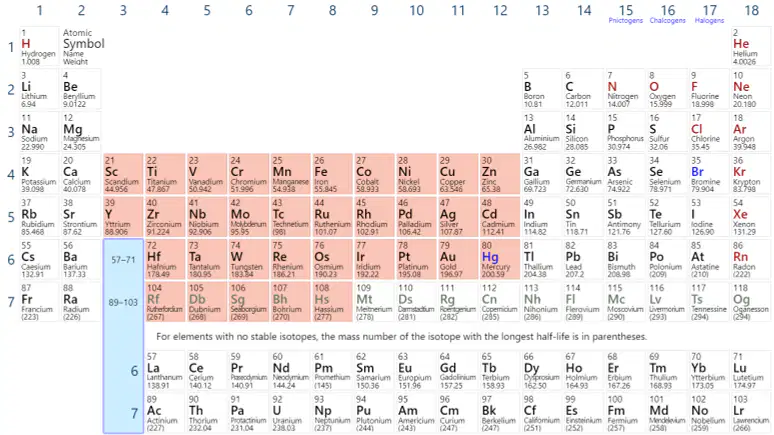
Option 1
b)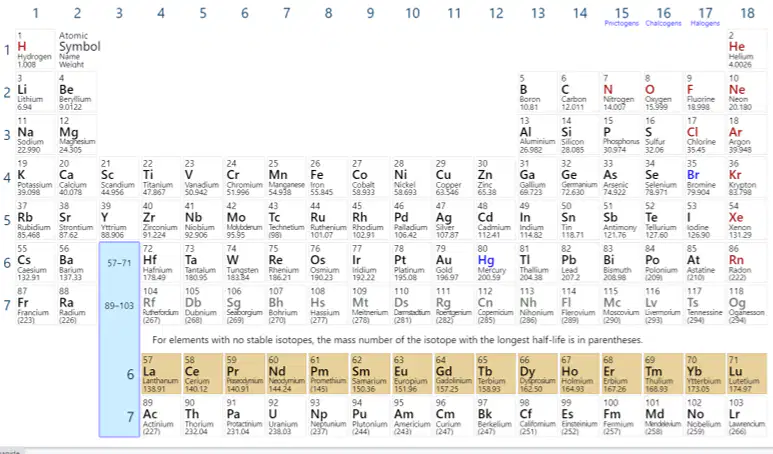
Option 2
c)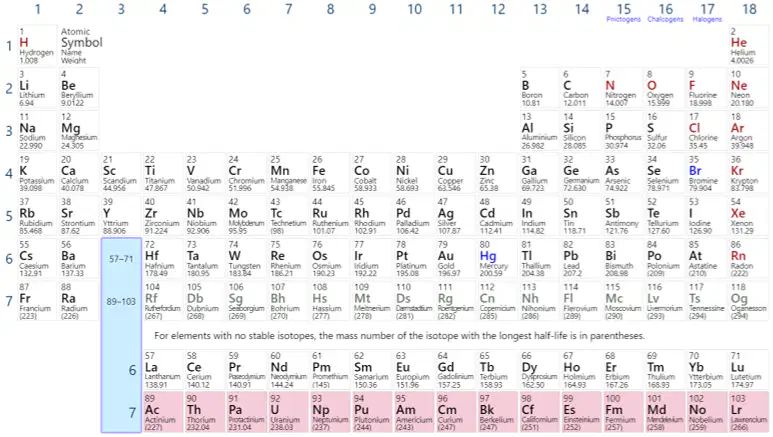
Option 3
d)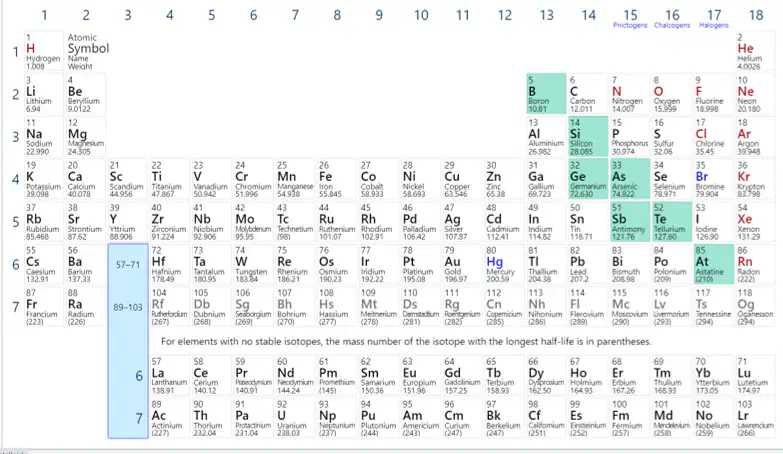
Option 4
47.
HS.P1U1.1
Which part of the periodic table is the LANTHANOIDS located?
a)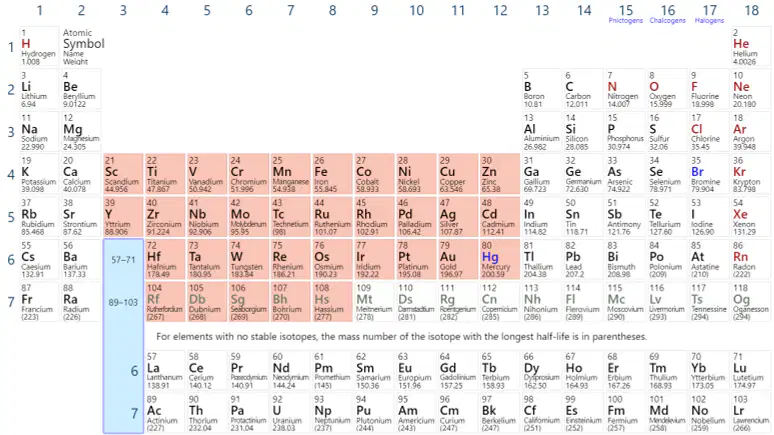
Option 1
b)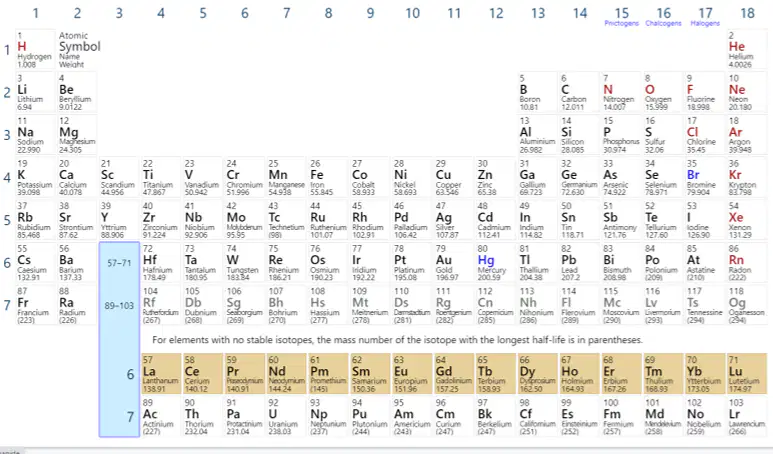
Option 2
c)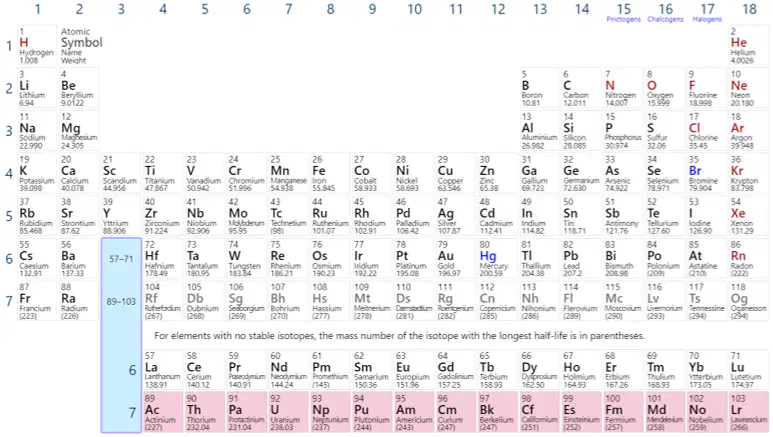
Option 3
d)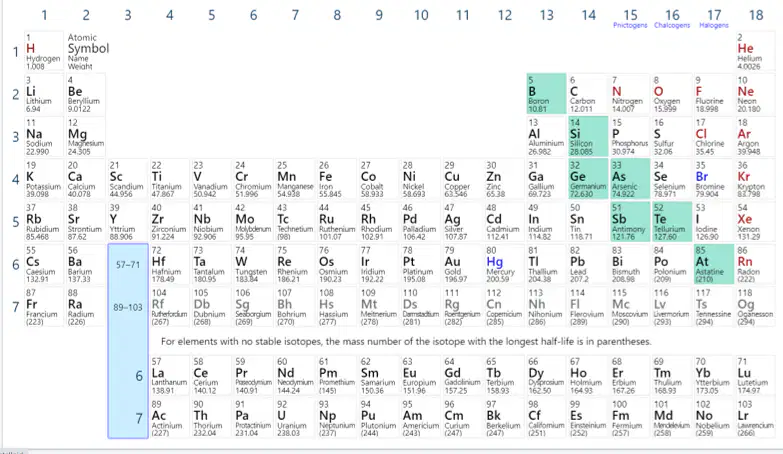
Option 4
48.
HS.P1U1.1
Which scientist is credited with creating the first version of the periodic table where elements were arranged in increasing order of atomic weights?
a)
Henry Moseley
b)
Dimitri Mendeleev
c)
John Newlands
d)
Antoine Lavoisier
49.
HS.P1U1.1
He predicted the properties of undiscovered elements
a)
Henry Moseley
b)
Dimitri Mendeleev
c)
John Newlands
d)
Antoine Lavoisier
50.
HS.P1U1.1
He determined that oxygen was a key substance in combustion
a)
Henry Moseley
b)
Dimitri Mendeleev
c)
John Newlands
d)
Antoine Lavoisier
51.
HS.P1U1.1
Lanthanides and Actinides belong to which period of the periodic table?
a)
Period 1 & 2
b)
Period 3 & 4
c)
Period 6 & 7
d)
Period 4 & 5
52.
HS.P1U1.1
He grouped the elements based on their properties into gases, non-metals, metals and earths
a)
Henry Moseley
b)
Dimitri Mendeleev
c)
John Newlands
d)
Antoine Lavoisier
53.
HS.P1U1.1
He arranged according to increasing atomic weight, those with similar physical and chemical properties occur after each interval of seven elements: The Law of Octaves
a)
Henry Moseley
b)
Dimitri Mendeleev
c)
John Newlands
d)
Antoine Lavoisier
54.
HS.P1U1.1
He’d found a way to actually measure atomic number. He fired the newly-developed X-ray gun at samples of the elements
a)
Henry Moseley
b)
Dimitri Mendeleev
c)
John Newlands
d)
Antoine Lavoisier
55.
HS.P1U1.1
Which part of the periodic table are the METALS located?
a)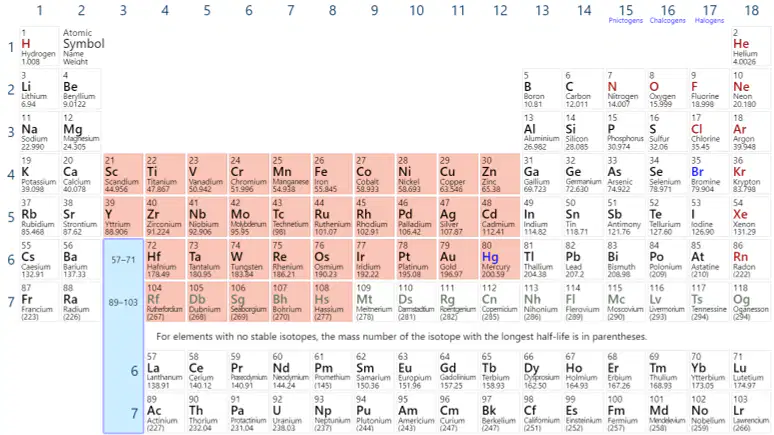
Option 1
b)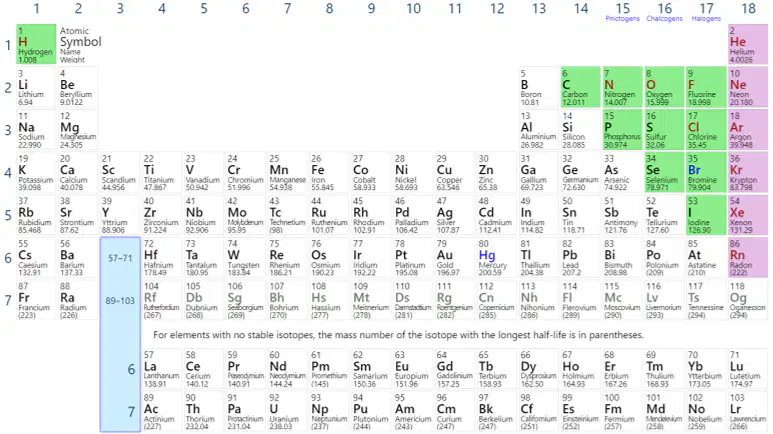
Option 2
c)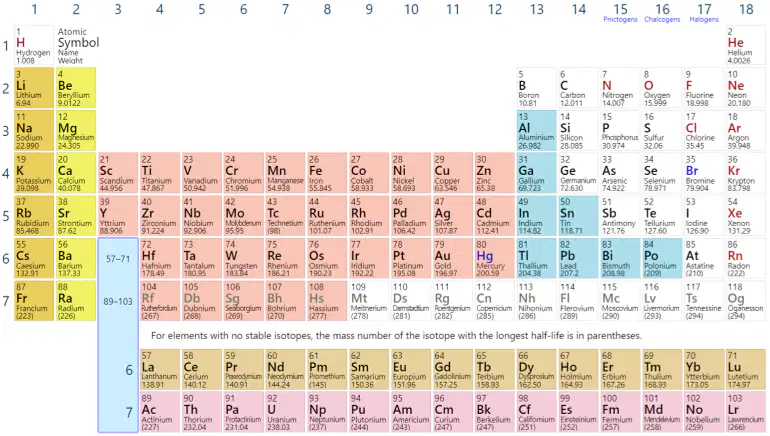
Option 3
d)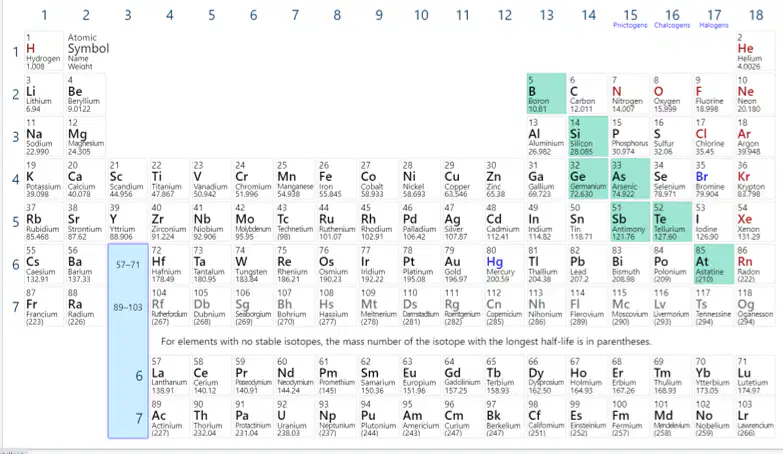
Option 4
56.
HS.P1U1.1
Which part of the periodic table are the METALLOIDS located?
a)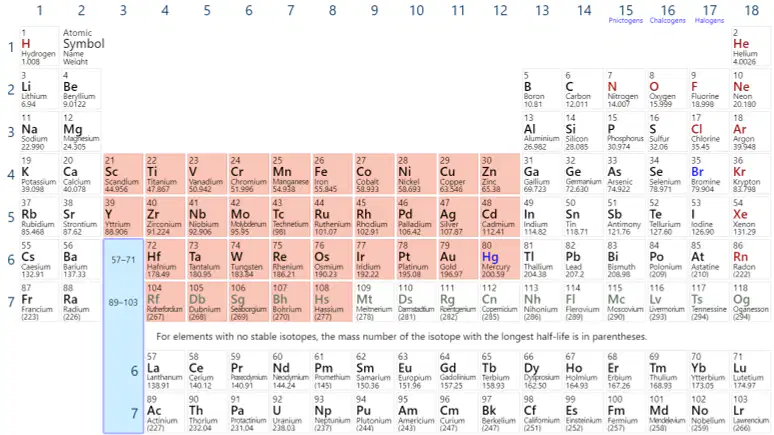
Option 1
b)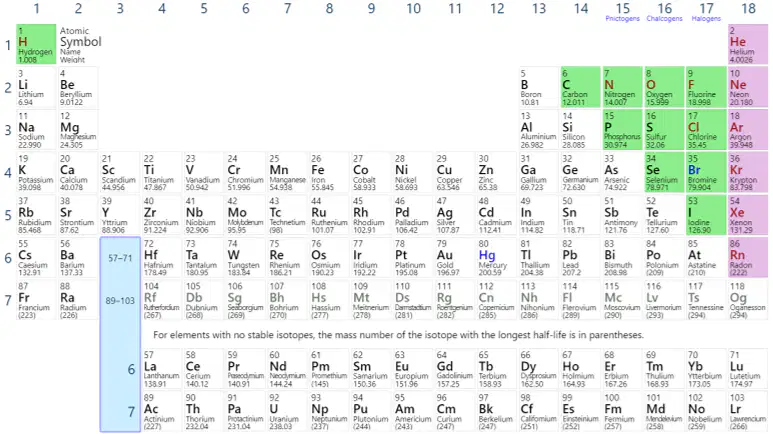
Option 2
c)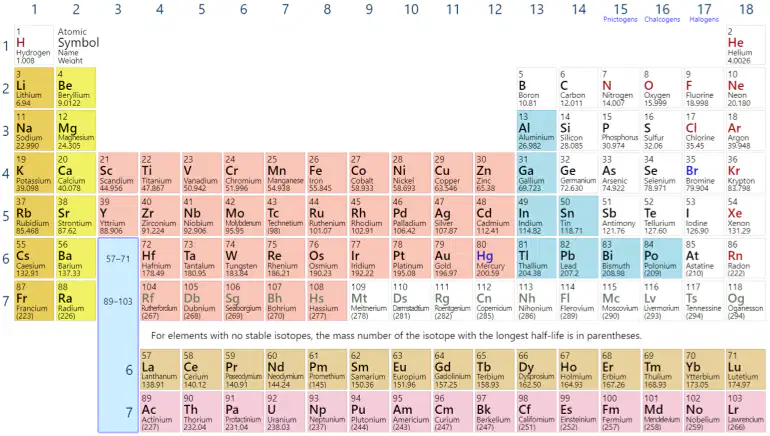
Option 3
d)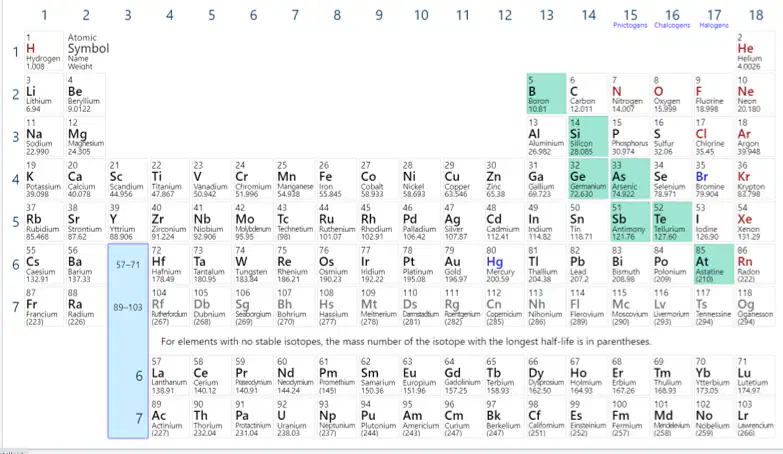
Option 4
57.
HS.P1U1.1
Which part of the periodic table are the TRANSITION METALS located?
a)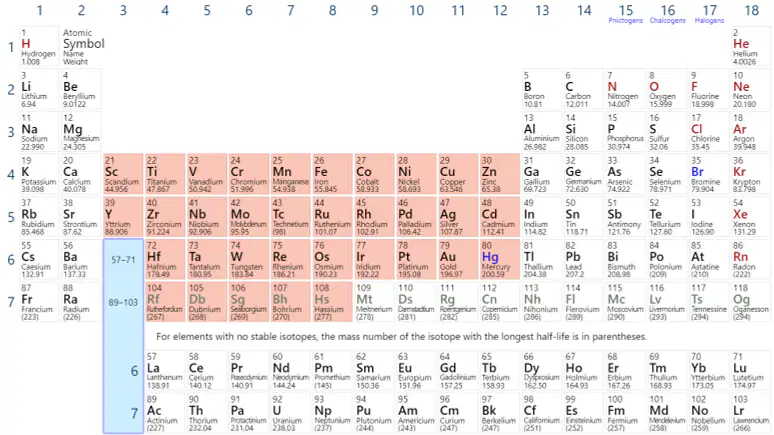
4
b)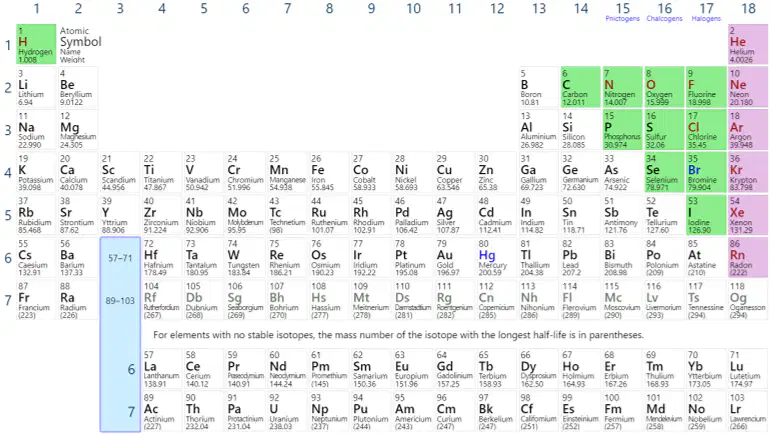
Option 2
c)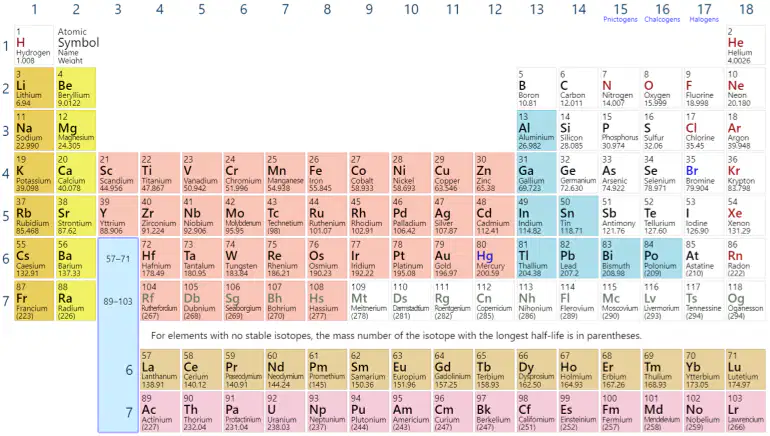
Option 3
d)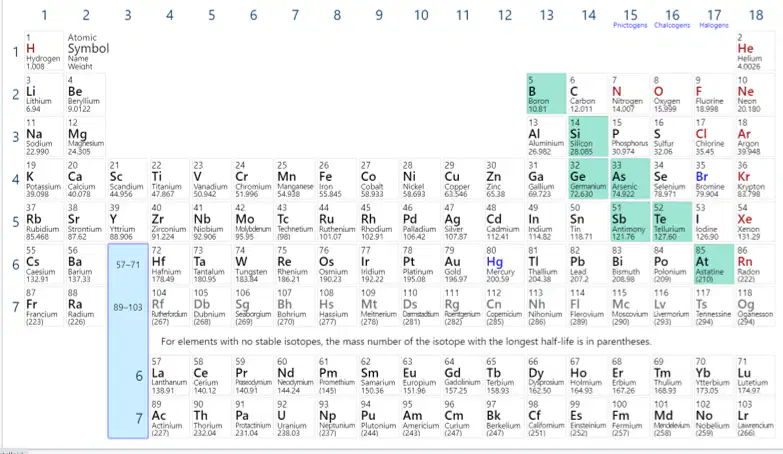
Option 4
58.
HS.P1U1.1
Which part of the periodic table are the POST TRANSITION METALS located?
a)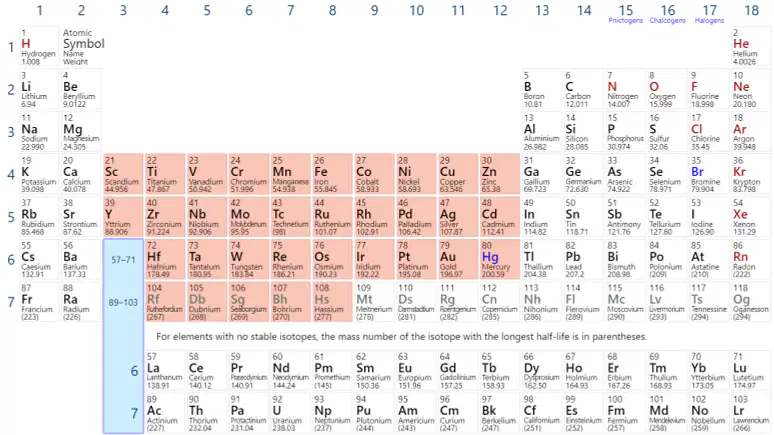
Option 1
b)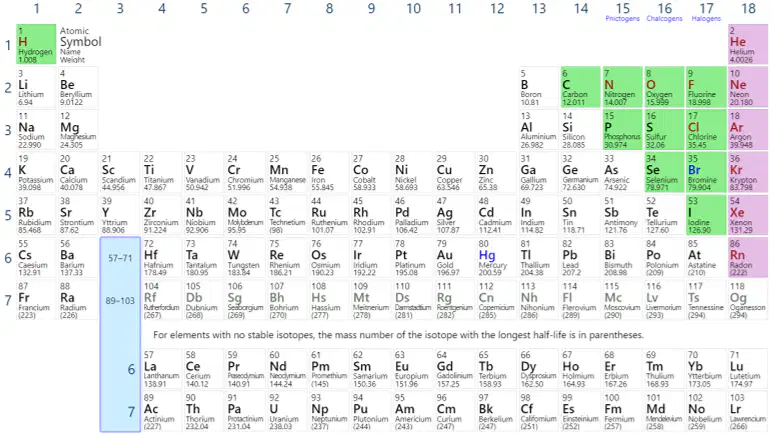
Option 2
c)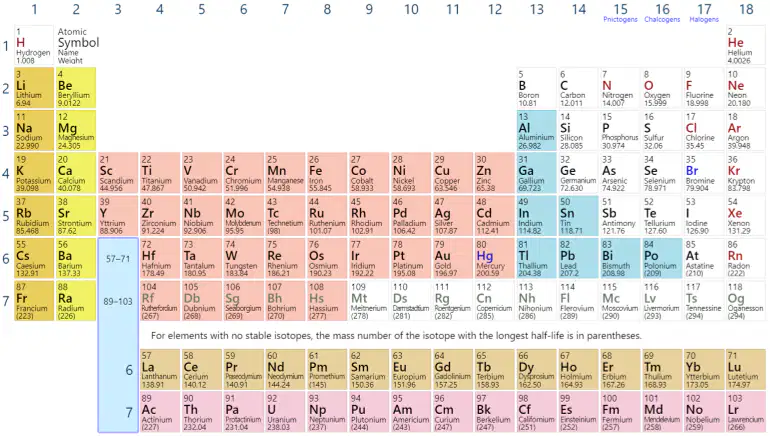
Option 3
d)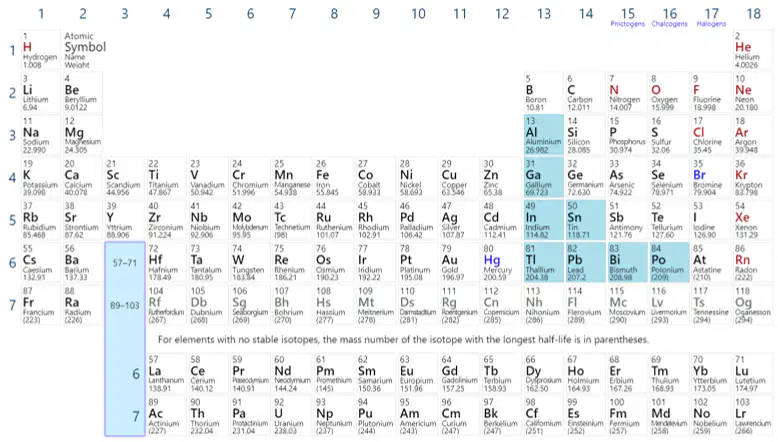
Option 4
59.
HS.P1U1.1
Which part of the periodic table are the ALKALINE EARTH METALS located?
a)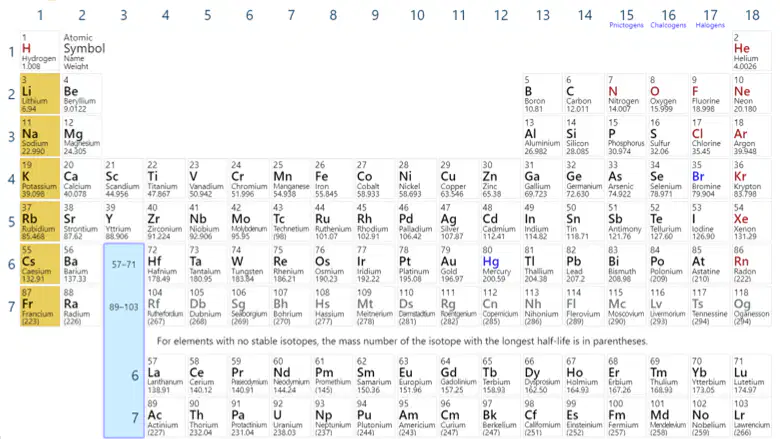
Option 2
b)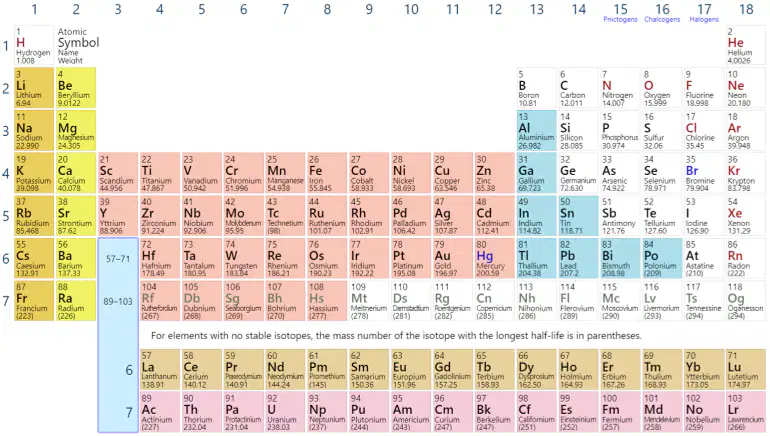
Option 3
c)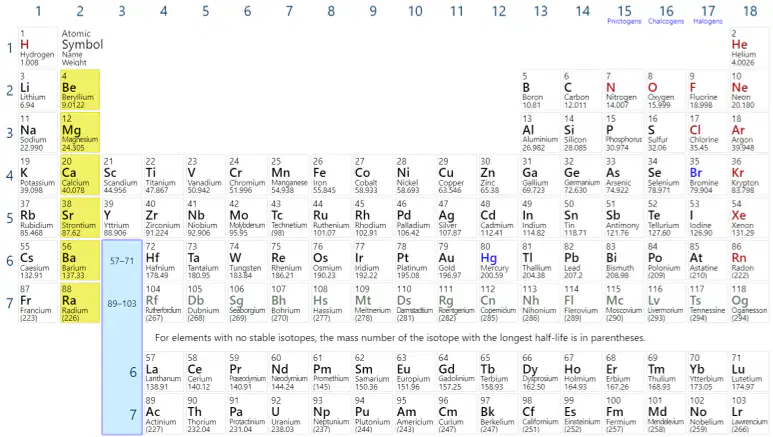
Option 1
d)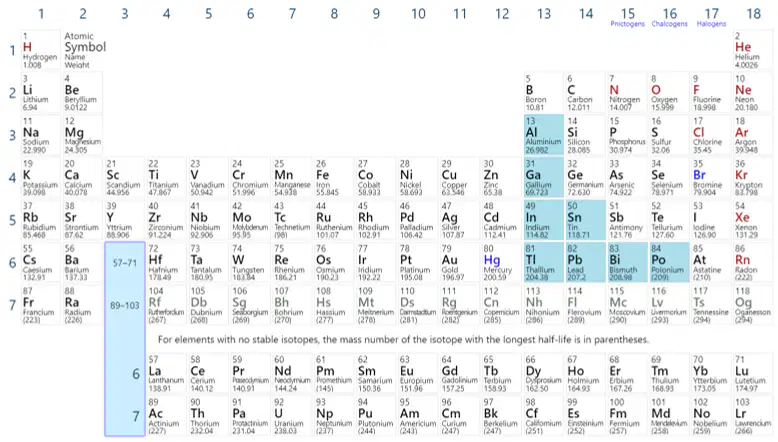
Option 4
60.
HS.P1U1.1
Which part of the periodic table are the ALKALI METALS located?
a)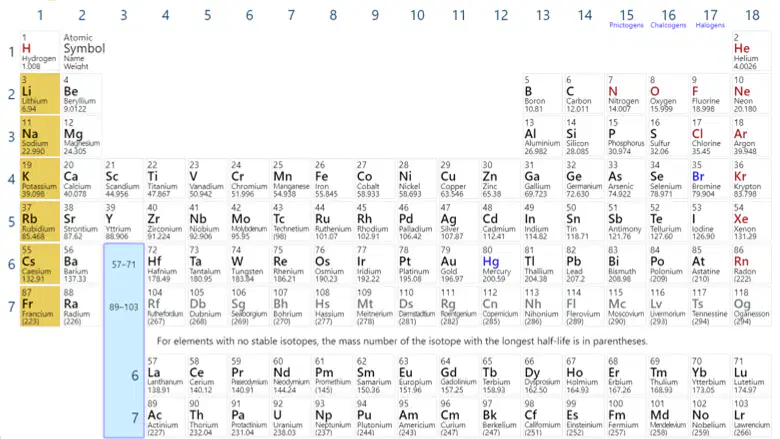
Option 2
b)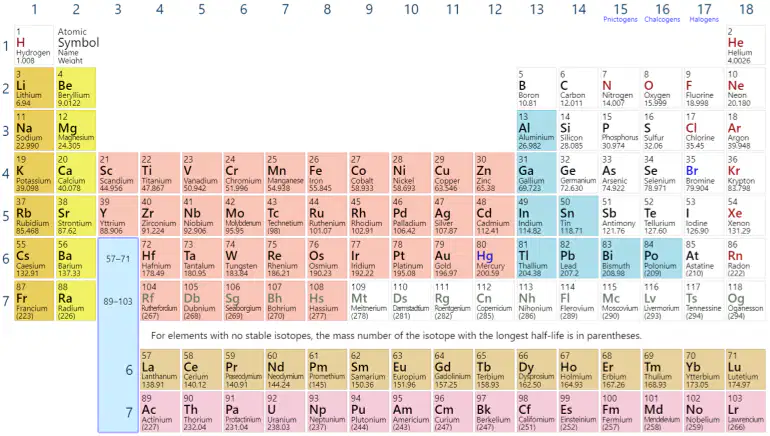
Option 3
c)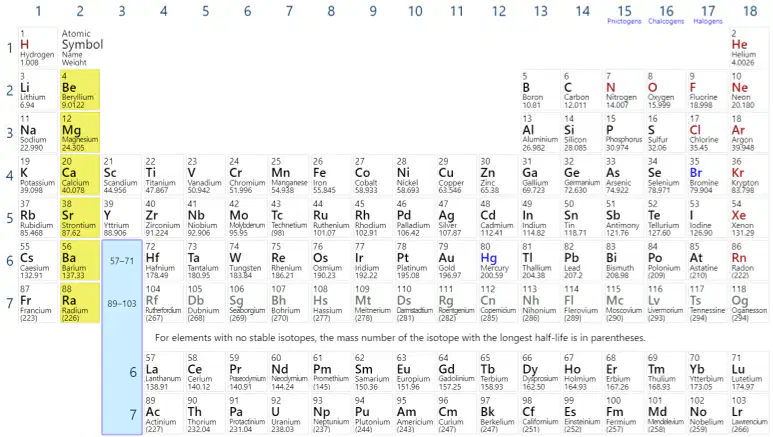
Option 1
d)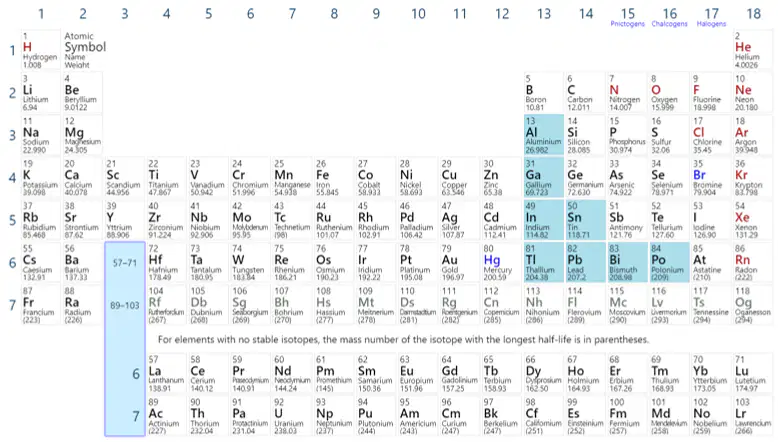
Option 4
61.
HS.P1U1.1
Which part of the periodic table are the NOBLE GASES located?
a)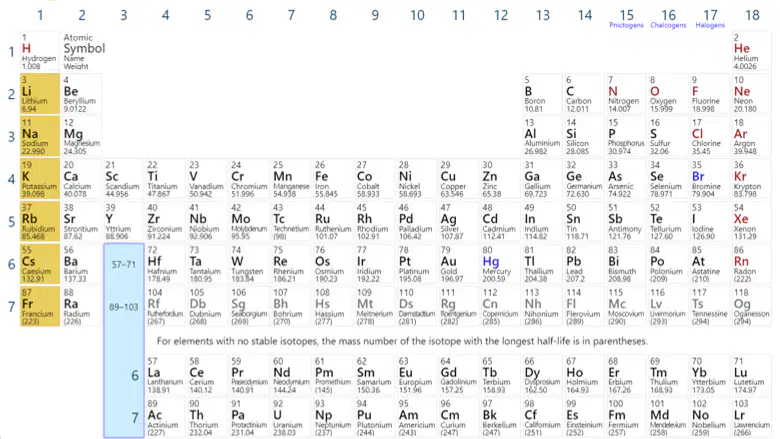
Option 2
b)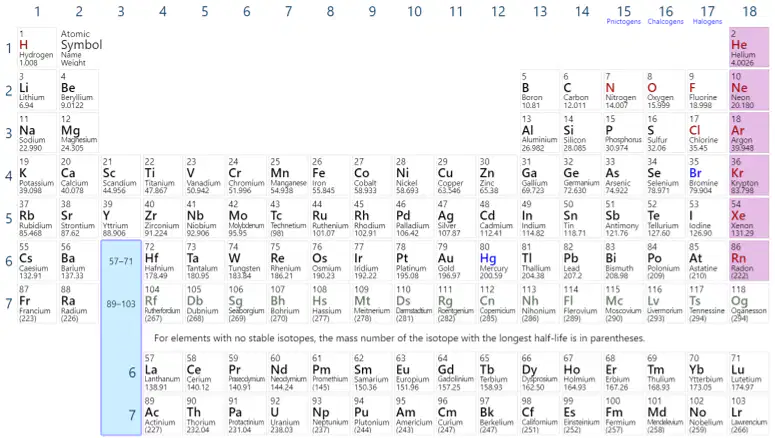
Option 3
c)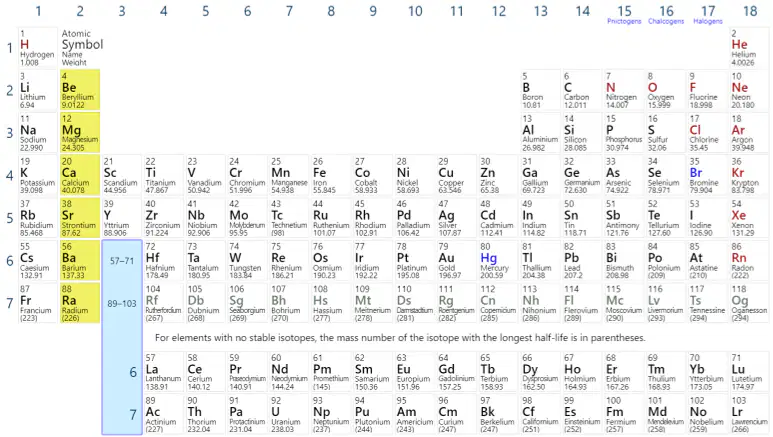
Option 1
d)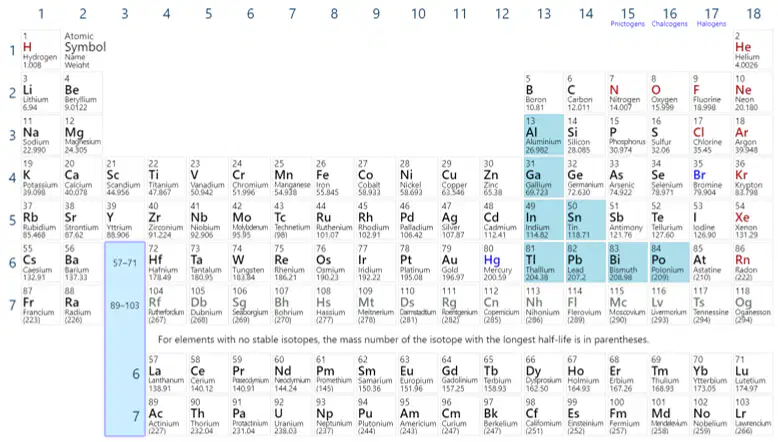
Option 4
62.
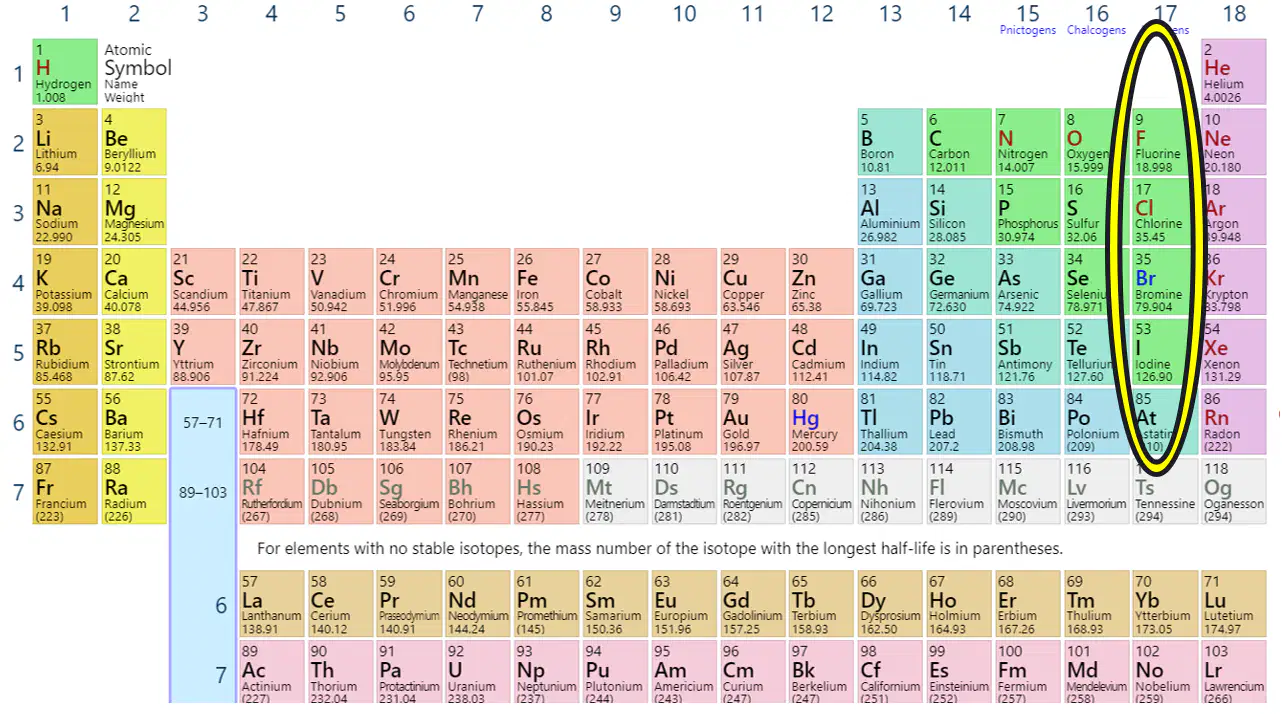
HS.P1U1.1
What group in the periodic table does the figure indicate?
a)
noble gases
b)
lanthanoids
c)
halogens
d)
metalloids
e)
alkali metals
63.
HS.P1U1.1
Elements that generally are not shiny and are poor conductors of heat and electricity. They can be gases, liquids, or brittle solids at room temperature.
a)
metalloids
b)
noble gases
c)
nonmetals
d)
metals
64.
Elements that are typically shiny, malleable, ductile, and good conductors of heat and electricity. They are usually found on the left side and center of the periodic table.
a)
metalloids
b)
noble gases
c)
nonmetals
d)
metals
65.
HS.P1U1.1
Elements that have properties intermediate between metals and nonmetals. Examples include silicon and boron. They are found in a zig-zag line on the periodic table between metals and nonmetals.
a)
metalloids
b)
noble gases
c)
nonmetals
d)
metals
66.
HS.P1U1.1
Group 1 elements (excluding hydrogen) on the periodic table, which are highly reactive and include lithium, sodium, potassium, etc.
a)
Alkali Metals
b)
Transition Metals
c)
Post Transition Metals
d)
Alkaline Earth Metals
67.
HS.P1U1.1
Group 2 elements on the periodic table, including beryllium, magnesium, calcium, etc. They are reactive, but less so than the alkali metals.
a)
Alkali Metals
b)
Transition Metals
c)
Post Transition Metals
d)
Alkaline Earth Metals
68.
HS.P1U1.1
Elements found in groups 3-12 of the periodic table. They include metals such as iron, copper, zinc, and nickel. These metals are characterized by multiple oxidation states and are often good conductors of electricity.
a)
Noble Gases
b)
Transition Metals
c)
Post Transition Metals
d)
Lathanoids
69.
HS.P1U1.1
Group 18 elements on the periodic table. They are colorless, odorless, and inert under most conditions. This group includes helium, neon, argon, krypton, xenon, and radon.
a)
Noble Gases
b)
Transition Metals
c)
Post Transition Metals
d)
Lathanoids
70.
HS.P1U1.1
A series of 15 metallic elements from lanthanum to lutetium in the periodic table. They are f-block elements, specifically from atomic numbers 57 (lanthanum) to 71 (lutetium).
a)
Noble Gases
b)
Transition Metals
c)
Post Transition Metals
d)
Lathanoids
71.
HS.P1U1.1
Horizontal Rows on the periodic table are called __________
a)
period
b)
family
c)
metals
d)
nonmetals
72.
HS.P1U1.1
vertical columns on the periodic table are called __________
a)
period
b)
family
c)
metals
d)
nonmetals
73.
HS.P1U1.
A series of 15 elements in the periodic table from actinium to lawrencium. They are also f-block elements, specifically from atomic numbers 89 (actinium) to 103 (lawrencium). Many of these elements are radioactive.
a)
Halogens
b)
Actinoids
c)
Lanthanoids
d)
Noble Gases
74.
HS.P1U1.1
Which of the following elements is NOT a Halogen?
a)
Fluorine (F)
b)
Chlorine (Cl)
c)
Bromine (Br)
d)
Beryllium (Be)
75.
HS.P1U1.2
What type of ion is formed when an atom loses electrons?
a)
Ions
b)
Cations
c)
Anions
d)
Neutral
100 %

