
 Worksheets
Page 1
Total questions: 150
Worksheet time: 1hrs 15mins
Which term best describes the biological system responsible for producing gametes and enabling sexual reproduction in humans?
Digestive system processing nutrients
Genital reproduction system organs
Endocrine system regulating hormones
Respiratory system exchanging gases
Identify the primary function of the genital reproduction system.
Oxygen transport in blood
Gametogenesis and fertilization
Detoxification of xenobiotics
Thermoregulation of the body
Which component is NOT typically considered part of the genital reproduction system?
Lungs or bronchi
Ovaries or testes
Uterus or prostate
External genitalia
In health sciences, which process directly depends on the genital reproduction system?
Protein synthesis in ribosomes
Gluconeogenesis in the liver
Meiosis producing gametes
Gas exchange in alveoli
Which statement best distinguishes the genital reproduction system from the endocrine system?
Both primarily exchange gases
One produces hormones only
Both digest and absorb nutrients
One forms and transports gametes
A clinician evaluates infertility. Which system is the main focus?
Musculoskeletal system
Genital reproduction system
Integumentary system
Respiratory system structures
Which outcome would be most impaired by dysfunction of the genital reproduction system?
Successful fertilization capacity
Effective nutrient absorption
Adequate lymph fluid return
Maintaining blood pH homeostasis
Select the best description of 'genital' in medical terminology.
Pertaining to digestive tract
Pertaining to lungs and airways
Pertaining to reproductive organs
Pertaining to skeletal muscles
Which professional field most directly studies the genital reproduction system?
Pulmonology subspecialty
Gynecology and andrology
Neurology discipline
Gastroenterology specialty
A textbook cover reads “Genital Reproduction System.” What core topics will likely be emphasized?
Gas diffusion physiology
Gametogenesis and mating
Renal filtration mechanisms
Immunoglobulin synthesis
Which duct system is associated with male internal structures during development?
Mesonephric (Wolffian) ducts
Urogenital sinus derivatives
Accessory gland primordia
Paramesonephric (Müllerian) ducts
Which hormone primarily directs male external genitalia differentiation in weeks 8–12?
Estrogen (E2)
Progesterone (P4)
Anti-Müllerian hormone (AMH)
Dihydrotestosterone (DHT)
AMH secreted by Sertoli cells primarily causes which developmental effect?
Regression of Müllerian ducts
Promotion of Wolffian ducts
Masculinization of external genitalia
Formation of accessory glands
During the indifferent stage (weeks 4–7), which structure pair remains undifferentiated?
Gonadal ridges and ducts
Seminal vesicles and prostate
Labia majora and minora
Penile urethra and glans
Which pathway outcome is linked to paramesonephric (Müllerian) duct fate?
Uterus, fallopian tubes, upper vagina
Epididymis, vas deferens, seminal vesicles
Prostate, bulbourethral glands, urethra
Penile shaft, scrotum, glans penis
Which clinical correlation most directly involves failure of testicular descent?
Turner syndrome
Cryptorchidism
Müllerian agenesis
Hypospadias
Which structure is homologous to the male scrotum in external genitalia?
Labia minora
Vestibular bulbs
Clitoral glans
Labia majora
Which accessory gland develops from the urogenital sinus in males?
Epididymis
Seminal vesicles
Testis
Prostate gland
During descent of the gonads, which ligament guides ovarian positioning?
Broad ligament proper
Gubernaculum of testis
Ovarian ligament and round ligament
Suspensory ligament of ovary
Which arterial supply primarily serves the penis alongside venous drainage and innervation?
Obturator artery
Inferior epigastric artery
Femoral circumflex artery
Internal pudendal artery
Which structure primarily produces ova in the female reproductive system?
Vagina generates secondary oocytes
Cervix forms Graafian oocytes
Uterus secretes primary oocytes
Ovaries produce mature oocytes
Which pathway connects the ovary to the uterine cavity for gamete transport?
Vaginal canal propels zygotes proximally
Uterine body carries spermatozoa
Uterine (fallopian) tubes conduct oocytes
Cervical canal transfers embryos distally
Which external female structure collectively refers to the labia majora, labia minora, clitoris, and vestibule?
Endometrium termed mucosa
External genitalia termed vulva
Pelvic floor termed perineum
Uterine cervix termed os externum
Which follicular stage is characterized by a fluid-filled antrum?
Graafian mature follicles
Primary preantral follicles
Primordial ovarian follicles
Secondary (antral) follicles
During spermatogenesis, which cells directly differentiate into spermatozoa following spermiogenesis?
Spermatids become spermatozoa
Spermatogonia form Sertoli cells
Leydig cells produce spermatids
Primary spermatocytes yield ova
Which hormone is chiefly responsible for male reproductive regulation and secondary sex characteristics?
Testosterone regulates male traits
Estrogen drives male features
Prolactin induces ejaculation
Progesterone controls spermiation
Which axis coordinates hormonal control of male reproduction involving GnRH, LH, and FSH?
Sympathetic–Adrenal–Gonadal axis
Pituitary–Thyroid–Testicular axis
Cortico–Limbic–Pituitary axis
Hypothalamic–Pituitary–Gonadal axis
Which component primarily contributes the largest volume to semen?
Bulbourethral mucus dominant share
Testicular plasma principal fraction
Prostatic secretions minor component
Seminal vesicle fluid major component
Which event is part of the stepwise physiological sequence of ejaculation during the sympathetic phase?
Bulbospongiosus relaxation only
Vasodilation sustaining tumescence
Neural control via parasympathetics
Transport during emission phase
Approximately what proportion of semen volume is contributed by the prostate?
Bulbourethral glands roughly five to ten percent
Seminal vesicles around sixty to seventy percent
Testes contribute approximately fifty percent
Prostatic contribution about twenty-five to thirty percent
Which phase of the menstrual cycle typically spans days 15 to 28?
Follicular phase (days 1–14)
Ovulation phase (day 14)
Luteal phase (days 15–28)
Menstrual phase (days 1–5)
Ovulation most commonly occurs on which day of a typical 28‑day cycle?
Day 10
Day 21
Day 14
Day 18
Which endocrine axis integrates hormonal control of the menstrual cycle in the 'Integrated Flow (HPO–Ovary–Endometrium)'?
HPT axis: hypothalamus–pituitary–thyroid
HPG axis: hypothalamus–pituitary–gonad
HPO axis: hypothalamus–pituitary–ovary
HPA axis: hypothalamus–pituitary–adrenal
Which process is defined as the making of the ovum?
Spermatogenesis
Oogenesis
Implantation
Lactogenesis
During which days does the menstrual phase commonly occur in the next cycle timeline?
Days 5–10 of current cycle
Days 10–14 of next cycle
Days 1–5 of next cycle
Days 20–28 of next cycle
Which section would most likely map where contraceptives act within the menstrual cycle?
Practical pearls and tips
Mechanism map of contraceptive action
Big‑picture cycle features table
Timeline (day‑by‑day blocks)
Which stage immediately follows fertilization in early pregnancy development?
Implantation
Organogenesis
Menstruation
Lactation
Which maternal system adaptation is highlighted during pregnancy in 'Maternal Physiological Adaptations'?
Respiratory and hematologic changes
Reduced cardiac output
Skeletal muscle hypertrophy
Thyroid gland atrophy
Which hormones group is emphasized as placental and fetal during pregnancy?
Placental and fetal hormones
Thyroid hormones only
Pancreatic peptide hormones
Catecholamines mainly
Which lactation topic details phases of milk production?
Benefits of breastfeeding
Composition of human milk
Lactogenesis phases
Neuroendocrine reflexes
Which drug class is primarily used to stimulate follicular development in infertility treatment?
Selective estrogen modulators for ovulation
Clomiphene citrate for follicular growth
PDE5 inhibitors for vascular supply
Progesterone-only agents for luteal support
Which mechanism best explains how combined oral contraceptives prevent pregnancy?
Enhance LH surge and ovulation
Inhibit GnRH to suppress ovulation
Increase uterine contractility during luteal phase
Stimulate endometrial proliferation for implantation
Alpha-blockers are most appropriately indicated for which prostate-related condition?
Chronic pelvic pain syndrome
Prostate cancer with bone metastasis
Benign prostatic hyperplasia causing obstruction
Acute bacterial prostatitis with fever
Which statement correctly describes PDE5 inhibitors in erectile dysfunction therapy?
Directly depolarize smooth muscle cells
Increase penile arterial inflow via cGMP
Block nitric oxide synthesis in corpora
Enhance sympathetic tone during erection
Which hormone replacement therapy component primarily addresses vasomotor symptoms in menopausal patients?
Progestin therapy for bone loss
Testosterone therapy for libido
Oxytocin therapy for sleep
Estrogen therapy for hot flashes
Which drug promotes uterine contractions to induce labor?
Tocolytics for myometrial relaxation
GnRH analogs for cervical dilation
Oxytocin for uterine activation
Alpha-blockers for uterine tone
Which agent class suppresses preterm labor by relaxing the uterus?
Alpha-blockers for uterine blood flow
Tocolytics for myometrial relaxation
Oxytocics for contractile force
Clomiphene for cervical ripening
Which STI is caused by Neisseria gonorrhoeae?
Syphilis with spirochete etiology
Gonorrhea with gram-negative diplococci
Chlamydia with intracellular pathogen
Trichomoniasis with flagellated protozoa
Which contraceptive component is typically a progestin used in hormonal contraception?
Clomiphene or letrozole
Levonorgestrel or medroxyprogesterone
Oxytocin or carboprost tromethamine
Ethinylestradiol or mestranol
Which disorder is most directly treated by 5α-reductase inhibitors?
Erectile dysfunction with vascular cause
Benign prostatic hyperplasia with enlargement
Testicular torsion with acute pain
Prostatitis due to bacterial infection
Which bacterium is the causative agent of Chlamydia in the reproductive tract?
Chlamydia trachomatis bacterium
Gardnerella vaginalis anaerobe
Haemophilus ducreyi coccobacillus
Treponema pallidum spirochete
Syphilis is primarily caused by which pathogen?
Treponema pallidum spirochete
Chlamydia trachomatis pathogen
Candida albicans fungus
Herpes simplex virus type
Bacterial vaginosis commonly involves which organism?
Papillomaviridae virions
Haemophilus ducreyi pathogen
Gardnerella vaginalis bacterium
Chlamydia trachomatis agent
Chancroid is associated with which bacterial species?
Neisseria gonorrhoeae species
Treponema pallidum species
Haemophilus ducreyi species
Gardnerella vaginalis species
Human Papillomavirus belongs to which virus family?
Lentivirus genus group
Retroviridae family group
Herpesviridae family group
Papillomaviridae family group
Herpes simplex virus is classified under which viral family?
Papillomaviridae viral family
Adenoviridae viral family
Retroviridae viral family
Herpesviridae viral family
Human Immunodeficiency Virus is part of which broader taxonomic group?
Herpesviridae family classification
Retroviridae family classification
Papillomaviridae family classification
Orthomyxoviridae family classification
Within Retroviridae, HIV is categorized under which genus?
Lentivirus genus grouping
Flavivirus genus grouping
Alphavirus genus grouping
Orthomyxovirus genus grouping
Candidiasis represents which type of reproductive tract infection?
Fungal infection category
Protozoal infection category
Viral infection category
Bacterial infection category
Trichomoniasis is best described as what class of pathogen?
Protozoal parasite class
Fungal yeast class
Bacterial coccus class
Viral capsid class
During weeks 3–7 of embryonic life, which factor primarily directs the development toward male or female pathways?
Chromosomal sex and SRY presence
Fetal adrenal androgen output
Placental hormones and hCG levels
Maternal estrogen and progesterone
Primordial germ cells originate from which embryonic structure before migrating to the genital ridges?
Yolk sac endoderm region
Intermediate mesoderm layer
Cloacal membrane ectoderm
Paramesonephric duct tissue
Failure of primordial germ cell migration is most likely to result in which outcome?
Streak gonads such as in Turner
Adrenal cortical hyperplasia
Persistent Müllerian structures
Prostatic utricle enlargement
Which molecular signal is associated with paired genital ridge formation around weeks 4–5?
SF1 steroidogenic factor one
HOX homeobox gene
WT1 Wilms tumor gene
SOX9 Sertoli cell factor
Loss of SF1 function is clinically correlated with which consequence?
Adrenal and gonadal failure
Renal agenesis and oligohydramnios
Pulmonary hypoplasia and distress
Thyroid aplasia and cretinism
At the indifferent gonad stage (weeks 6–7), which gene is key for gonadal development?
WT1 with LHX9 activity
AR with DHT signaling
FOXL2 ovarian determinant
AMH anti-Müllerian hormone
Sexual differentiation begins after week 7. Which gene on the Y chromosome initiates testis development?
HOXA10 with PAX2 control
FOXL2 with CYP19 expression
WNT4 with RSPO1 activation
SRY with SOX9 induction
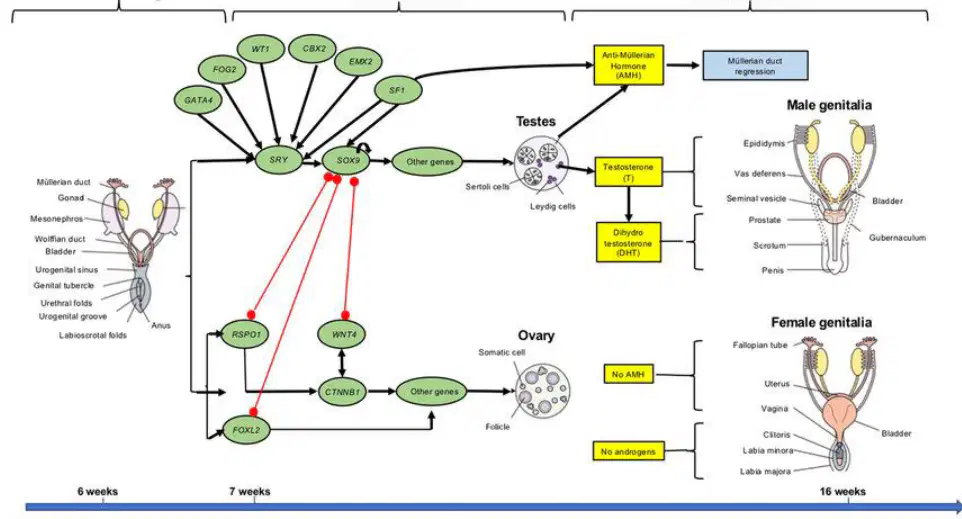
Which hormone produced by Sertoli cells causes Müllerian duct regression in male embryos?
Gonadotropin releasing hormone
Dihydrotestosterone
Anti-Müllerian hormone
Testosterone hormone
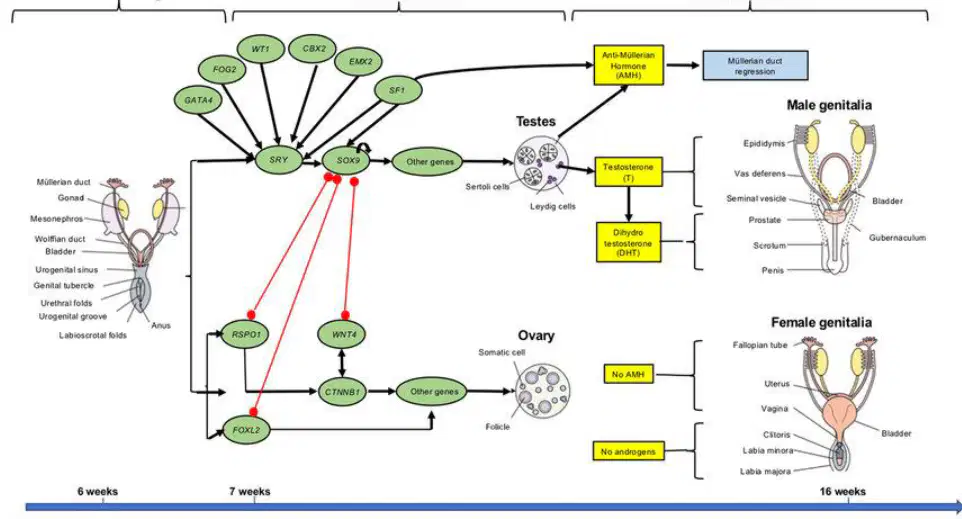
Dihydrotestosterone is essential for the development of which structures?
Wolffian duct derivatives
External male genitalia
Placental chorionic villi
Ovarian follicle cells
Which embryological origin correctly describes gonadal development?
Somites to mesonephric ducts
Intermediate mesoderm to gonadal ridges
Neural crest to genital tubercle
Endoderm to paramesonephric ducts
Which axis regulates gonadal hormone secretion postnatally with feedback to hypothalamus and pituitary?
Hypothalamic–Pituitary–Gonadal axis
Hypothalamic–Pituitary–Thyroid axis
Renin–Angiotensin–Aldosterone system
Sympathetic–Adrenal–Medullary axis
Which clinical correlation is linked to WT1 mutation during indifferent gonad development?
Denys–Drash syndrome
Congenital adrenal hyperplasia
Kallmann syndrome
Androgen insensitivity
In females, the gonads produce which primary gametes and hormones?
Sperm, testosterone, inhibin
Sperm, estrogen, progesterone
Ova, estrogen, progesterone
Ova, testosterone, cortisol
During weeks 5–7 of embryonic development, the gonadal ridge is best described as containing which structures that invade the mesoderm?
Differentiated Leydig and Sertoli cells
Mature ovarian follicles and stroma
Definitive seminiferous tubules and rete
Primitive sex cords that invade mesoderm
Which statement correctly defines a bipotential gonad at the indifferent stage?
Contains fully formed ovarian follicles
Structurally identical to mature testes
Already producing testosterone hormone
Not committed to testis or ovary fate
Failure of primordial germ cell migration most likely results in which gonadal outcome?
Hyperplastic functional bilateral testes
Non-functional fibrous streak gonads
Normal ovaries with mature follicles
Ambiguous gonads secreting androgens
Which key gene set is highlighted as important in early gonadal development at the indifferent stage?
GATA4 TBX5 NKX2-5 HAND1
FGFR3 MAPK1 KRAS MEK1
SOX2 NANOG OCT4 TET1
WT1 SF1 DAX1 LHX9
Primordial germ cells enter the primitive sex cords at the indifferent stage. What is the primary significance of this step?
Determines external genitalia formation
Triggers Müllerian duct regression
Initiates spermatogenesis immediately
Critical for gonadal viability establishment
Activation of the SRY gene product most directly influences which developmental pathway of the bipotential gonad?
Müllerian duct persistence pathway
External genitalia feminization
Ovarian folliculogenesis pathway
Testicular differentiation pathway
Which histologic feature characterizes the indifferent gonad in early development?
Mature seminiferous architecture
Primitive cords with loose stroma
Distinct medulla–cortex partition
Organized follicular compartments
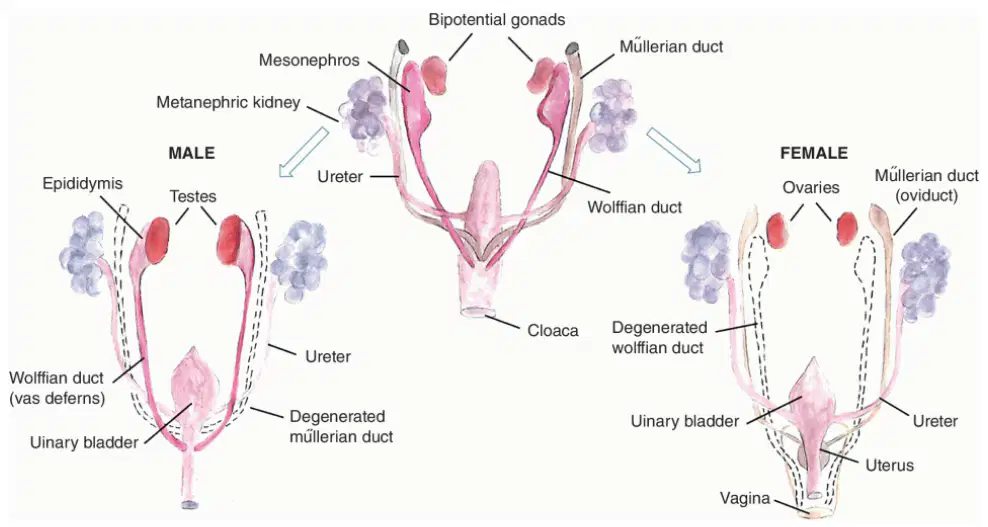
In the provided diagram, which duct system persists in the male and degenerates in the female?
Cloacal duct persists in both
Ureteric duct persists in female
Müllerian duct persists in male
Wolffian duct persists in male
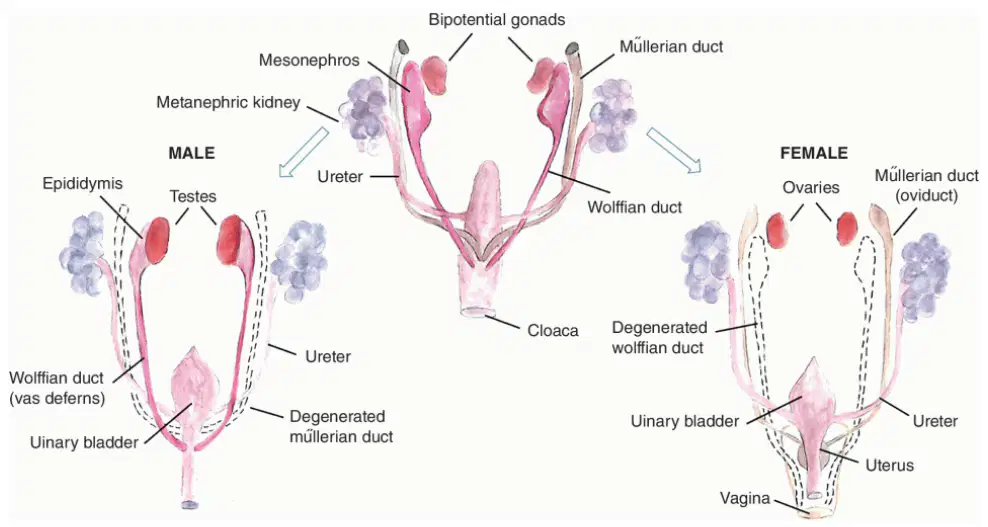
Which statement accurately contrasts duct fate between typical male and female development shown in the diagram?
Both sexes retain Müllerian ducts equally
Both sexes degenerate Wolffian ducts
Male retains Wolffian ducts; female retains Müllerian
Male retains Müllerian ducts; female retains Wolffian

Which structure labeled near the developing testes in the male diagram is the future site of sperm storage and maturation?
Epididymis adjacent to testes
Metanephric kidney cortex
Urinary bladder trigone
Degenerated Müllerian remnant
Which gene on the Y chromosome initiates testis development by producing Testis-Determining Factor?
FGF9 gene in gonads
SOX9 gene on autosomes
SRY gene on Y chromosome
AMH gene on X chromosome
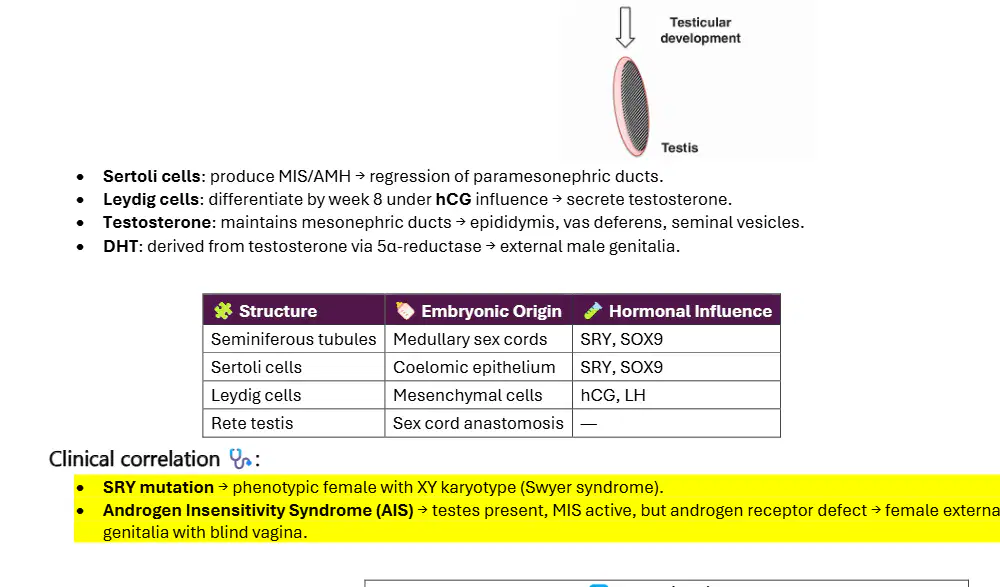
Sertoli cells primarily secrete which substance that causes regression of paramesonephric ducts?
Testosterone synthesis
DHT conversion enzyme
MIS or AMH secretion
LH hormone secretion
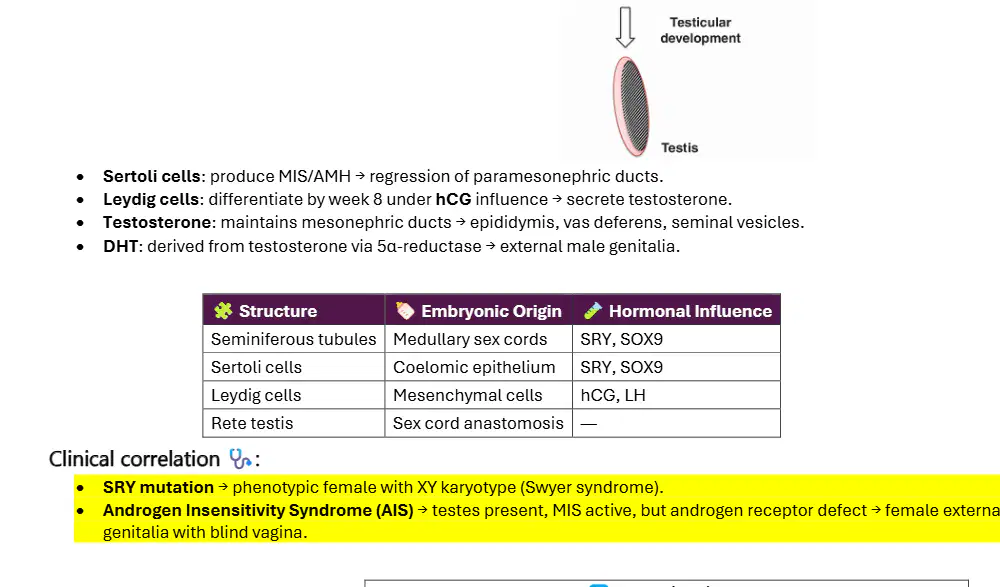
By approximately which developmental time do Leydig cells differentiate under hCG influence?
By week 4 of gestation
By week 16 of gestation
By birth of the infant
By week 8 of gestation
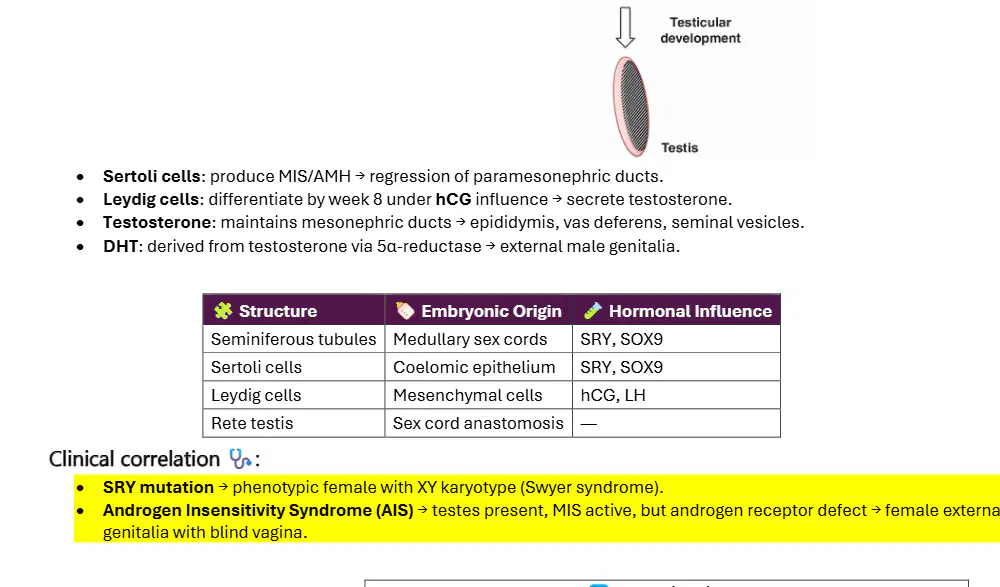
Testosterone maintains which ducts that develop into epididymis, vas deferens, and seminal vesicles?
Allantoic duct derivatives
Müllerian ducts structures
Wolffian ducts structures
Paramesonephric ducts
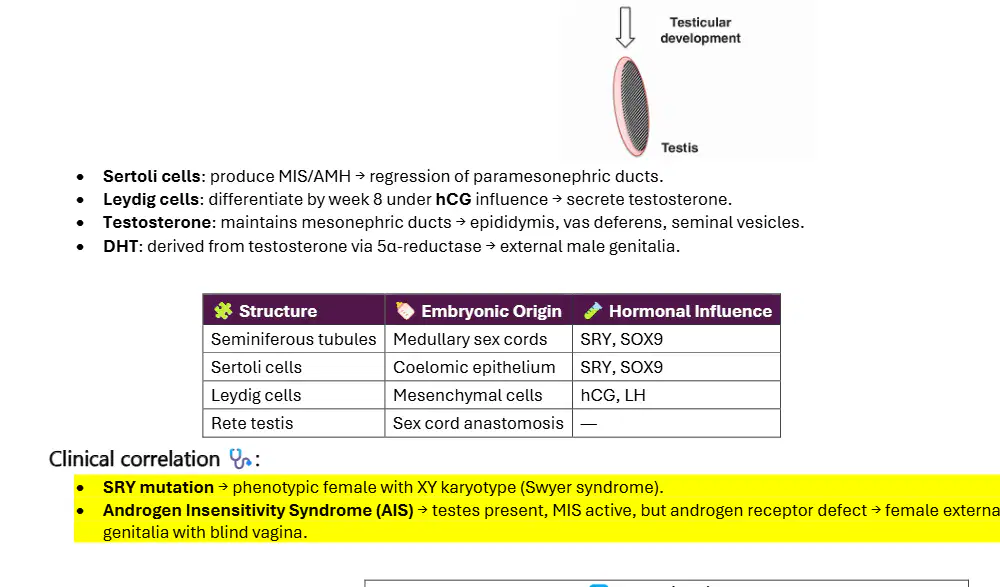
Which androgen is derived from testosterone via 5α-reductase and is crucial for external male genitalia?
Androstenedione via aromatase
Dihydrotestosterone via 5α-reductase
Estradiol via CYP19A1
Progesterone via 3β-HSD
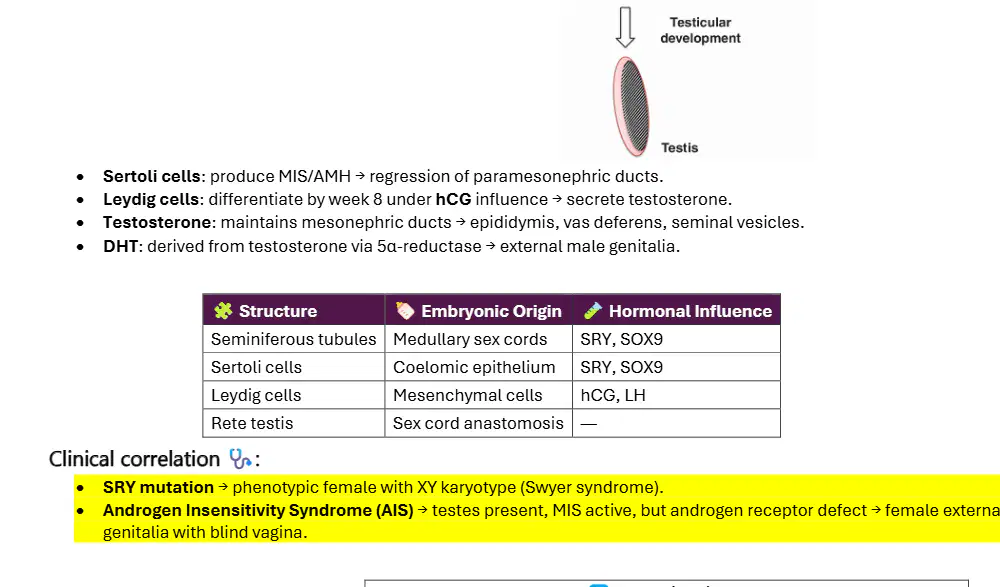
Match each structure with its embryonic origin. Which pairing is correct?
Leydig cells — mesenchymal cells
Rete testis — mesonephric ducts
Sertoli cells — medullary sex cords
Seminiferous tubules — coelomic epithelium
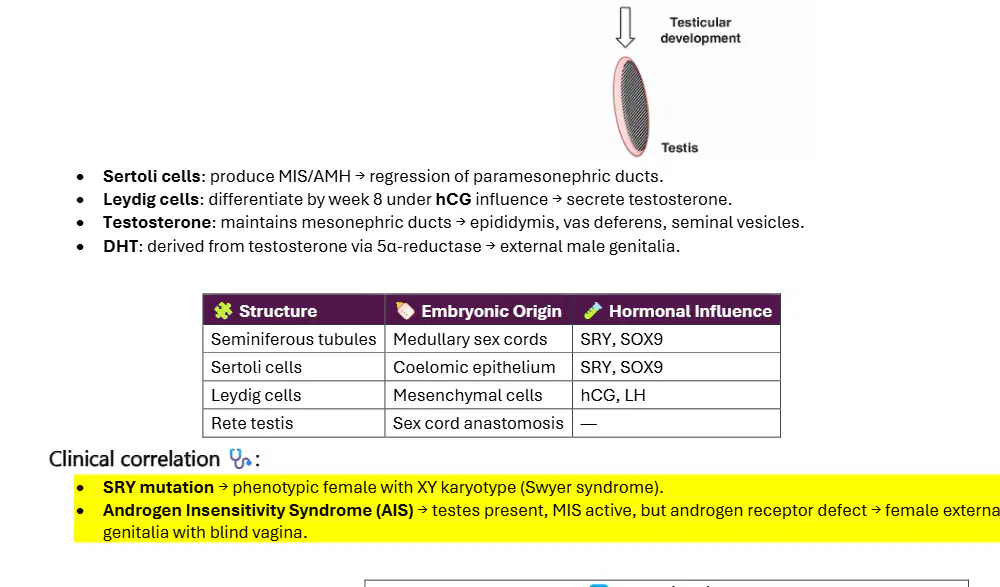
Which hormonal influence is associated with development of seminiferous tubules?
MIS and AMH secretion
SRY and SOX9 signaling
hCG and LH stimulation
PGD2 and FGF9 inhibition
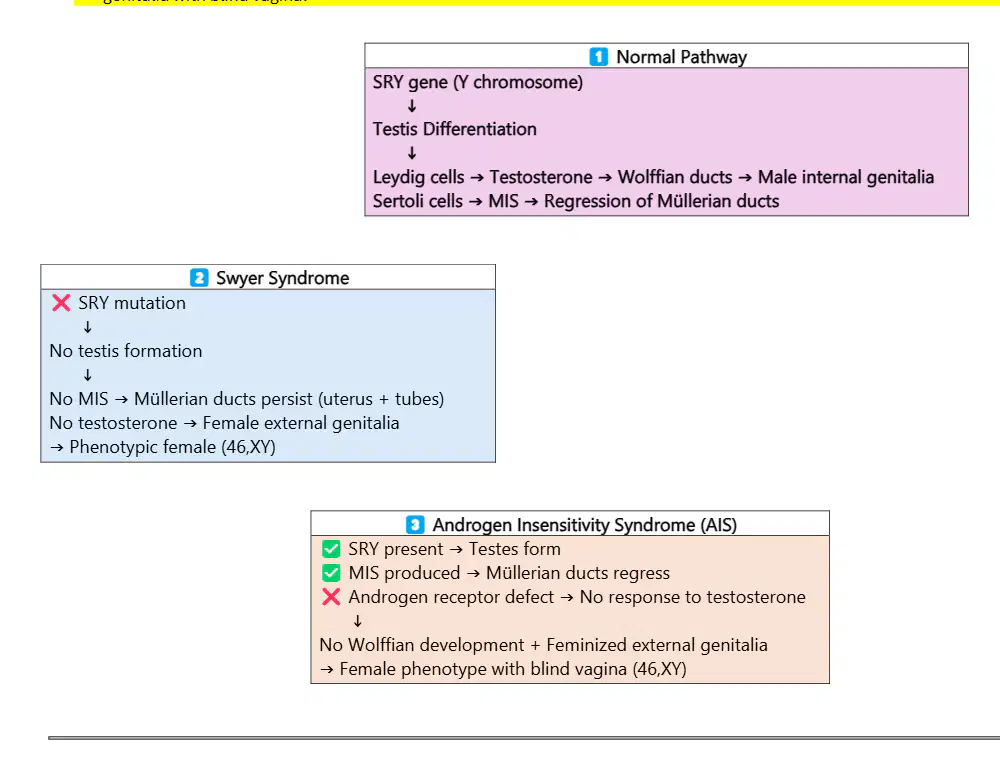
In Swyer syndrome, what phenotype is expected in an individual with a 46,XY karyotype?
Ambiguous genitalia without uterus
Female external genitalia develop
Male internal and external genitalia
Normal male phenotype with infertility
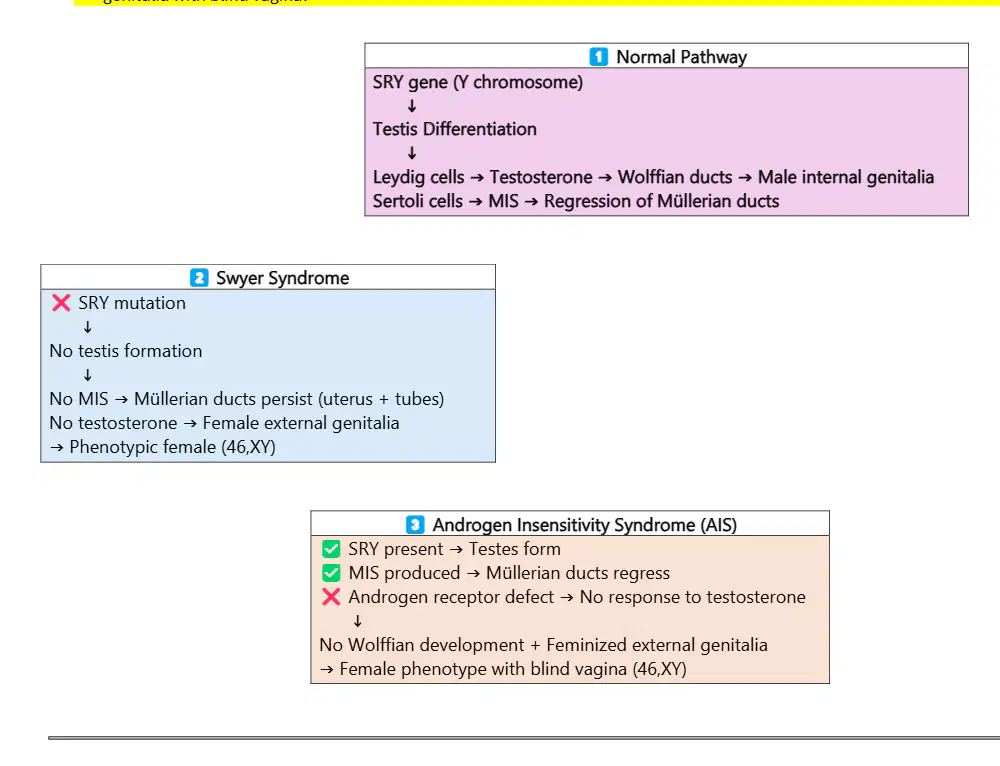
Which sequence best summarizes the normal male pathway from SRY activation?
SRY activates MIS, uterus forms
SRY leads to testis, testosterone, Wolffian ducts
SRY suppresses Leydig, Müllerian ducts persist
SRY causes DHT absence, female genitalia
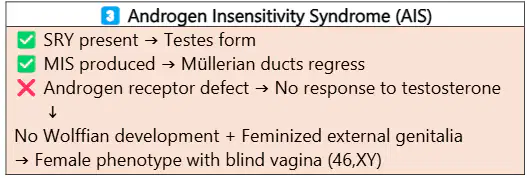
In Androgen Insensitivity Syndrome, which statement is most accurate?
Testes absent, testosterone not produced
MIS absent, Müllerian ducts persist
Androgen receptor defect, female external genitalia
Wolffian ducts fully develop, male phenotype
Which signaling molecules primarily drive ovarian development in XX embryos when SRY is absent?
WNT4 and FOXL2
AMH and DHH
SOX9 and SF1
RSPO1 and MIS
During normal ovarian development, what happens to medullary cords?
They form primordial follicles
They proliferate rapidly
They regress gradually
They become Müllerian ducts
Which structure arises from cortical cords enclosing oogonia?
Theca cell layers
Primordial follicles
Genital ridge epithelium
Müllerian ducts
In the default female pathway, absence of MIS leads to persistence of which ducts?
Common cloacal ducts
Wolffian ducts
Mesonephric ducts
Paramesonephric ducts
Which embryonic origin correctly matches theca cells?
Intermediate mesoderm
Mesenchyme origin
Cortical sex cords
Cortical epithelium
Which hormone primarily stimulates granulosa cell development?
Androgen hormone
MIS hormone
LH hormone
FSH hormone
A patient with WNT4 gene mutation most likely presents with which finding?
Ambiguous external genitalia
Normal ovaries with regular menses
Absent uterus and upper vagina
Functional Müllerian structures
Which karyotype is characteristic of Turner syndrome described in the material?
47,XXY trisomy
45,X monosomy
46,XY normal
45,XX mosaic
Which hormonal profile is typical in Turner syndrome due to reduced estrogen feedback?
Normal FSH with low LH
Elevated FSH and LH
Suppressed FSH and LH
Elevated MIS and DHT
In WNT4 mutation, why are external genitalia typically normal?
Excess MIS secretion present
No SRY-driven testis pathway
Mesonephric ducts dominate development
Hyperandrogenism promotes virilization
Which factor initiates testis development in an XY embryo during gonadal differentiation?
Cortical cord formation
FOXL2 transcription program
SRY-mediated SOX9 activation
WNT4 signaling cascade
In androgen insensitivity syndrome, which structure regresses due to Sertoli cell secretion of MIS?
Wolffian ducts
External genitalia
Müllerian ducts
Cortical cords
A newborn with ambiguous genitalia has a 46,XY karyotype, normal testosterone, and absent Müllerian structures. Which defect best explains female-appearing external genitalia?
5α-reductase deficiency
Androgen receptor defect
SRY gene deletion
WNT4 gene mutation
Which pathway is most associated with ovarian differentiation in XX embryos?
SRY and SOX9 cascade
WNT4 with FOXL2 pathway
MIS-driven duct regression
Leydig cell testosterone surge
What is the primary role of SOX9 in gonadal differentiation?
Promote cortical cords in ovary
Activate Sertoli cell development
Induce FOXL2 expression
Maintain Müllerian duct patency
Which finding distinguishes 5α-reductase deficiency from androgen insensitivity syndrome in a 46,XY patient?
Low circulating testosterone levels
Absent Müllerian structures
Intact Wolffian duct derivatives
Female-appearing external genitalia
SRY gene deletion most likely results in which outcome for gonadal development?
Under-virilization at puberty
Partial androgen insensitivity
Complete gonadal dysgenesis
Exaggerated Leydig cell function
Which cell type produces MIS to cause regression of Müllerian ducts?
Theca cells
Leydig cells
Sertoli cells
Granulosa cells
In a 46,XY fetus with functional androgen receptors, what do Wolffian ducts typically form under testosterone influence?
Uterus and fallopian tubes
Ovarian cortical cords
Labia majora and clitoris
Epididymis and vas deferens
Which statement best explains female-appearing external genitalia in complete androgen insensitivity syndrome?
Androgens cannot act at receptors
MIS fails to regress Müllerian ducts
Testosterone synthesis is absent
WNT4 drives testis formation
During weeks 5–7 of embryogenesis, which paired duct systems run alongside the mesonephros in all embryos?
Thyroglossal and branchial ducts
Ureteric and cloacal ducts
Mesonephric and Müllerian ducts
Hepatic and pancreatic ducts
In XY embryos, what primary signal from the early testis triggers regression of Müllerian ducts?
Anti-Müllerian hormone from Sertoli cells
Testosterone from Leydig cells
Dihydrotestosterone from skin
FSH from pituitary gonadotrophs
Which hormone preserves and differentiates Wolffian ducts into male internal structures?
Prolactin via Jak-Stat signaling
Progesterone via PR activation
Estrogen via ER-alpha binding
Testosterone via androgen receptors
In XX embryos, absence of significant AMH and testicular testosterone leads to which outcome?
Formation of prostate and epididymis
Persistence and fusion of Müllerian ducts
Development of seminal vesicles and vas deferens
Rapid differentiation of Wolffian ducts
Which structure is a derivative of the mesonephric (Wolffian) duct in males and primarily functions in sperm maturation and storage?
Ureter draining the kidney
Prostatic urethra conducting semen
Seminal vesicle secreting fructose
Epididymis with long coiled tube
Topographic remodeling of Wolffian derivatives produces which regional specialization for peristaltic propulsion during emission?
Epididymis with highly coiled tubules
Seminal vesicles with alkaline fluid
Ejaculatory ducts entering prostatic urethra
Ductus deferens with thick muscular wall
Which embryologic source gives rise to the ejaculatory ducts?
Distal mesonephric duct segments
Urogenital sinus endoderm
Paramesonephric duct remnants
Cloacal membrane ectoderm
Without testosterone in XX embryos, what happens to Wolffian ducts?
Involution via apoptosis
Transformation into Müllerian ducts
Persistence with gland outgrowth
Hyperplasia with coiling
Which gene family is noted for patterning tubes such as uterus versus cervix during weeks 6–12?
SOX17–FOX A gut genes
MYOD1–MYF5 myogenic genes
PAX2–8 nephric genes
HOXA9–13 patterning genes
What is the overall functional rationale of the Wolffian duct system in males after differentiation?
Low-resistance conduit for sperm storage and emission
High-pressure vessel for hormonal delivery
Absorptive surface for nutrient uptake
Barrier epithelium for immune protection
Which hormone causes regression of the Müllerian ducts during typical male development?
Estradiol from granulosa cells
Dihydrotestosterone from Leydig cells
Progesterone from the placenta
Anti-Müllerian hormone from Sertoli cells
In androgen insensitivity syndrome (46,XY), which developmental outcome is expected?
Ambiguous external genitalia with uterus
Normal male internal tract with uterus
Male external genitalia with prostate
Female external genitalia with no uterus
Which step requires 5α-reductase for normal male external genitalia formation?
Stabilization of Wolffian ducts by AMH
Migration of testes to scrotum
Secretion of AMH by Sertoli cells
Conversion of testosterone to dihydrotestosterone
A patient with 5α-reductase deficiency at birth is most likely to present with which finding?
Female external genitalia with functional uterus
Normal male external genitalia with absent Wolffian ducts
Ambiguous genitalia with complete Müllerian regression failure
Under-virilized external genitalia with preserved Wolffian ducts
Which embryologic structure develops into epididymis, vas deferens, and seminal vesicles?
Urogenital sinus under AMH influence
Allantois under progesterone influence
Wolffian ducts under testosterone influence
Müllerian ducts under estrogen influence
In XX embryos, what allows paramesonephric ducts to persist and form uterovaginal canal?
High AMH and high androgen levels
Absence of AMH and low androgen levels
Testosterone surge and Wolffian stabilization
Presence of DHT and HOXA11 suppression
Which HOX gene is most associated with development of the upper vagina and cervix?
HOXA13 guiding upper vagina and cervix
HOXA11 guiding lower uterus and cervix
HOXA9 guiding fallopian tubes
HOXA10 guiding uterine body alone
Failure of midline fusion and resorption of the Müllerian septum most likely leads to which anomaly?
Didelphys with complete duplication
Unicornuate uterus with one duct
MRKH syndrome with agenesis
Septate uterus with resorption failure
Which clinical feature distinguishes AIS from 5α-reductase deficiency in adolescence?
Regression of Müllerian ducts ceases in AIS at puberty
Partial virilization at puberty in 5α-reductase deficiency
Development of uterus in AIS during puberty
Formation of prostate in both conditions
Where are testes commonly located in complete AIS?
In abdomen or inguinal canal
In scrotum with normal descent
Adjacent to functional uterus
Retroperitoneal near kidneys
Which embryologic source gives rise to the fallopian (uterine) tubes?
Caudal Müllerian fusion zone
Caudal Müllerian sinus induction
Fused Müllerian uterovaginal canal
Cranial, unfused Müllerian ducts
What is the primary functional rationale of the cervix in reproductive physiology?
Barrier and selective mucus
Oocyte capture and transport
Implantation and gestation
Birth canal epithelium
In Müllerian agenesis (MRKH), which clinical feature is most characteristic?
Absent uterus with upper vagina
Two uteri with two cervices
Single-horn uterus with rudimentary horn
Septum dividing the uterine cavity
Which uterine anomaly is most strongly linked to early pregnancy loss?
Septate uterus with fibromuscular septum
Unicornuate uterus with agenesis
Uterus didelphys with non-fusion
Bicornuate uterus with partial fusion
Which mnemonic correctly pairs Wolffian derivatives in males?
SEED: Skene glands, Epididymis, Ejaculatory ducts, Deferens
F-U-V: Fallopian tubes, Uterus, Vestibular glands
F-U-V: Fallopian tubes, Uterus, Upper vagina
SEED: Seminal vesicles, Epididymis, Ejaculatory ducts, Ductus deferens
Anti-Müllerian hormone (AMH) primarily targets which structure during sexual differentiation?
Müllerian duct regression
Urogenital sinus budding
External genitalia virilization
Wolffian duct maintenance
Testosterone’s principal role in duct development is best summarized as:
Induces prostate budding
Virilizes external genitalia
Regresses Müllerian ducts
Maintains Wolffian ducts (SEED)
Which statement about dihydrotestosterone (DHT) is most accurate?
Not needed for duct decisions
Inhibits Sertoli cell AMH
Primarily regresses Müllerian ducts
Directly maintains Wolffian ducts
Which accessory gland arises from urogenital sinus endoderm and produces citrate and PSA?
Skene gland with estrogen modulation
Bartholin gland with estrogen modulation
Bulbourethral gland with androgen dependence
Prostate with androgen-dependent budding
Which female accessory gland is homologous to the bulbourethral gland and provides vaginal lubrication?
Prostate derived from sinus endoderm
Skene gland from paraurethral endoderm
Bartholin gland from vestibular endoderm
Seminal vesicle from Wolffian duct
Which cell type secretes Anti-Müllerian Hormone during fetal gonadal development?
Theca cells in ovary
Leydig cells in testes
Sertoli cells in testes
Granulosa cells in ovary
Primary target of Anti-Müllerian Hormone in embryogenesis is which duct system?
Müllerian duct system
Metanephric duct
Wolffian duct system
Urogenital sinus
Testosterone maintains and differentiates Wolffian derivatives. Which structure is NOT a Wolffian derivative?
Seminal vesicles
Ejaculatory ducts
Ductus deferens
Epididymis segment
Conversion of testosterone to dihydrotestosterone requires which enzyme?
17β-HSD enzyme
Aromatase enzyme
5α-reductase enzyme
11β-hydroxylase
Under DHT influence, which targets undergo virilization in male development?
Renal collecting ducts
Internal Müllerian organs
External genitalia structures
Anterior pituitary tissue
Deficiency of 5α-reductase most likely leads to which phenotype at birth?
Complete Müllerian agenesis
Ambiguous external genitalia
Absent Wolffian derivatives
Primary ovarian formation
In the absence of AMH and androgens, which female ductal derivatives persist from the Müllerian system?
Uterus and cervix
Seminal vesicles only
Ejaculatory duct pair
Epididymis and prostate

