
 Worksheets
Body Mechanics
Total questions: 46
Worksheet time: 23mins
Which of the following is NOT a benefit of proper body mechanics?
A) Prevent injury
B) Avoid muscle fatigue
C) Protect your spine
D) Cause muscle strain
What is the benefit of proper body mechanics?
Reduces chance of injury
Increases risk of falls
Decreases flexibility
Causes muscle strain
What is body mechanics?
Body mechanics is the term for how you use your body to move during daily activities like standing, sitting, lifting, and bending.
Body mechanics refers to the study of human anatomy only.
Body mechanics is a type of exercise routine for athletes.
Body mechanics is the process of measuring body weight and height.
Proper body mechanics means moving in ways that use your body's strength efficiently to prevent injury, avoid muscle fatigue, and protect your spine.
True
False
Why is it important for both patients and healthcare professionals to know how to use body mechanics?
Knowing how to use body mechanics is important for everyone to prevent injury, avoid muscle fatigue, and protect the spine.
It helps to increase the speed of patient recovery without any risks.
It is only necessary for healthcare professionals to avoid legal issues.
It allows patients to perform medical procedures on themselves safely.
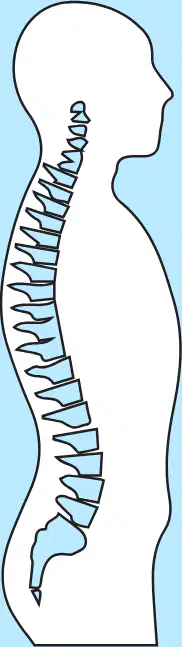
What is a neutral spine?
The position where your back is curved unnaturally
The natural, balanced position of your back that keeps its normal inward and outward curves aligned
The position where your spine is under the most stress
The position where your muscles do not work efficiently
Fill in the blank: A neutral spine allows all of the muscles in your back to work most ________ and the stress of the activity is evenly distributed across the vertebra and discs.
efficiently
slowly
randomly
painfully
Which of the following is a benefit of maintaining a neutral spine?
Increased stress on the vertebra and discs
Muscles in your back work less efficiently
The spine is strongest and under the least amount of stress
The normal curves of the spine are misaligned
A neutral spine keeps its normal inward and outward curves aligned.
True
False

What is the Center of Gravity (COG)?
The point where all of an object's weight is evenly distributed
The heaviest part of an object
The topmost point of an object
The lowest point of an object

In the human body, where is the center of gravity typically located when standing?
Around the shoulders
Around the pelvis, just below the belly button
At the feet
At the head

Fill in the blank: Moving outside the imaginary line of the center of gravity greatly increases your chance for _______.
injury or falls
success
balance
speed

True or False: The center of gravity in the human body never changes, even when you move or carry objects.
True
False
A wide base of support increases stability by lowering your ________ and broadening the area contacting the ground. Fill in the blank.
center of gravity
body temperature
heart rate
muscle tension
A wide base of support helps prevent injury because it evenly distributes the weight of the object over a larger area.
True
False
It is better to rely on your body's large muscle groups like legs, abs, and glutes to do most of the work, rather than straining smaller muscles like those in your arms and smaller back muscles.
True
False
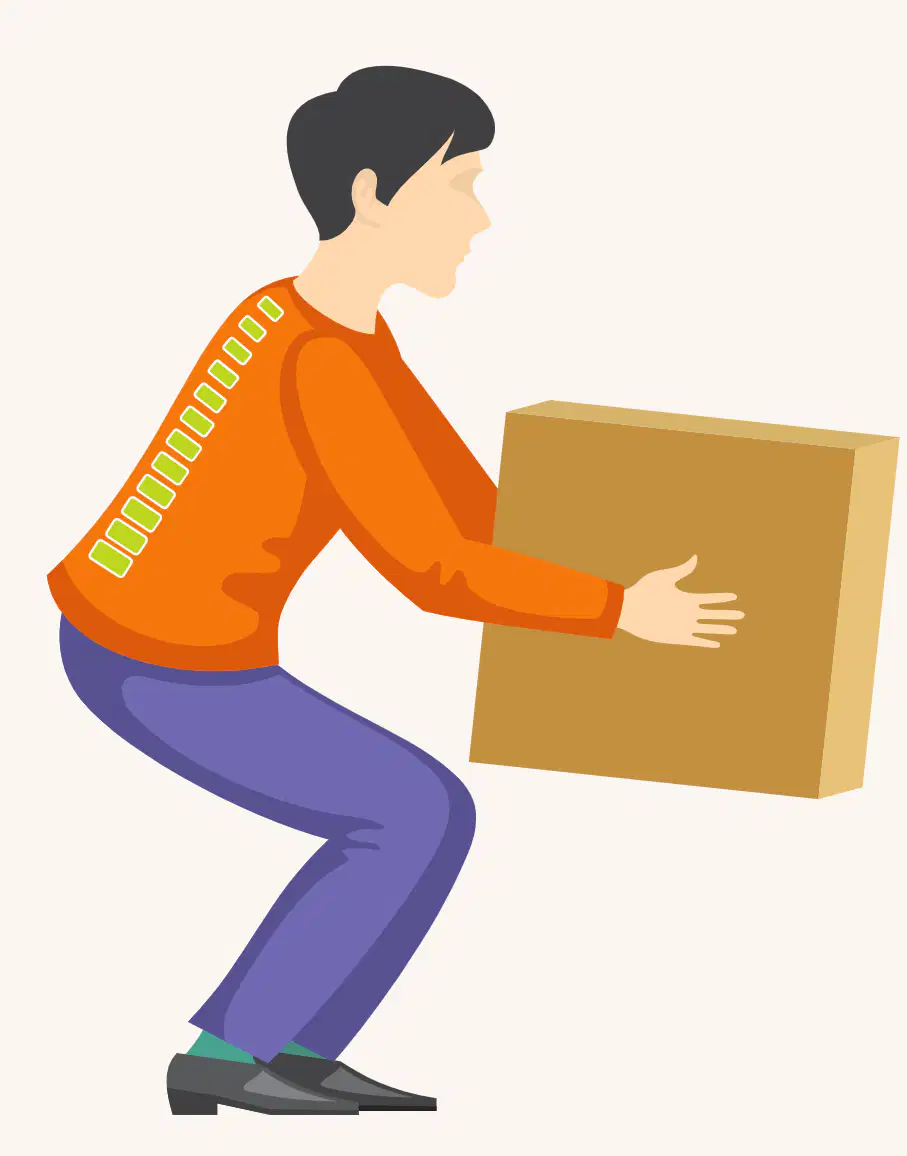
Controlled Muscle Movements: What does it mean to deliberately control your muscles to move your body safely and efficiently?
To use your brain and nervous system to guide your body with purpose and precision
To move awkwardly or rely on momentum
To ignore your body's signals
To move without thinking
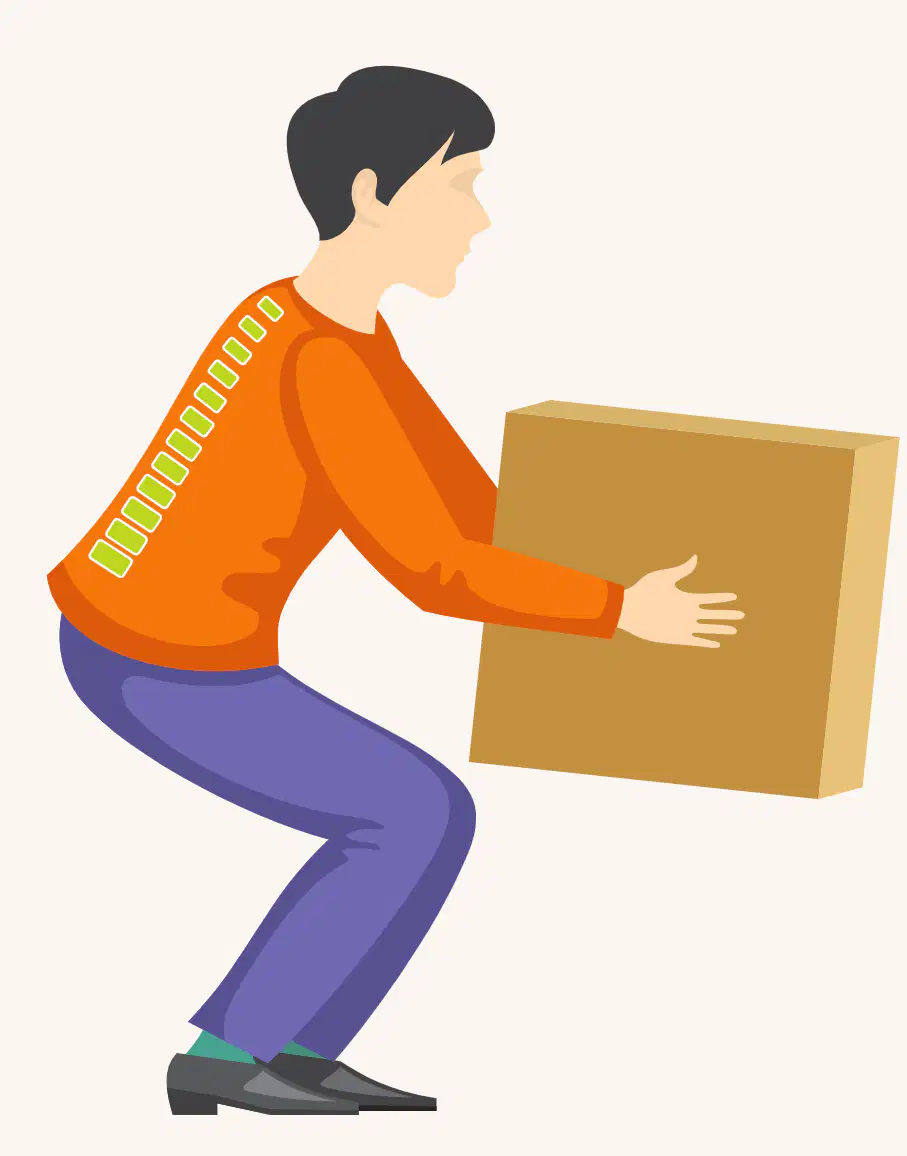
Deliberately controlling your muscles means using your ______ and nervous system to guide your body with purpose and precision.
brain
heart
lungs
stomach
Understanding the 'why' is important in the context of this worksheet because:
It helps clarify the purpose and deepen comprehension.
It allows you to skip steps in the worksheet.
It makes the worksheet longer and more complicated.
It is only necessary for advanced learners.
We have external forces that act against us everyday, all day long. Which of the following is an example of an external force?
Gravity
Ground Reaction Forces
Friction
Applied Forces
We have external forces that act against us everyday, all day long. Fill in the blank: The force that pulls objects toward the center of the Earth is called _________.
Gravity
Magnetism
Friction
Electricity
The force that resists motion between two surfaces that are in contact is called _________.
Friction
Gravity
Magnetism
Tension
We have external forces that act against us everyday, all day long. Fill in the blank: The force exerted by the ground on a body in contact with it is called _________.
Ground Reaction Forces
Frictional Forces
Gravitational Forces
Magnetic Forces
The force that is applied to an object by a person or another object is called _________.
Applied Forces
Frictional Forces
Gravitational Forces
Magnetic Forces
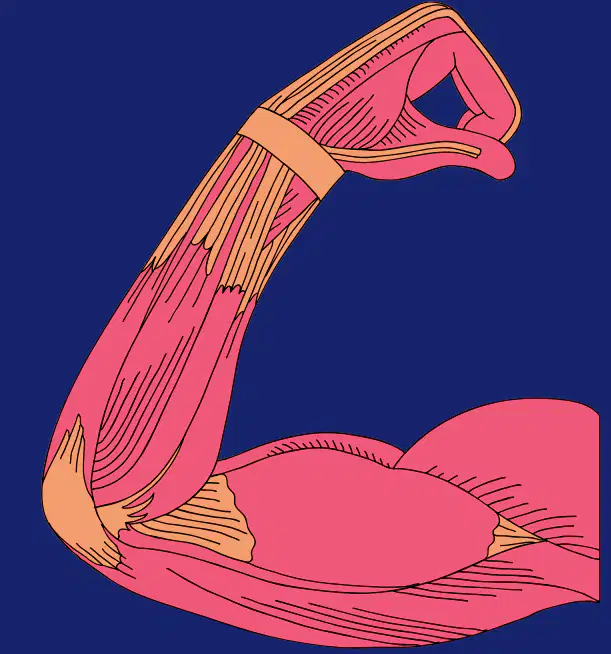
What type of internal force is shown by the image of a flexed arm?
Muscular forces
Gravitational forces
Frictional forces
Elastic forces
Which type of internal force is represented by the image of bones and red bands?
Ligament/Tendon forces
Muscle contraction forces
Joint reaction forces
Bone compression forces
Fill in the blank: In the body, muscles contract, pulling on bones via ______ to create motion.
tendons
ligaments
cartilage
nerves
What is torque?
A linear force
A rotational force around a joint (the pivot point)
A type of muscle
A type of bone
Fill in the blank: Muscles generate ______ to move a limb; the amount of torque depends on the force applied and the distance from the joint.
torque
energy
pressure
heat
What is tension? Fill in the blank: Tension is a ______ force, specifically the force transmitted through muscles and tendons to the bones.
pulling
pushing
rotational
compressive
When you lift an object, which muscle creates tension to pull your forearm up?
Triceps
Biceps
Deltoid
Quadriceps
What is the ability of tissues like muscles and tendons to stretch and return to their original shape after a force is removed called?
Elasticity
Rigidity
Plasticity
Viscosity

Which property helps tissues like muscles and tendons store and release energy, making movement more efficient?
Rigidity
Elasticity
Flexibility
Hardness
The ability of an object to return to its original shape after being stretched or compressed is called _________?
elasticity
density
viscosity
plasticity
Fill in the blank: The force that causes rotation is known as _________.
torque
momentum
friction
gravity
Fill in the blank: Forces that act within an object or system are called _________.
internal forces
external forces
gravitational forces
frictional forces
Forces that act on an object from outside the system are called _________
external forces
internal forces
gravitational forces
frictional forces
The force that is transmitted through a muscle or tendon when it is pulled tight by forces acting from opposite ends is called _________?
tension
compression
friction
gravity
Fill in the blank: The act of changing position or location is called _________.
movement
growth
respiration
reproduction
And all of these forces/abilities have to act properly and in unison to have proper body mechanics _____________.
True body mechanics require all forces/abilities to act properly and in unison.
True body mechanics can occur even if some forces/abilities do not act properly.
Proper body mechanics do not depend on forces/abilities acting in unison.
Body mechanics are unrelated to the coordination of forces/abilities.
Body Mechanics are super important in reduction/prevention of injury.
True
False
According to the passage, which of the following is NOT a common daily activity that can cause body mechanic issues?
Poor posture
Lifting heavy objects
Eating fruits
Prolonged sitting

Fill in the blank: Wearing __________ shoes can contribute to body mechanic issues, according to the passage.
unsupportive
colorful
expensive
tight
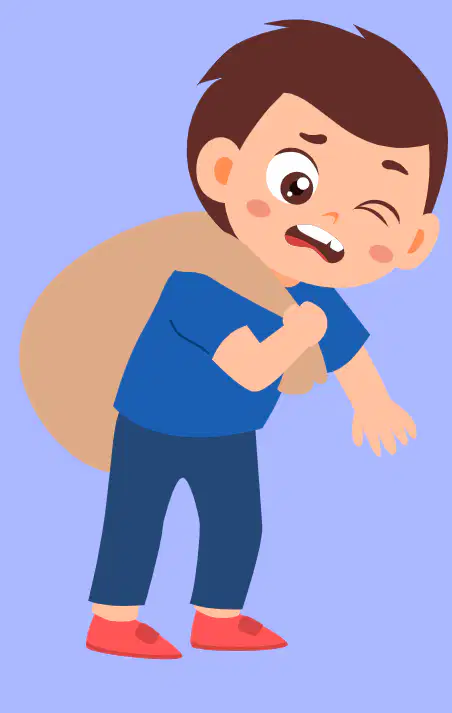
Consistently carrying heavy bags on one shoulder can put stress on your muscles, joints, and ligaments, potentially leading to pain and injury.
True
False
What are two possible consequences of not warming up before activities, as mentioned in the passage?
Pain and injury
Improved flexibility and strength
Faster recovery and relaxation
Better concentration and focus
According to the passage, what do poor posture, lifting heavy objects, and repetitive motions have in common?
They can all cause body mechanic issues by putting stress on muscles, joints, and ligaments.
They are all recommended for improving flexibility.
They are all ways to prevent injuries.
They are all unrelated to physical health.

