
 Worksheets
Weather Patterns TEST 25-26
Total questions: 70
Worksheet time: 57mins

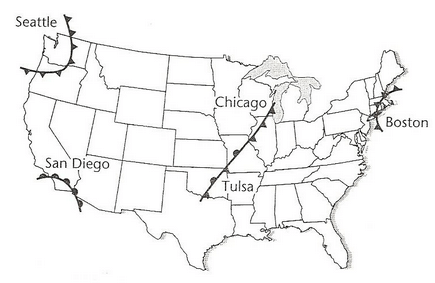
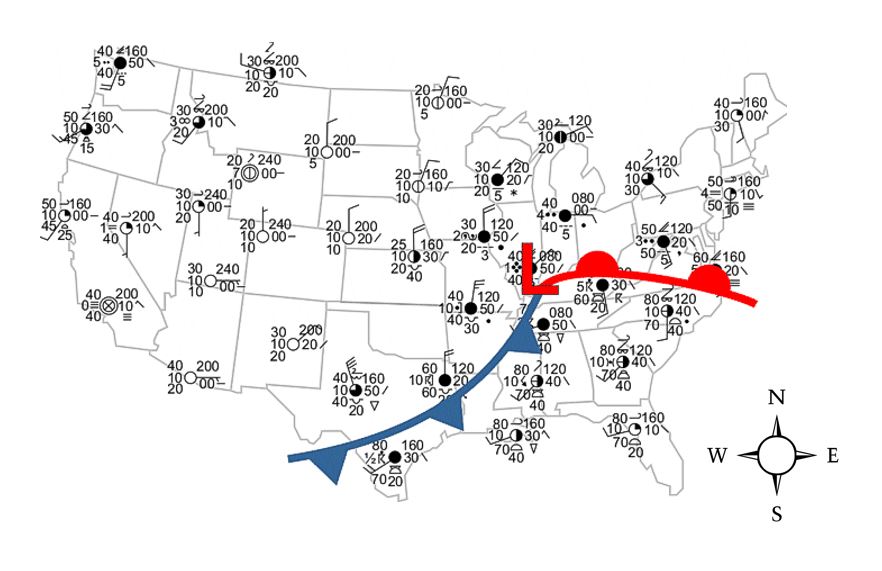
What city will experience decreasing temperatures in the next day?
Denver
El Paso
Memphis
Los Angeles

What city is most likely going to see temperatures rise?
San Jose
El Paso
Jacksonville
Chicago

What does this symbol represent?
Cold Front
Warm Front
Stationary Front
Occluded Front


The water cycle has no start or end
True
False
What is the energy source for the water cycle?
the Sun
the Earth
water
the Moon

The amount of water vapor in the air is known as ___.
dew point
humidty
relative humidity
rain

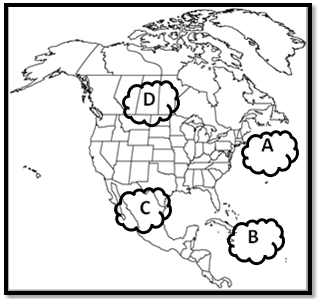
How do we characterize an air mass that forms over land?
Dry
Humid
Cold
Warm
How do we characterize an air mass that forms over the ocean?
Dry
Humid
Cold
Warm
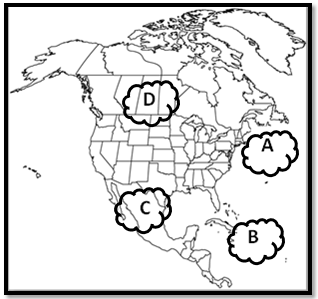
How do we characterize an air mass that forms near the poles?
Dry
Humid
Warm
Cold
How do we characterize an air mass that forms over near the equator?
Dry
Humid
Cold
Warm
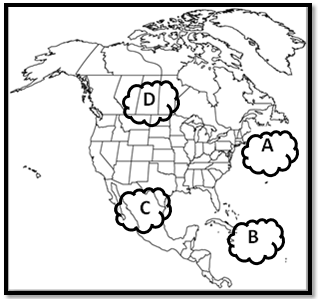
A humid and cold air mass would be a...
Maritime polar
Continental polar
Maritime tropical
Continental tropical
What type of weather is usually found in high pressure areas?
sunny and dry
wet and stormy
cold and snowy
sunny and humid
What type of weather does a low pressure system bring?
Clear skies
Stormy, cloudy weather
Does Warm air or Cold air hold MORE water?
Warm
Cold
they hold the same
Explain the difference between warm and cold fronts.
Cold fronts involve warm air moving into colder air, leading to abrupt weather changes and potential thunderstorms.
Warm fronts involve warm air moving into colder air, leading to abrupt weather changes and potential thunderstorms.
Warm fronts involve warm air moving into colder air, resulting in gradual weather changes and precipitation. Cold fronts involve cold air moving into warmer air, leading to abrupt weather changes and potential thunderstorms.
Warm fronts involve cold air moving into warmer air, resulting in gradual weather changes and precipitation.
Which cross section best represents a cold front?


Which of the following is an example of convection?
Melting ice in a glass
Lightning during a thunderstorm
Boiling water in a pot
Baking cookies in an oven
What is convection?
The process of heat transfer through the movement of a fluid caused by differences in temperature.
The process of heat transfer through the movement of a fluid caused by differences in density.
The process of heat transfer through the movement of a gas caused by differences in pressure.
The process of heat transfer through the movement of a solid caused by differences in temperature.
What is the primary method of heat transfer in fluids and gas?
Conduction
Convection
Radiation
None of the above
Which is an example of Convection?
Walking on the beach
A heater warming the air in a bedroom
the sun's rays hitting earth
a hot soup warming the spoon
Which particles move faster?
Hot
Cold

Match these heat transfers

Conduction

Convection

Radiation

Measures wind speed.
Rain Gauge
Wind Vane
Wind Sock
Anemometer
What causes wind?
differences in air pressure
differences in gravity
difference in oxygen
differences in the thermosphere
What gas makes up 78% of the atmosphere?
Oxygen
Nitrogen
Ozone
Carbon Dioxide

What would be the effect on the particles in the animation if more heat is supplied to the system?
They would slow down.
They would stop moving completely.
They would speed up.
There would be no effect.
Which layer of the atmosphere contains the ozone layer?
troposphere
thermosphere
methosphere
stratosphere
Which layer of the atmosphere do we live in?
tropsophere
stratosphere
mesosphere
thermosphere
magnetosphere
What instrument do meteorologists use to measure atmospheric pressure?
barometer
thermometer
rain gauge

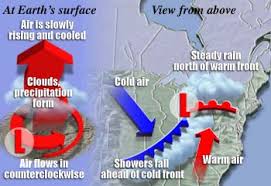
What is the energy source for the water cycle?
the Sun
the Earth
water
the Moon
What is the expected relative humidity when it is precipitating outside?
80%
0%
100%
20%


what type of cloud is shown?
cumulus
cirrus
stratus
cumulonimbus
What will most likely happen when air pressure rapidly drops in an area?
Clear and sunny weather will occur
A high-pressure system is approaching
Stormy and possibly rainy weather is likely
Temperatures will immediately rise
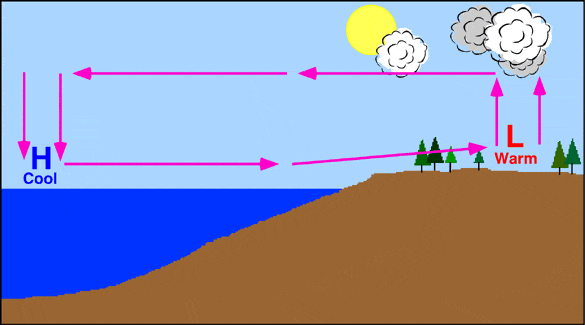
As you sit on the beach, you notice that the breeze, which had been blowing toward the water from the land, shifts so that it is blowing off the water toward land. What event has just occurred?
Clouds have begun to form over the water.
The temperature over the land has reached its highest point for that day.
The temperature over the land has become higher than the temperature over the water.
The temperature over the water has become higher than the temperature over the land.
Which Earth's surface heats quicker, sand or water?
sand
water
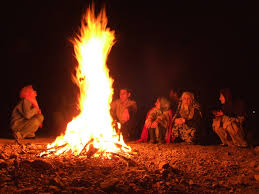
A group of friends gather around a fire to stay warm. How is the heat transferring to them?
conduction
convection
radiation

The way the heat is moving out of the hot coffee cup is called...
convection
radiation
insulation
conduction
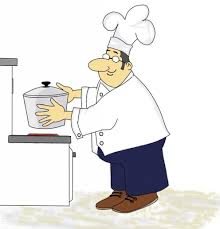
The man goes to take the hot pot off the stove with his bare hands. How does heat transfer to his hands?
conduction
convection
radiation
When a substance loses heat energy, its molecules _______.
slow down
speed up
are not affected
break apart

