wayground logo

Free Printable Worksheets

Font size

S
M
L
XL
Worksheets

Chemistry Semester Review Fall 2025

Total questions: 66

Worksheet time: 1hrs 23mins

Name
Class
Date
1.
Density: Chemical or Physical Property
a)
Chemical Property
b)
Physical Property
2.
Flammability (burns): Chemical or Physical Property
a)
Chemical Property
b)
Physical Property
3.
Reacts with Acid: Chemical or Physical Property
a)
Chemical Property
b)
Physical Property
4.
Melting Point: Chemical or Physical Property
a)
Chemical Property
b)
Physical Property
5.
Boiling Point: Chemical or Physical Property
a)
Chemical Property
b)
Physical Property
6.

Glass breaking

a)

Physical Change

b)

Chemical Change

7.
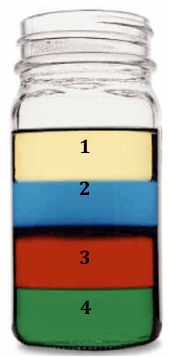
Put the liquids in order from most dense to least dense?
a)
4, 3, 2, 1
b)
1, 2, 3, 4
c)
3, 4, 2, 1, 
d)
4, 3, 1, 2
8.
What is the formula for density?
a)
density = mass x volume
b)
density = mass / volume
c)
density = mass + volume
d)
density = mass - volume
9.
Frank has an eraser. It has a mass of 4g, and a volume of 2cm3. What is its density?
a)
8 g/cm3
b)
2 g/cm3
c)
1/2 g/cm3
d)
24 g/cm3
10.
An object with which of the following densities will float on water?
a)
0.7 g/cm3
b)
1.2 g/cm3
c)
3.5 g/cm3
d)
11.4 g/cm3
11.
Which box has a higher density?  
a)
Box A
b)
Box B
c)
cannot be determined
d)
they are the same
12.
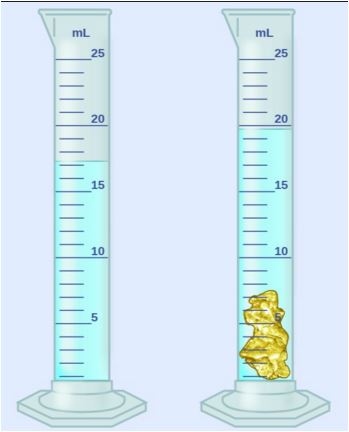
An irregularly shaped piece of gold was lowered into a graduated cylinder holding a volume of water equal to 17 ml. The height of the water rose to 20 ml. If the mass of the gold was 27 g, what was its density?
a)
9 g/mL
b)
10.5 g/mL
c)
6.5 g/mL
d)
8 g/mL
13.

What are the subatomic particles?

a)

Protons, Electrons, Neutrons

b)

Molecules, and atoms

c)

Electrons, Protons, Nucleus

d)

Nucleus, and Electrons

14.

What is this subatomic particle that has positive charge?

a)

Electron

b)

Neutron

c)

Proton

d)

Megatron

15.

What mass does a neutron have?

a)

1 amu

b)

0 amu

c)

-1 amu

d)

+2 amu

16.
Complete the missing label on the diagram.
a)
Neutron
b)
Centre
c)
Nucleus
d)
Sub atomic particle
17.

An atom has 9 protons, 10 neutrons, and 9 electrons.

What is the charge on this atom?

a)

-1

b)

0

c)

+1

d)

19

e)

18

18.

An atom has 8 protons, 8 neutrons, and 10 electrons.

What is the mass of this atom?

a)

8

b)

16

c)

18

d)

-2

19.
Sodium has an atomic number of 11, how many protons does this atom have?
a)
22
b)
11
c)
12
d)
2
20.
Where is most of the mass in an atom located?
a)
in the nucleus
b)
in the protons
c)
in the neutrons
d)
in the electrons
21.

How many protons does indium have?

a)

49

b)

66

c)

114

d)

115

22.

Label the correct subatomic particles

23.
Name the following Ionic Compound: 
KCl
a)
Potassium Chlorine
b)
Potassium Chloride
c)
Potassium (I) Chlorine
d)
Potassium (II) Chloride
24.
Name the following Ionic Compound: 
FePO4
a)
Iron (III) Phosphate
b)
Iron (III) Phosphide
c)
Iron (II) Phosphate
d)
Iron (II) Phosphite
25.
Write the formula from the following ionic compound: 
Calcium Nitrate
a)
CaN
b)
CaNO3
c)
Ca2NO3
d)
Ca(NO3)2
26.

If Na+1 and Cl-1 combine what is the resulting formula?

a)

NaCl

b)

NaCl2

c)

Na2Cl

d)

Na

27.

If Mg+2 and Br-1 combine what is the resulting formula?

a)

MgBr2

b)

MgBr

c)

Mg2Br

d)

Br

28.

If Ca+2 and S-2 combine, what is the resulting formula?

a)

CaS

b)

Ca2S

c)

CaS2

d)

Ca

29.

an ion that has a negative charge

a)

cation

b)

anion

c)

polyatomic ion

d)

monatomic ion

30.

Which of the following compounds contains a Co+3 ion?

a)

CoBr

b)

CoNO3

c)

CoP

d)

CoS

31.

Which of the following compounds has the lowest lattice energy?

a)

LiF

b)

NaCl

c)

KBr

d)

RbI

32.
Contains two or more atoms combined
a)
Elements
b)
Compounds
c)
Mixtures
33.
Contains only one kind of atom.
a)
Element
b)
Compund
c)
Mixture
34.
SiCl4
a)
silicon tetrachloride
b)
silicon quadchloride
c)
monosilicon tetrachloride
d)
silicon chloride
35.
The chemical formula of sulfur hexabromide is
a)
SBr₆
b)
S₆Br
c)
S(VI)Br
d)
S6Br
36.

The chemical formula of dinitrogen tetroxide is

a)
Ni₂O₄
b)
NiO
c)
N₂O₄
d)
NiO₂
37.
The name of SO₃ compound is
a)
sulfate
b)
sulfur oxide
c)
sulfur trioxide
d)
monosulfur trioxide
38.
BrO3
a)
bromine oxide
b)
monobromine trioxide
c)
bromine trioxide
d)
bromine (III) oxide
39.

Attraction between molecules of the same substance is known as (a)   .

Choose from the below words
Buffer
Adhesion
Hydrogen Bond
Cohesion
40.

Attraction between differnt kinds of molecules.

a)

Cohesion

b)

Carbon Bond

c)

Hydrogen Bond

d)

Adhesion

41.

Type of mixture in which all the components are evenly distributed.

a)

Solution

b)

Solute

c)

Solvent

d)

Suspension

42.

Substance that is dissoved in a solution.

a)

Base

b)

Solute

c)

Solvent

d)

Suspension

43.

Dissolving substance in a solution.

a)

Acid

b)

Solute

c)

Solvent

d)

Suspension

44.

The oxygen atom in water is slightly ____.

a)

negative

b)

positive

45.

When a solid becomes a liquid the ___ point is reached.

a)

melting

b)

boiling

46.

Because solid water is less dense than liquid water, ___ floats.

a)

solid water

b)

liquid water

47.
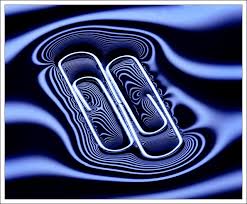
The tightness across the surface of water that enables paper clips to float is ____________.
a)
adhesion
b)
capillary action
c)
surface tension
d)
polarity
48.

What is the strongest intermolecular forces in the molecule?

a)

London Dispersion Force (Van der Waals Forces)

b)

Hydrogen bonds

c)

Dipole-Dipole

49.

Which molecule has the strongest intermolecular forces?

a)

H-F

b)

H-Cl

c)

Br-Br

d)

Cl-I

50.

Which of the following molecules would have London Dispersion Forces?

a)

CH4

b)

SCO

c)

PCl3

d)

SO2

51.

Which is the stronger intermolecular force present in NH3?

a)

London dispersion Force

b)

Dipole dipole

c)

Hydrogen bonding

52.

Which is the stronger intermolecular force present in CO2? Think....Is the molecule polar or non-polar

a)

London dispersion Force

b)

Dipole dipole

c)

Hydrogen bonding

53.
Which of the following has the highest boiling point?
a)
H2
b)
NH3
c)
N2
d)
O2
54.
Which of the following has the lowest boiling point?
a)
CaCl2
b)
PH3
c)
Cl2
d)
N2
55.
Which of the following will take the longest to evaporate?
a)
CH3CH2OH
b)
CH3OH
c)
CH3CH3
56.

Water and ammonia molecules are roughly the same size and the same mass but ammonia boils at -28°F and water boils at 212°F. What can we conclude about the intermolecular forces between water and ammonia?

a)

Water has stronger intermolecular forces

b)

Ammonia has stronger intermolecular forces

c)

The intermolecular forces are the same strength

d)

Not enough information is given

57.
 A lone pair is defined as
a)
A pair of bonding electrons
b)
One non-bonding electron
c)
A pair of non-bonding electrons
d)
A pair of electrons on the central atom
58.
What is the VSEPR theory used to predict?
a)
Bond Strength
b)
Polarity
c)
Molecular Shape
d)
Electronegativity
59.
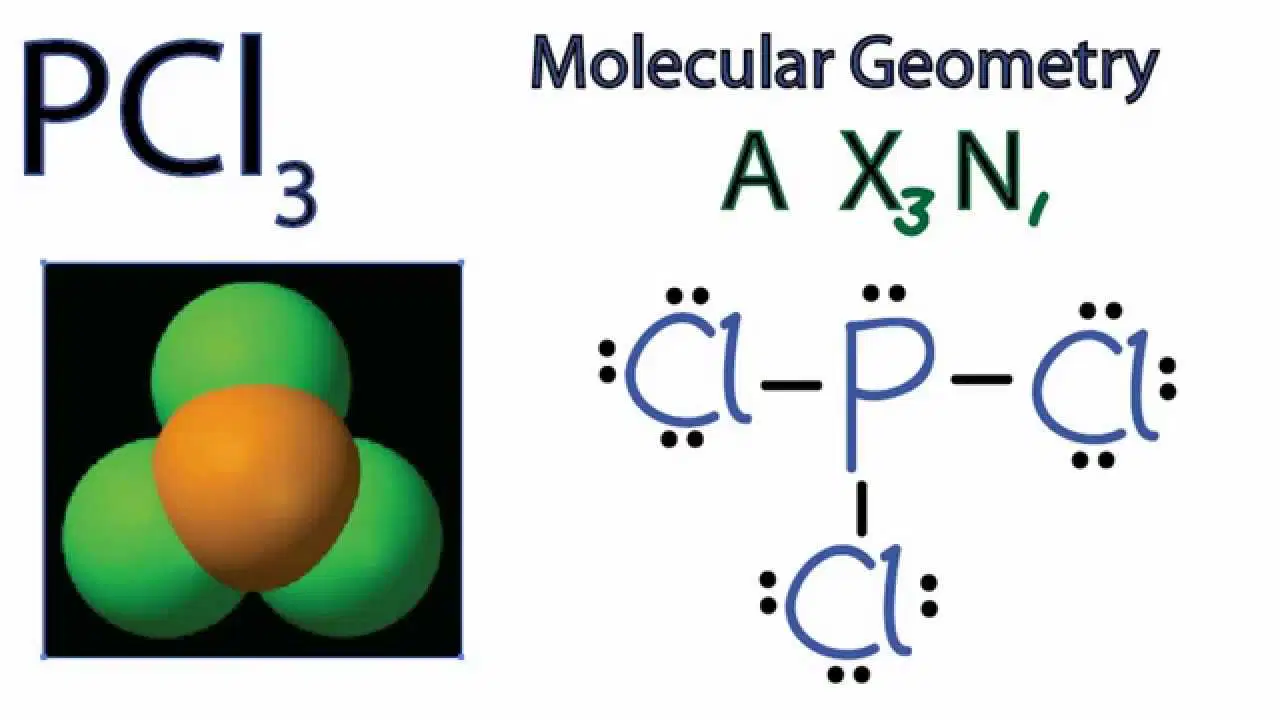
What is the molecular shape of PCl3?
a)
trigonal pyramidal
b)
trigonal planar
c)
linear
d)
trigonal bipyramidal
60.
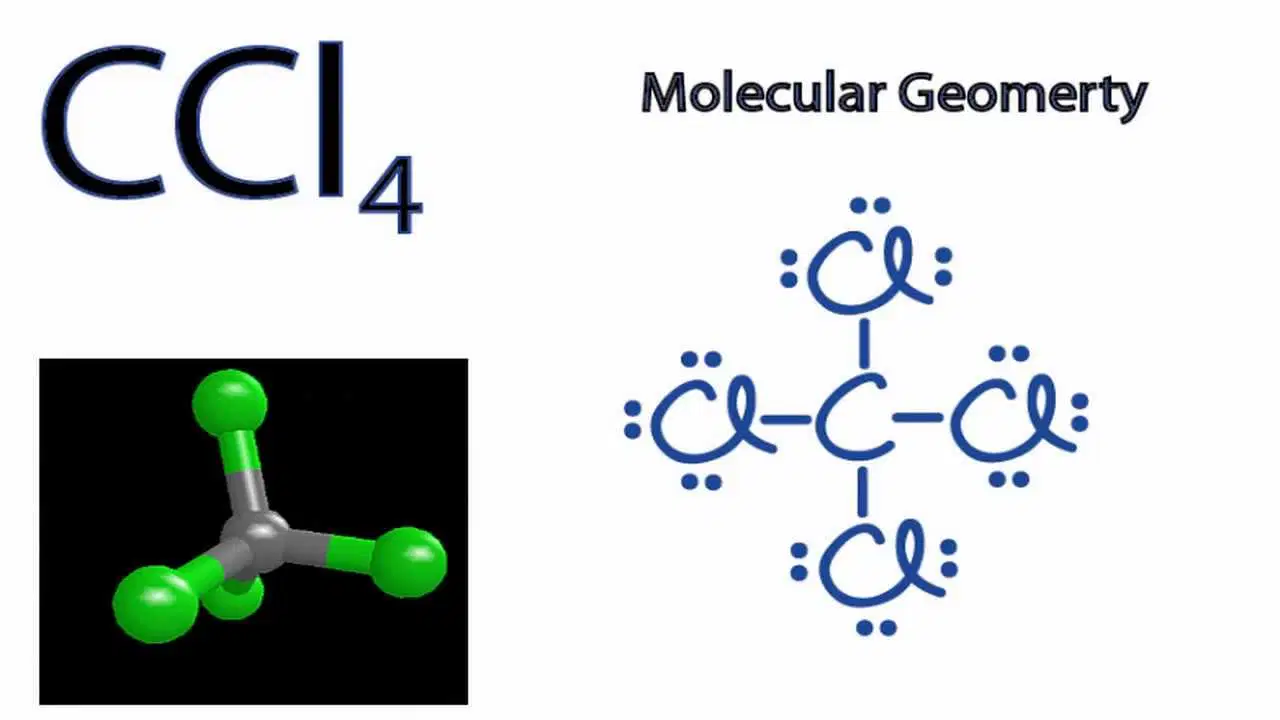
What is the molecular shape of CCl4?
a)
trigonal bipyramidal
b)
tetrahedral
c)
trigonal pyramidal
d)
bent
61.
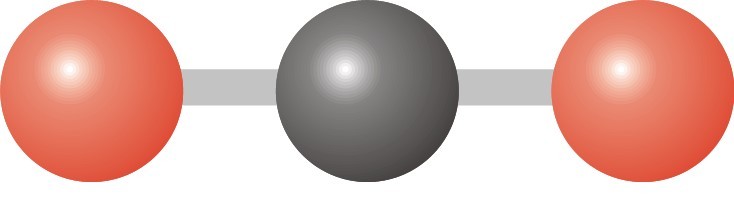
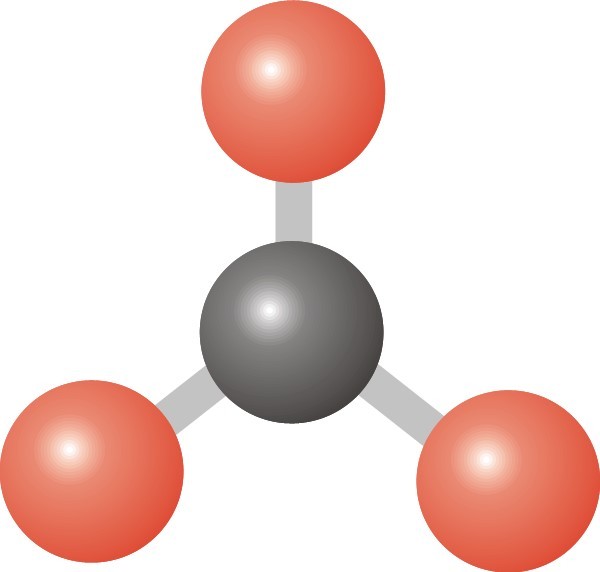
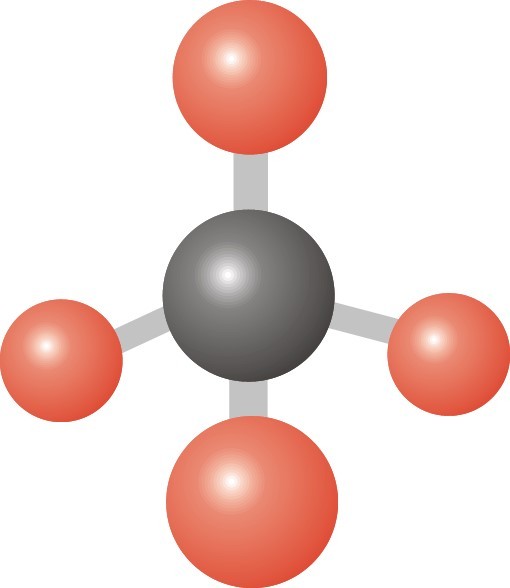
Which molecule would have this molecular geometry?
a)
BF3
b)
CH4
c)
PCl5
d)
CO2
62.
What molecule could this be? 
a)
BF3
b)
CH4
c)
H2O
d)
CO2
63.
Who could this molecule be?
a)
CH4
b)
CO2
c)
PCl5
d)
BF3
64.

What does VSEPR stand for?

a)

Very Sad Engineering Process Report

b)

Valence Electron Shell Pair Repulsion

c)

Vicious Savage Excessive Public Relations

d)

Valence Shell Electron Pair Repulsion

65.

The oxygen atom in water has (a)   lone pairs.

66.

What are the steps to determining 3D shape?

a)

1. Draw Lewis Dot Structure

2. Consider Central Atom

3. Think about VSEPR

b)

1. Hope for the best

2. Guess and Check

3. Flip a coin

c)

1. Consider Central Atom

2. Consider VSEPR

3. Draw Lewis Dot Structure

d)

1. Draw a diagram

2. Consider Central Atom

3. Count all Bonding sites and lone pairs