
 Worksheets
Chem Quiz
Total questions: 185
Worksheet time: 5hrs 29mins
Why does a higher temperature increase the rate of a reaction?
it increases both the frequency and energy of particle collisions
it only increases the frequency of particle collisions
it only increases the energy of particle collisions
it reduces the activation energy of the reaction
Grinding a effervescent tablet into powder increases the rate of reaction due to increased
concentration
surface area
temperature
reactants
Adding a catalyst ___________ the activation energy.
Raises
Lowers
Doesn't affect
Inreases
The minimum amount of energy needed for colliding particles to react is called
Chemical Energy
Kinetic Energy
Activation Energy
Potential Energy
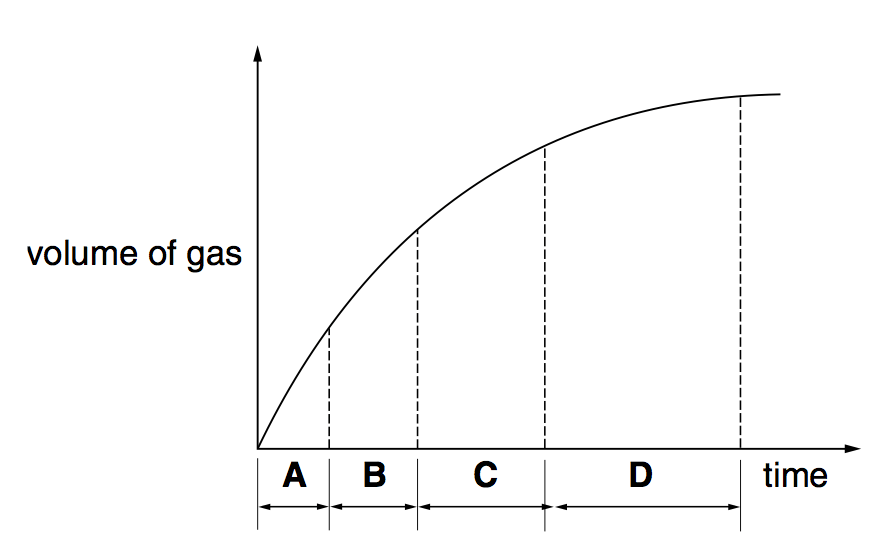
Which graph shows the effect of increasing temperature on the rate of reaction of calcium carbonate with dilute hydrochloric acid?
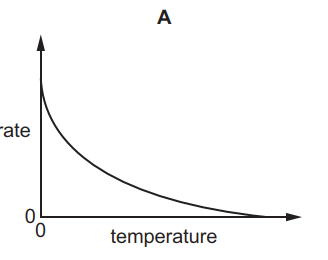
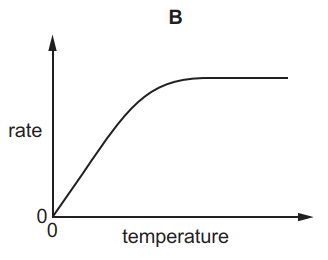
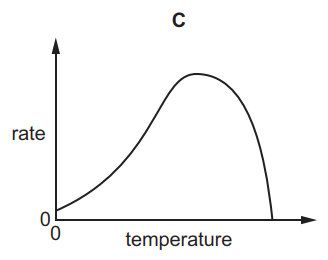
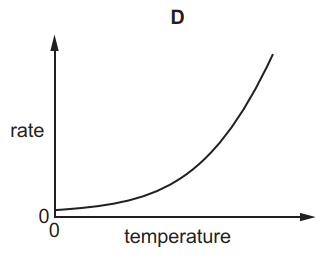
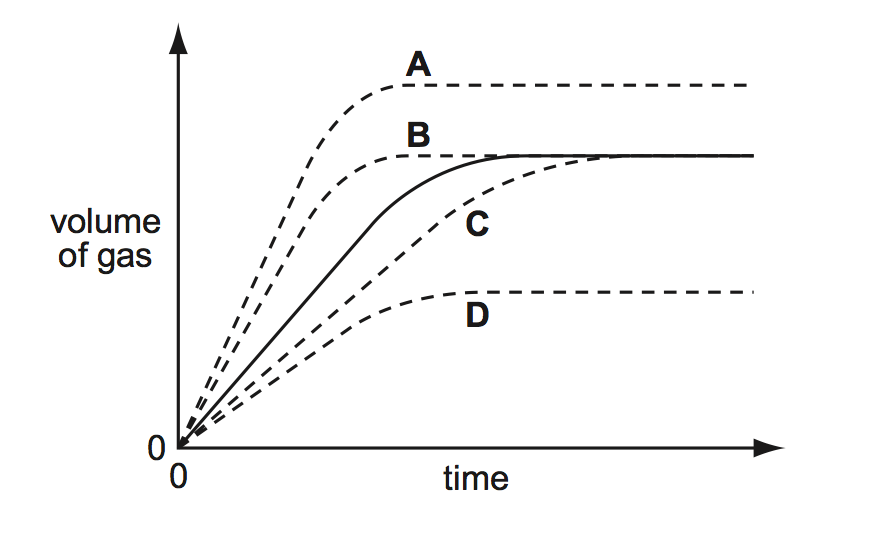
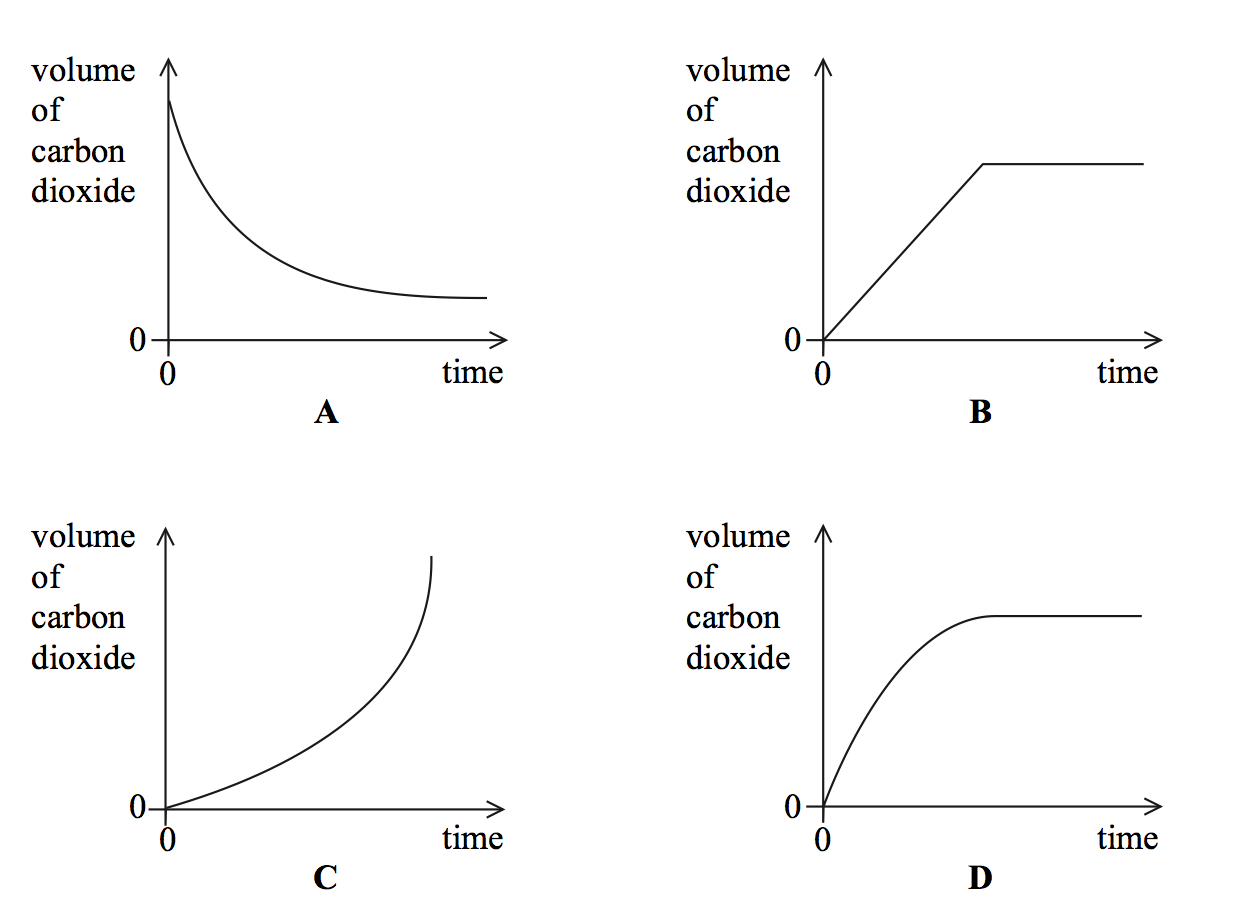
Which graph shows the correct results?

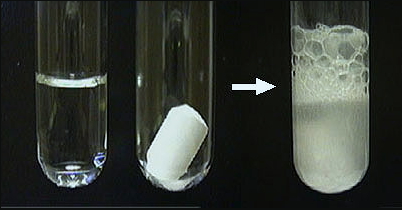
How could we make this reaction happen more quickly?
Decrease the concentration of the acid
crush the chalk to increase the surface area
Put the test tube in an ice bath
The major theory of reaction rate is called
Collision theory
Crash theory
Newton's laws
Thermodynamics


Which factors affect the rate of a reaction?
temperature
concentration
surface area
pressure
catalyst
Why does a higher concentration increase the rate of reaction?
it increases the amount of reactants
it lowers the activation energy
it increases the energy of particle collisions
it increases the frequency of particle collisions
Why does a higher temperature increase the rate of a reaction?
it increases both the frequency and energy of particle collisions
it only increases the frequency of particle collisions
it only increases the energy of particle collisions
it reduces the activation energy of the reaction
Grinding a effervescent tablet into powder increases the rate of reaction due to increased
concentration
surface area
temperature
reactants
Increasing the temperature gives particles more __________.
Time
Energy
Space
Frequency
As the frequency of ______________ increases, the rate of reaction increases.
Time
Reactions
Collisions
Reactants
Adding a catalyst ___________ the activation energy.
Raises
Lowers
Doesn't affect
Inreases
The minimum amount of energy needed for colliding particles to react is called
Chemical Energy
Kinetic Energy
Activation Energy
Potential Energy
Substance that changes the rate of a chemical reaction without being consumed in the reaction
bonding
catalyst
chemical reaction
activation energy
Which graph shows the effect of increasing temperature on the rate of reaction of calcium carbonate with dilute hydrochloric acid?

P, Q, R and S are pieces of apparatus.
Which row describes the correct apparatus for the measurement made?
A
B
C
D

Icing sugar has a greater ______ _____ than a solid cube of
sugar.
Surface Area
Catalyst
Temperature

hydrogen peroxide → water + oxygen
The diagrams show the effect of adding blood to the solution. What could be the reason for the observed change?
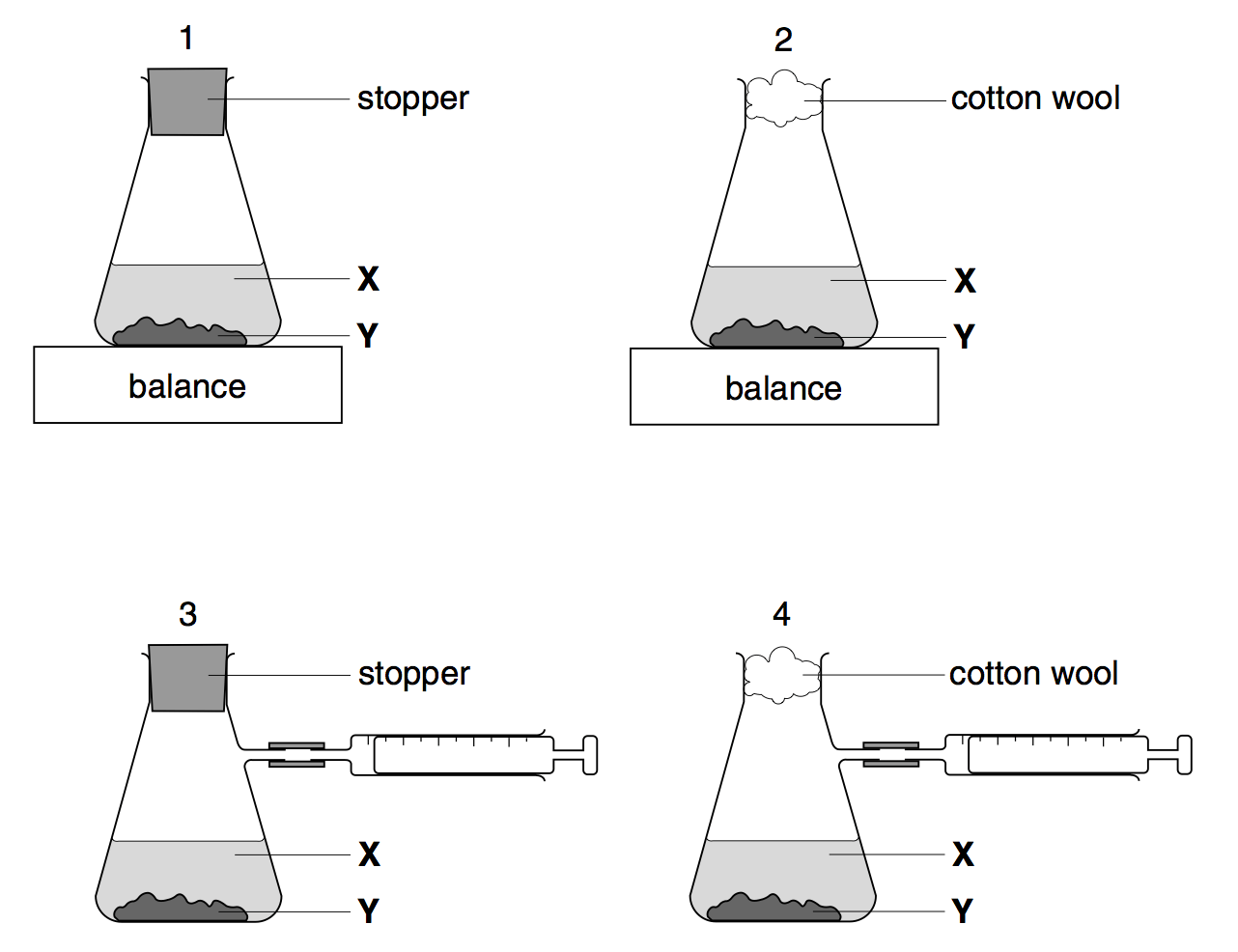
Which two diagrams show suitable methods for investigating the speed of the reaction?

Which graph shows the correct results?
Why does a higher temperature increase the rate of a reaction?
it increases both the frequency and energy of particle collisions
it only increases the frequency of particle collisions
it only increases the energy of particle collisions
it reduces the activation energy of the reaction
Grinding a effervescent tablet into powder increases the rate of reaction due to increased
concentration
surface area
temperature
reactants
Adding a catalyst ___________ the activation energy.
Raises
Lowers
Doesn't affect
Inreases
The minimum amount of energy needed for colliding particles to react is called
Chemical Energy
Kinetic Energy
Activation Energy
Potential Energy
Why does a higher concentration increase the rate of reaction?
it increases the amount of reactants
it lowers the activation energy
it increases the energy of particle collisions
it increases the frequency of particle collisions
Why does a higher temperature increase the rate of a reaction?
it increases both the frequency and energy of particle collisions
it only increases the frequency of particle collisions
it only increases the energy of particle collisions
it reduces the activation energy of the reaction
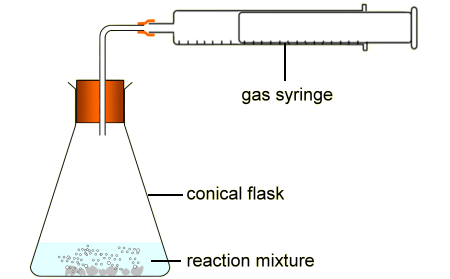
How is this equipment being used to measure the rate of reaction?
The gas syringe measures how much gas is produced in a certain time
The reaction mixture will increase in volume in a certain time

The rates of some chemical reactions can be measured by using the apparatus shown. For which reaction is this apparatus suitable?
MgCO3 + 2HCl -> MgCl2 + CO2 + H2O
Mg + ZnCl2 -> MgCl2 + Zn
MgCl2 + 2NaOH -> Mg(OH)2 + 2NaCl
MgO + 2HCl -> MgCl2 + H2O
When you react sodium thiosulfate and hydrochloric acid, the solution turns cloudy. This is because...
a sodium precipitate is produced
a sulfur precipitate is produced

Which solution show a higher concentration (left or right)?
left
right
both the same
The more concentrated the sodium thiosulfate solution, the less time is taken for the cross to become no longer visible. Give two reasons why.
Particles are more spread out
Particles collide more frequently
Particles have more energy
Particles move more quickly
There are more particles in a fixed volume
How does a catalyst work in speeding up a reaction?
By lowering the activation energy or reaction
by giving them more energy
by making them more available
The rate of a reaction is described as the speed at which the amount of reactants decreases or the amount of ______ increases
reagents
gases
products
metals
The rate of a reaction can be calculated as the change in concentration, volume or mass divided by _________
time
mass
moles
rate

When acid is reacted with calcium carbonate the volume of carbon dioxide released is recorded, what equipment could be used to record the volume of gas? (pick all correct answers)
A pipette
A burette
A gas syringe
A measuring cylinder submerged in water

Which line represents a higher initial rate of reaction?
1
2
They both have the same initial rate

As the reaction progresses both lines plateau, why is this the case?
The rate of reaction is at a constant high rate
The reaction has reached the maximum rate
The reaction has stopped and no more carbon dioxide is produced.

What might cause the difference between line 1 and 2?
Reaction 1 contains a solid with a higher surface area than the solid in reaction 2
Reaction 1 is carried out at a higher temperature than reaction 2
Reaction 1 uses a catalyst and reaction 2 does not.
Reaction 1 has a greater number of moles of reactants than reaction 2.
Substances which are powdered will react faster, this is because...
A smaller surface area of solid will result in more frequent successful collisions
A larger surface area of solid will result in more frequent successful collisions
A larger surface area of solid will result in the particles having higher energy and therefore more particle will have the required activation energy.
A smaller surface area of solid will result in the particles having higher energy and therefore more particle will have the required activation energy.
Collision theory states that for a reaction to take place the the particles must collide with sufficient energy for the collision to result in a reaction. This amount of energy is called the...
collision energy
frequency energy
activation energy
success energy

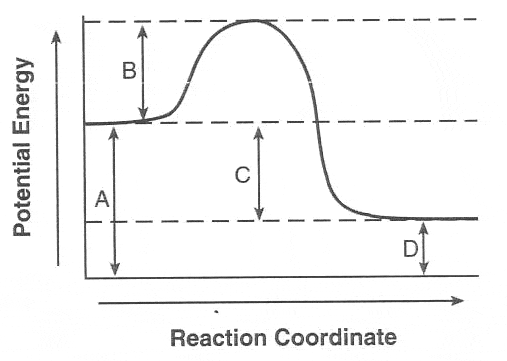
The reaction profile digram is shown for an exothermic reaction, which arrow represents the activation energy?
A
B
C

The reaction between an acid and calcium carbonate was carried out (reaction 1) it was repeated at a higher temperature. Which line (or lines) could represent the reaction?
1
2
3
4

The reaction between an excess of acid and calcium carbonate was carried out (reaction 1) it was repeated but the concentration of the acid was reduced but still remained in excess. Which line (or lines) could represent the reaction?
1
2
3
4

The reaction between an excess of acid and calcium carbonate was carried out (reaction 1) it was repeated but the mass of the calcium carbonate was halved. Which line (or lines) could represent the reaction?
1
2
3
4
Reactions taking place at a higher temperature have a higher rate of reaction because...
The particle move faster and so there are more frequent collisions.
Higher temperatures break the particles down into smaller parts and so they have a greater surface area resulting in more frequent collisions.
The particles have more energy and so more of the collisions exceed the activation energy and so there are more frequent successful collisions.
Higher temperatures cause the water to evaporate and the solutions to become more concentrated, this means there will be more frequent collisions.
Catalysts are...
Substances that speed up the rate of a reaction
Substances that are chemically unchanged at the en of a reaction
Always solids
Often (but not always) transition metal compounds.
Catalysts work by...
Providing an alternative route for a reaction with a lower activation energy. This results in less frequent successful collisions.
Providing an alternative route for a reaction with a lower activation energy. This results in less frequent successful collisions.
Providing an alternative route for a reaction with a higher activation energy. This results in more frequent successful collisions.
Providing an alternative route for a reaction with a lower activation energy. This results in more frequent successful collisions.
What does rate of reaction tell us?
How fast products turn into reactants
How fast reactants turn into products
If a reaction happens or not
What happens during a reaction
What factors affect rate of reaction?
Surface area
Catalysts
Temperature
Concentration
Time
What is activation energy?
Energy needed to make chemicals spontaneously split apart
Energy to activate chemicals
Largest amount of energy particles have
Smallest amount of energy particles need before they react
What is needed for particles to react?
They must collide
They must have enough energy
They must be elements
They must be compounds
If we increase the temperature, what happens to the rate of reaction?
Nothing
Decreases
Increases
Particles that are at a higher temperature move (a) then particles with a low temperature
Why does increasing concentration increase rate of reaction?
Less particles moving around so more collisions
More particles moving around so more collisions
More particles moving around so less collisions
Less particles moving around so less collisions
A higher surface area means....
nothing
higher rate of reaction
lower rate of reaction
Which has the biggest surface area?
Small particles
Large particles
elements
compounds
What is the name of a special substance which can be added to a reaction to increase the rate of reaction?
(a)
What happens to a catalyst during a reaction
It is used up and needs to be replaced every reaction
It is used up
It isnt used up but cant be used again
It isn't used up and can be used again
True or false: There is only one type of catalyst which can be used for every reaction
True
False
How can we measure the rate of reaction?
Time the bubbles
Measure how quickly reactants are used up
Measure rate at which products are made
Just look and see what is happening
Why is it important to control the rate of reaction in the body?
Otherwise you will die
So your cells can get exactly what they need
A temperature increase causes the particles to ......
to slow down
move faster
collide higher
in the right order
Why does a higher concentration increase the rate of reaction?
it increases the amount of reactants
it lowers the activation energy
it increases the energy of particle collisions
it increases the frequency of particle collisions
A temperature increase causes the particles ......
to slow down
move faster
collide higher
in the right order
How does Mg react with water?
Reacts very slowly
Reacts readily
Reacts violently
No visible reaction
How does Mg react with steam?
Reacts very slowly
Reacts readily
Reacts violently
No visible reaction
How does Zn react with steam?
Reacts very slowly
Reacts readily
Reacts violently
No visible reaction
How does Fe react with water?
Reacts very slowly
Reacts readily
Reacts violently
No visible reaction
How does Fe react with steam?
Reacts very slowly
Reacts readily
Reacts violently
No visible reaction
How does Na react with water?
Reacts very slowly
Reacts readily
Reacts violently
No visible reaction
How does Pb react with water?
Reacts very slowly
Reacts readily
Reacts violently
No visible reaction
How does Cu react with water?
Reacts very slowly
Reacts readily
Reacts violently
No visible reaction
How does Cu react with steam?
Reacts very slowly
Reacts readily
Reacts violently
No visible reaction
What are the TWO products when Fe react with steam?
iron(III) oxide
iron(III) hydroxide
water
hydrogen
What are the TWO products when Mg react with water?
magnesium hydroxide
magnesium oxide
water
hydrogen
When a metal react with steam, hydrogen and another product is formed. What is the other product?
(a)
When a metal react with water, hydrogen and another product is formed. What is the other product?
(a)
When a zinc react with steam, hydrogen and another product is formed. What is the other product?
(a)
When a iron react with steam, hydrogen and another product is formed. What is the other product?
(a)
When a calcium react with water, hydrogen and another product is formed. What is the other product?
(a)
When a calcium react with steam, hydrogen and another product is formed. What is the other product?
(a)
When a potassium react with water, hydrogen and another product is formed. What is the other product?
(a)
when a metal reacts with oxygen in the air the surface will appear....
shiny
dull
metals react with oxygen in the air to form (a)
Metals in group 1 of periodic table is more reactive than other metals
True
False
Tick all the metals that should be stored under oil to prevent explosion from reacting with oxygen.
Aluminium
Calcium
Potassium
Lithium
Complete the word equation:
magnesium + oxygen --> (a)
Complete the word equation:
________ + __________ --> aluminium oxide
Put the following five metals in order of reactivity judging from their reactions with oxygen, with the most reactive first:
Iron
Copper
Gold
Magnesium
Lithium

Select the products of this displacement reaction:
iron + copper sulphate -> iron sulphate + copper
iron + copper sulphate
iron sulphate + copper
iron + iron sulphate
copper + copper sulphate
Select the reactants of this displacement reaction:
iron + copper sulphate -> iron sulphate + copper
iron + copper sulphate
iron sulphate + copper
iron + iron sulphate
copper + copper sulphate

In a displacement reaction...
... a more reactive element pushes out a less reactive element from its compound.
... a less reactive element pushes out a more reactive element from its compound.
... a more reactive compound pushes out a less reactive compund from its element.
... a less reactive element pushes out a more reactive element from its compound.

Shinno and Alfie are doing an experiment. They add magnesium to copper sulphate. Select the most likely result.
Copper + magnesium sulfate is produced.
Copper sulfate + copper is produced.
Magnesium sulfate + copper is produced.
Magnesium + copper sulfate is produced.

Select the correct explanation for why magnesium displaces copper from copper sulphate.
Magnesium is less reactive than copper.
Magnesium is more reactive than copper.
Magnesium is as reactive as copper.
There has been bad blood between magnesium and copper for centuries.

Momo and Yuki are doing a different experiment. They add copper to magnesium suplhate. Select the most likely outcome.
Copper, magnesium and sulfur are produced.
Copper and magnesium are produced.
Copper sulphate and magnesium are produced.
The copper and magnesium sulphate remain unchanged.
Select the best explanation for why there is no reaction between copper and magnesium sulphate.
Copper is more reactive than magnesium so does not displace it.
Copper is less reactive than magnesium so does not displace it.
Copper is less reactive than magnesium so displaces it.
Copper is more reactive than magnesium so displaces it.

Aluminium + iron oxide -> ?
aluminium + aluminium oxide
iron oxide + iron
aluminium oxide + iron
aluminoum + iron oxide
Removing metals from compounds containing oxide requires mixing the powders and heating them strongly. This is called a ...
thermite reaction.
endothermic reaction.
decomposition reaction.
physical change.
Select a disadvantage of displacement through thermite reactions.
It looks nice!
Metals you want can be obtained.
No energy is required.
A lot of energy is required.
Iron + copper oxide =
Iron + copper oxide
Iron oxide + copper oxide
Iron oxide + copper
Magic

Which of the following is more reactive?
Calcium
Magnesium
Zinc
Magnesium

Will the following reaction take place?
Ni + NaCl ->
NO
YES
Which one of the following combinations result in a displacement reaction?
Iron with magnesium chloride
magnesium with iron chloride
Iron with Zinc Sulphate
gold with silver nitrate
What will the products of this reaction be?
calcium + zinc nitrate --------->
Calcium + zinc nitrate
Zinc + calcium nitrate
there will be no reaction
Zinc + calcium chloride
True or false? Chemical reactions are easily reversible
True
False
True or false: A change in state is a chemical reaction
True - something melting would be an example of a chemical reaction
False - a change in state is a physical change
In a word equation, the starting chemicals are called...
reactants
products
ingredients
Sometimes, compounds can be broken down into simpler substances. What type of reaction is this?
combustion
oxidation
decomposition
displacement
When energy is transferred from the substances to the surroundings during a chemical reaction, what type of reaction is this?
endothermic
exothermic
decomposition
combustion
Which is NOT an example of something you could observe that would suggest a chemical reaction is taking place?
melting
fizzing
smells
temperature change
Metal A is more reactive than Metal B. The following displacement reaction takes place.
Metal A + Metal B in compound ---> Metal B + Metal A in compound.
True or False.
True
False
Which of these elements is unlikely to be found in the ground in its pure form?
gold
platinum
aluminium
silver
What gas is always produced when a metal reacts with water?
Oxygen
Carbon Dioxide
Hydrogen
Carbon Monoxide

Magnesium chloride + Sodium → ?
Sodium chloride + Magnesium
Magnesium chloride + Sodium (No change)
Sodium magnesium + Chlorine
Magnesium sodium chloride
Which of the following does not react with water?
Lithium
Magnesium
Lead
Calcium
Which one of the following metals reacts most vigorously with cold water?
Sodium
Magnesium
Copper
Zinc
What element rusts?
Carbon
Iron
Manganese
Potassium
What two things cause Iron to rust ?
Water and Oxygen
Air and HCl
Carbon Monoxide and Air
Water and Carbon Dioxide
What prevents rusting?
Painting
Washing
Dusting
Sanding
Which of the followings is NOT a protection method of rusting?
Galvanizing
Painting
Covering in plastic
Heating with carbon

Which metal is more reactive than calcium?
magnesium
potassium
silver
aluminum
Choose the least reactive metal
calcium
magnesium
iron
copper
Oxidation is the _________ of electrons.
loss
gain
sharing
transfer
Reduction is the ___________ of electrons.
loss
gain
sharing
transfer
The forward reactions in the Electrochemical Series are examples of...
Oxidation
Reduction
Gaining hydrogen is an example of...
oxidation
reduction
Gaining oxygen is an example of...
oxidation
reduction
Which of the following represents oxidation?
C → CH4
Fe3+ → Fe2+
Cl2 → 2Cl-
Zn → ZnO
Mg → Mg2+ + 2e–
Which element is oxidised in the reaction Zn + 2HCl → ZnCl2 + H2
Zinc
Hydrogen
Chlorine
None
A redox equation has...
electrons on the left side
electrons on the right side
electrons on both sides
no electrons on either side
In a redox reaction, spectator ions...
become oxidised
become reduced
remain unchanged




H
S
O

