
 Worksheets
MAKE UP PART 2B REVIEW SEM 1
Total questions: 60
Worksheet time: 30mins
Name
Class
Date
1.
-HS.P1U1.2
Analyze the type of bonding in each of the following compounds. Which compound shows a transfer of electrons resulting in an ionic bond?
a)
SF₆
b)
H₂O
c)
CO₂
d)
CaO
2.
-HS.P1U1.2
Which explanation best describes why the correct formula for the compound between calcium and fluorine is CaF₂?
a)
CO₂
b)
NaOH
c)
H₂O
d)
CH₄
3.
-HS.P1U1.2
A student claims that C and O form an ionic bond because carbon is a metal and oxygen is a nonmetal. Evaluate this claim and select the best explanation.
a)
The claim is correct; metals and nonmetals always form ionic bonds.
b)
The claim is incorrect; carbon is a nonmetal, and C–O bonds are covalent because electrons are shared.
c)
The claim is correct because the difference in atomic numbers guarantees an ionic bond.
d)
The claim is incorrect because oxygen cannot form bonds with metals.
4.
-HS.P1U1.2
Analyze the elements below. Which element is most likely to lose electrons to form a positively charged ion and why?
a)
Oxygen, because it has 6 valence electrons and tends to gain 2 electrons
b)
Nitrogen, because it shares electrons to complete its octet
c)
Sodium, because it has 1 valence electron that it can easily lose
d)
Chlorine, because it has 7 valence electrons and tends to gain 1 electron
5.
-HS.P1U1.2
Analyze the bonding in carbon dioxide. Which formula correctly represents the number of atoms of each element in a molecule of CO₂?
a)
CO – 1 carbon, 1 oxygen
b)
CO₂ – 1 carbon, 2 oxygen
c)
CH₄ – 1 carbon, 4 hydrogen
d)
C₆H₁₂O₆ – 6 carbon, 12 hydrogen, 6 oxygen
6.
-HS.P1U1.2
Analyze the chemical formula N₂O. Which name correctly represents the number of atoms of each element in the molecule?
a)
Nitrogen oxide – unclear number of nitrogen atoms
b)
Dinitrogen monoxide – 2 nitrogen atoms, 1 oxygen atom
c)
Nitrogen dioxide – 1 nitrogen, 2 oxygen atoms
d)
Dinitrogen dioxide – 2 nitrogen, 2 oxygen atoms
7.
-HS.P1U1.2
Analyze the chemical name sulfur trioxide. Which formula correctly represents the number of sulfur and oxygen atoms in the molecule?
a)
SO – 1 sulfur, 1 oxygen
b)
SO₂ – 1 sulfur, 2 oxygen
c)
S₂O₃ – 2 sulfur, 3 oxygen
d)
SO₃ – 1 sulfur, 3 oxygen
8.
-HS.P1U1.2
A student argues that CCl₄ should be named carbon chloride because it contains carbon and chlorine. Which evaluation best explains why this reasoning is incorrect?
a)
The student is incorrect because the name must include a prefix indicating the number of chlorine atoms.
b)
The student is correct because the elements are carbon and chlorine.
c)
The student is incorrect because chlorine does not bond with carbon.
d)
The student is correct because molecular formulas do not affect naming.
9.
-HS.P1U1.2
Analyze the name dinitrogen tetroxide. Which formula correctly represents the number of nitrogen and oxygen atoms in one molecule?
a)
N₂O₂ – 2 nitrogen, 2 oxygen
b)
N₂O₆ – 2 nitrogen, 6 oxygen
c)
NO₂ – 1 nitrogen, 2 oxygen
d)
N₂O₄ – 2 nitrogen, 4 oxygen
10.
-HS.P1U1.2
Analyze the bonds in the following compounds. Which compound is formed by sharing electrons between nonmetals, rather than transferring electrons?
a)
NaCl – formed by electron transfer
b)
CaO – formed by electron transfer
c)
MgF₂ – formed by electron transfer
d)
H₂ – formed by sharing electrons
11.
-HS.P1U1.2
Analyze the following pairs of elements. Which pair is most likely to form an ionic bond based on metal and nonmetal characteristics and electron transfer tendencies?
a)
Barium, Chlorine – metal + nonmetal, electron transfer occurs
b)
Calcium, Sodium – both metals, unlikely to form ionic bond
c)
Oxygen, Fluorine – both nonmetals, form covalent bonds
d)
Sulfur, Carbon – both nonmetals, form covalent bonds
12.
-HS.P1U1.2
Analyze the charges of strontium (Sr²⁺) and nitrogen (N³⁻) ions. Which formula correctly represents a neutral compound formed by these ions?
a)
SO
b)
SO₂
c)
Sr₃N₂
d)
S₂O₃
13.
- HS.P1U1.2
Analyze the elements magnesium (Mg) and oxygen (O). Which type of bond is most likely to form based on electron transfer between a metal and a nonmetal?
a)
Ionic bond – Mg loses 2 electrons, O gains 2 electrons
b)
Carbon chloride
c)
Tetracarbon chloride
d)
Carbon dichloride
14.
-HS.P1U1.1
Which of the following was Johann Döbereiner's contribution to the development of the periodic table?
a)
observed that groups of four elements could be formed in which all the elements shared similar physical and chemical properties
b)
observed that groups of three elements (triads) could be formed in which all the elements shared similar physical and chemical properties
c)
observed that groups of elements could be formed in which all the elements shared similar physical and chemical properties
d)
observed that groups of protons could be formed in which all the elements shared similar physical and chemical properties
15.
-HS.P1U1.2
A student claims that two non-metals can form an ionic bond because one is more electronegative. Which explanation best evaluates this claim?
a)
The claim is correct because both non-metals tend to share electrons, forming covalent bonds.
b)
The claim is incorrect because both non-metals tend to share protons, forming covalent bonds.
c)
The claim is incorrect because both non-metals tend to share electrons, forming covalent bonds.
d)
The claim is incorrect because both metals tend to share electrons, forming covalent bonds.
16.
-HS.P1U1.2
Metals tend to __________ electrons and nonmetals tend to __________ electrons.
a)
lose, gain
b)
gain lose
c)
transfer share
d)
lose lose
17.
-HS.P1U1.2
Analyze the following compounds. Which one is formed by electron transfer between a metal and a nonmetal, creating oppositely charged ions?
a)
NaCl
b)
C) Sr₂N₃
c)
E) SrN₂
18.
-HS.P1U1.2
Analyze the electron transfer that occurs when sodium reacts with chlorine. Which statement correctly describes sodium’s role in the bond?
a)
Sodium loses one electron to chlorine, forming a positively charged cation.
b)
chlorine loses one electron to sodium, forming a positively charged cation.
c)
Sodium loses two electron to chlorine, forming a positively charged cation.
d)
all of these
19.
-HS.P1U1.2
A technician is preparing SF₆ for use as an insulating gas in electrical equipment. She needs to label the chemical container correctly. Which formula accurately represents sulfur hexafluoride?
a)
SF₆
b)
Halogens
c)
Chalcogens
d)
Alkali metals
20.
-HS.P1U1.1
If Mendeleev had not arranged the periodic table by atomic weight, what might have happened?
a)
Patterns in chemical properties might not have been noticed, delaying discoveries.
b)
creating the first version of the periodic table where elements were arranged in increasing order of atomic weights
c)
Periodic repetition of elements after every eighth element
d)
Assigning atomic numbers to elements based on X-ray spectra
21.
-HS.P1U1.1
If Mendeleev had not predicted undiscovered elements, what might have been a consequence for chemistry at the time?
a)
Scientists would not have been able to identify new elements easily.
b)
Low melting and boiling points
c)
Poor conductivity in solution
d)
Soft texture
22.
-HS.P1U1.1
Why do metals tend to lose electrons and form positive ions during chemical reactions?
a)
Because they have more valence electrons that are easily removed.
b)
Because they have few inner electrons that are easily removed.
c)
Because they have few valence electrons that are easily removed.
d)
none of these
23.
-HS.P1U1.1
If you were to apply Newlands’ Law of Octaves to today’s periodic table using atomic number, would the pattern hold perfectly?
a)
positive, positive
b)
negative, negative
c)
positive, negative
d)
Yes, because atomic number reflects the number of protons, not mass.
24.
HS.P1U1.2
When sodium (Na) bonds with chlorine (Cl), sodium becomes:
a)
A neutral atom
b)
A cation
c)
An anion
d)
A free electron
25.
HS.P1U1.2
In an ionic bond, what charge does the non-metal typically acquire?
a)
Positive
b)
Negative
c)
Neutral
d)
No charge
26.
HS.P1U1.2
Which species below is the nitride ion?
a)
Na+
b)
NO3 -
c)
NO2 -
d)
N3-
27.
HS.P1U1.2
What holds the ions together in an ionic bond?
a)
Covalent forces
b)
Hydrogen bonding
c)
Electrostatic attraction
d)
Magnetic forces
28.
HS.P1U1.2
What is covalent bonding?
a)
Transfer of electrons from one atom to another
b)
Sharing of electrons between atoms
c)
Formation of ions
d)
Attraction between oppositely charged ions
29.
HS.P1U1.2
Which type of elements typically form covalent bonds?
a)
Metals and non-metals
b)
Metals only
c)
Non-metals only
d)
Metalloids and metals
30.
HS.P1U1.2
What is the correct name for the covalent compound CO₂?
a)
Carbon oxide
b)
Carbon dioxide
c)
Carbon monoxide
d)
Dicarbon oxide
31.
HS.P1U1.2
Which of the following correctly names the covalent compound N₂O₄?
a)
Dinitrogen oxide
b)
Nitrogen tetraoxide
c)
Dinitrogen tetraoxide
d)
Nitrogen dioxide
32.
HS.P1U1.2
How many electrons does a calcium ion (Ca²⁺) have?
a)
16
b)
18
c)
20
d)
22
33.
HS.P1U1.2
What is the correct formula for sulfur hexafluoride?
a)
SF
b)
SF₂
c)
SF₄
d)
SF₆
34.
HS.P1U1.2
How many electrons does a calcium ion (Mg²⁺) have?
a)
8
b)
10
c)
12
d)
14
35.
HS.P1U1.2
Which of the following elements is classified as a metalloid?
a)
Sodium (Na)
b)
Silicon (Si)
c)
Chlorine (Cl)
d)
Calcium (Ca)
36.
-HS.P1U1.1
A chemistry lab is organizing elements for a study on radioactive metals. The students need to identify the actinoids for their experiment. Where should they find these elements on the periodic table?
a)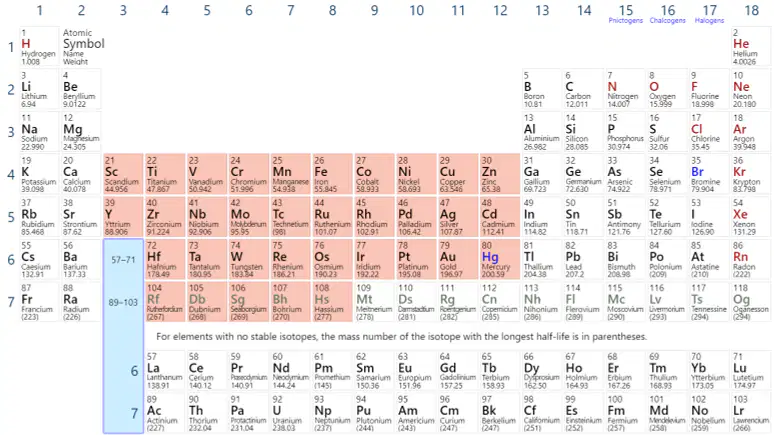
Option 1
b)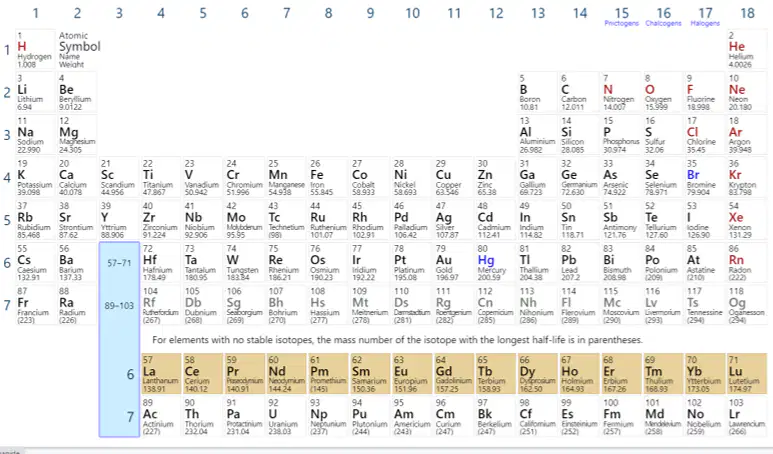
Option 2
c)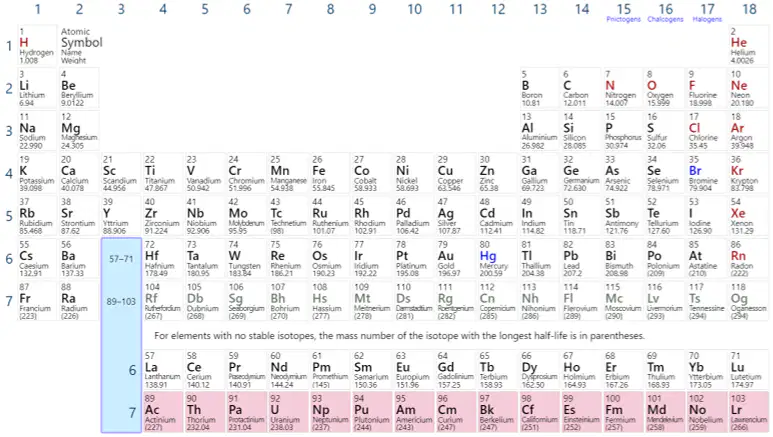
Option 3
d)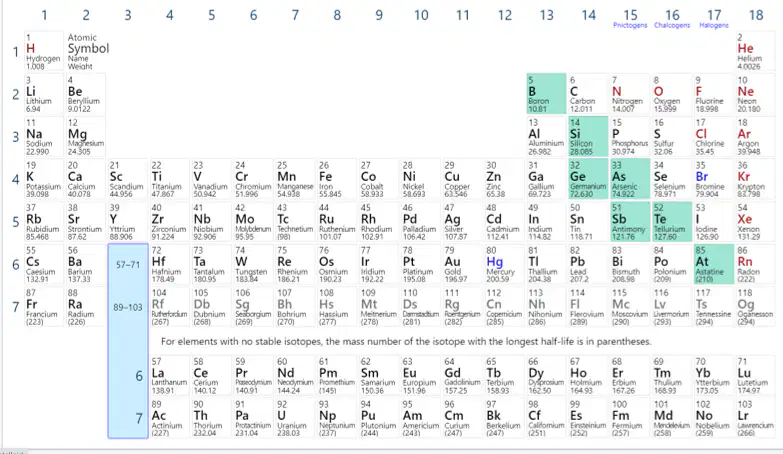
Option 4
37.
-HS.P1U1.1
A materials scientist is selecting elements to study metallic conductivity. Which part of the periodic table should she focus on to find most metals?
a)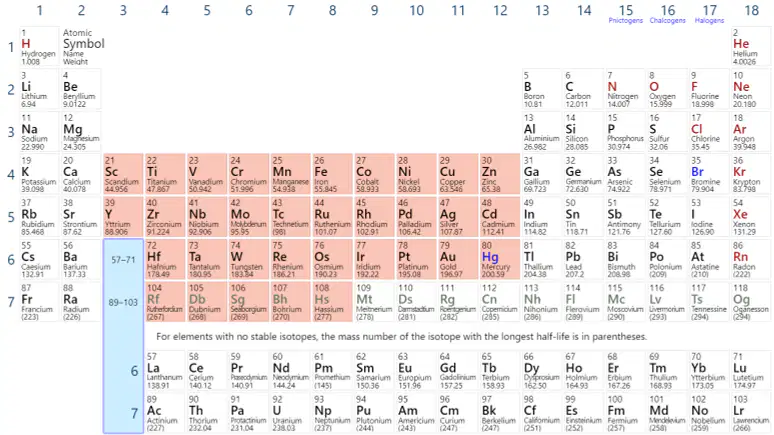
Option 1
b)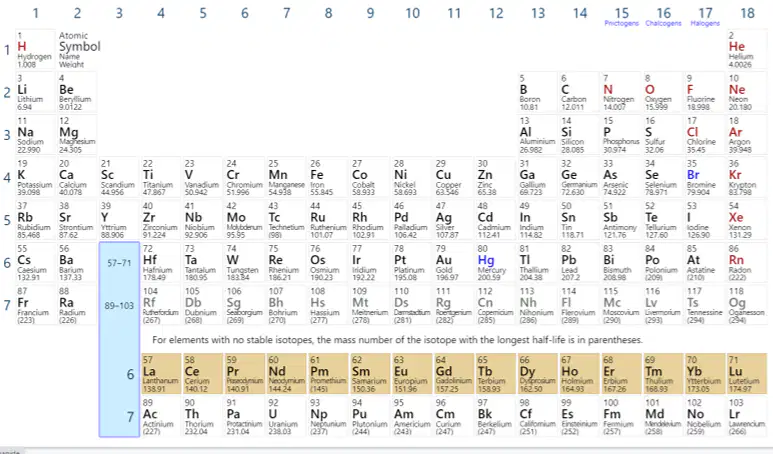
Option 2
c)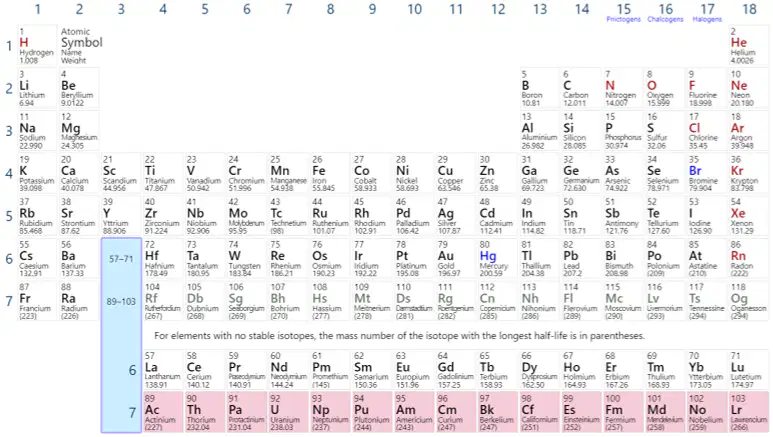
Option 3
d)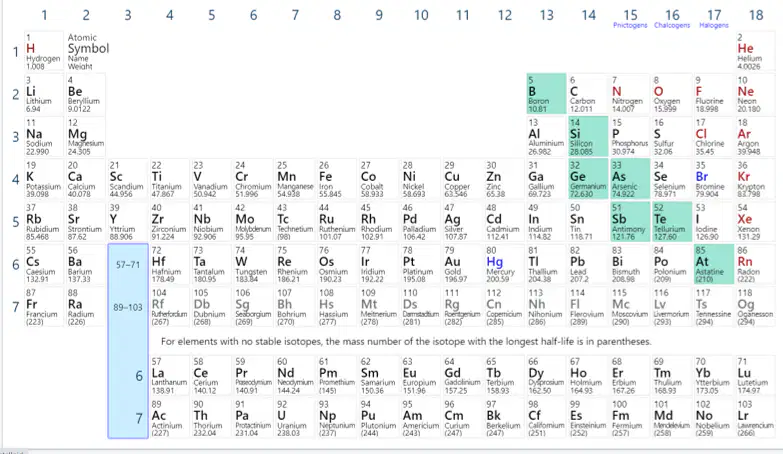
Option 4
38.
-HS.P1U1.1
A chemistry student is classifying elements for a lab experiment on semiconductors. To find metalloids, which part of the periodic table should they examine?
a)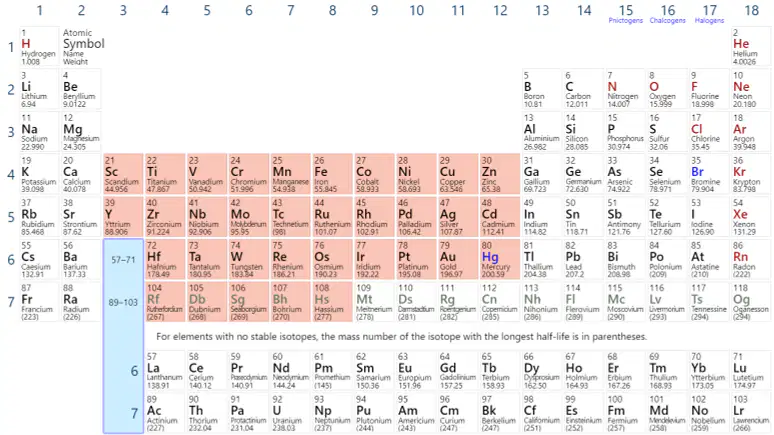
Option 1
b)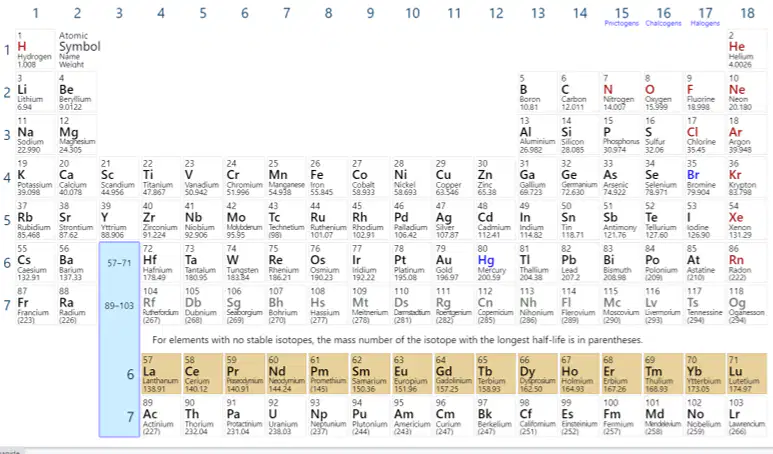
Option 2
c)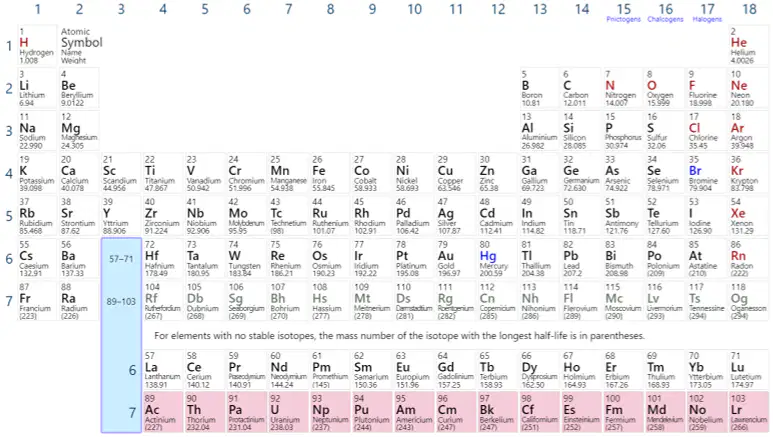
Option 3
d)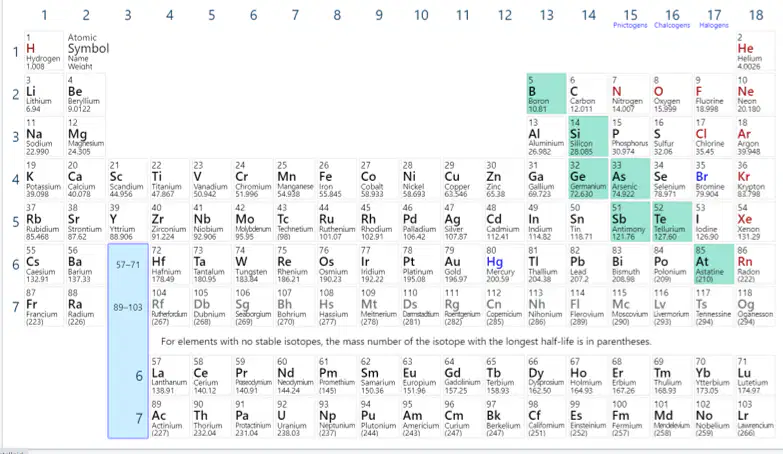
Option 4
39.
HS.P1U1.1
Which scientist is credited with creating the first version of the periodic table where elements were arranged in increasing order of atomic weights?
a)
Henry Moseley
b)
Dimitri Mendeleev
c)
John Newlands
d)
Antoine Lavoisier
40.
HS.P1U1.1
He determined that oxygen was a key substance in combustion
a)
Henry Moseley
b)
Dimitri Mendeleev
c)
John Newlands
d)
Antoine Lavoisier
41.
HS.P1U1.1
Lanthanides and Actinides belong to which period of the periodic table?
a)
Period 1 & 2
b)
Period 3 & 4
c)
Period 6 & 7
d)
Period 4 & 5
42.
HS.P1U1.1
He grouped the elements based on their properties into gases, non-metals, metals and earths
a)
Henry Moseley
b)
Dimitri Mendeleev
c)
John Newlands
d)
Antoine Lavoisier
43.
HS.P1U1.1
He arranged according to increasing atomic weight, those with similar physical and chemical properties occur after each interval of seven elements: The Law of Octaves
a)
Henry Moseley
b)
Dimitri Mendeleev
c)
John Newlands
d)
Antoine Lavoisier
44.
HS.P1U1.1
He’d found a way to actually measure atomic number. He fired the newly-developed X-ray gun at samples of the elements
a)
Henry Moseley
b)
Dimitri Mendeleev
c)
John Newlands
d)
Antoine Lavoisier
45.
HS.P1U1.1
Which part of the periodic table are the METALS located?
a)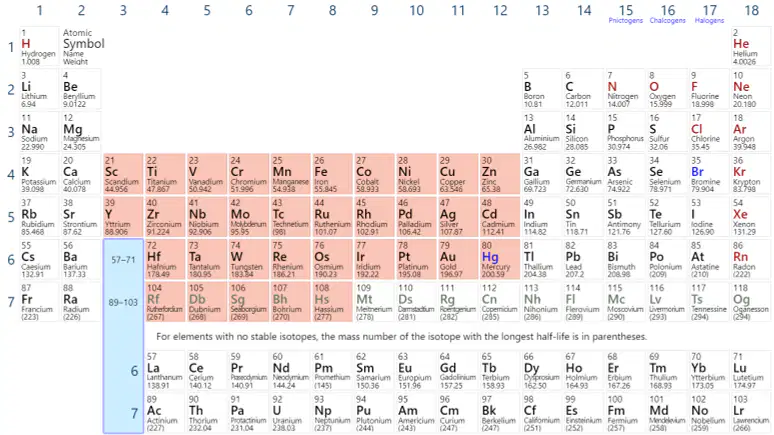
Option 1
b)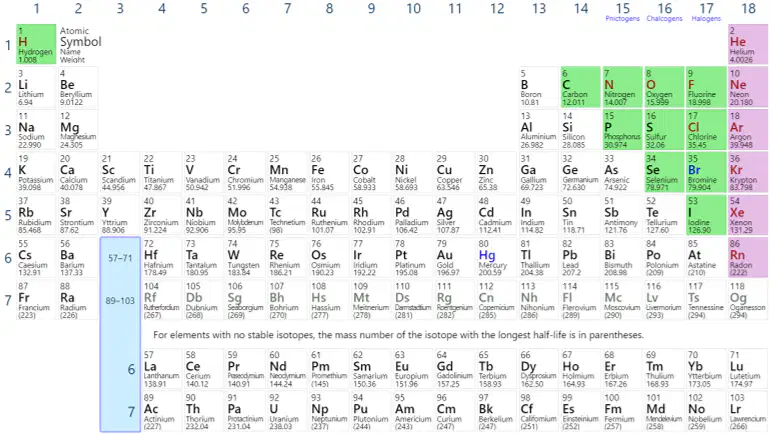
Option 2
c)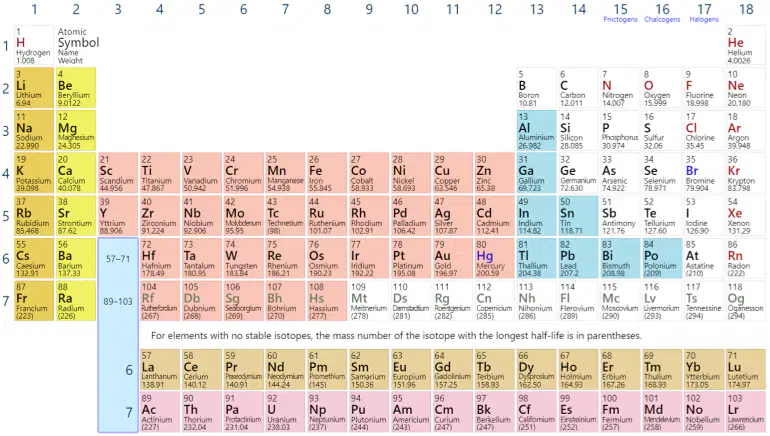
Option 3
d)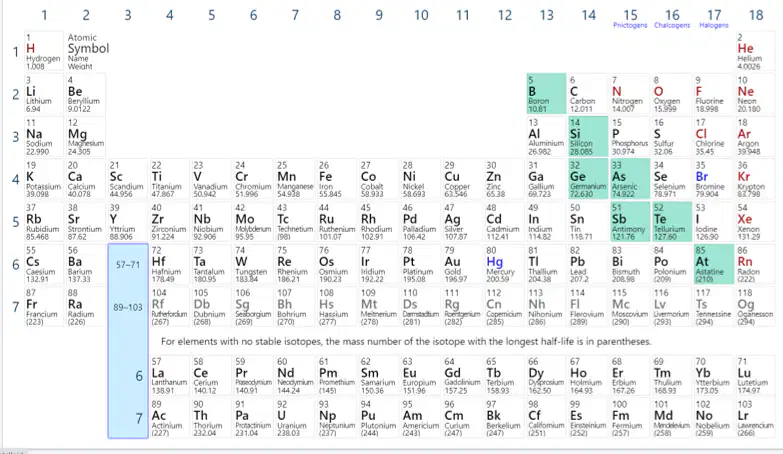
Option 4
46.
HS.P1U1.1
Which part of the periodic table are the METALLOIDS located?
a)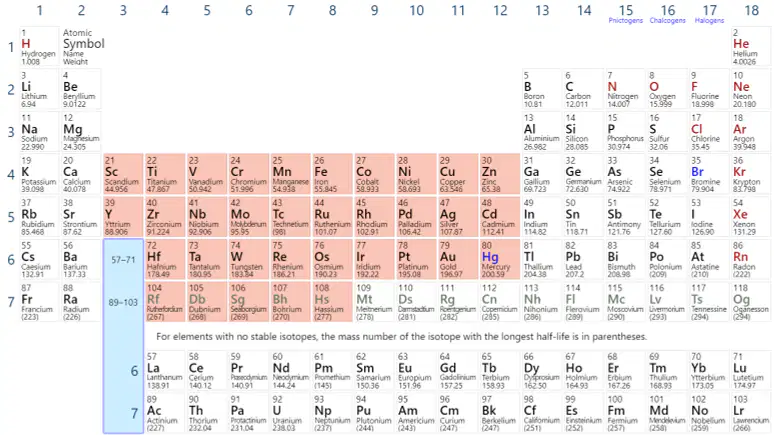
Option 1
b)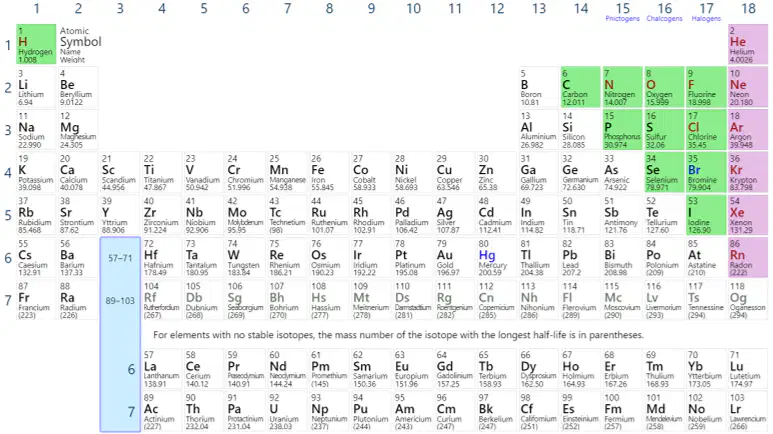
Option 2
c)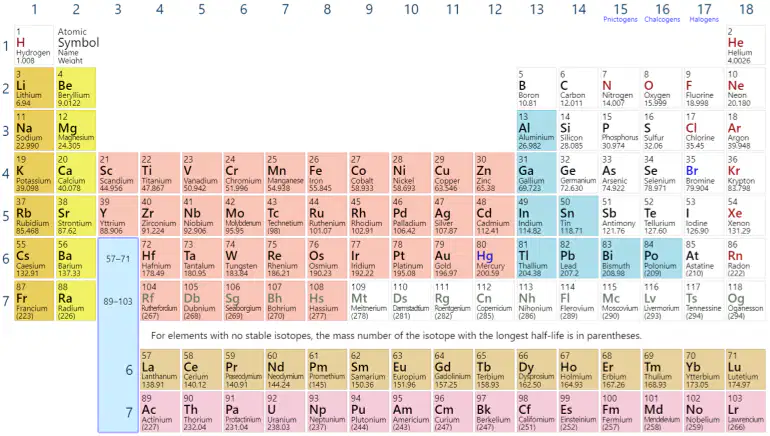
Option 3
d)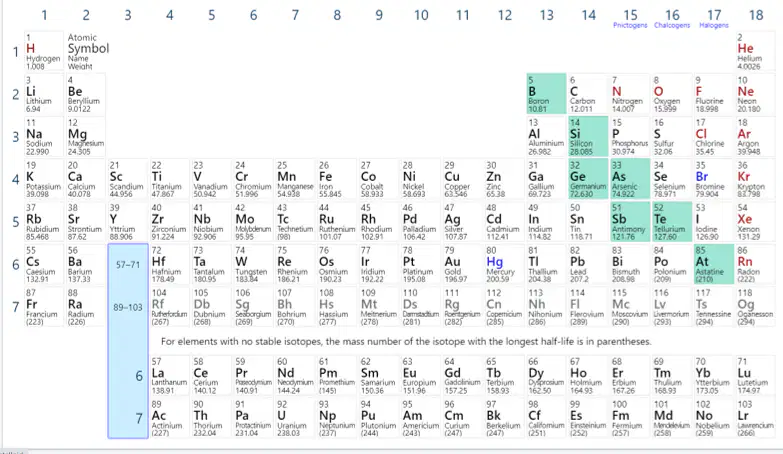
Option 4
47.
HS.P1U1.1
A metallurgist is selecting elements for a study on conductivity and corrosion resistance. To find transition metals, which part of the periodic table should she examine?
a)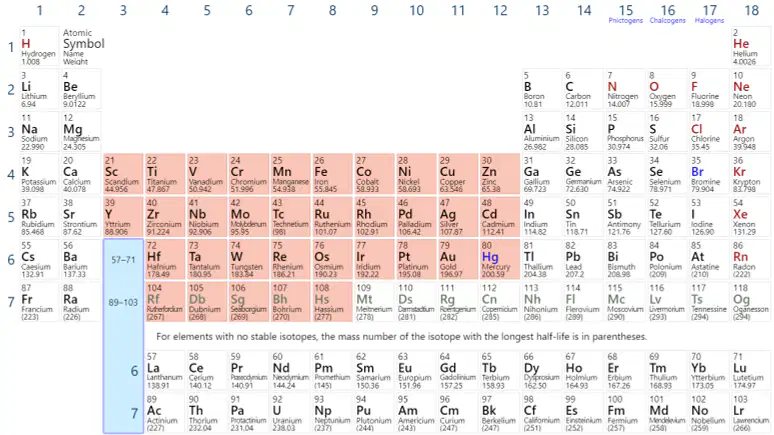
4
b)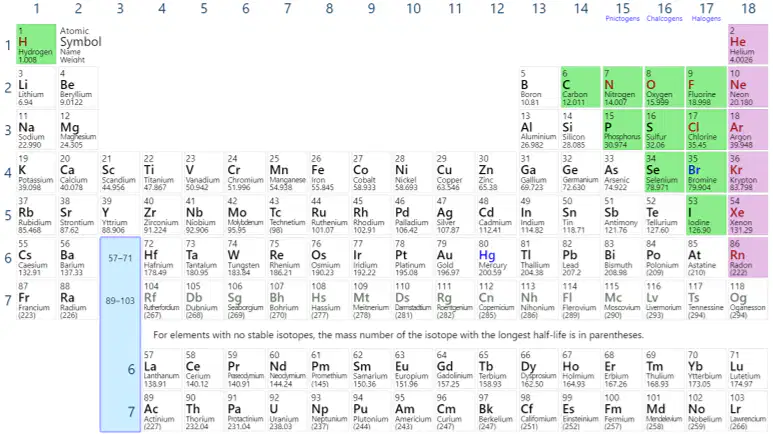
Option 2
c)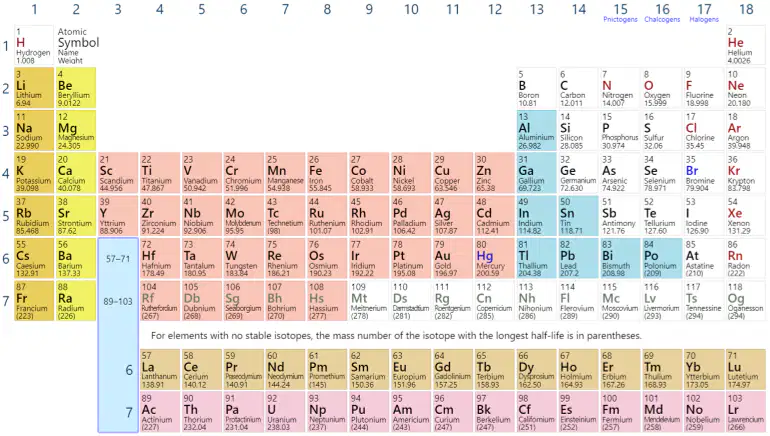
Option 3
d)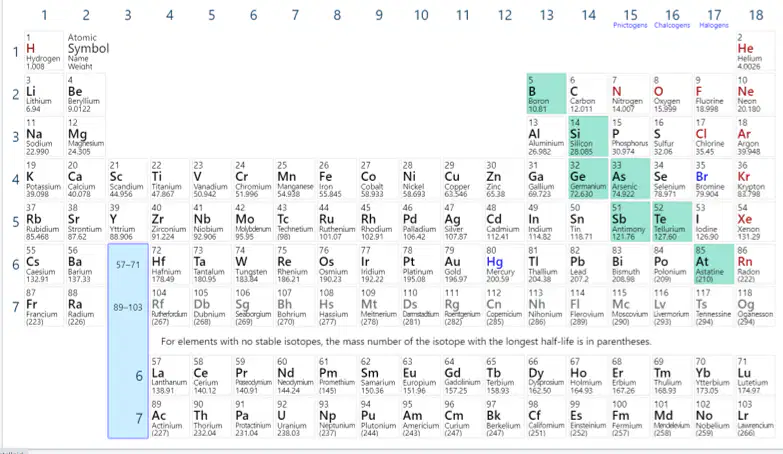
Option 4
48.
-HS.P1U1.1
A materials scientist is identifying elements suitable for making alloys that are softer and more malleable than transition metals. To locate post-transition metals on the periodic table, which area should she examine?
a)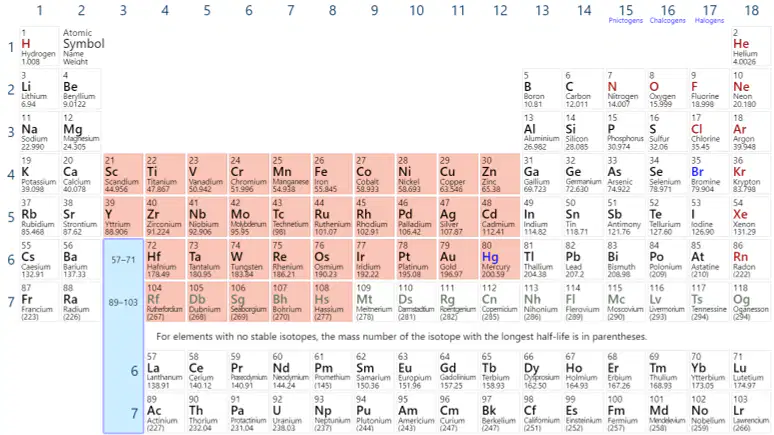
Option 1
b)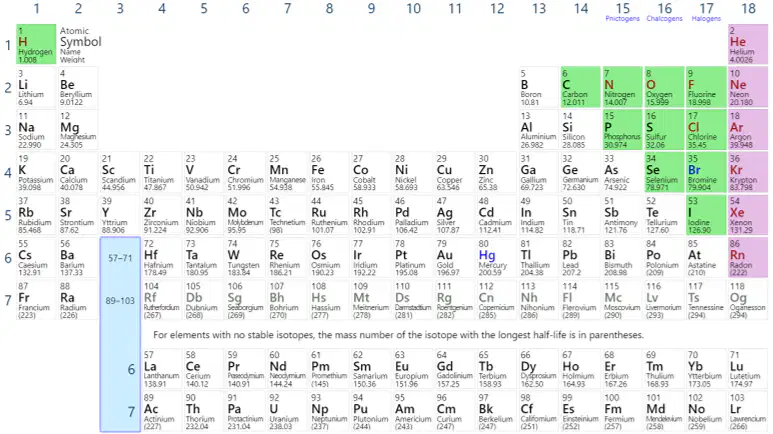
Option 2
c)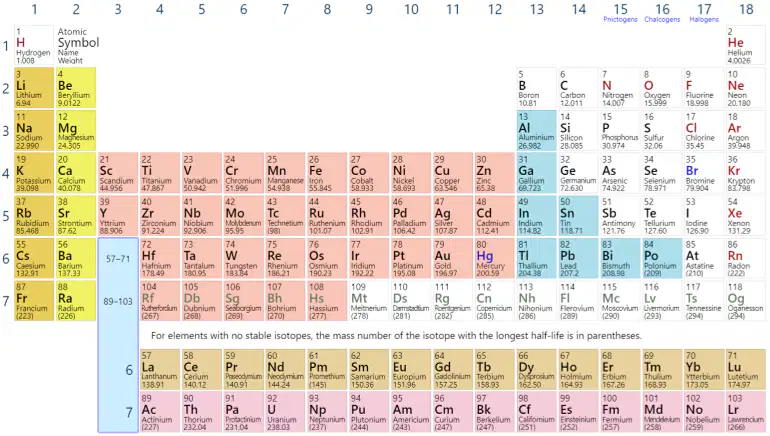
Option 3
d)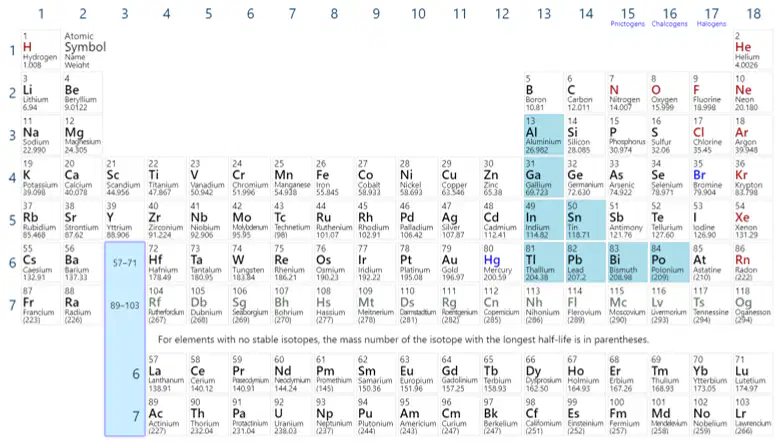
Option 4
49.
-HS.P1U1.1
A chemist is designing a reaction that requires elements that are reactive metals but less reactive than alkali metals. To locate alkaline earth metals, which part of the periodic table should she examine?
a)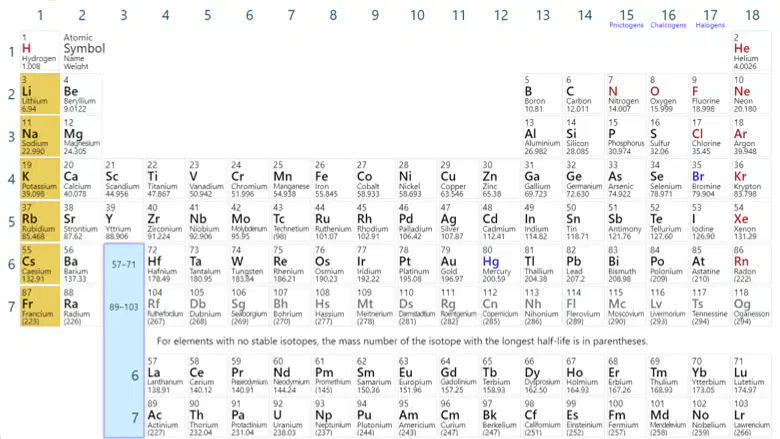
Option 2
b)
Option 3
c)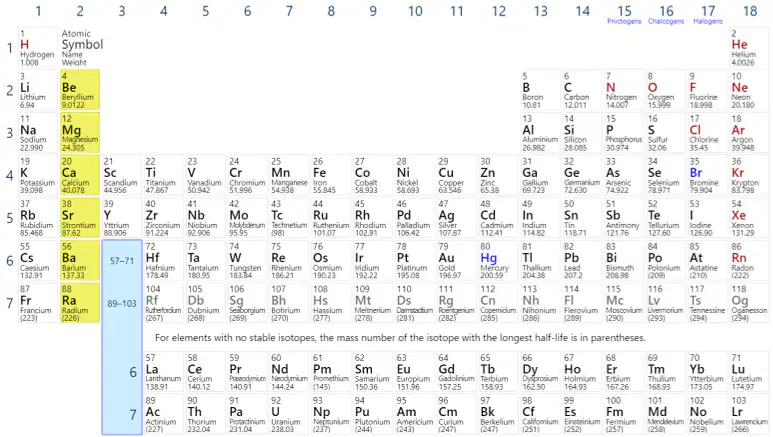
Option 1
d)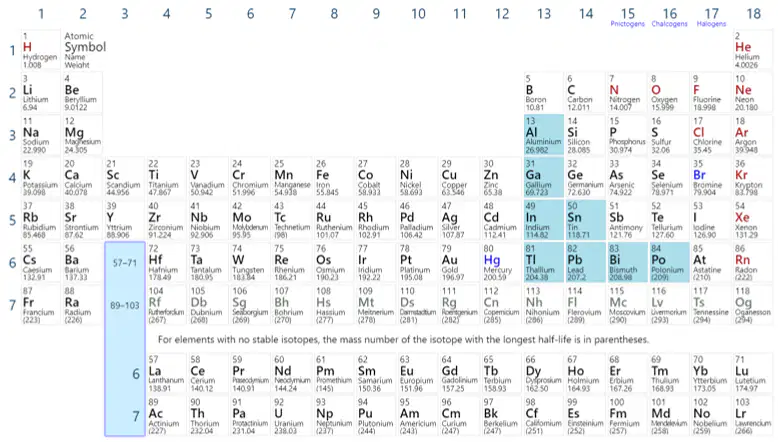
Option 4
50.
-HS.P1U1.1
A chemistry teacher asks students to select elements for an experiment involving highly reactive metals (ALKALI METALS) that react vigorously with water. Which group of elements should they choose?
a)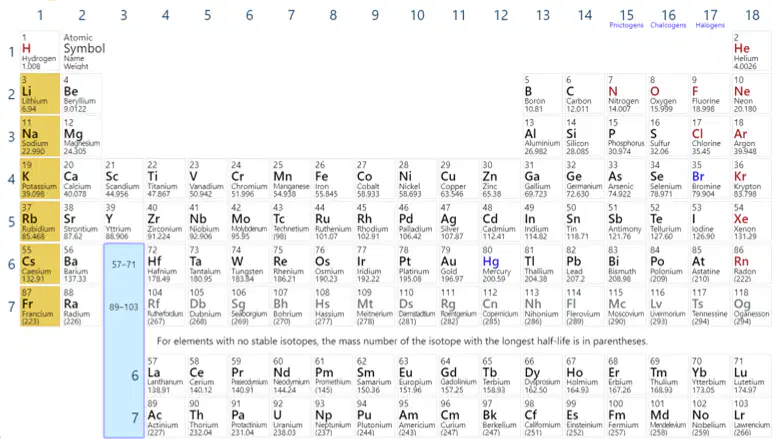
Option 2
b)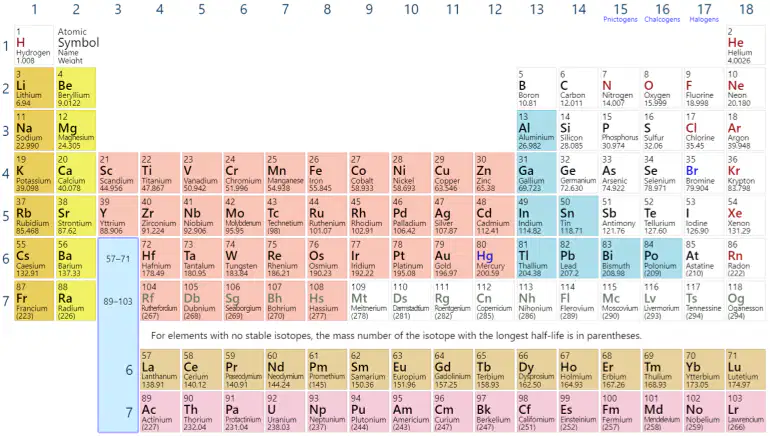
Option 3
c)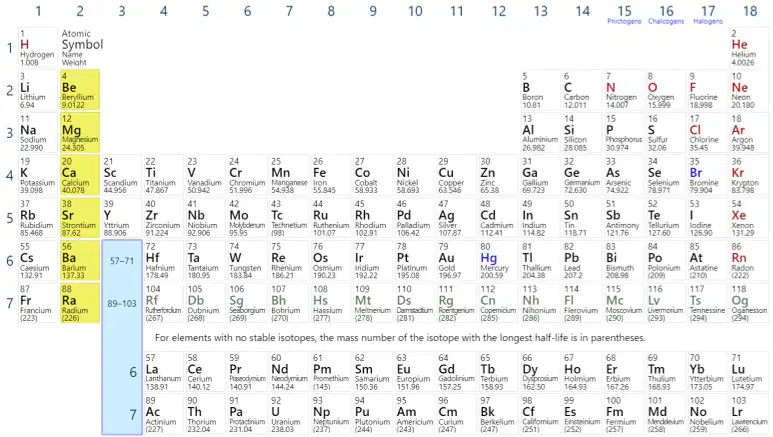
Option 1
d)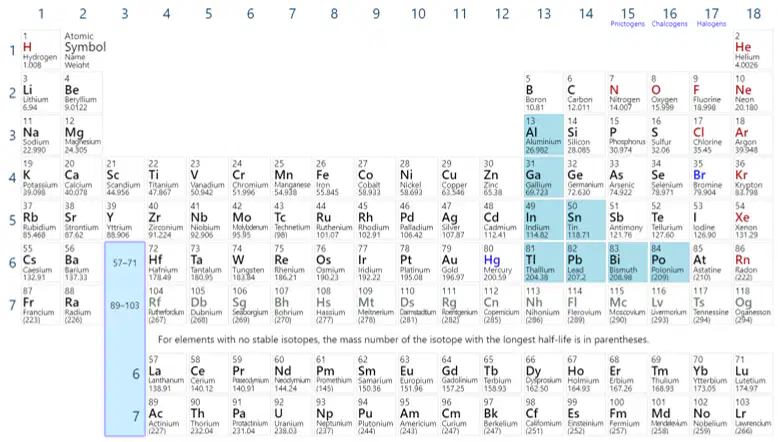
Option 4
51.
-HS.P1U1.1
Why can metals be drawn into wires (ductile) and hammered into sheets (malleable)?
a)
Their atoms have properties
b)
Atoms are different
c)
They are different from nonmetals
d)
Their atoms can slide past each other without breaking the metallic bond.
52.
-HS.P1U1.1
Why are metalloids often used in electronic devices?
a)
They can conduct electricity under certain conditions, making them useful semiconductors.
b)
noble gases
c)
nonmetals
d)
metals
53.
-HS.P1U1.1
Uranium and plutonium are both actinides.
What property do these elements share that makes them useful in nuclear energy production?
a)
Their ability to undergo radioactive decay and release energy
b)
Transition Metals
c)
Post Transition Metals
d)
Alkaline Earth Metals
54.
-HS.P1U1.1
Elements like fluorine, chlorine, and bromine belong to the same group.
Which property do they share?
a)
Alkali Metals
b)
Transition Metals
c)
Post Transition Metals
d)
They all form -1 ions when reacting with metals
55.
-HS.P1U1.2
Uranium and plutonium are both actinides.
What property do these elements share that makes them useful in nuclear energy production?
a)
They are reactive metals that produce heat when they combine with oxygen.
b)
Their ability to undergo radioactive decay and release energy
c)
They burn easily and release energy.
d)
They absorb light instead of emitting it.
56.
-HS.P1U1.1
How does the placement of sodium (Na) and chlorine (Cl) in the same period explain why they form compounds together?
a)
Sodium and chlorine have the same reactivity
b)
Sodium needs to lose an electron and chlorine needs to gain an electron to be stable
c)
Both have the same number of valence electrons
d)
Both are noble gases that do not react
57.
-HS.P1U1.1
Elements like fluorine, chlorine, and bromine belong to the same group.
Which property do they share?
a)
They all form +1 ions
b)
They are all noble gases
c)
They all form -1 ions when reacting with metals
d)
They all are found in Group 2
58.
-HS.P1U1.2
Uranium and plutonium are both actinides.
What property do these elements share that makes them useful in nuclear energy production?
a)
Their low reactivity and stable isotopes
b)
Their high melting points and metallic luster
c)
Their ability to undergo radioactive decay and release energy
d)
Their location near noble gases
59.
-HS.P1U1.2
Using your knowledge of ions, explain which type of ion sodium forms and why this helps create a stable compound.
a)
Sodium gains electrons to form a negative ion, balancing chlorine’s charge.
b)
Sodium loses electrons to form a positive ion, which is attracted to chlorine’s negative ion.
c)
Sodium shares electrons equally with chlorine to stay neutral.
d)
Sodium neither gains nor loses electrons but attracts chlorine atoms by gravity.
60.
-HS.P1U1.2
Which statement best explains why this ion has a positive charge?
a)
The atom has more electrons than protons.
b)
The atom has lost negative particles, leaving more protons than electrons.
c)
The atom gains energy from the lost electrons.
d)
The atom becomes neutral after losing electrons.
100 %

