
 Worksheets
Midterm Review Quiz #2 of 2
Total questions: 45
Worksheet time: 23mins
Identify what branch each article of the Constitution established and its responsibility.
Article 1: Legislative, Article 2: Executive, Article 3: Judicial
Article 1: Judicial, Article 2: Legislative, Article 3: Executive
Article 1: Executive, Article 2: Judicial, Article 3: Legislative
Article 1: Legislative, Article 2: Judicial, Article 3: Executive
What is the importance of the Bill of Rights?
It guarantees basic freedoms and rights to individuals.
It establishes the structure of the government.
It defines the responsibilities of the President.
It outlines the process for amending the Constitution.
Which of the following is an American value defined as "the belief in equal opportunity for all"?
Egalitarianism
Liberty
Individualism
Populism
What were two impacts of the transcontinental railroad on America?
Increased immigration and the rise of monopolies
Expansion of trade and the growth of cities
Decrease in agricultural production and the rise of nativism
Decline in industrialization and the growth of political machines
What was the goal of the Pullman strike, and which side did the government support?
To demand better wages; the government supported the workers
To protest working conditions; the government supported the workers
To demand better wages; the government supported the Pullman Company
To protest working conditions; the government supported the Pullman Company
Explain the two justifications Robber Barons gave for their wealth.
Social Darwinism and philanthropy.
Hard work and government support.
Inheritance and monopolies.
Innovation and public approval.
What is philanthropy? Which Captain of Industry was known for being a philanthropist?
Philanthropy is the act of giving to charity; Andrew Carnegie was known for it.
Philanthropy is the act of creating monopolies; John D. Rockefeller was known for it.
Philanthropy is the act of lobbying the government; J.P. Morgan was known for it.
Philanthropy is the act of improving working conditions; Cornelius Vanderbilt was known for it.
What was the result of laissez-faire practices of the government?
It allowed businesses to grow without regulation, leading to monopolies.
It created strict regulations for businesses.
It reduced the influence of big businesses.
It improved working conditions for laborers.
Why did Americans leave rural areas and move to urban areas during the Gilded Age?
To find jobs in factories and improve their standard of living.
To escape overcrowded cities.
To pursue agricultural opportunities.
To avoid industrialization.
Define the term muckraker. What did muckrakers encourage the public to do?
Journalists who exposed corruption; encouraged public awareness and reform
Politicians who advocated for social justice; encouraged voting rights
Activists who promoted conservation; encouraged environmental protection
Industrialists who supported monopolies; encouraged economic growth
What two reform movements were led by women?
Women's suffrage and temperance
Conservation and muckraking
Prohibition and bimetallism
Social gospel and direct election of Senators
Why did we create the FDA and Pure Food and Drug Act? What was the goal of these laws?
To ensure food and drug safety and protect public health
To regulate interstate commerce and promote economic growth
To reduce corruption in government and increase transparency
To promote conservation and protect natural resources
What was the Interstate Commerce Act?
A law to regulate railroads and prevent unfair practices
A law to promote conservation and protect natural resources
A law to ensure food and drug safety
A law to prevent monopolies and promote fair competition
What is conservation? Which muckraker led the movement on conservation?
The protection of natural resources; led by John Muir
The regulation of industries; led by Upton Sinclair
The promotion of social justice; led by Ida B. Wells
The prevention of monopolies; led by Jacob Riis
Name 5 reasons Theodore Roosevelt was considered the Progressive President.
Conservation efforts, trust-busting, labor rights, food safety reforms, and foreign policy
Expansion of slavery, trust-busting, labor rights, food safety reforms, and foreign policy
Conservation efforts, expansion of slavery, labor rights, food safety reforms, and foreign policy
Conservation efforts, trust-busting, labor rights, food safety reforms, and isolationism
Name the 16th, 17th, 18th, and 19th Amendments.
Income tax, direct election of senators, prohibition, women's suffrage
Income tax, prohibition, direct election of senators, women's suffrage
Women's suffrage, prohibition, income tax, direct election of senators
Direct election of senators, income tax, prohibition, women's suffrage
Why did the United States want control of territories in the Pacific Ocean?
To establish military bases and trade routes.
To prevent European colonization.
To spread democracy to Europe.
To avoid conflicts with neighboring countries.
Name 3 examples of Big Stick Policy.
The Panama Canal, the Roosevelt Corollary, and intervention in Latin America.
The Louisiana Purchase, the Monroe Doctrine, and the Civil War.
The Spanish American War, the Treaty of Paris, and the annexation of Texas.
The Marshall Plan, the Truman Doctrine, and the Cold War.
Who were the American Expeditionary Forces and why were they so important?
A group of American soldiers who fought in WWI
A group of American diplomats sent to Europe
A group of American industrialists supporting the war effort
None of the above
What were the Espionage and Sedition Acts? What did they violate?
Laws that restricted immigration and violated the Constitution.
Laws that limited free speech and violated the First Amendment.
Acts that promoted freedom of the press and violated no laws.
Acts that encouraged espionage and violated international treaties.
What was the Teapot Dome Scandal and how did it affect American citizens' view of the government?
A scandal involving land disputes that increased trust in the government.
A bribery scandal involving oil reserves that decreased trust in the government.
A political scandal about election fraud that had no impact on public trust.
A financial scandal involving banks that increased trust in the government.
How did WWI impact the U.S. economy? Which two groups of people will have more job opportunities?
It caused a recession; women and immigrants had fewer job opportunities.
It boosted the economy; women and African Americans had more job opportunities.
It had no impact; only men had job opportunities.
It caused inflation; only immigrants had more job opportunities.
What was the Red Scare and what caused it? What was the result?
Fear of communism leading to widespread arrests and deportations.
Fear of economic collapse leading to increased taxation.
Fear of foreign invasion leading to military buildup.
Fear of environmental disasters leading to policy changes.
What is the 19th Amendment? What impact does this have on women?
Granted women the right to vote, leading to increased political participation.
Granted women the right to work, leading to economic independence.
Granted women the right to education, leading to social reform.
Granted women the right to own property, leading to financial stability.
Describe consumerism in the 1920s.
Increased spending and advertising, leading to economic growth.
Decreased spending and advertising, leading to economic decline.
Increased government control over markets, leading to social reform.
Decreased production and innovation, leading to stagnation.
Who were the Hollywood Ten and what happened to them?
A group of actors who supported Communism and were imprisoned.
A group of screenwriters and directors accused of Communist ties and blacklisted.
A group of producers who created propaganda films during the Cold War.
A group of journalists who reported on the Cold War and were exiled.

What is the difference between the arms race and space race? Write a one-sentence description for each on how they are different.
Arms race focused on military power, while space race focused on technological and scientific achievements
Arms race focused on agriculture, while space race focused on industrialization
Arms race focused on education, while space race focused on healthcare
Arms race focused on sports, while space race focused on entertainment
Under which president did the USSR build the Berlin Wall? Why did the Soviets build the Berlin Wall?
John F. Kennedy; To prevent East Germans from fleeing to West Berlin
Dwight D. Eisenhower; To promote tourism in Berlin
Lyndon B. Johnson; To establish trade routes
Richard Nixon; To create a cultural divide
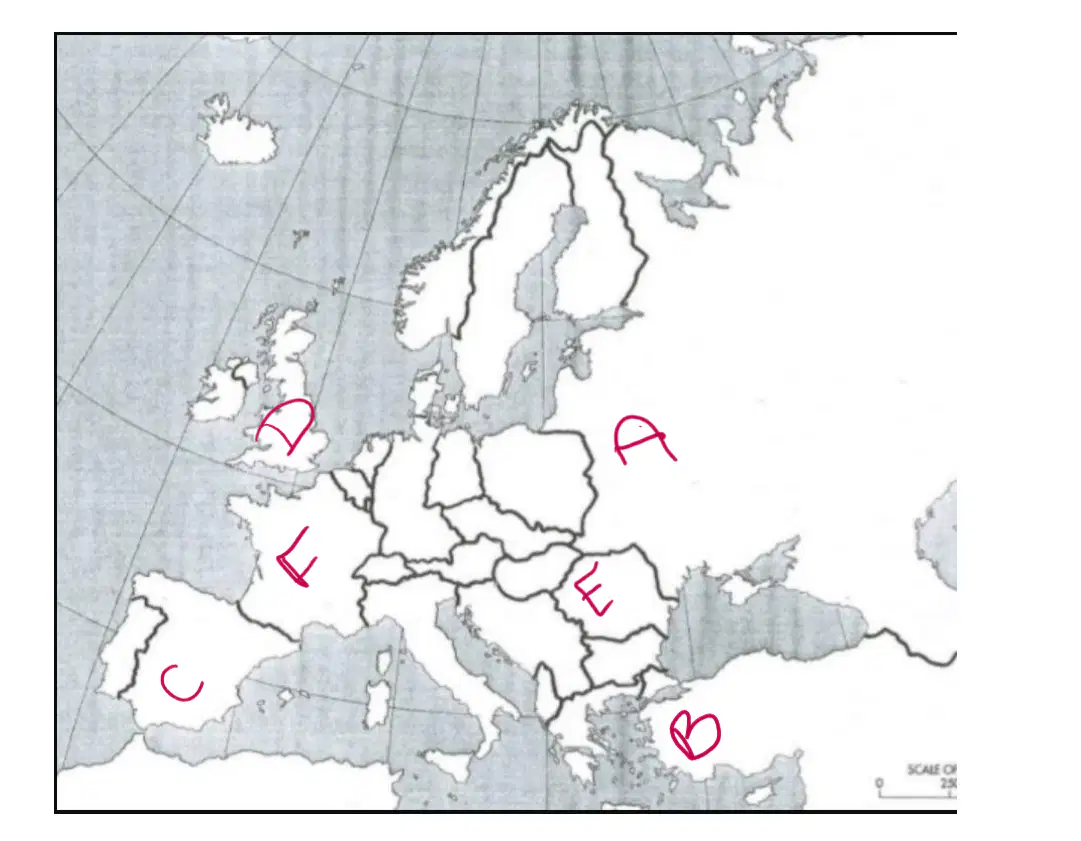
What country on the map was a beneficiary of the Truman doctrine?
A (Russia)
C (Spain)
E (Ukraine)
B (Turkey)
What country on the map was a NATO Member
A (Russia)
C (Spain)
E (Ukraine)
F (France)
What country on the map was a beneficiary of the Marshall Plan?
A (Russia)
F (France)
E (Ukraine)
B (Turkey)
What country on the map was a Warsaw Pact Member?
D (England)
F (France)
E (Ukraine)
B (Turkey)
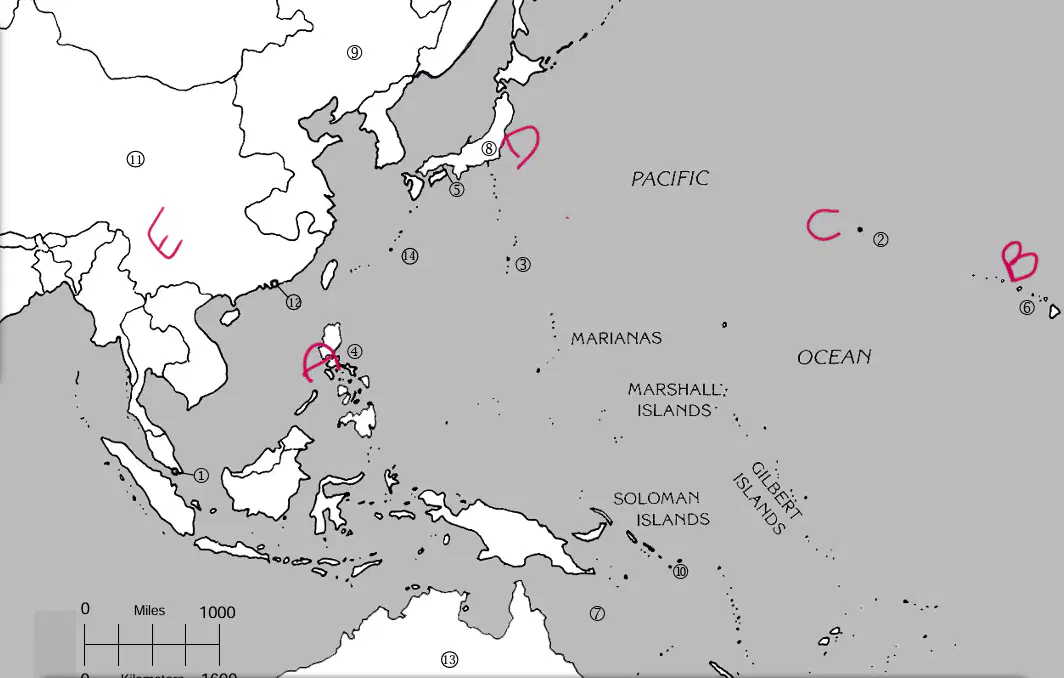
Where was the Battan Death March?
D (Japan)
E (China)
F (Philippines)
(C Midway Islands)
Where was Pearl Harbor?
B (Hawaii)
E (China)
F (Philippines)
(C Midway Islands)
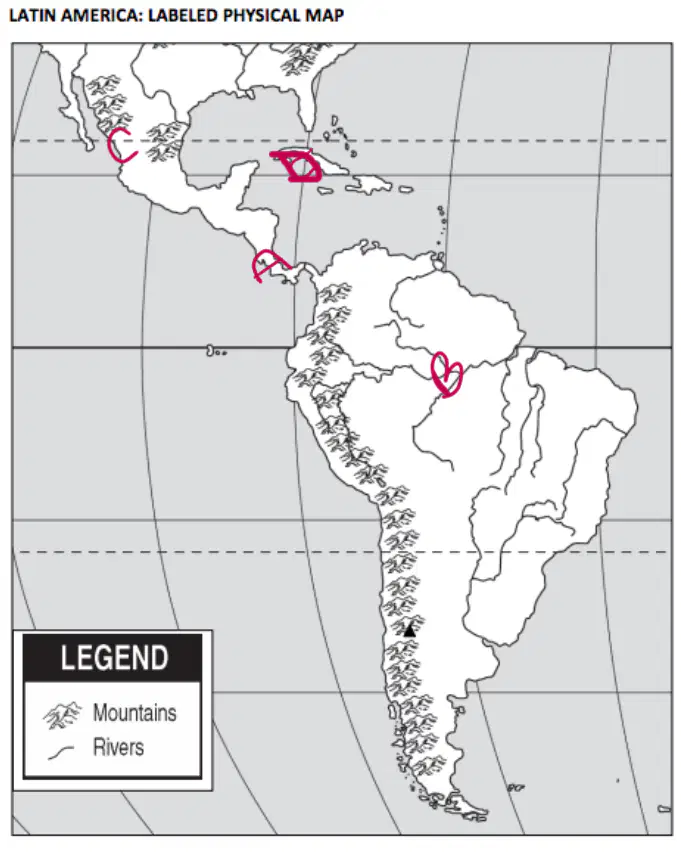
Where is the Panama Canal?
A
B
C
D
Where is Cuba?
A
B
C
D
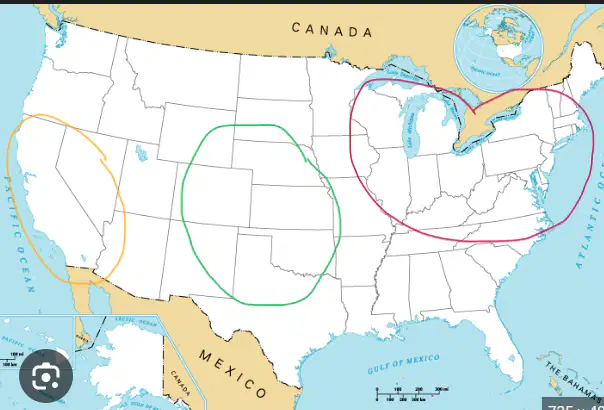
Where was the Dust Bowl?
Yellow Circle
Green Circle
Pink Circle
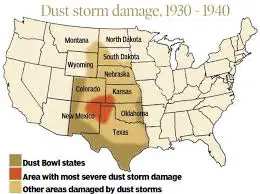
People that fled the Dust Bowl and went to California where called?
Okies
Yuppies
Rednecks
Cajuns
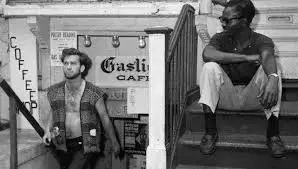
Beatniks were a counter culture movement in the 50s they were dissatisfied with what in America?
Mass consumerism and traditional values
Socialism and Communism
Drug culture and Rock n Roll
Representative Governments
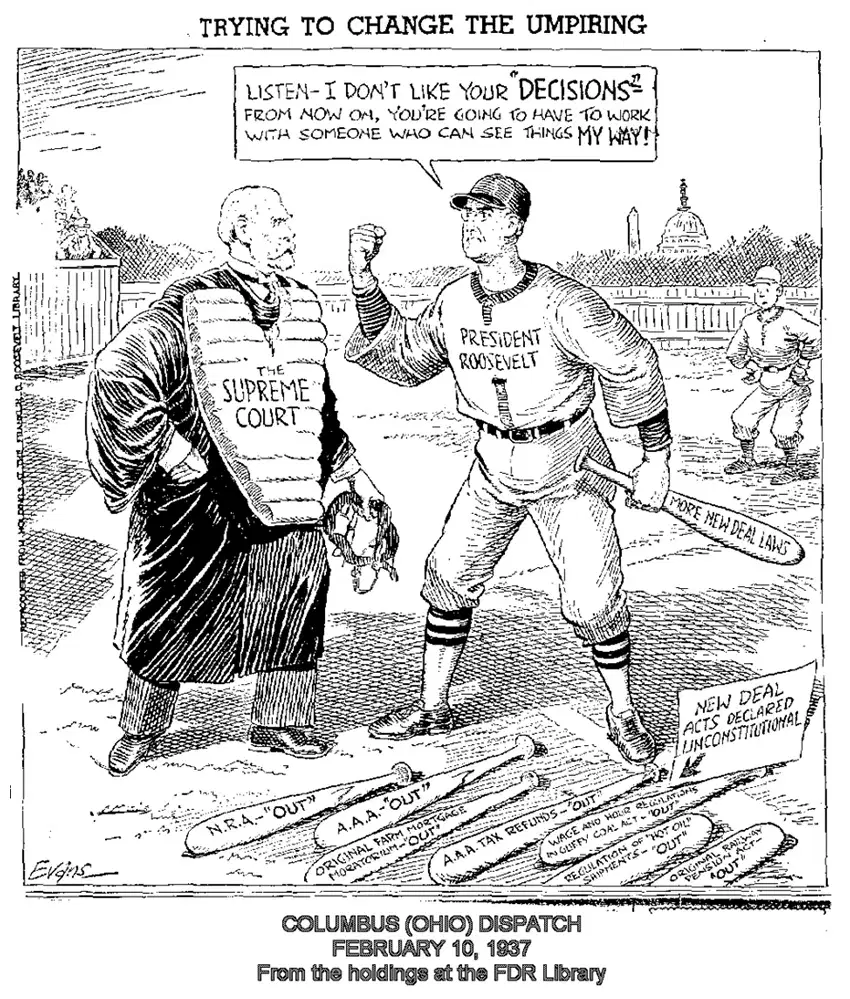
The court packing scandal under FDR was important as it tried to do what?
It tried to shift the balance of power in the three branches of government
It tried to make the supreme court more representative
It tried to impeach the president
It tried eliminate congress

The "Cross of Gold" speech, which is depicted in the cartoon above, was a Populist initiative promoting what?
Hard money, based on the gold standard
Deflation, in order to raise farm prices
Bimetallism, which based money on gold and silver
Muckraking, to expose the corruption of big business
What contributed to increased consumption in the 1950s?
Reduced employment opportunities
Decrease in population
Decrease in disposable income
Growing middle class with increased disposable income
What is the subdivision called that was built after World War II and helped give middle-class families affordable housing?
Levittown
Hooverville
Midtown
Schererville
What other Government Group tried suspected Communists?
HUAC (House Committee on Un-American Activities)
SETI (Search for Extraterrestrial Intelligence)
Vermin Supreme Democrats
U.S.S.R.
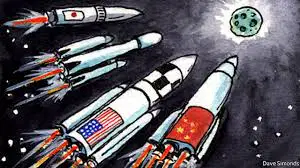
What started the Space Race in the 50s?
Laika (the first dog in space) was launched by the Russians
Russia launched Sputnik
Neil Armstrong landed on The moon
NASA (National Aeronautics and Space Administration) was created

