
Font size
 Worksheets
NU 331 FA 25 Final Exam Practice Test Answers
Total questions: 91
Worksheet time: 44hrs 32mins
The nurse is administering immunizations to a group of adolescents in a county health clinic. The nurse correctly identifies this action as:
illness prevention.
restorative care.
treatment of disease.
supportive nursing care.
After graduating from an accredited program in nursing and successfully passing the NCLEX, the nurse must take which action to obtain the legal right to practice?
Enroll in an advanced degree program
File NCLEX results in the county of residence
Be licensed by the State Board of Nursing
Submit a signed letter confirming graduation
Who is considered to be the founder of professional nursing?
Dorothea Dix
Lillian Wald
Florence Nightingale
Clara Barton
A client reports to the emergency department with ankle pain from a minor accident. The nurse asks the client to fully describe the circumstances of the accident. Which ANA standard of nursing practice is best demonstrated by the nurse's action?
Assessment
Diagnosis
Ethics
Caring
A nurse documents on a client's electronic chart that the client has an advance directive, makes a copy of the advance directive, and immediately informs the client's health care provider. Which role is the nurse demonstrating?
Advocate
Counselor
Leader
Researcher
A nurse is having lunch in the break room and overhears the other nurses talking about a difficult client in an inappropriate way. The nurses attempt to engage her in the conversation. Which response by the nurse would best represent behavior that supports the value of human dignity in nursing practice?
Sharing what the client did to the nurse last week, though the nurse treats the client with dignity
Getting up and walking out of the break room because the nurse's break is over
Laughing and joining in the conversation, though the nurse does not believe the client is that bad
Saying that this discussion is inappropriate and disrespectful to the client and that the nurse does not want to be a part of it
A nurse pulls the curtains closed before changing the dressing of the surgical wound on the abdomen of a postsurgical client. What value is served?
Accountability
Dignity
Freedom
Altruism
The principle of autonomy by a client is applied in which situation?
The family of a client is discussing care with the health care provider.
An order for an antibiotic is being written in the chart.
The client has decided to stop chemotherapy treatments.
A hospice consult is ordered by the nurse
It is time for a nurse to renew licensure. The nurse says, “I need some really easy and quick continuing education hours. I don’t understand why we have to do these every year.” What is the nurse’s coworker’s best response?
There is lots of free continuing education online.
See if any of the classes we have to take at the hospital each year will count.
Life-long learning is part of the code for nurses.
It is hard to get enough hours since we work full time and have families.
The nursing student is describing moral values to another student. Which statement is correct?
Moral values place an emphasis on emotional attitudes.
Moral values are assigned by one's religion.
Moral values give individuals some sense of what is right and wrong.
Moral values determine one's beliefs about others.
A nurse is acting inappropriately and has an odor of alcohol. This behavior breaches the principle of:
ethical conduct.
beneficence.
fidelity.
autonomy.
A rapid onset of symptoms that lasts a relatively short time indicates which condition?
A chronic illness
An acute illness
An actual risk factor
A potential for wellness
A client, who has just been diagnosed with a chronic condition, asks the nurse what a "chronic condition" means. What would be the nurse's best response?
“Chronic conditions usually come on slowly and may have periods of remission and exacerbation.”
“Chronic conditions are diseases that come and go.”
“Chronic conditions involve disabilities that require hospitalization.”
“Chronic conditions require short-term management in extended-care facilities.”
When chronic illnesses and disabilities are present, individuals benefit most from activities that:
A client is admitted to the hospital with abrupt symptoms of increasing shortness of breath, fever, and a productive cough with green sputum. Upon further exam the client is diagnosed with chronic obstructive pulmonary disease (COPD) exacerbation. The nurse identifies this as which type of illness?
Acute
Chronic
Terminal
Contagious
A nurse is giving a talk to a local community group on the importance of proper diet and regular exercise. This is an example of which type of health promotion?
Primary
Secondary
Tertiary
Chronic
A nurse does not assist with ambulation of a postoperative client on the first day after surgery. The client falls and fractures a hip. What charge might be brought against the nurse?
assault
battery
fraud
negligence
A nurse asks a coworker about the condition of the nurse's next-door neighbor, who has been admitted to the unit. If the coworker shares the neighbor's client information with the nurse, the coworker could be held liable for committing which act?
Invasion of privacy
Negligence
Assault
Defamation of character
On finding multiple bruises on a client’s arms and back, the nurse suspects that the client is being abused by a daughter who lives with the client. When questioned, the client denies any abuse. Despite the client’s denial, the nurse should report the suspected abuse on the basis of which rationale?
The client does not want anyone to know what is happening in the client's home.
The client is ashamed to admit to the abuse by the daughter.
The nurse wants peers to see the nurse as a hero.
The nurse has a legal and ethical responsibility to report the suspected abuse.
A nurse is caring for a client with hypertension whose blood pressure has increased from 154/78 mmHg to 196/98 mmHg with a heart rate of 110 beats per minute during the past hour. The nurse goes to lunch without reporting the change to the health care provider, and the client experiences a cardiac arrest. What tort has the nurse likely committed?
Negligence
Battery
Invasion of privacy
False imprisonment
A client on a surgical unit asks for the nurse’s opinion of the surgeon. The nurse says that the surgeon is rude and that the surgeon’s clients always end up with infections. The nurse is at risk of being accused of which?
Libel
Slander
Negligence
Assault
While caring for an older adult client, the nurse observes that the skin is dry and wrinkled, the hair is gray, and they need glasses to read. Based on these observations, what would the nurse conclude?
These are normal physiologic changes of aging.
The observations are not typically found in older adults.
The nurse is readmitting a client who was discharged 1 week ago with complications from diabetes mellitus. The client states, "I really did not understand what I was supposed to do to care for myself from those papers that I was sent home with." What question will the nurse ask to promote the client's self-esteem?
What was so difficult about the discharge instructions?
You understand that if you are not able to care for yourself, will you'll continue to be admitted?
How do you learn best and what can we do to provide you with that information?
Do you have a problem with reading?
The nurse is teaching a client newly diagnosed with diabetes about the disease, testing, diet, and how to self-administer insulin. The client does not speak the dominant language. What is the appropriate nursing action?
Have family members translate.
Obtain a medical interpreter.
Request other health care providers who speak the client’s language to care for the client.
Use a translating application for cellular phone to aid in communication.
A nurse is changing the bed linen of a client admitted to the health care facility. Which precaution to prevent infection should the nurse follow?
Health care personnel follow which of the following precautions whenever there is the potential for contact with blood, body fluids except sweat, non-intact skin, or mucous membranes?
Standard precautions
Droplet precautions
Contact precautions
Airborne precautions
The nurse is preparing to assess the client’s vital signs. The client just had morning coffee. What explanation and action does the nurse take in this situation?
take a rectal temperature before the client needs to have a bowel movement
assess and document the oral temperature noting the client had a hot beverage
wait 30 minutes, then assess the oral temperature because the client had a beverage
skip the temperature during this vital sign rotation because the client had a beverage
An adult client is assessed as having an apical pulse of 140. How would the nurse document this finding?
bradycardia
tachycardia
arrythmia
normal pulse
Various sounds are heard when the nurse assesses a blood pressure. What does the first sound heard through the stethoscope represent?
systolic pressure
diastolic pressure
auscultatory gap
pulse pressure
An informatics nurse specialist is conducting a program for facility staff about creating strong passwords to promote secure and private data. The nurse determines that the teaching was successful when the staff identify which password as a strong password?
mary
ABC123
MaFrN610#
12345!
A nurse receives an order from a medical provider for chloramphenicol, 500 mg by mouth every 6 hours. The drug comes in 250 mg capsules. What would the nurse administer per dose?
1 capsule
2 capsules
3 capsules
4 capsules
The health care provider prescribes ciprofloxacin 500 mg PO q12h for a client with bronchial pneumonia. The nurse has liquid ciprofloxacin 250 mg/10 mL on hand. How many milliliters would the nurse dispense? Round to the nearest whole number.
10mL
15mg
20mL
25mg
The nurse is caring for a client with a paralytic ileus and receives the prescription to place a nasogastric tube. The nurse knows to place the client in which of the following positions for the insertion of the nasogastric tube?
Supine
Lateral recumbent
Sim’s
High Fowlers
A nurse is caring for a client with a chronic wound on the left buttock. The wound is 8.3 x 6.4 cm. Which action should the nurse use during wound care?
cleanse the wound from the outer area toward the inner area
cleanse at least 0.5 inch (1.25 cm) beyond the end of the new dressing
cleanse the wound in parallel strokes from the top to the bottom of the wound
cleanse with a new swab for each stroke
A nurse has just inserted a nasogastric tube in a client. Which method is most reliable for verifying the correct placement of the tube?
Radiographic confirmation of position
Confirmation that pH of the aspirate is less than 5.5
Green fluid with particles aspirated
Off-white fluid aspirated
As part of a client's plan of care, a nurse teaches a client's spouse how to perform a dressing change to the client's abdominal wound. Which method would be most effective to determine whether the spouse has mastered the skill?
Spouse lists the signs of healing.
Spouse identifies the steps for the dressing change.
Spouse performs the steps of the dressing change correctly.
Spouse shows the nurse what supplies are needed.
The nurse is removing personal protective equipment after dressing the infected wounds of a client. Which is the priority nursing action?
remove the garments that are most contaminated
make contact between two contaminated surfaces
make contact between two clean surfaces
handwashing before leaving the client's room
While administering a cleansing enema, the client displays lightheadedness, nausea, and has clammy skin. The nurse would implement which priority action?
Stop the procedure and reposition the client.
Slow the infusion rate, have the client take deep breaths, then resume the enema.
Slow the infusion rate, withdraw the tubing slightly, then resume the enema.
Stop the procedure, monitor heart rate and blood pressure.
The nurse is administering a large-volume enema to a client as prescribed. The client reports abdominal cramping. What should the nurse do first?
Increase the flow of the enema for approximately 30 seconds then decrease it to the prior flow rate.
Stop the administration of the enema and notify the health care provider.
Pause the administration of the enema momentarily.
Gently increase the flow of the enema until all of the solution has been administered.
A nursing student is performing a urinary catheterization for the first time on a female client and inadvertently contaminates the catheter by touching the bed linens. What should the nurse do next to maintain surgical asepsis for this procedure?
Clean the client’s genital area with disinfectant-soaked cotton swabs from inside to outside
Connect the catheter to the drainage bag using sterile medical tubing
Clean the catheter with antiseptic wipes and allow to dry
Gather new sterile supplies and start over
A nurse is collecting a sterile urine specimen from an indwelling catheter. How will the nurse correctly obtain the specimen?
Pour urine from the collecting bag.
Remove the catheter and ask the client to void.
Aspirate urine from the collecting bag.
Aspirate urine from the collection port.
A client has had abdominal surgery and the creation of a colostomy. The client avoids looking at the colostomy and refuses visitors. Which nursing concern is most appropriate for this client?
Altered self-esteem related to colostomy and poor self-image
Altered body image related to colostomy as evidenced by avoidance of colostomy
Fear of rejection by others related to colostomy and altered self-image
Altered role performance related to inability to cope with visitors
An older adult client is in the hospital following an intestinal diversion with an ileostomy on the right upper quadrant and a mucous fistula. What is the most important nursing action in the care of this client?
Assess the color of the stoma.
Apply device for stool collection.
Perform stoma irrigation.
Have the client perform self stoma care
The nurse manager observes one of the unit nurses failing to wash hands on entering a client room. Hospital protocol is to wash hands before and after entering a client room. This scenario is an example of which approach to quality assurance?
Quality by inspection
Quality as opportunity
Quality by perception
Quality as initiative
The nurse is documenting a variance that has occurred during the shift. This report will be used for quality improvement to identify high-risk patterns and, potentially, to initiate in-service programs. This is an example of which type of report?
Incident report
Nurse's shift report
Transfer report
Telemedicine report
A nurse responds to the call bell and finds another nurse evacuating the client from the room, which has caught fire. Which action should the nurse take?
Upon hourly rounding, a nurse finds that a fire has broken out in a client's room. Which intervention is the priority?
Extinguish the fire.
Rescue the client.
Raise an alarm.
Confine the fire.
Which statement should the nurse include in the teaching plan for a family learning about fire safety?
Cigarette smoking is no longer a major cause of home fires because most people smoke outside.
Electric heaters are safer and do not usually increase the risk of fire in the home.
Most fires occur outside of the home when grilling out or camping.
Most people who die in home fires die from inhalation and not from burns.
The nurse is teaching the caregiver of a 3-year-old about safety. Which teaching will the nurse include?
Supervise your child on the changing table.
Place all household cleaners out of reach.
Buy protective sporting equipment.
Peer pressure causes children of this age to take risks.
Which nurse would be at the highest risk of causing a hazardous situation?
A nurse who has worked 32 hours of overtime this week
A nurse who has placed a client in the bed with three side rails up
A nurse who is transferred to another unit to assist with care
A nurse who is administering medications to four clients
The nurse is reading an order that indicates that a drug is to be given to a client “q4h.” How will the nurse administer the medication?
immediately
four times daily
every 4 hours
as needed
The nurse is reading a medication prescription for a drug that is routinely administered every 12 hours. The prescription does not state the frequency of administration. What is the appropriate nursing action and accompanying rationale that guides the nurse’s action?
Contact the health care provider to clarify the prescription. Assumptions cannot be made about medication administration and the nurse must practice within the state’s nurse practice act and the organization’s policies and procedures concerning medication administration.
Ask the client how often this drug is taken at home, because this is not an assumption and is within the state’s nurse practice act and the organization’s policies and procedures concerning medication administration.
The client is prescribed a medication that needs to be taken on an empty stomach. The nurse inadvertently administers this medication with food. What are the ramifications of this error?
The medication will be more effective.
The medication schedule will have to be changed.
The client may experience abdominal pain.
Absorption of the medication will be impaired.
A clinic nurse is preparing for a tuberculosis screening. Knowing the injections will be administered intradermally, what size needles and syringes will the nurse prepare?
10-mL syringe, 3-inch (8-cm) 18-gauge needle
5-mL syringe, 2-inch (5-cm) 20-gauge needle
insulin syringe, 1-inch (2.5-cm) 16-gauge needle
tuberculin syringe, 1/2-inch (1.25-cm) 26-gauge needle
What must a nurse do each time medications are administered to ensure that medication errors do not occur?
Verify the number of medications to be administered.
Review information about classification of drugs.
Ask another nurse to double-check the medications.
Observe the three checks and rights of administration.
Which statement by a client indicates to the nurse that teaching was effective regarding the different parts of a syringe?
The plunger is the part of the syringe that moves back and forth to withdraw and instill medication.
The barrel is the part of the syringe that resets the dose window to zero following an injection.
The barrel is the part of the syringe to which the needle is attached.
The plunger is the part of the syringe that holds the medication.
A nurse gives a client 0.25 mg of digoxin instead of the prescribed dose of 0.125 mg. What should the nurse do next?
Give another 0.125 mg as soon as possible.
Nothing; the dose will not make a significant difference.
Assess the client and notify the client’s health care provider.
Hold the next dose to make sure the total amount balances.
A nurse is conducting an interview with a client to collect a medication history. Which question would be used to ensure safe medication administration?
Have you noticed any change in your bowel habits?
How do you feel about taking medications?
Do you have any allergies to medications?
At what times do you take your medications?
A nurse is teaching an older adult about taking newly prescribed medications at home. Which information would be included?
You can identify your medications by their color.
I have written the names of your drugs with times to take them.
You won't forget a medication if you count them every day.
Don't worry if the label comes off; just look at the shapes.
The nurse is caring for a client who has been prescribed an enteric-coated drug. Which should the nurse include when teaching the client proper administration of this drug?
It can be cut into smaller pieces.
It should not be chewed or crushed.
It should not be opened.
It is available in liquid form if needed.
A home care nurse is educating a client with diabetes on how to self-administer insulin. Which teaching point should the nurse include in the education plan?
Each time you give the injection rotate the injection site.
For each injection use the same site on the body.
Insulin syringes and needles may be reused up to three times.
Store insulin needles and syringes in a glass container between use.
How should the nurse instruct clients to clean their eyes before instilling medications?
Wipe your eyes from the inner canthus toward the outer canthus.
Wipe your eyes from the outer canthus toward the inner canthus.
Apply pressure to the inner canthus while wiping the eyes.
Apply pressure to the outer canthus while wiping the eyes.
A nurse is administering an immunization injection to an adult client. Which site would the nurse choose for this injection?
Vastus lateralis site
Deltoid muscle site
Ventrogluteal site
Dorsogluteal site
A nurse is caring for a client at a health care facility who is undergoing nicotine withdrawal therapy and has been prescribed a nicotine patch. Which is true with regard to the application of a transdermal patch?
The patch is mostly applied to lower parts of the body.
A new patch is placed in exactly the same location as the previous one.
The patch is applied to a skin area with adequate circulation.
The drug becomes inactive immediately after the patch is removed.
During a teaching session on self-administration of insulin, the client asks the nurse why it is necessary to bunch the skin before inserting the needle. How will the nurse respond?
Bunching your skin controls bleeding.
Bunching your skin steadies the syringe.
Bunching your skin ensures complete delivery of the insulin.
Bunching your skin facilitates the placement of the needle in the subcutaneous tissue.
A nursing student is caring for a client with the prescription for a urinalysis. The nurse knows that this test is performed for which of the following indications?
Determine the presence of a genitourinary infection or abnormality
Assess the extent of congenital heart disease.
Monitor blood loss and response to blood replacement
Investigate suspected hyperparathyroidism
A postoperative client's medication administration record (MAR) provides for PRN administration of a number of analgesics by various routes. Which action should the nurse take to assess the client’s pain to determine the appropriate analgesic to administer?
The nurse will have the client rate pain on the pain scale of 1 to 10 and proceed accordingly.
The nurse will call the health care provider to ask which medication should be used.
The nurse will explain the options to the client and let the client decide.
The nurse will consult with the charge nurse to make the decision.
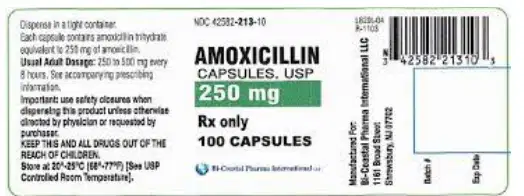
A nurse receives a prescription to administer Amoxil 10 milligrams per kilogram by mouth daily times 14 days. The client weighs 220 pounds. Available: AMOXICILLIN CAPSULES, USP 250 mg. How many tablets should the nurse administer?
4 tablets
2 tablets
6 tablets
8 tablets
The nurse observes the client for signs of stage I pressure injury development, which most likely will include which finding?
Non-blanchable erythema of intact skin
Open ulcer with visible subcutaneous fat
Necrotic tissue with exposed bone
Serous drainage from a deep wound
A stage I pressure injury is a defined area of intact skin with:
nonblanchable redness
a shallow open injury
visible subcutaneous fat
exposed bone with eschar
The nurse is preparing to clean a client's surgical wound. What would the nurse assess before beginning the procedure?
The client's comfort
The client's race
The client’s location to the nurse’s station
The effectiveness of the client’s pain medication
The client’s age
A nurse documents the respiratory rates of several adult clients. Which client will the nurse document as experiencing bradypnea?
client A
client B
client C
client D
Which action should the nurse perform when applying negative pressure wound therapy?
Cut foam to the shape of the wound and place it in the wound.
Increase the negative pressure setting until drainage is brisk.
Irrigate the wound thoroughly using normal saline and clean technique.
Test the seal of the completed dressing by briefly attaching it to wall suction.
The nurse is performing an assessment of a client's pressure injury to the coccyx. The nurse observes that the wound bed is black and will consequently document what finding?
Eschar
Granulation tissue
Gangrene
Erythema
A nurse is assessing a client with a stage 4 pressure injury. What assessment of the injury would be expected?
full-thickness skin loss
skin pallor
blister formation
eschar formation
The nurse is performing a head and neck assessment for a client. When inspecting the face, the nurse notes that the skin, sclera, and mucous membranes appear yellowish. Based on the following, how should the nurse document the findings?
(a)
The nurse is assessing a client who has jaundice. Which color would the nurse expect the client's skin to be?
yellow
erythema
pallor
cyanosis
Which action by the nurse is most appropriate when attempting to remove surgical staples that have dried blood or drainage on them?
Apply moist saline compresses to loosen crusts before attempting to remove the staples.
Go ahead and remove the staples as they will pop up and out of the skin.
Notify the health care provider of the dried blood and wait for a prescription to proceed.
Apply a warm compress to the surgical staples and allow the dried blood to melt.
The nurse is assessing the wounds of clients in a burn unit. Which wound would most likely heal by primary intention?
a surgical incision with sutured approximated edges
a large wound with considerable tissue loss allowed to heal naturally
a wound left open for several days to allow edema to subside
a wound healing naturally that becomes infected.
During a head-to-toe assessment of a client, the nurse carefully palpates the client’s nails. Which is the best rationale for this technique?
To assess capillary refill and oxygenation
To assess for edema
To assess for infection
To assess for melanoma
The nurse preparing to perform an abdominal assessment on a client places the client in which position?
Supine
Sims
Prone
Lithotomy
The nurse is assessing the skin of a veteran who has returned from deployment overseas. Which response by the nurse reflects the best strategy to gain the cooperation of the client?
“May I look at your skin to determine if there are any issues?”
“Can you take off your clothes? I need to see your skin.”
The nurse is assessing a newly admitted client. Auscultation of the client's lungs reveals the presence of discontinuous, popping sounds during inspiration over the lower lung fields. How does the nurse document this finding?
crackles
friction rub
sonorous wheeze
sibilant wheeze
A client has been reporting persistent headaches. Which is an example of subjective data?
Temperature is 104.1°F (40.1°C)
The client us slow to respond to questions
Pain is 4 out of 10 on a pain scale.
The client is oriented to person, place, and time.
To assess subjective data related to a client's elimination pattern, the nurse should perform which action?
Review culture and sensitivity results of urine
Ask the client about changes in voiding patterns.
Document the frequency, amount, and time the client voids.
Palpate the abdomen for pain or distention.
When planning care for a client with a Foley catheter, which actions should the nurse include? Select all that apply.
Use powder or lotion in the perineal area.
Encourage fluid intake, unless contraindicated.
Record volume and character of the urine.
Maintain a closed urinary catheter system.
Change the indwelling catheter regularly.
The nurse is preparing to place a Foley catheter for a female client who will soon have surgery. Into what position will the nurse place the client?
supine
dorsal recumbent
lithotomy
semi-Fowler's
While observing a new nurse inserting an indwelling urinary catheter, the preceptor observes a break in sterile technique. What is the preceptor's first action?
Stop the procedure and instruct the nurse to re-establish sterility.
Allow the nurse to continue and correct the error later.
Ignore the break in technique if the patient is not at risk.
Report the incident to the supervisor immediately.
89. How is obstructive sleep apnea diagnosed?
Polysomnography
Electrocardiogram
Electroencephalogram
Polygraph
90. Which class of sleep medications is the most commonly prescribed?
Benzodiazepine
Antidepressants
Nonbenzodiazepine hypnotics
Antihistamines
91. A nurse is discussing the challenges of assessing pain in children with a group of
parents. Which of the following statements should the nurse include?
The presence of the child’s parent can make it more difficult to assess a child’s
pain.
Children may deny pain to avoid IM injection or bad tasting oral medicine
Children often cannot identify where the pain is located
Young children do not exhibit pain

