
 Worksheets
Quiz on Chapter 4 of Vector Mechanics for Engineers: Statics
Total questions: 35
Worksheet time: 18mins
What is the main focus of Chapter 4 in "Vector Mechanics for Engineers: Statics"?
Dynamics of fluids
Equilibrium of rigid bodies
Kinematics of particles
Structural analysis
What does the term "equilibrium" refer to in the context of statics?
A state where a system is in motion.
A state where external forces cause deformation.
A stationary state where external loads are balanced.
A state where forces are unbalanced.
Which of the following best describes the aim of studying statics in engineering?
To understand the behavior of fluids in motion.
To calculate unknown forces in systems under equilibrium.
To analyze the thermal properties of materials.
To study the acceleration of moving objects.
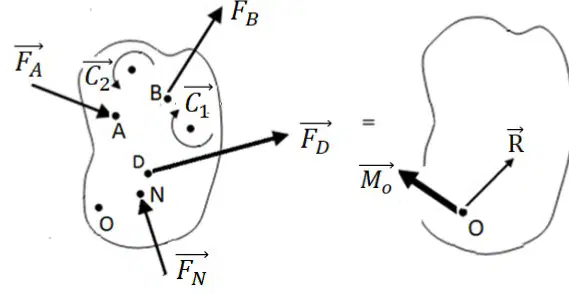
What is the equilibrium condition for a rigid body or system subject to external loads?
The resultant force and resultant moment are zero.
The resultant force is maximum, and the resultant moment is minimum.
The resultant force is zero, but the resultant moment is non-zero.
The resultant force and resultant moment are equal.
What are the three independent scalar equations used for 2D (plane) problems in equilibrium equations?
ΣFx = 0, ΣFy = 0, ΣMz = 0
ΣFx = 0, ΣFy = 0, ΣFz = 0
ΣMx = 0, ΣMy = 0, ΣMz = 0
ΣFx = 0, ΣFy = 0, ΣMy = 0
Which type of solution is preferred for 3D (space) problems in equilibrium equations?
Scalar Solution
Vector Solution
Both Scalar and Vector Solutions
Neither Scalar nor Vector Solutions
What does the vector equation ΣM = 0 represent in equilibrium equations for 3D problems?
Forces in the x-direction are zero.
Forces in the y-direction are zero.
The moment about a point or axis is zero.
Forces in the z-direction are zero.
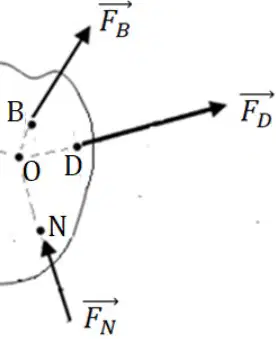
What is the condition for the moment equation to not be written in a system in static equilibrium?
The directions of the forces do not intersect at the same point.
The directions of the forces intersect at the same point.
The resultant force is not equal to zero.
The system is in motion.
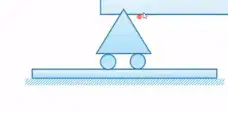
What type of support is used in 2D plane applications that allows translation in one direction and rotation, but restricts translation in another direction, causing a reaction force?
Fixed Support
Roller Support
Pin Support
Hinged Support
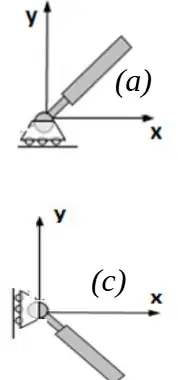
What reaction force occurs when translation is restricted in the y-direction in a roller support?
Ax
Ay
Az
None

Which of the following types of connections results in a reaction equivalent to a force with a known line of action?
Roller
Rocker
Frictionless surface
All of the above
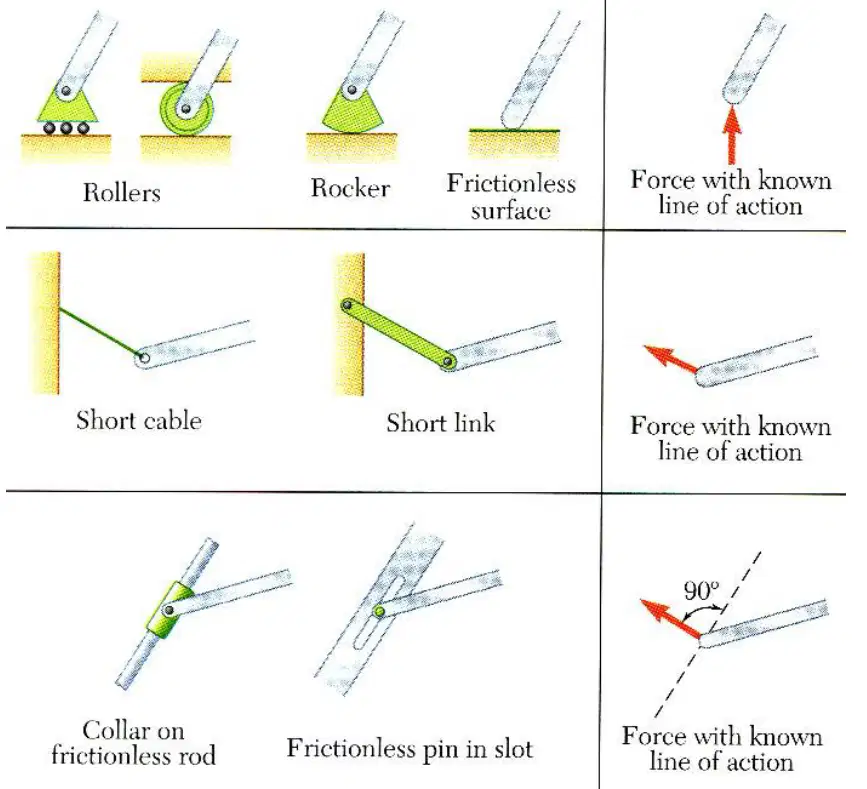
What is the reaction type for a short cable connection in statics?
A force with a known line of action
A moment with a known direction
A force with an unknown line of action
A combination of force and moment
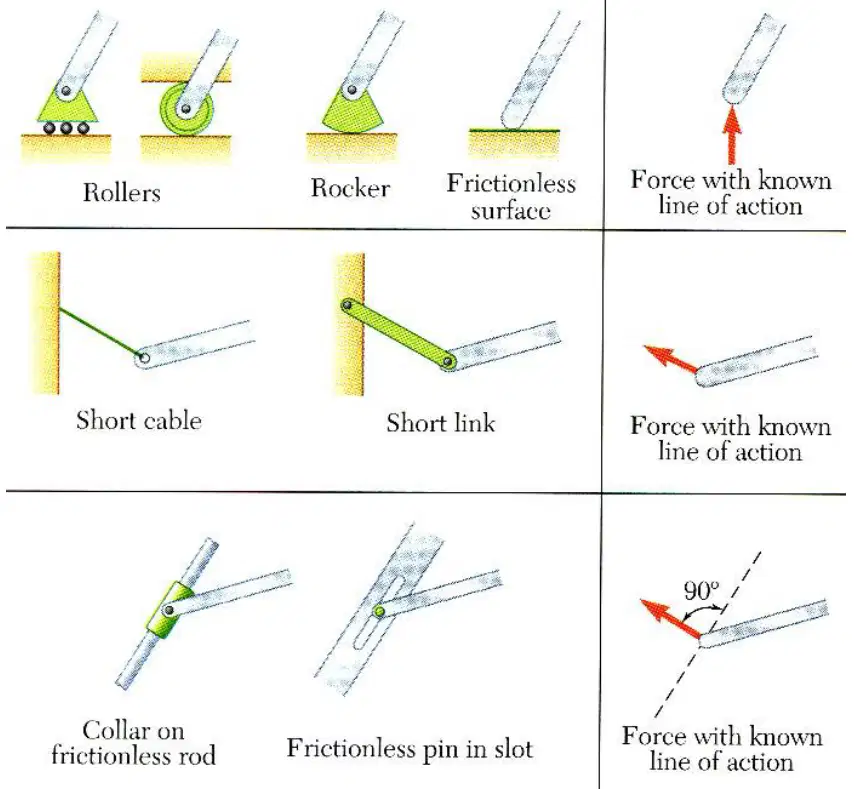
Which type of connection involves a collar on a frictionless rod?
A connection that allows rotation but restricts translation
A connection that restricts both rotation and translation
A connection that allows translation but restricts rotation
A connection that allows both rotation and translation
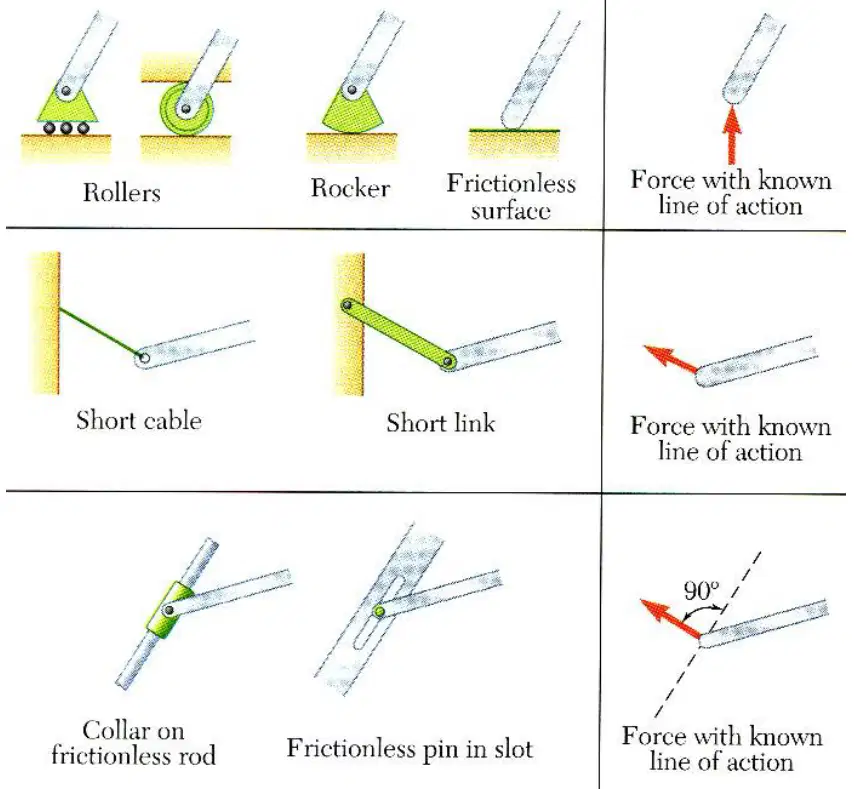
What is the angle of the force reaction for a frictionless pin in a slot?
45°
60°
90°
120°
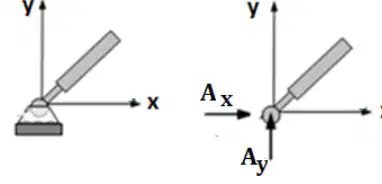
What is the primary characteristic of a pin connection (or hinge support) in 2D plane problems?
It allows translation in both x and y directions.
It does not allow translation in x and y directions but allows rotation around the z-axis.
It allows translation in the x direction but not in the y direction.
It does not allow rotation around the z-axis.
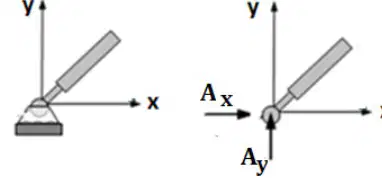
In a pin connection, where do the reaction forces occur?
Only in the x direction.
Only in the y direction.
In both the x and y directions.
In the z direction only.
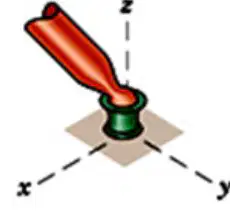
What is a ball joint in the context of vector mechanics for engineers?
A connection that allows translation in all axes but restricts rotation.
A connection that allows rotation in all axes but restricts translation.
A connection that allows both translation and rotation in all axes.
A connection that restricts both translation and rotation in all axes.
What is a built-in or fixed support in the context of mechanics?
A connection that allows translation and rotation in all directions.
A connection that does not allow translation or rotation in any direction.
A connection that only allows rotation but not translation.
A connection that only allows translation but not rotation.
What reaction moments occur in a built-in or fixed support in 3D (space) problems?
Mx, My, and Mz reaction moments.
Ax, Ay, and Az reaction moments.
Mx, Ay, and Az reaction moments.
Ax, My, and Mz reaction moments.
In 2D (plane) problems, which reaction forces and moments occur in a built-in or fixed support?
Ax, Ay, and Mz.
Ax, Ay, and Az.
Ax, Ay, and My.
Ax, Az, and Mx.

What is the primary characteristic of a roller support in structural mechanics?
Allows rotation but prevents translation in all directions
Allows translation in one direction and prevents rotation
Prevents both translation and rotation
Allows translation in all directions

Which type of support is commonly used to allow rotation but restrict translation in all directions?
Roller support
Fixed support
Pin support
Hinge support

In the context of structural supports, which of the following is NOT a real-world example of a roller support?
A bridge bearing with cylindrical rollers
A beam resting on a smooth surface
A column rigidly fixed to the ground
A structure with a movable base
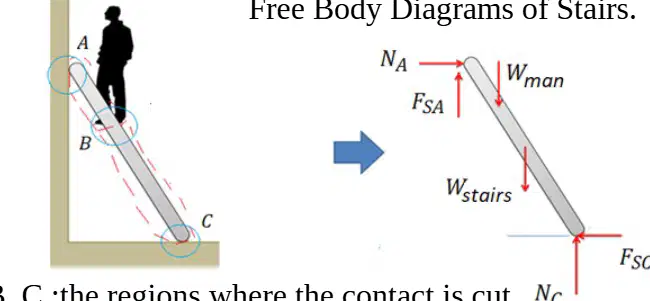
What is the purpose of isolating an object when drawing a Free Body Diagram (FBD)?
To visualize the object's interaction with other objects.
To simplify the calculation of forces acting on the object.
To ignore external loads acting on the object.
To eliminate reaction forces from the diagram.
Which of the following is NOT a characteristic of a Free Body Diagram (FBD)?
It includes all external loads acting on the object.
It shows reaction forces where contact is broken.
It ignores the weight acting on the object.
It isolates the object from other objects.
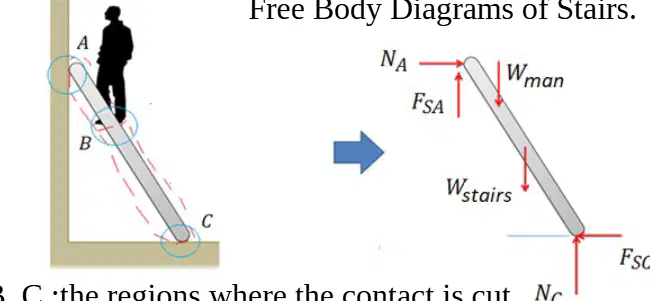
Which tip is essential when isolating an object in a Free Body Diagram (FBD)?
Forces are shown in areas where the object is not in contact.
Forces are shown in each part where contact is broken.
Reaction forces are ignored in equilibrium equations.
All forces are unbalanced in the diagram.

What happens to forces in a correctly drawn Free Body Diagram (FBD)?
Forces are ignored in areas of contact.
All forces balance each other.
Reaction forces are excluded from the diagram.
External loads are not considered.
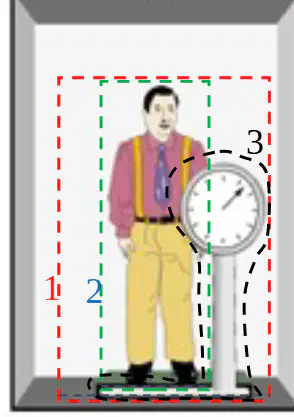
What does FBD-1 represent in the given example?
The man isolated from the scale
The scale isolated from the ground and the man
The entire system isolated from the ground
The reaction forces at the man's shoes
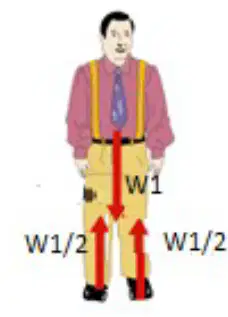
In FBD-2, what forces are plotted?
Forces acting on the scale
Reaction forces at the man's shoes
Forces acting on the entire system
Forces acting on the ground
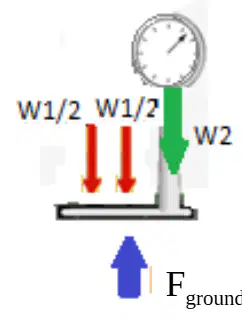
What is the key observation in FBD-3 regarding the scale?
The scale is isolated from the ground only
The scale is isolated from the man only
The scale is isolated from both the ground and the man
The scale is part of the entire system
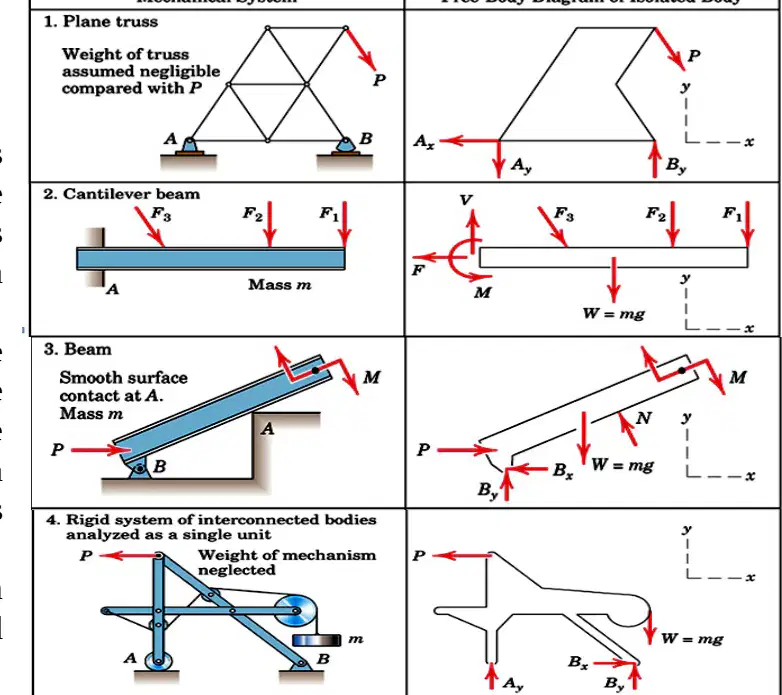
What does a negative sign (-) indicate when calculating the direction of a reaction force in a Free Body Diagram (FBD)?
The reaction force is opposite to the chosen direction.
The reaction force is aligned with the chosen direction.
The reaction force is perpendicular to the chosen direction.
The reaction force is arbitrary and does not follow any direction.
What is the purpose of writing static equilibrium equations in force calculations?
To determine the material properties of the system
To find the unknown forces in the system
To calculate the weight of the object
To measure the dimensions of the system

How many unknowns can the three equations of equilibrium solve for?
No more than 2 unknowns
No more than 3 unknowns
No more than 4 unknowns
No more than 5 unknowns
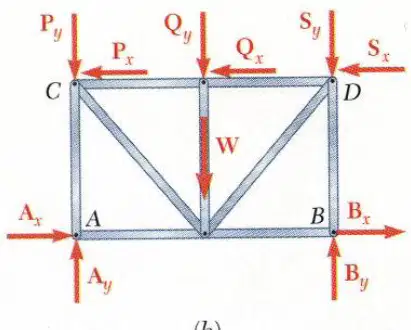
What does it mean when a structure has more unknowns than equations in the context of statically indeterminate reactions?
The structure is properly constrained.
The structure is partially constrained.
The structure is improperly constrained.
The structure is statically indeterminate.

What is the condition of a structure with fewer unknowns than equations?
The structure is statically indeterminate.
The structure is partially constrained.
The structure is improperly constrained.
The structure is over-constrained.

