
Font size
 Worksheets
Music 6 Meter, Notes, Tempo (1st Summative)
Total questions: 92
Worksheet time: 47mins
These are musical symbols that represent sound.
Beat
Notehead
Note
Rest
It is an oval shape that is either shaded black or kept white.
Flag
Notehead
Stem
beam
It is a line found on either side of the notehead.
Flag
Notehead
Stem
beam
An element of music that pertains to the regular flow of music through time.
Tempo
Beat
Rhythm
Melody
It represents silence in music.
Beat
Notehead
Note
Rest
When two notes have the same number of flags, the flags can be replaced or connected by a horizontal line called a _____.
Stem
Flag
Beam
Line
Does the direction of the stem affect the duration of the sound?
Yes
No
Possible
Depends on the note
What is the value of a dot if placed beside a note or rest?
The same value as the note or rest beside it.
A quarter of the note or rest it follows.
Half of the value of a note or rest it follows.
1/8 of the value of the note or rest beside it.
Notes and rests have distinctive values. Which of the following notes has the highest value?
Dotted half note
half note
Whole note
quarter note
What is the value of a dotted half rest?
1 ½ beats
2 beats
3 beats
2 ½ beats
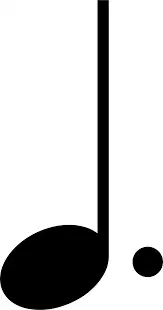
Which of the following dotted notes receives 1 ½ beats?
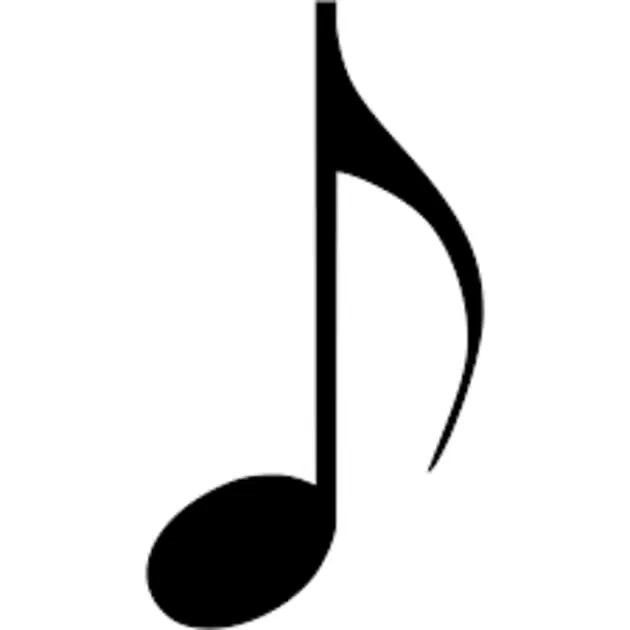

Sixteenth Note
Sixteenth Note

It is the unit of time in music and the foundation for building rhythm.
Rhythmic Pattern
Rhythm
Beat
Pulse
It combines sounds and silences within a given time.
Rhythmic Pattern
Rhythm
Beat
Meter
The pattern of strong and weak beats.
Rhythmic Pattern
Rhythm
Beat
Meter
Which type of meter has two beats wherein the first beat is always strong?
Duple meter
Triple meter
Quadruple meter
2 quarter time signature
A ________ shows how strong and weak beats are organized in music. It can be felt in 2s, 3s, and 4s.
Rhythmic Pattern
Rhythm
Beat
Meter
In music, sound and silence are represented by symbols. What do you call a style of art that also uses symbols and figures to spell out a word or form an alphabet?
Notes and Rests
Letras y figuras
Letras y de musicas
painting
Its first beat is always strong. It groups two beats together.
Triple Meter
Duple Meter
Quadruple Meter
Its usual beat pattern has a strong first beat, and weak second and third beat.
Triple Meter
Duple Meter
Quadruple Meter
It usual beat pattern uses strong first and third beats, and weak second and fourth beats.
Triple Meter
Duple Meter
Quadruple Meter
It is composed of two vertically arranged numbers.
Meter
Beat unit
Time signature
The top number in a time signature tells us _______.
The number of beats per measure.
What kind of note gets a beat.
The number of measure in the song.
Nothing
What does the number at the bottom of the time signature mean?
The number of beats per measure.
What kind of note gets one beat or the beat unit.
The number of measures in the song.
Nothing
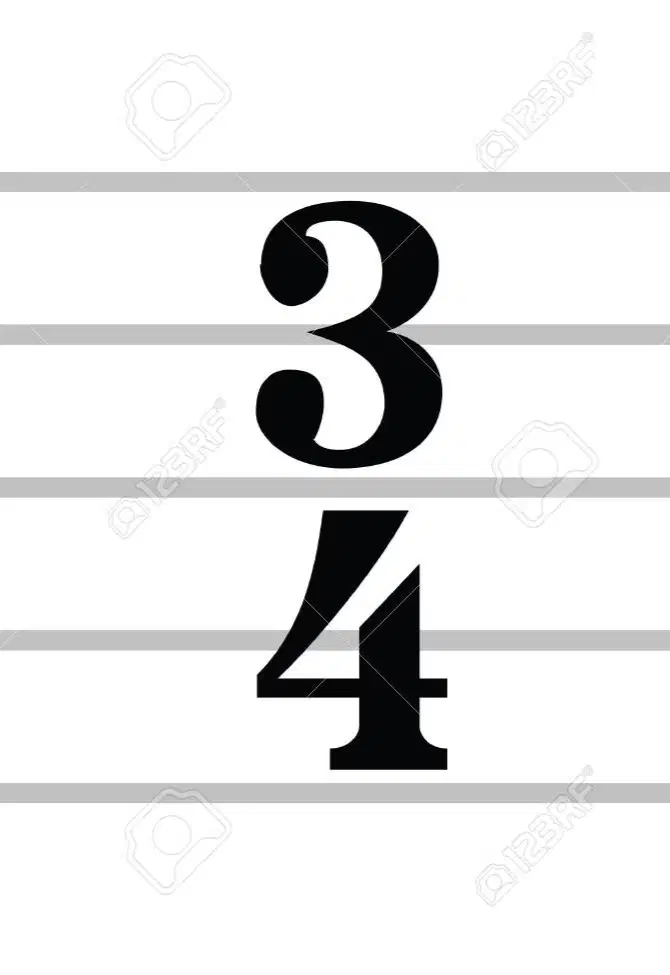
How many beats are there in this time signature?
1
3
2
4
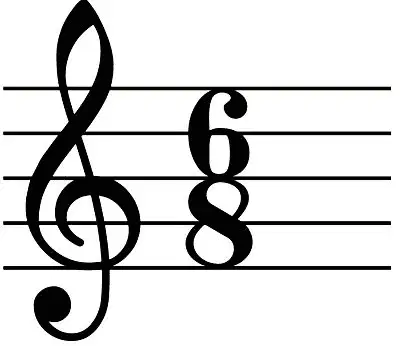
How many beats are there in this time signature?
6
3
2
4
In a simple meter, each beat can be divided into _______.
three equal parts
four equal parts
two equal parts
one whole part
Which tempo marking means “very fast”?
Largo
Moderato
Vivace
Presto
A song begins with an incomplete measure. What do you call this?
Pickup Bar
Ending Bar
Repeat Sign
Strong Beat
If a conductor starts with a downward movement, what does this show?
The fastest beat
A weak beat
The accented beat
The pickup beat
“Ritardando” means _______.
gradually getting faster
repeat the part again
gradually getting slower
play very lively
A teacher asks the class to sing “at a walking pace.” What tempo should they follow?
Vivace
Largo
Allegretto
Andante
A conductor wants the choir to sing “faster than Allegro but still lively.” Which marking shows this?
Vivace
Lento
Adagio
Moderato
Which tempo marking is the slowest among the choices?
Vivace
Lento
Adagio
Moderato
You see the marking “accel.” in your music. What should you do?
Slow down gradually
Speed up gradually
Stay at the same tempo
Sing very slowly
These are usually Italian terms often found at the beginning of a piece.
Key Signature
Cleff
Tempo Markings
Tempo
How many beats are in one measure of 6/8 time?
3
6
2
9
In 6/8, the eighth note receives how many beats?
2
1
½
3
Compound meter means each beat is divided into:
4 parts
3 parts
2 parts
5 parts
Which of the following is a compound duple meter?
3/4
9/8
6/8
2/4
Compound meter means each beat is divided into:
4 parts
3 parts
2 parts
5 parts
Which of the following is a compound triple meter?
6/8
9/8
2/4
4/4
In compound duple meter, how many main beats are there?
2
3
4
6
In 9/8, how many beats are grouped in each measure?
2
3
4
9
What note is equal to three eighth notes combined?
Quarter note
Dotted quarter note
Half note
Whole note
The time signature 9/8 is also called:
Compound duple
Simple triple
Compound triple
Simple duple
A dotted quarter note in 6/8 receives how many beats?
1
2
3
4
Which note is equal to 1 beat in 6/8 time?
Quarter note
Eighth note
Sixteenth note
Dotted quarter note
In 9/8, one main beat equals:
Two eighth notes
Three eighth notes
One eighth note
One quarter note
Which best describes compound meter?
Beats divided into halves
Beats divided into three equal parts
Beats grouped in fours
Beats grouped randomly
Which meter pattern matches 6/8?
Strong–weak–weak
Strong–weak / Strong–weak
Strong–weak–weak–weak
Strong–medium–weak
Which pattern matches 9/8?
S – w
S – w – w
S – w / S – w
S – w – w / S – w – w / S – w – w
“Rock-a-bye Baby” is mostly in what meter?
4/4
3/4
6/8
2/4
A compound meter always has a top number of:
2, 3, 4
5, 7, 11
6, 9, 12
8, 10, 14
In 6/8, how many eighth notes fit in one measure?
3
4
6
8
The bottom number 8 in a time signature means:
Whole note gets 1 beat
Quarter note gets 1 beat
Eighth note gets 1 beat
Sixteenth note gets 1 beat
“Three eighth notes make one beat” describes:
Simple meter
Compound meter
Mixed meter
Irregular meter
A song feels like “ONE–two–three / ONE–two–three / ONE–two–three.” What meter is this likely in?
6/8
9/8
3/4
2/4
A rhythmic pattern of ♩. ♩. ♩. (three dotted quarter notes) fits perfectly in:
9/8
6/8
3/4
4/4
If you clap one strong beat followed by two light taps repeatedly, you are demonstrating the feel of:
Simple duple
Compound duple
Simple triple
Mixed meter
A drum pattern grouped into three sets of triplets usually fits:
9/8
4/4
3/4
2/4
A melody containing six eighth notes grouped as 3 + 3 is:
6/8
9/8
3/4
12/8
Your class taps “STRONG–weak–weak / STRONG–weak–weak.” What are you performing?
Compound triple
Compound duple
Simple duple
Simple triple
A song with the feel of three big beats per measure, each subdivided into three, is:
9/8
6/8
2/4
3/4
A rhythmic line of nine eighth notes per measure must be in:
6/8
9/8
4/4
3/8
A dotted quarter note + three eighth notes = how many total beats in 6/8?
2
3
4
6
If you march to a song in 6/8, you step on:
Every eighth note
Every main beat (dotted quarter)
Only the first beat
Only the last beat
Why is 6/8 called a compound duple meter?
Because it has two eighth notes per beat
Because each of its two beats is divided into three
Because it has six beats
Because it uses dotted notes
A song feels fast but the beats feel grouped in 3’s and not in 2’s. What type of meter is it likely in?
Simple
Compound
Irregular
Changing meters
A composer wants a “rolling” or “swaying” feel like a lullaby. Which meter would best create this?
2/4
3/4
6/8
5/4
You observe a song where dancers step “BIG–small–small, BIG–small–small, BIG–small–small.” What meter is ideal?
Simple duple
Compound triple
Simple triple
Compound duple
A student says “9/8 and 6/8 are the same because they both use eighth notes.” What is the BEST correction?
They are the same but grouped differently
They have the same number of beats
9/8 has 3 main beats, while 6/8 has 2
6/8 is faster
Which situation BEST uses 9/8 time?
Marching
Fast dance with swirling movements
Slow walking
Stomping beats
A song includes 3 groups of triplets but emphasizes the 2nd and 5th eighth notes. What does this suggest?
Irregular meter
Changing meter
Compound triple with syncopation
Simple triple
When arranging a lullaby, you use many dotted quarter notes. Why?
They fill more measures
They match the beat unit in compound meters
They sound louder
They save space in notation
A teacher claps “ONE–two–three–four–five–six / ONE–two–three–four–five–six.” What meter is practiced?
6/8
9/8
12/8
3/4
A rhythmic pattern has 1 dotted quarter + 6 eighth notes. Which is true?
It cannot fit in any measure
It fits 6/8 exactly
It fits 9/8 exactly
It fits 12/8
A (a) note has 4 beats.
It has 1/4 beat, this is a (a) note.
A half note has (a) beats.
This has 1 beat. It is a (a) rest.
An eighth note has (a) beat
Put a check mark to items that are true about notes.
It is a musical symbol that represents silence.
Each note corresponds a beat.
The longer a note is sounded, the more beats should receive.
Put a check mark to items that refer to rest.
This represents silence.
When you see a rest symbol you continue to sing.
The longer a rest is held, the more rest should receive.
The top numbers for this meter are; 2,3, and 4.
Simple Meter
Compound Meter
Simple Duple Meter
Compound Duple Meter
A time signature of 3/4 indicates:
Compound meter
Simple meter
Triple meter
Duple meter
Which time signature is most likely to be found in a waltz?
4/4
6/8
3/4
2/2
Compound meter is characterized by:
A straightforward, even feel
A flowing, swaying feel
Beats divided into two
Time signatures like 2/4 and 3/4
Which of the following is NOT a typical characteristic of simple meter?
Clear, direct feel
Predictable rhythm
Beats divided into three
Time signatures with 2, 3, or 4 on top
Which meter generally has a stronger, more "driving" feel?
Simple
Compound
They both feel the same
It depends on the tempo
Which of the following is NOT a characteristic of compound meter?
The beat is divided into three equal parts
It often feels smoother and more flowing than simple meter
The main beats can be easily divided into two parts
It is commonly found in waltzes and marches
Why might a composer choose to write a piece in compound meter?
To create a more complex and challenging piece
To evoke a smoother, more flowing rhythmic feel
To adhere strictly to classical music traditions
Because it is easier to perform than simple meter
What might be a reason for a piece of music to switch between simple and compound meter?
To correct mistakes in the original composition
To accommodate changes in the lyrics
To add variety and contrast to the rhythm
Because of a misunderstanding of musical theory

