
 Worksheets
Algebra I Semester 1 Final Review
Total questions: 129
Worksheet time: 4hrs 18mins
Solve the proportion: 43=8x . What is the value of x ?
4
6
8
12
Solve the proportion for x using the proportion x5=1815 .
6
9
12
15
If x7=1221 , what is the value of x ?
4
6
12
3
Solve for y : 10y=53
2
5
6
8
Solve the proportion for x for the proportion 52=20x ?
4
6
8
10
If x9=43 , what is x ?
12
9
6
15
The formula for the area of a triangle is A=21bh . What is the area(A) if b=8 and h=5 ?
20
40
10
13
Using the formula C=2πr , what is the circumference of a circle with radius r=7 ? (Use π≈3.14 )
21.98
43.96
14.00
28.00
The volume of a rectangular prism is V=lwh . If l=4 , w=3 , and h=5 , what is V ?
12
20
60
35
If d=rt , and d=120 miles, r=60 mph, what is t ?
1 hour
2 hours
3 hours
4 hours
The formula for the perimeter of a rectangle is P=2l+2w . If l=9 and w=4 , what is P ?
26
18
36
13
Using A=πr2 , what is the area(A) of a circle with r=6 ? (Use π≈3.14 )
18.84
36.00
113.04
28.26
Which of the following is a relation?
y=2x+1
{(1,2),(2,3),(3,4)}
x2+y2=25
All of the above
Which set of ordered pairs represents a relation?
{(2,3),(4,5),(6,7)}
{(1,2),(1,3),(1,4)}
{(5,6),(7,8)}
All of the above
Which of the following relations is not a function?
{(1,5),(2,6),(3,7)}
{(2,3),(2,4),(2,5),(2,6)}
{(4,8),(5,9),(6,10)}
{(7,11),(8,12),(9,13)}
Which relation is NOT a function?
{(1,2),(2,3),(3,4)}
{(1,2),(1,3)}
{(2,5),(3,6)}
{(4,7),(5,8)}
Which of the following equations represents a function?
y=2x+3
x2+y2=16
x=y3
x2=y2
Which of the following is NOT a function?
y=2x+1
x2+y2=16
y=3x−4
y=x
Which set of ordered pairs represents a function?
{(1,2),(2,3),(3,4)}
{(1,2),(1,3)}
{(2,5),(2,6)}
{(3,7),(4,8),(5,9)}
Which of the following is a function?
y=2x+5
x2+y2=9
x=y2
x2=y2
Which of the following is NOT a function?
y=x3
y=x
x2+y2=25
y=2x−1
Which of the following is a function?
y=4x
x2+y2=36
x=y2
x2=y2
Which of the following is NOT a function?
y=5x−2
y=x2
x2+y2=49
y=x
Which of the following is a function?
y=3x+2
x2+y2=64
x=y2
x2=y2
Which of the following is NOT a function?
y=x2
y=2x−3
x2+y2=81
y=x
Which of the following is a function?
y=6x
x2+y2=100
x=y2
x2=y2
Which of the following is NOT a function?
y=x2
y=2x+7
x2+y2=121
y=x
Which of the following is a function?
y=7x−1
x2+y2=144
x=y2
x2=y2
Which of the following is NOT a function?
y=x2
y=2x−5
x2+y2=169
y=x
IDENTIFY IF IT IS A FUNCTION OR NOT

Function

Not A Function

Function

Function

Not A Function


{(1,3) , (5,15) , (2,6), (4,12) , (3,9)}
What are the range values from least to greatest!
R: {0, 1, 2, -4}
R:{-4, -3, 1}
R:{1, -3, -4}
R: {1, -3, -4, 1}
What is domain?
A set of ordered pairs
The collection of all inputs or x-values
The collection of all outputs or y-values
Has only one output for every input
What is range?
The collection of all inputs or x-values
Has only one output for each input
A set of ordered pairs
The collection of all outputs or y-values
Give the range of the set of ordered pairs: (2, 11), (9, -3), (7, 21), (-8, 6)
{2, 9, 7, -8}
{11, -3, 21, 6}
-8 < x < 9
-3 < y < 21
A _____________ is a symbol, usually a letter, that represents a number.
coefficient
algebraic expression
variable
term
A(n) __________________ consists of one or more numbers, variables, and operations.
numerical expression
term
variable
algebraic expression
Which verbal expression represents the following expression?
3(4-x)
four minus the number x divided by 3
three times four less than a number x
three times the quantity x less than four
four minus x multiplied by three
Which expression represents: "the product of 3 and x increased by 5"?
5x - 3
3 - 5x
3x + 5
3x(5)
Carla and her sisters each earned 9 dollars for babysitting. Which expression represents how much Carla and her sisters earned in total?
9 + x
9x
2(9 + x)
2x + 9
Three times the sum of 2 and e.
3e+2
3(e-2)
3(e+2)
2e+3

Choose the verbal phrase that corresponds to the algebraic expression.

the product of a number and 37
the sum of 37 and a number
8 more than 37 times a number
37 more than 8 times a number
Write an algebraic expression for:
20 divided by c
20÷c
20c
c20
20c
Write an algebraic expression for:
Eight times the product of five and t
8×5+t
8(5t)
5t÷(8)
8+5t
Difference, minus, less than, and decreased by are all words that mean ______________.
add
subtract
multiply
divide
The answer to a division problem
product
quotient
sum
difference
The answer to an addition problem
product
quotient
sum
difference
Translate the verbal expression into an algebraic expression.
The product of 7 and the square of x, increased by the difference of 5 and x2.
7(2x)+(x2−5)
7(x2+5−x2)
(5+x2)−7x2
7x2+(5−x2)
Write 35 in expanded form.
7+(13+3)=(7+13)+3
True
False
Never
Which verbal expression represents the following expression?
3(4-x)
Four minus the number x divided by 3
Three times the quantity of four minus a number x
Three times the quantity of x minus four
Four subtracted from x multiplied by three
Write the expression below using exponents.
x⋅x⋅x
Which of the following options verbally expresses the following numerical expression?
22−6÷(2⋅3)
the quotient of twenty-two and six divided by the sum of two and three
the difference of twenty-two and six plus the product of two and three
the difference of twenty-two and six divided by the product of two and three
the difference of twenty-two and six divided by the sum of two and three
Find and explain the error.
5 - 3 + 2
5 - 5
0
There is no error.
The addition was done first, but you should have subtracted first.
There is a subtraction error.
Which operation is performed FIRST?
(13 - 1) + 4
addition
subtraction
multiplication
addition
Which operation is performed SECOND?
44 ÷ 2 X (3 -1)
multiplication X
division ÷
subtraction -
addition
What does the E in PEMDAS stand for?
Exceptional
Egg
Exponent
Empty
What is the first step in PEMDAS?
Parentheses
Exponents
Addition
Mathematics
What is the third step in PEMDAS?
Exponents
Division/Multiplication
Division
Multiplication

What is the last step in PEMDAS?
multiply
exponents
addition/subtraction
none of the above
Addition ALWAYS comes before subtraction.
True
False
When multiplying and dividing (for example, 4 x 5 / 2), how do you know which step to do first?
Always multiply
Always divide
Whichever comes first reading left to right
Whatever I feel like doing first
2(x+2)=4 Solve for x
6
0
2
4
Solve for x:
6x - 5 = 7
2
3
6
12
Solve for x
2x - 12 = -5x +4x
x = 3
x = 4
x = -3
x = -4
Solve for x
12 = -4 (-6x - 3)
x = 2
x = 0
x = -2
not possible
5a + 2b - 3a + 4
Distribute and Combine Like Terms:
−4(3x−7)+12
Solve for r:
−2∣−2r−4∣=−12
{3,1}
{−3,−1}
{−3}
No Solution
Solve for n:
∣2n∣+10=−50
{30,−30}
{20,−20}
{−5,5}
No Solution
Solve for x:
∣2x+9∣=15
x=3
x=3 x=6
x=3 x=−12
x=6 x=−12
Evaluate: 12 + 7(-2h - 3) for h = -3
Write in Point Slope Form Y-Y1 = m(x-x1)
m= 3
(1, 7)
y - 7 = 3( x - 1)
y - 1 = 3( x - 7)
y - 3 = 3( x - 1)
y - 1 = 7( x - 3)
Write in Point Slope Form Y-Y1 = m(x-x1)
m=4
(2, 2)
y- 2 = 4( x - 2)
y- 4=4(x - 2)
y- 2= 2( x - 2)
y + 2 = 4(x + 2)
Find the slope given these points:
(2,-4) and (3,1)
5
-3
3
-5
(-2, 4) and (1, 10)
Write Slope intercept using (0,-3) and (4,1)
What is the standard form of the line that passes through (1,3) and (4,-8)
Write an equation in standard form for the line that passes through the two points.
(-8, 4) (4, -4)
What is the first step to solve this equation?
x - 5 = 7 - 2x
Add 7 to both sides of the equation
Add 2x to both sides of the equation
Subtract 2x from both sides of the equation
combine x and -2x
What should be the first two steps to solve this equation?
2x +4(3x + 6) = 90
combine 2x and 3x and then distribute the 4.
subtract 6 from both sides and then divide by 4
distribute the 4 and then combine like terms by addition
combine 2x and 3x and then subtract 6 from both sides
Put the m and the point in Point Slope Form Y-Y1 = m(x-x1)
m= 5
(2, 4)
y - 2= 5(x - 4)
y - 4= 5(x - 2)
y- 5 = 4(x - 2)
y - 2 = 4(x - 5)
Y-Y1 = m(x-x1)
Write the point-slope form of the line that goes through (2,-1) ** and (4,-6).
Write the following equation in slope intercept form: Y = mx+B
m=-3
(5,-2)
Write the slope-intercept form of the equation with the given point and slope.
Through ( - 1,4 ) and m = - 3
y = x - 3
y = - 3x + 1
y = x + 2
y= - 3x + 4
Write the equation
m = -3
(-5,2)
in standard form.
3x+y=-13
-3x+y=-13
-3x-y=13
3x+y=-13
Put the two points in Standard Form
(4,3) (2,-5)
Which of the following is slope intercept form?
Ax+By = C
y-y1=m(x-x1)
y=mx+b
I don't know
Is the following equation in slope-intercept form or point-slope form?
y=−31x−17
Point-Slope Form
Slope-Intercept Form
Write the following equation in slope intercept form: Y = mx+B
y + 2 = -3(x - 5)
y = -3x + 17
y = -3x + 13
y = -3x - 13
y = -3x - 17
Write in Point Slope Form Y-Y1 = m(x-x1)
m= 3
(1, 7)
y - 7 = 3( x - 1)
y - 1 = 3( x - 7)
y - 3 = 3( x - 1)
y - 1 = 7( x - 3)
Write the equation in point-slope form Y-Y1 = m(x-x1)
for the line that contains the points
(3, -5) and (5, - 1)
y - 5 = 2(x + 3)
y + 5 = 2(x - 3)
y - 3 = 2(x + 5)
y + 3 = 2(x - 5)
Y = mx+B
Using the slope intercept form what is the equation of the line: m= 1/4
y-intercept= (0,-2)
Y = mx+B
Using the slope intercept form what is the equation of the line: m= 4
y-intercept= (0,6)
Write the following equation in Standard Form:
y+3=−(x−5)
x+y=2
x−y=−2
2x+y=−1
x+4y=4
Write an equation in Standard Form for a line containing the points
(-5,-4) and (2,-1)
7x−28y=−3
7x+28y=−3
5x−28y=3
3x−7y=13
What equation represents point-slope form?
y = mx + b
y - y1 = m ( x - x1 )
y = mx - b
y + y1 = m ( x + x1 )
What is the first step to convert this equation into slope-intercept form?
y+4=−9(x+3)
Subtract 4 from both sides of the equation
Add 4 to both sides of the equation
Distribute -9 to everything in the parentheses
Distribute 9 to everything in the parentheses
Y = mx+B
Write the following equation in slope intercept form:
y - 3 = 3(x - 1)
y = 3x + 6
y = 3x - 6
y = 3x
y=3x - 4
Y = mx+B
Write the following equation in slope intercept form:
y - 2 = -4( x - 3)
y = -4x + 14
y = -4x - 10
y = -4x + 10
y = -4x - 14

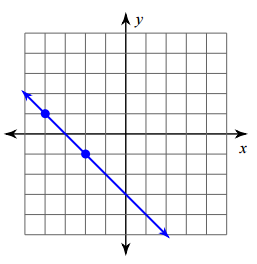
(6,7) and (4,2)
(2, 4) and (6, 12)
(10, 1) and (5, 2)

What is the slope represented in the table?
slope: 21
slope: 2
slope: −21
slope: −2
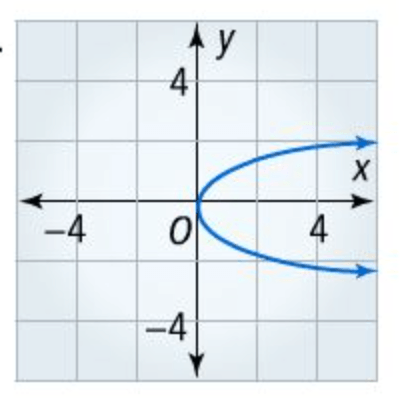

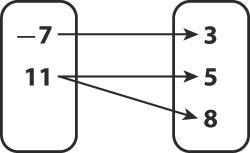
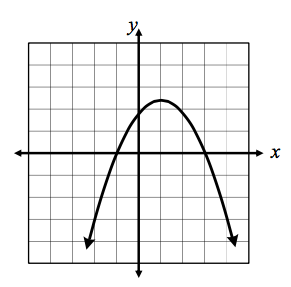
R: {0, 1, 2, -4}
R:{1, -3, -4}
R:{1, -3, -4}


