
NEW
Font size
 Worksheets
2025-Earth Space S1-60 Questions p1
Total questions: 60
Worksheet time: 1hrs 28mins

The original source of energy for a food web is...
sun
plants

What is a herbivore?
an animal that gets energy from eating other animals
an organism that gets energy from eating only plants

Photosynthesis is important because...
it makes food for the food webs
it makes carbon dioxide
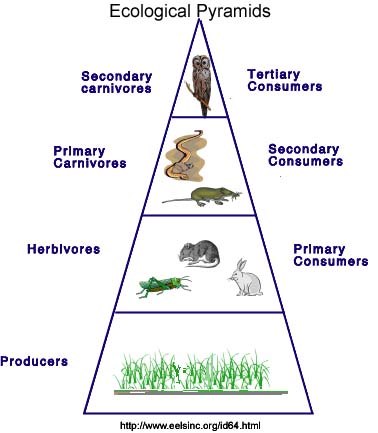
The largest group of organisms found in a food web would be:
Primary Consumers
Producers

List the physical plates from outermost layers to the innermost layers.
Crust, mantle, asthenosphere, outer core, inner core
Lithosphere, asthenosphere, mesosphere, outer core, inner core

Cattle egrets forage (feed) in fields among cattle. The egret gets easy access to flying insects stirred up by the cattle, and the cattle don't care if they are there or not.
competition
commensalism

This is any variation that makes an organism better suited to its environment.
Evolution
Adaptation

The role an organism plays in its ecosystem
function
niche

When an organism copies a characteristic of something else in order to better its chances for survival and reproduction
hibernation
mimicry

Which of the following shows the symbiotic relationship between the Rodent and the Bird?
Competition
Mutualism
What is a Geologic Process?
Something that occurs naturally and changes Earth's surface
Something that only happens to geodes
What does climate mean?
is the broad long term patterns (average) of weather in a region
day to day regions on earth

Which of the following best describes a relationship in the food web?
The mouse is a producer because it consumes the green plant.
The wild cat is a secondary consumer because it consumes the rabbit.

What is a producer?
an organisms that uses sunlight to make its own food
an organism that gets energy from eating dead organisms, non-living material or waste

A volcano is an opening in the Earth's crust that allows hot lava to escape from underground.
True
False

The huge pieces of the earth's crust are called ____________________________.
plates
directions

parasites, disease, predators, are examples of what type of limiting factors?
density independent
density dependent

When a population grows past the ecosystem's carrying capacity, what happens to the population?
The population starts to die off to return to carrying capcity
Continues to grow

After a forest fire, an ecosystem would start regrowth through -
limiting factors
secondary succession

This is the process that forms a new ecosystem where no organisms lived before.
competition
primary succession

Who is the prey?
Bear
Salmon

Noah and Aria love checking the forecast to see if they need an umbrella or sunglasses. What is it that changes every day?
weather
latitude

Mason, William, and Evelyn are on a globe-trotting adventure! They notice that the temperature and weather patterns change as they move closer or farther from the equator. What is this change mostly related to?
Weather
Climate

Which layer of the atmosphere contain all the weather?
Thermosphere
Troposphere

Which of these BEST describes the atmosphere?
a blanket of air that surrounds Earth
all of Earth's water

This cycle shows the way water evaporates from Earth’s surface into the air, condenses, and falls back to the surface as precipitation.
What is this cycle called?
A. the water cycle
B. the weather cycle
C. the precipitation cycle

This diagram shoes three important processes in the water cycle, What does number 1 show?
Evaporation
condensation
precipitation
This diagram shoes three important processes in the water cycle, What does number 2 show?
Evaporation
condensation
precipitation
What does it mean to adapt?
To stay the same
To move environments
To change in order to survive
To stay the same in order to survive

fish swimming in schools
physical adaptation
behavioral adaptation

Long Limbs
physical adaptation
behavioral adaptation

Fur Color
Physical Adaptation
Behavioral Adaptation


When convergent plates collide, if both plates are pushed upward, this forms.
Fissures
Mountain Ranges
Volcanoes
Rock Cycle

The arrows in the mantle are showing _________ which move the Earth's plates.
(click on the image to enlarge)
continental drift
convection currents
radioactive decay
conduction

Primary Consumer
Most likely an herbivore
Must find its own food
Most likely eats meat “ONLY”
Creates its own food through photosynthesis
Most likely an omnivore

Parasitism
A. Both organism’s benefits
B. This is the maximum number of organisms that can be supported by an ecosystem
C. Non-Living parts of the environment
D. Things that can grow a population or the lack thereof, can destroy a population.
One organism benefits and the other is harmed


Which letter shows exponential growth happening?
A
B
C
D


behaviors that come from watching other animals or through experience
hibernation
migration
instinct
learned behavior


The teeth in this picture are from an animal that would most likely eat
grass
insects
fruit
fish


Volcanoes
Meteorology
Astronomy
Geology
Oceanography
Pseudoscience

Waves
Meteorology
Astronomy
Geology
Oceanography
Pseudoscience

Thunderstorms
Meteorology
Astronomy
Geology
Oceanography
Pseudoscience

Bigfoot
Geology
Meteorology
Astronomy
Oceanography
Pseudoscience


What are climate factors?
Latitude/Elevation
All of the Above
Wind/Ocean Currents
Surface features (Landforms)


factor trees

What could happen to this food web if all the plants were eliminated?
only fungi would survive
the food web would collapse
birds and nematodes will increase
the food web would produce more decomposers

