
 Worksheets
12-16 Physical/Chemical Change Test
Total questions: 49
Worksheet time: 25mins
Name
Class
Date
1.
What is the boiling point?
a)
The temperature at which a liquid turns into a gas
b)
The temperature at which a solid turns into a liquid
c)
The temperature at which a gas turns into a liquid
2.
Does water have mass?
a)
Yes
b)
No
3.
Does air take up space (have volume)?
a)
Yes
b)
No
4.
Mass measures the amount of _______ in a substance or an object.
a)
gravity
b)
space
c)
matter
5.
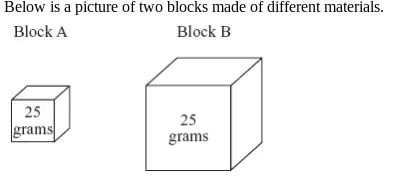
Below is a picture of two blocks made of different materials.If Block A is located on the Moon and Block B is located on Earth, which of the following is true about the two blocks?
a)
They have the same volume.
b)
They have the same weight.
c)
They have the same mass.
6.
The melting point of a substance is the temperature at which:
a)
A liquid becomes a gas
b)
A solid becomes a liquid
c)
A liquid becomes a solid
d)
A gas becomes a solid
7.
Why do helium balloons float upward?
a)
Because they are filled with hot air
b)
Because helium is more dense than air
c)
Because helium is less dense than air
8.
Which property describes how much mass is contained in a specific volume?
a)
Density
b)
Weight
c)
Mass
9.
Why can't you store a fixed amount of gas in an open container like a glass?
a)
They do not have a fixed volume and will expand
b)
They require pressure
c)
They have fixed volume
10.
This flows easily, assumes the shape of its container, and particles can slide past one another with little free space between particles.
a)
Solid
b)
Liquid
c)
Gas
11.
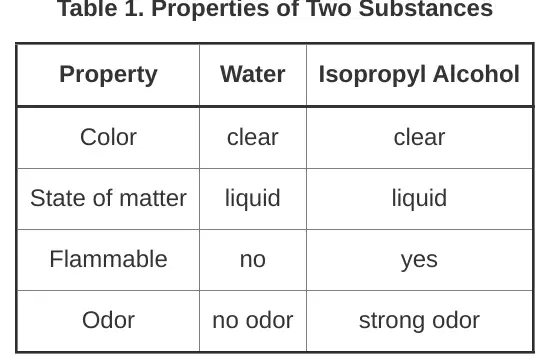
Two beakers contain clear liquids. One beaker contains water, and the other contains isopropyl alcohol (rubbing alcohol). Table 1 lists information about the properties of both substances.
A physical property that scientists could use to identify which beaker contains isopropyl alcohol and which contains water is ___________
Complete the sentences by choosing the correct answer
a)
color
b)
odor
c)
flammability
d)
state of matter
12.
When magnesium ribbon is placed in hydrochloric acid, magnesium chloride forms, and hydrogen gas is released.
The test tube's temperature changes slightly, and gas bubbles fizz. The magnesium ribbon then dissolves into water.
What type of change is being shown?
a)
Physical
b)
Chemical
c)
Chemist
13.
A change in matter that results in a material changing from one state to another without any change in chemical properties. Example: solid ice changes to liquid water.
a)
compound
b)
physical change
c)
chemical change
d)
element
14.
Signs that a chemical change has occurred include
a)
a change in color.
b)
the release of bubbles.
c)
the production of an odor.
d)
all of the above
15.
In making a pizza, which process involves a chemical change?
a)
mixing spices for the sauce
b)
adding pepperoni to the pizza
c)
spreading cheese on the pizza
d)
baking the dough to form the crust
16.
All of the following are chemical changes except
a)
iron rusting.
b)
ice cubes melting.
c)
pennies tarnishing.
d)
food spoiling.
17.
This has a fixed volume and shape, the particles are packed close together
a)
Solid
b)
Liquid
c)
Gas
18.
This assumes the shape of its container and particles can slide past each other
a)
Solid
b)
Liquid
c)
Gas
19.
Which of the following is an example of physical change?
a)
Paper being cut into different sizes and shapes
b)
Ice melting
c)
Liquid water evaporating
d)
all of the above
20.
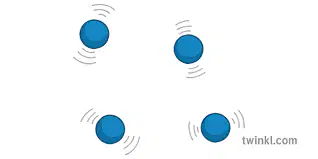
The particles below represent:
a)
Solid
b)
Liquid
c)
Gas
21.
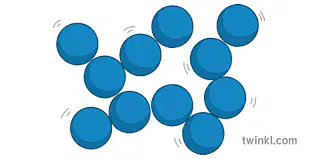
The particles below represent:
a)
Solid
b)
Liquid
c)
Gas
22.
What will blue litmus paper do if dipped into a substance with a pH of 4?
a)
turn red
b)
turn green
c)
turn orange
d)
stay blue
23.
What will red litmus paper do if dipped into a substance with a pH of 2?
a)
stay red
b)
turn green
c)
turn orange
d)
stay blue
24.
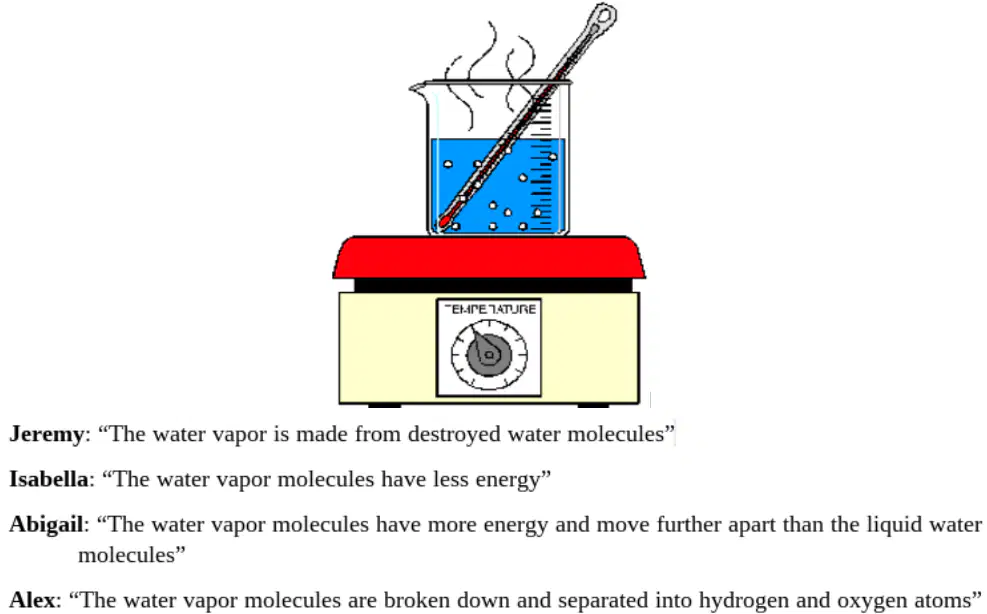
A beaker of water (H₂O) is sitting on a hot plate in the front of the science classroom, pictured below. After several minutes, the students observe the water begin to boil and water vapor appears from the top of the beaker.
Students are asked to observe the following experiment and explain what is happening.
Which of the students do you agree with most?
a)
Jeremy
b)
Isabella
c)
Abigail
d)
Alex
25.
What is the pH of pure water?
a)
6
b)
7
c)
10
d)
2
26.
How do you detect if a substance is an acid?
a)
Drink the liquid
b)
Smell the liquid
c)
Use an indicator
d)
Feel the liquid
27.
Red litmus paper turns blue when exposed to:
a)
a. Water
b)
b. An acid
c)
c. A base
d)
d. Both acids and bases
28.
What happens to blue litmus paper in an acidic solution?
a)
a. Stays blue
b)
b. Turns red
c)
c. Turns green
d)
d. Turns black
29.
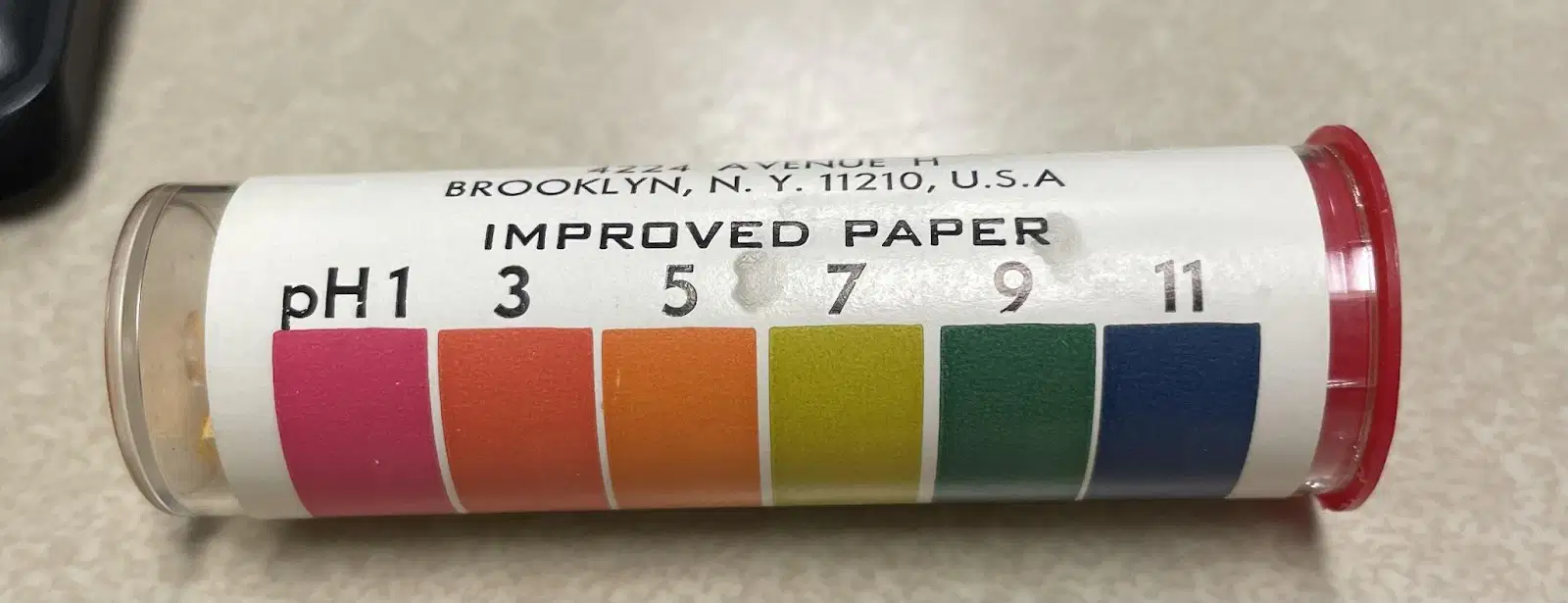
A universal indicator, pH paper, shows which color for a strong base.
Use the image below to match the pH
a)
a. Orange (5)
b)
b. Yellow (7)
c)
c. Pink (1)
d)
d. Blue (11)
30.
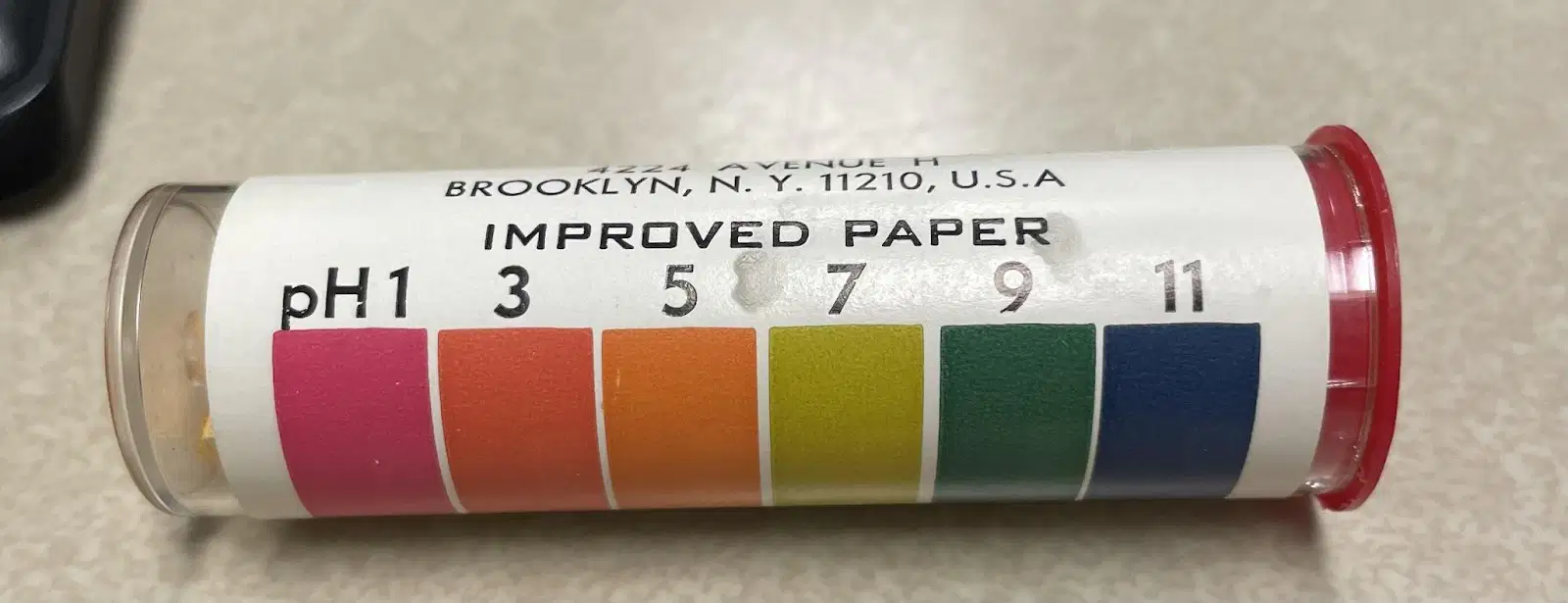
A universal indicator, pH paper, shows which color for a strong Acid.
Use the image below to match the pH
a)
a.Green (9)
b)
b. Yellow (7)
c)
c. Pink (1)
d)
d. Blue (11)
31.
On the pH scale, where can you find bases?
a)
7.1-10
b)
0- 6.9
c)
7.1-14
32.
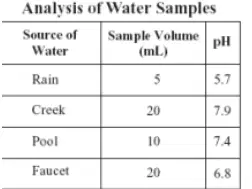
The table contains data for water samples from four sources. Nancy analyzed water samples from several sources: rainfall, a nearby creek, a swimming pool, and her kitchen faucet. She recorded her data in the table. Which sample was most acidic?
a)
Rain
b)
Pool
c)
Creek
d)
Kitchen Faucet
33.
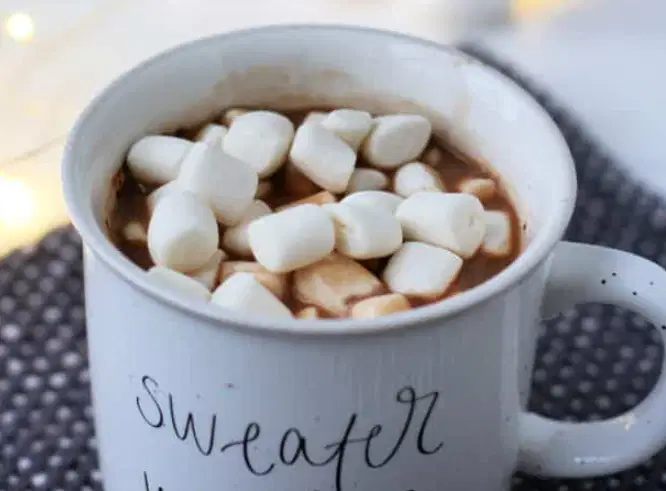
The marshmallows float in the hot chocolate pictured below, are the marshmallows more or less dense than the hot chocolate?
a)
More dense
b)
Less dense
34.
Diane draws a picture on a piece of paper and then folds it into a paper airplane. She throws it at her little brother, He responds by ripping up the paper. Which of the following is an example of a physical change?
a)
ripping up the paper
b)
folding the paper into an airplane
c)
drawing on the paper
d)
all of these
35.
A solid brown metal is added to a clear acidic solution. A white powder appears and the acid solution becomes cloudy and bubbles are produced. Which type(s) of change have/has occurred?
a)
both chemical and physical
b)
only physical
c)
only chemical
36.
Two solutions are added together and the new solution becomes hot, the temperature increases, bubbles are produced and Hydrogen gas is given off. This tells you that
a)
the solutions have remained the same substances.
b)
the solutions are not soluble.
c)
the physical properties are the same.
d)
a chemical change is taking place.
37.
How do molecules move if energy is being removed from a substance?
a)
Slow
b)
Fast
c)
Medium
d)
They don't move
38.
Two substances were combined and immediately a gas was produced. What type of change is happening?
a)
chemical
b)
physical
c)
accidental
d)
electrical
39.
Properties that do not involve changing the atoms and molecules of the substance are ___________.
a)
Chemical
b)
Physical
c)
Soluble
d)
Energetic
40.
Which of the following is an example of a chemical property?
a)
Boiling point
b)
Density
c)
Reactivity with oxygen
d)
Solubility in water
41.
Physical properties can be ___________.
a)
Observed and measured
b)
Observed but not measured
c)
Measured but not observed.
42.
What property is defined as the amount of mass within a given amount of volume?
a)
Weight
b)
Solubility
c)
Temperature
d)
Density
43.
When ice is melting into a liquid, energy is __________________
a)
Absorbed
b)
Released
44.
When water freezes, energy is ___________________
a)
Absorbed
b)
Released
45.
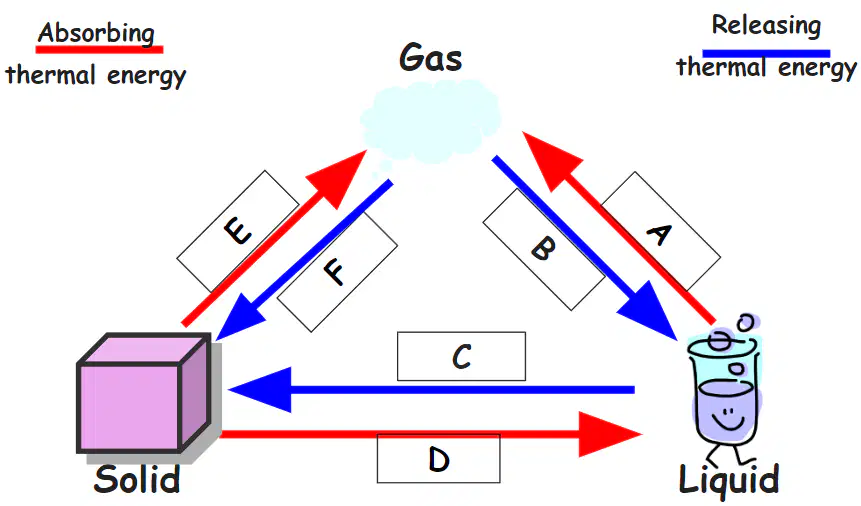
What words describes the process for letter "A"
a)
Freezing
b)
Sublimation
c)
Vaporization
d)
Liquid
46.

Calculate the density of the following Unknown Sample D: mass = 36g mass, volume = 51cm3
Use this calculated Density to determine what the substance is made of.
a)
Mahogony
b)
Aluminum
c)
Tin
d)
Platinum
e)
Oak
47.
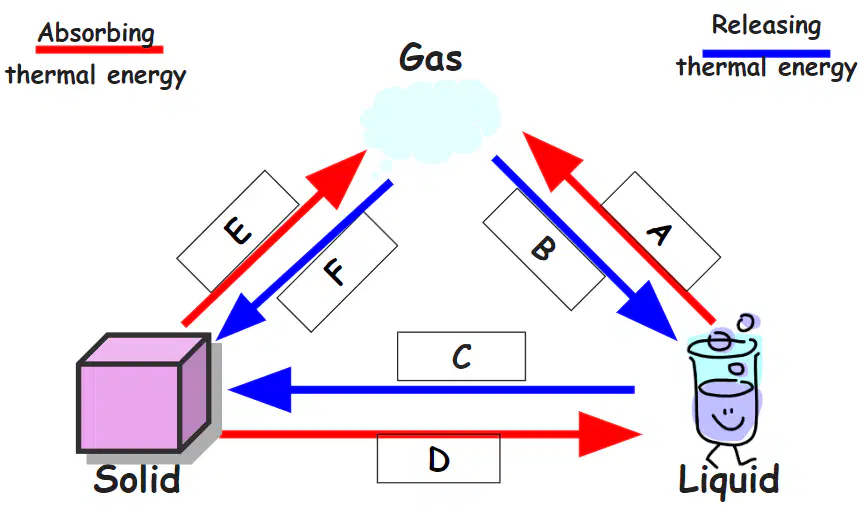
What words describes the process for letter "F"
a)
Sublimation
b)
Deposition
c)
Gas
d)
Boiling
48.
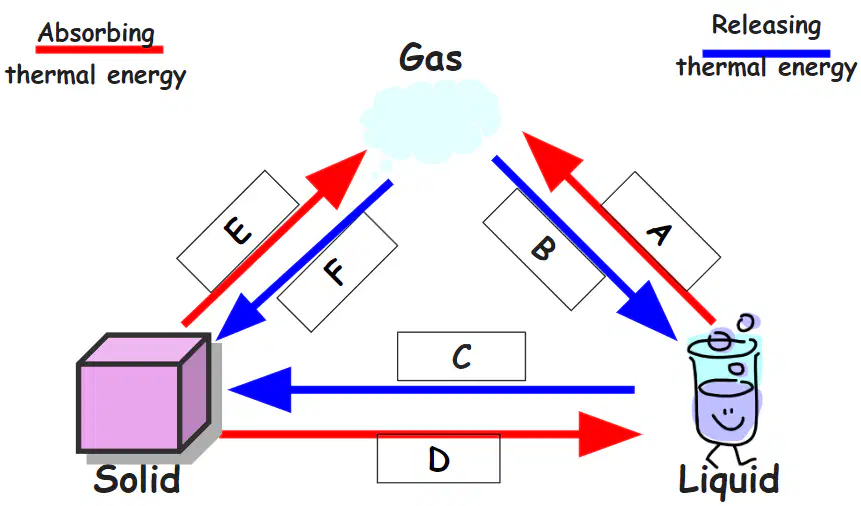
What words describes the process for letter "B"
a)
Sublimation
b)
Deposition
c)
Condensation
d)
Vaporization/ evaporation
49.
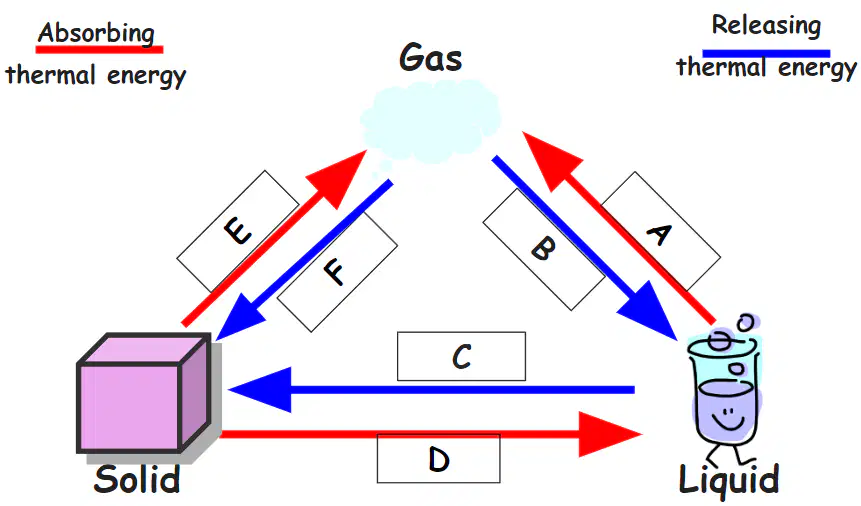
What words describes the process for letter "C"
a)
Sublimation
b)
Melting
c)
Freezing
d)
Solidification
100 %

