
 Worksheets
Semester Exam Review
Total questions: 80
Worksheet time: 1hrs 6mins


Based on the theory of island biogeography, which of the following is the most likely reason that an island in the ocean that is 5 kilometers from a continent would have a higher number of species than one that is 15 kilometers from a continent?
There are more species that have the ability to travel 5 kilometers than can travel 15 kilometers.
Islands that are closer to continents always have a wider range of habitats than more distant islands do.
There are smaller populations of each species on islands that are at greater distances from continents.
Islands that are closer to continents always have more ecological niches than more distant islands do.
The four types of ecosystem services are
Provisioning, regulating, cultural, moderating
Provisioning, regulating, supervision, intervention
Regulating, provisioning, supporting, cultural
Regulating, provisioning, moderating, reoccurring
What prediction is correct about island biogeography?
Smaller islands have more resources, and will have more biodiversity
Larger islands have more space for resources, but will have less biodiversity due to competition
Islands closer to mainland will be more diverse due to more successful dispersal.
There is more diversity far away from the mainland because some species fly.
A reduction in the genetic diversity of a population caused by a reduction in its size.
genetic drift
gene flow
bottleneck effect
founder effect
The concentration of carbon dioxide in the atmosphere
is increasing in part due to fossil fuel use.
has not significantly changed in the past 200 years.
is increasing in part due to deforestation.
has been decreasing since the 1800’s.
can not be reliably measured
a species that is critical to the success of an ecosystem
predator species
parasitism
carrying capacity
keystone species
the number of different types of species in an ecosystem
richness
evenness
hot spot
biodiversity
the stability of an ecosystem depends on 2 factors
natural and human-caused disturbances
weather and climate
ecosystem resilience and resistance
independent and dependent variables
first time establishment and development of life in an area that previously had 0 species
primary succession
secondary succession
finale succession
regrowth of species from the soil after a disturbance
primary succession
secondary succession
finale succession
keystone species
The theory of island biogeography suggests that species richness is affected by which of the following factors?
I. island distance from mainland
II. how the island is formed
III. island size
II only
III only
I and III
II and III
Obtaining lumber from a forest would be considered what type of ecosystem service?
Provisioning
Regulating
Supporting
Cultural
What adaptation makes the most sense for living in a cold snowy area?
gills
colorful wings
white fur
striped skin
A role played by an organism in an ecosystem is known at its
Niche
Job
Role
Duty
Carrying Capacity
The maximum population size that an environment can sustain indefinitely without being degraded.
The total number of species that can coexist in a habitat.
The number of individuals that can be supported by a specific resource.
The average population size over a given time period.
Density-Dependent factors
Factors that affect a population regardless of its size, such as natural disasters.
Factors that affect a population depending on its size, including food availability, predation, parasitism, and disease.
Factors that only affect small populations, like genetic drift.
Factors that are influenced by the climate and weather patterns.
Density-Independent factors
Factors that affect all populations similarly regardless of population size.
Factors that only affect large populations.
Factors that are dependent on the population size.
Factors that affect only small populations.
Type III survivorship
A pattern of survival where there is low survivorship early in life, with few individuals reaching adulthood.
A survival pattern where most individuals survive to old age.
A type of survivorship where individuals have equal chances of survival at all ages.
A pattern of survival characterized by high mortality rates in adulthood.
Generalists
Species that have a wide range of dietary options and a relatively large area of habitat.
Species that have a very specific diet and habitat requirements.
Species that are exclusively carnivorous and require large territories.
Species that can only thrive in aquatic environments.
Type I survivorship
A pattern of survival that tracks organisms with low death rates and high survivorship rates early in life, with a dramatic increase in death rate toward the end of their life expectancy.
A survival pattern where organisms have high mortality rates early in life and low mortality rates as they age.
A type of survivorship where organisms have equal chances of dying at any age throughout their life.
A pattern of survival characterized by high death rates in the early stages of life and low death rates in adulthood.
r-selected species
Species that produce many offspring with little parental care, leading to lower survival rates.
Species that produce few offspring with high parental care, leading to higher survival rates.
Species that have a stable population size and invest equally in all offspring.
Species that migrate seasonally to find better breeding grounds.
Invasive species
Species that are native to a specific habitat
Non-native species that spread widely in a new habitat and can cause harm to native species and ecosystems.
Species that are endangered and require protection
Species that are beneficial to the ecosystem
K-selected species
Species that produce many offspring with little parental investment.
Species that produce fewer offspring but invest more resources in raising them, leading to higher survival rates.
Species that are highly adaptable to changing environments.
Species that have a short lifespan and reproduce quickly.
What growth model has an J-shaped curve?
Logistic
Exponential
What growth model has an S-shaped curve?
Logistic
Exponential

What growth rate does this population pyramid represent?
Rapid Growth
Slow Growth
Negative Growth
Zero Growth
Lower birth rate
More developed
Less developed

Is this country Developed or Developing?
Developed
Developing

Click density dependent factor(s).
competition for resources
predator-prey relationships
parasitism and disease
weather
Click density independent factor(s).
competition for resources
predator-prey relationships
parasitism and disease
weather, natural disaster and man made disturbances

In Stage 1, the birth rate is...
High
Falling
Low
Total Fertility Rate
The average number of children born to a woman during her reproductive years.
The total number of children born in a year per 1,000 women of childbearing age.
The number of children born to an average woman in a population during her entire reproductive life.
The number of children a couple plans to have in their lifetime.

What type of plate boundary is shown here?
Convergent
Subduction
Divergent
Transform

What type of plate boundary is shown here?
Convergent
Subduction
Divergent
Transform
Which soil particle is largest in diameter?
Clay
Silt
Sand
Loam
In which layer of the atmosphere does weather take place?
Troposphere
Stratosphere
Mesosphere
Thermosphere
Exosphere
Which layer of the atmosphere contains the ozone layer?
Troposphere
Stratosphere
Mesosphere
Thermosphere
Exosphere
Which wind system is closest to the equator?
Doldrums
Westerlies
Polar easterlies
Trade winds
As altitude increases, what happens to temperature?
Temperature increases
Temperature decreases
Temperature does not change with altitude
Which gas is there the most of in the atmosphere?
Oxygen
Nitrogen
Water vapor
Carbon dioxide
Which of the following items has the highest albedo?
Asphalt
Grass
Rooftops
Snow
Why does the Earth have seasons?
Tilt of the Earth on its axis
Earth's shape
Earth's rotation around the Sun
Earth's rotation on its own axis

I. variation in the angle of sunlight that reaches Earth
II. variation in the amount of surface area over which the Sun's rays are distributed
III. variation in the amount of sunlight reflected from clouds

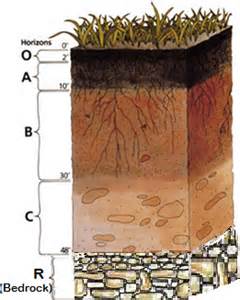
The rate at which water flows through the soil is called soil percolation or ______.
Groundwater
Permeability
Soil Pores
Porosity

During a(n) ____ event, trade winds are much stronger than usual.
El Nino
La Nina
Normal
Partly sunny
Which of the following best characterizes the air that deposits at the surface of the Earth 30 degrees north and south of the equator by Hadley Cells?
cool, moist air deposits here, which is why taiga biomes are often found here
cool, dry air deposits here, which why tundra biomes are often found here
warm, moist air deposits here, which is why tropical rain forests are often found here
warm dry air deposits here, which is why desert biomes are often found here

What are the proportions of sand, silt, and clay for the soil at point X ?
5% Sand, 95% Silt, 5% Clay
5% Sand, 20% Silt, 5% Clay
65% Sand, 30% Silt, 10% Clay
60% Sand, 30% Silt, 10% Clay
What is the overall direction of global air currents at the equator?
Air rises at the equator
Air sinks at the equator
Air moves horizontally to the north at the equator
Air moves horizontally to the south at the equator
Air is relatively stable at the equator.

In the diagram above, at what locations is water sinking?
I. 1
II. 2
III. 4
I only
II only
III only
II and III
I and II
Which of the following is the most effective form of irrigation?
Spray Irrigation
Drip Irrigation
Flood Irrigation
Furrow Irrigation
A downside to monocropping is?
It makes harvesting more efficient
it leaves soil vulnerable to erosion
It can lead to desertification
it leaves crops susceptible to disease
Aquaculture aims to address what issue?
Eutrohpication
demand for more seafood based protein
Depletion of world fisheries due to overfishing
CAFOs
GMOs are leading to loss of original/ native plants because of cross breeding effecting genetic diversity
true
false
Use of this method of control requires concentrations to be increased often because pest develop resistance
GMOs
Pestsides
plant removal
control burning
The Green Revolution was
a dramatic increase in crop yields in developing countries
change to more sustainable agriculture
way of fighting soil erosion
power grab by the Green party in the 1980s
Which type of fishing has high rates of bycatch and highly destructive of benthic communities.
Pole Fishing
Long Line Fishing
Purse Seining
Trawling
Overgrazing of grasslands can lead to reduced range quality. Two of the major effects of overgrazing are
erosion and desertification
eutrophication and increased methane production
higher fire potential and increased productivity
higher primary productivity and ammonification
Which of the following type of tree harvesting is the most detrimental to the environment?
Strip Cutting
Selective Cutting
Clear Cutting
Partial Harvest
The LEAST efficient method of irrigation in terms of water loss is . . .
Spray
Drip
Furrow
Flood
Compared with people in developing countries, people in industrialized countries are more likely to eat
beans
beef
corn
rice
wheat
Planting a field with different crops from year to year
industrial agriculture
crop rotation
conservation tillage
alley cropping
How does clear-cutting of forests change the water cycle?
there will be an increase in transpiration
there will be an increase in evaporation
there will be a decrease in run-off
there will be a decrease in sedimentation
When irrigation water evaporates, salts are left behind on the soil surface and can cause plant death or lead to
soil salinization
desertification
waterlogging
monocropping
Over use of farmland can cause a depletion in soil nutrients and can lead to
waterlogging
desertification
irrigation
intercropping
When nutrients end up in a body of water, causing growth to explode, it's known as
biomagnification
eutrophication
the pesticide treadmill
runoff
Aquaculture...
is completely unsustainable
is a form of irrigation
is also known as fish farming
creates massive amounts of soil erosion
An agricultural practice used to help increase soil fertility is
methane intrusion
flood irrigation
tilling
salinization

