
 Worksheets
World History I Midterm Assessment
Total questions: 50
Worksheet time: 25mins
In Buddhism, the release from selfishness and pain that comes from complete understanding is known as:
sangha.
dharma.
moksha.
nirvana.
The ethical and moral code of the Hebrews is stated in the
Ten Commandments
Vedas
Eightfold Path
Torah
In Hinduism, the knowledge that all thoughts and actions result in future consequences is known as:
dharma
moksha
nirvana
karma
A system of government in Ancient China where dynastic leadership revolves based on the problems of the dynasty would be referred to as which process?
The Dynastic Cycle
The Electoral Process
The Circle of Life
The Weather Cycle
A Phoenician contribution that people still benefit from today was
the introduction of Indo-Aryan languages to Europe.
the invention of the sail.
the invention of the phonetic alphabet.
the invention of the labyrinth.
The reign of Darius was characterized by—
constant chaos and widespread bloodshed
efficiency and organization
peaceful relations with Greece
the rise of Christianity
The Hebrews’ major contribution to world thinking was
Monotheism: belief in one god
Radical changes in farming technology
Polytheism: belief in many gods
The law should treat everyone equally
The caste system in India was introduced by which group of invaders?
Muslims
Persians
Hittites
Aryans
What was the most significant contribution/invention that helped develop the writing process in Egypt?
Papyrus
Purple dye
Writing utensils
All of the above
Under the caste system, an individual
can advance up the social ladder during this life if he or she works hard
is born into a particular caste based on luck
must live according to the duties of the caste into which he or she is born
may be asked to join a higher caste if he or she pleases people in higher castes
This Hebrew King united the peoples of Israel, built Jerusalem as a capital, and is credited with slaying the giant Goliath. Who was he?
Soloman
David
Abraham
Saul
The Hittites were famous for what achievement(s)?
The ability to smelt iron and organize the first peace treaty between empires
The ability to develop the first alphabet where each symbol represented a sound
The ability to conquer India and subject the people there to a rigid caste system
The ability to construct the great pyramids
How did the geography of Greece affect its development?
the cold weather prevented any agriculture from succeeding
the few natural barrier allowed one strong clan to unite the entire country
the intense heat generally forced most outdoor activities inside
the many mountains and seas caused many city-states to develop
What was the underlying objective that gave rise to the Chinese philosophies of Confucius, Laozi and Legalists?
How to restore family values and relationships among the Chinese people
How to restore social order, harmony, and respect for authority
How to live simply and in harmony with nature and the universal force
How to best apply punishment to ensure a strictly controlled government
The Christian Bible gets its Old Testament from the sacred text of the Jewish faith, known as
The Bible
The Ten Commandments
The Torah
The Upanishads
The event that inspired the composition of the Iliad and the Odyssey was the –
Trojan War
Persian War
Aryan Invasion
Dorian Invasion
Considered to be the founder of Judaism, this man made the first covenant between Yahweh and the Hebrews.
Moses
Abraham
David
Soloman
Sacred texts of Hinduism include
the Bible and the Gospel
the Ahura Mazda and Vishnu
the Four Noble Truths and the Eightfold Path
the Vedas and the Upanishads
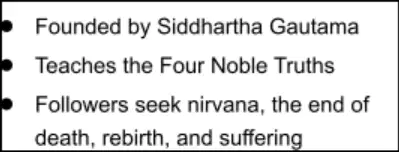
Which of the following religions is described by the above statements?
Hinduism
Confucianism
Judaism
Buddhism
Which hominid was the first to control fire?
Homo Erectus
Homo Habilis
Homo Sapiens
Homo Sapien
Two groups of early humans fall into the category of Homo Sapiens, who are they?
Australopithecus and Homo Erectus
Cro Magnon and Homo Erectus
Neanderthal and Cro Magnon
Homo Erectus and Neanderthal

What form of government was practiced in Sparta?
Monarchy
Aristocracy
Oligarchy
Direct democracy

In which form of government is the state ruled by all citizens?
Monarchy
Aristocracy
Oligarchy
Direct democracy

Which form of government was the earliest in Athens?
Monarchy
Aristocracy
Oligarchy
Direct democracy
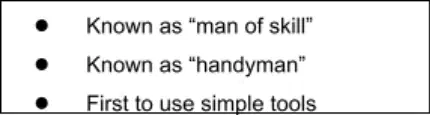
Which hominid would the facts above refer to?
a. Australopithecus
b. Homo Erectus
c. Homo Habilis
d. Homo Sapien
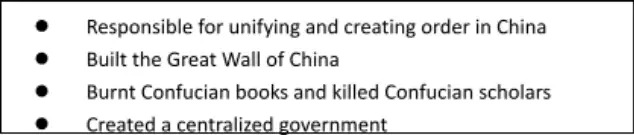
All of the characteristics above were accomplished in China thanks to which leader?
Shi Huangdi
Confucius
Laozi
Nebuchadnezzar
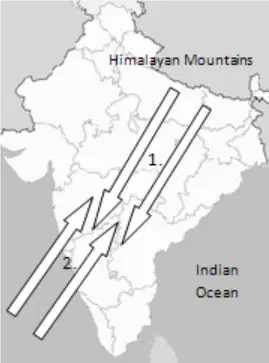
The lines on the map represent which seasonal climate event in India?
Monsoons
Hurricanes
Typhoons
Tornados
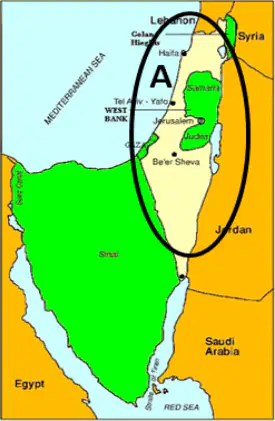
On the map above, the letter A represents the ancient homeland of the Hebrews, also known as
Alexandria
Canaan
Jerusalem
Phoenicia
What mountain pass was used to gain access to the area of the Indus River Valley?
Khyber Pass
Himalayan Pass
Hindu-Kush Pass
Thermopylae Pass
A cataract in geographical terms is?
An eye condition
The uncontrollable flooding of a river
A very thin area of water connecting two larger bodies of water
A waterfall or group of rocks that keeps one from sailing up a river
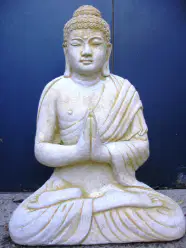
The above picture is most commonly associated with the founder of what major world religion?
Hinduism
Confucianism
Judaism
Buddhism
Saul, David, and Soloman were kings of the
Macedonians
Hebrews
Phoenicians
Babylonian Empire
Which of the following rivers was different in its flooding and why?
The Nile, because it flooded regularly
The Indus, because it was the only river in the Indus River Valley
The Huang He, because it had unpredictable flooding
The Euphrates, because it flowed North
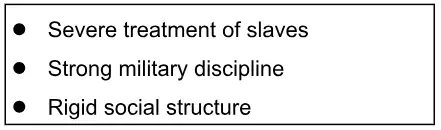
The characteristics listed above describe which city-state?
Corinth
Athens
Sparta
Syracuse
Which of these is not a god from Greek mythology?
Aphrodite
Zeus
Apollo
Ra
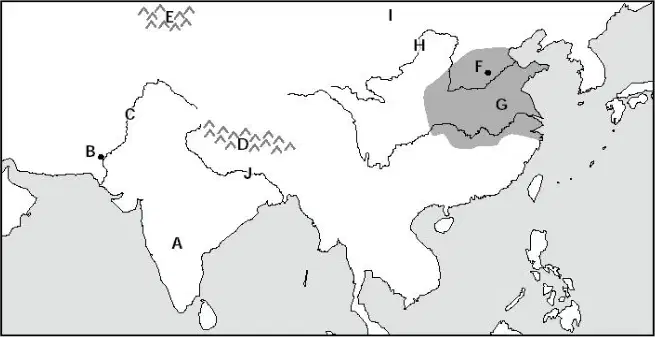
What letter on the map above refers to the Indus River?
Letter F
Letter H
Letter C
Letter J
Which region did Cambyses add to the Persian Empire?
Ur
Odessus
Nineveh
Egypt
The Babylonian responsible for the creation of the world’s first code of law is known as?
Sargon
Nebuchadnezzar
Ramses II
Hammurabi
Which civilization believed that its rulers were god-kings?
Ancient China
Indus Valley Civilization
Ancient Egypt
Mesopotamia
Early humans were nomadic. That means that they
had not yet developed written language
were farmers who used a variety of techniques in cultivating the soil
knew how to control fire
frequently moved from place to place to fulfill basic needs
A Greek city-state is also known as a –
Helot
Agora
Hoplite
Polis
Among the conquerors of the ancient world, what was Cyrus famous for?
Courage
Religious beliefs
Intellectual abilities
Tolerance of diversity
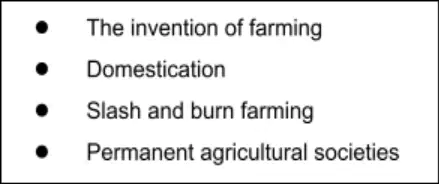
Which age would best be described by the above facts?
Bronze Age
Neolithic Age
Farming Age
Paleolithic Age
What do Daoism and the concept of yin and yang focus on?
Natural order
Virtues of good leadership
Importance of order in society
Differences between men and women
What is the name of the kind of government that Shi Huangdi formed, in which the ruler had unlimited power and used it in an arbitrary manner?
Empire
Autocracy
Dynasty
Bureaucracy
The movement patterns of early humans were mostly determined by
tribal wars
language development
animal migration
religious practices
A child who listens and follows the rules of her parents, but also respects other elders in her life when they give her directions is practicing which of the following words?
Legalism
I Ching
Filial piety
Daoism
Why was the invention of plumbing by the Indus River Valley people so significant to history?
It gave them the first stand up showers
It aided in the creation of the spa complex
First public sewage system; showed incredible city planning
It kept the city from smelling
The main result of the domestication of animals and farming was that humans
were safer during a hunt
were able to hunt more efficiently
could use animals to pull carts and wagons
had a ready supply of food for permanent settlements
Which of the following areas is MISMATCHED to its proper early River Valley Civilization?
Huang-He and Yangtze – Ancient China
Indus and Ganges – Ancient Indus
Tigris and Euphrates - Mesopotamia
Nile and Amazon – Ancient Egypt

