
 Worksheets
Introduction to Process Instrumentation
Total questions: 30
Worksheet time: 15mins
Which of the following topics is covered in my FIRST PART of the lecture?
Instrument Symbology
Identification Letters & Tag Numbering
Piping, Connections & Signal Line Symbology in Instrumentation
Process Diagrams
CO2: Ability to analyze the ISA symbology, identification letters and tag numbering in ______ diagrams.
process
electrical
mechanical
piping

What are ID letters and tag numbers? ID letters and tag numbers are ______ placed within or in close proximity to the instrument.
letters and numbers
symbols and codes
colors and shapes
labels and stickers

In the diagram, what does 'TRC 206' stand for?
Temperature Indicator
Temperature Recording Controller
Temperature Transmitter
Flow Control Valve

In the diagram, the component labeled 'FCV 206' is marked with 'Who knows?'. Fill in the blank: FCV stands for _________.
Flow Control Valve
Fuel Control Valve
Filter Control Valve
Fan Control Valve
What does the abbreviation 'PIC' stand for?
Pressure Indicating Controller
Process Instrumentation Control
Power Input Circuit
Programmable Interface Chip
What does the abbreviation 'PCV' stand for?
Pressure Control Valve
Positive Crankcase Ventilation
Primary Circuit Voltage
Power Control Vehicle
In the instrument tag number format XYY CZZLL, what does 'X' represent?
X represents a process variable to be measured. (T=temperature, F=flow, P=pressure, L=level)
X represents the location of the instrument in the plant.
X represents the manufacturer code of the instrument.
X represents the calibration range of the instrument.
In the instrument tag number format XYY CZZLL, what does 'YY' represent?
YY represents type of instruments
YY represents location of instruments
YY represents manufacturer code
YY represents loop number
In the instrument tag number format XYY CZZLL, what does 'ZZ' designate?
ZZ designates the process unit number
ZZ designates the instrument type
ZZ designates the control loop number
ZZ designates the location code
In the instrument tag number format XYY CZZLL, what does 'LL' designate?
LL designates the loop number
LL designates the location code
LL designates the line number
LL designates the instrument type
What does the symbol 'FI' stand for in instrument symbology?
Flow Indicator
Frequency Indicator
Fuel Injector
Field Instrument
What does the symbol 'FT' stand for in instrument symbology?
Flow Transmitter
Field Terminal
Frequency Tuner
Fault Tester
What does the symbol 'FR' stand for in instrument symbology?
Flow Recorder
Flow Regulator
Frequency Relay
Fuel Reservoir
What does the symbol 'PR' stand for in instrument symbology?
Pressure Recorder
Power Relay
Process Regulator
Pump Rotor
What does the symbol 'I/P' stand for in instrument symbology?
Transducer
Indicator
Pump
Input
What does the symbol 'PRC' stand for in instrument symbology?
Pressure Recording Controller
Process Relay Circuit
Primary Regulator Control
Pump Relay Contact
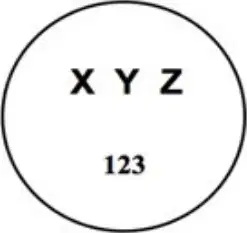
What does the symbol with no line indicate about the location of the physical device?
The device is mounted on the equipment
The device is located above the ceiling
The device is located below the floor
The device is located in a remote area
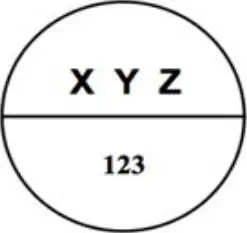
What does the symbol with a solid line indicate about the location of the physical device?
The device is located on the main floor
The device is mounted on the control panel
The device is mounted below the floor
The device is located in a remote area
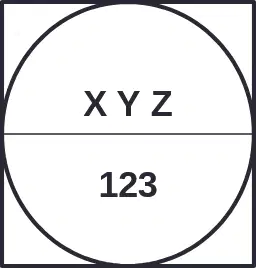
What does the symbol with a circle in a box indicate about the location of the physical device?
The device is located on the main floor
The device is located above the ceiling
The device is located below the floor
The device is located in a remote area
Instruments that are mounted on process plant, such as sensors mounted on pipeline or process equipment, are called ________.
field mounted instruments
control room instruments
portable instruments
laboratory instruments
Fill in the blank: Instruments that are mounted on a control board are called _________.
board mounted instruments
panel lights
control switches
indicator bulbs
Look at the images of the control panels. Are these examples of instruments that are board mounted or mounted on a control board?
Mounted on a control board
Mounted on a wall
Mounted on a desk
Mounted on a ceiling
What does DCS stand for in the context of instrument location?
Distributed Control System
Direct Current Source
Data Collection System
Digital Control Signal
In a distributed control system (DCS), the controller elements are distributed throughout the system rather than being central in location.
True
False
In a Block Flow Diagram, process operations are represented by
Symbols and tags
Detailed equipment sketches
Blocks
Piping networks
What best describes a Block Flow Diagram (BFD)?
A detailed mechanical drawing of equipment
A superficial view of a facility emphasizing process flow
A piping and instrumentation diagram
A layout showing control loops only
How should light and heavy streams be arranged in a Block Flow Diagram?
Light streams at the bottom, heavy streams at the top
Light streams toward the top, heavy streams toward the bottom
Both at the same vertical level
Randomly, depending on process complexity
Which statement best summarizes the philosophy of a Block Flow Diagram?
It explains how the process works in detail
It emphasizes operational control strategies
It conveys what is achieved, not how it is achieved
It replaces detailed process flow diagrams
Flow in a Block Flow Diagram should preferably move from right to left
True
False

