
Font size
 Worksheets
Kitchen Hygiene and Tools Worksheet (Grade 9)
Total questions: 80
Worksheet time: 40mins
You watched the instructor demonstrate proper handwashing techniques. Which option best describes that technique?
Wash thoroughly with soap and water for 20 seconds
Rinse briefly with water for 10 seconds without soap
Use hand sanitizer only instead of soap and water
Wipe hands on an apron if they do not look dirty
Quiz: Why is handwashing important in food preparation?
It removes pathogens that can cause foodborne illness and prevents contamination
It keeps hands from getting dry while working with food
It replaces the need to clean and sanitize surfaces
It shortens cooking time by speeding up ingredient handling
Quiz: When should you wash your hands in a food preparation setting?
Before beginning work and after actions like coughing, sneezing, or using the restroom
Only at the end of the shift after all tasks are complete
Only if your hands look visibly dirty
After putting on gloves so the gloves stay clean
Quiz: Can hand sanitizer replace handwashing in a food preparation setting?
No, it cannot replace washing with soap and water to remove contamination
Yes, sanitizer is always an acceptable substitute for handwashing
Yes, if the sanitizer is at least 60% alcohol, it fully replaces handwashing
Only for handling ready-to-eat foods, not raw foods
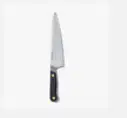
Select the proper name for this knife.
Paring Knife
Boning Knife
Bread Knife
Chef Knife

What type of knife is shown in the image with a serrated blade being held by a hand?
Bread Knife
Chef Knife
Paring Knife
Boning Knife
Select the name for a long-handled bowls used for serving liquids.
Slotted Spoon
Scooper
Ladle
Strainer
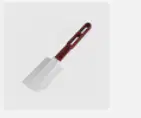
What is the name of this tool?
Bench Scraper
Flipper
Chef Knife
Rubber Spatula
What are the two sizes of sheet pans we have in our kitchen?
1/4 sheet and Full Sheet
Full Sheet and 1/2 Sheet
1/2 Sheet and 1/4 Sheet
1/8 sheet and 1/2 sheet
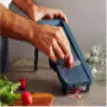
Look at the kitchen tool shown. This is a grater.
True
False
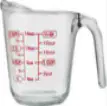
What kind of cup is shown in the image?
Dry measuring cup
Hot measuring cup
Measuring cup
Liquid measuring cup
We have multiple double boilers in our kitchen.
True
False
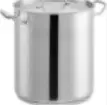
Name the pot shown in the image.
Sauce pot
Big pot
Rondeu pot
Tablespoons are the largest measuring spoons.
True
False

What type of measuring cups are these? Identify the set of nested, handled cups shown in the image.
Scooping Cups
Dry Measuring Cups
Liquid Measuring Cups
Metal Measuring Cups
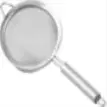
What is this? Identify the tool shown in the image.
Whisk
Microplane
Strainer
Garlic Press

Name this spatula. Identify the type shown in the image.
Metal Spatula
Icing Spatula
Cake Spatula
Offset Spatula

What is this? Identify the tool shown in the image.
Knife Sharpener
Chopping Block
Knife Block
Honing Steel
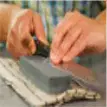
What is this? Identify the tool being used in the image.
Honing Steel
Knife Block
Whetstone
Meat Tenderizer
It is best to sharpen your knife on your cutting board for stability.
True
False
When you are carrying a knife through the kitchen, it is best to move in silence.
True
False
The proper way to carry a knife is point down, blade facing back, and by your side?
True
False
A dull knife is safer than a sharp knife?
True
False
What part of the knife is this?
Heel
Bolster or Shank
Blade
Cutting Edge
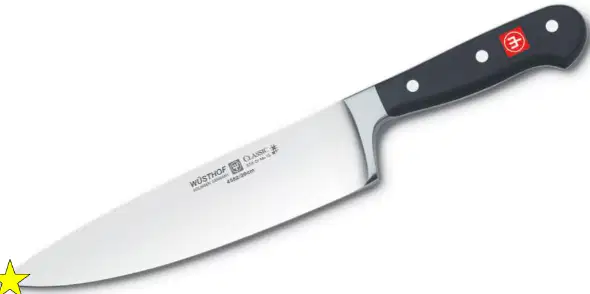
What part of the knife is this?
Point
Tip
Handle
Rivets
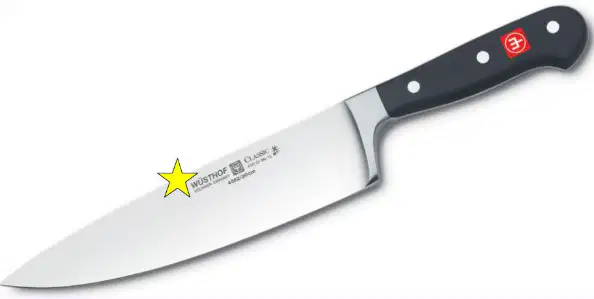
What part of the knife is this?
Spine or Back
Bolster or Shank
Point
Blade
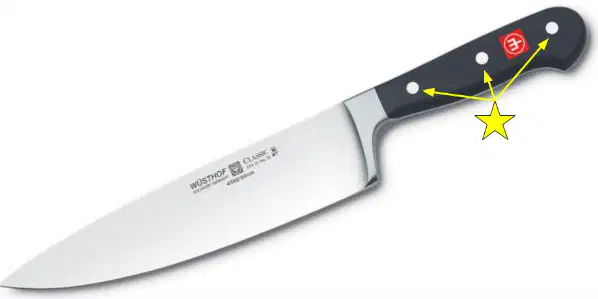
What part of the knife is this?
Rivets
Tang
Handle
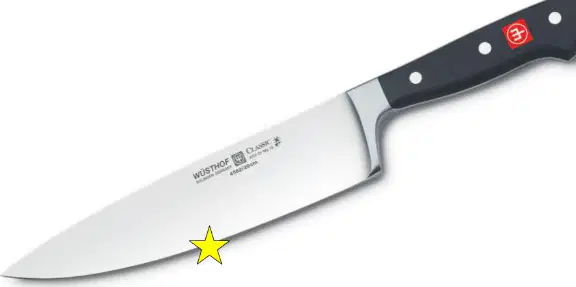
What part of the knife is this?
Cutting Edge
Bolster or Shank
Tang
Back or Spine
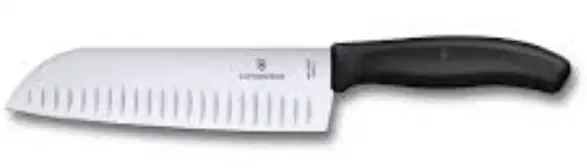
What knife is this?
Chef Knife
Sudoku
Fruit Knife
Butter Knife
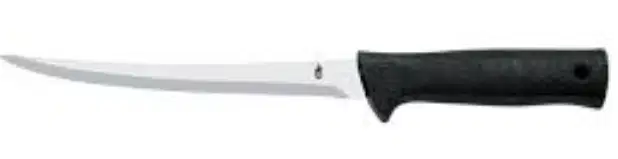
What knife is this?
Boning Knife
Chef Knife
Blade
Pairing Knife
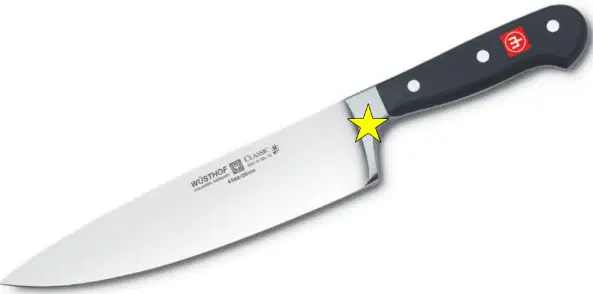
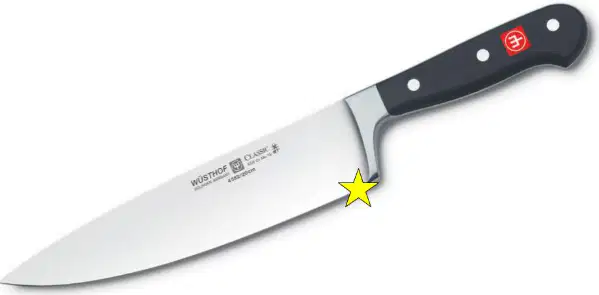
Name the star?
Cutting Edge
Tip
Bolster or Shank
Tang
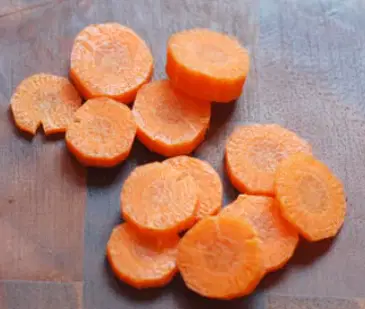
Name the cut
Diagonal
Rondele
Small Dice
Large Dice
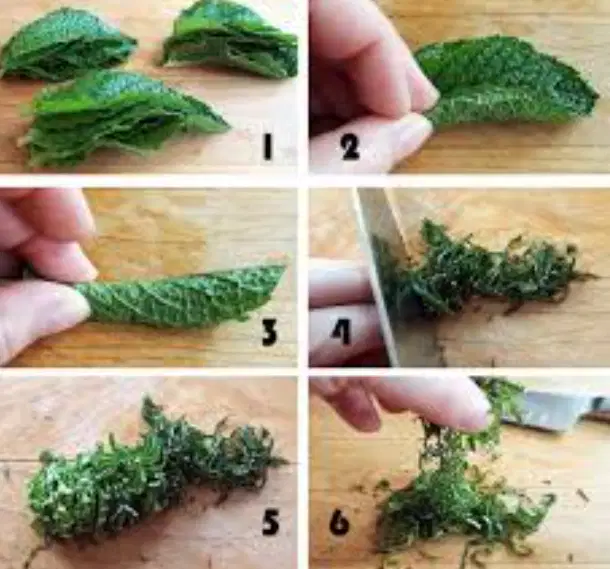
Name the cut?
Mince
Small Dice
Chiffonade
Julienne
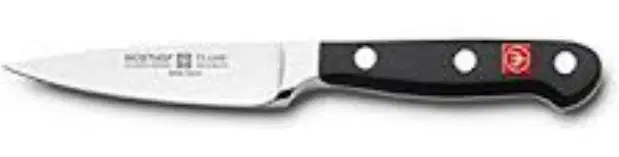
Name the knife
Bread Knife
Fillet Knife
Chef Knife
Pairing Knife
What part of the knife is shown in the close-up image of the handle with a strip of metal running through it?
Cutting Edge
Tip
Spine
Tang
Knife with a flexible blade; used for filleting fish.
Fillet knife
Boning knife
Chef’s knife
Paring knife
What Knife Cut?
Dice
Julienne
Large Chop
Mince

Why does Aria always keep her knives sharp in the kitchen?
To make them look shiny
To reduce the risk of slipping
To make them heavier
To increase their length
Not cutting foods on a cutting board can cause your knife to __________.
become sharper
slip while cutting
Dull/Damage the blade.
Ruin your countertops
If your knife falls to the floor, stand back and
try to catch it
let it fall
Which stick cut has the dimensions of 1/8 x 1/8 x 2?
julienne
batonnet
small dice
brunoise
Which of the following is not one of the Top 8 Food Allergens?
Milk
Soy
Gluten
Food Dye
Shellfish
Which of the following is not one of the Top 8 Food Allergens?
Milk
Soy
Gluten
Food Dye
Shellfish
To keep the kitchen Allergy Friendly, you should always change ______ and wash your hands in between preparing different foods items.
Ingredients
Cooking Utensils
Gloves
Food
True or false: To help keep a kitchen Allergy Friendly you should prepare meals on top of barriers like cutting boards, foil, deli paper, etc.
False
True
Cross Contact
Also known as a food allergy, occurs when an allergen is unintentionally transferred
Also known as foodborne illness, when an allergen is unintentionally transferred
Also known as foodborne illness, when bacteria unintentionally transferred
Also known as a food allergy, when bacteria is unintentionally transferred
Cross Contamination
Also known as a food allergy, occurs when an allergen is unintentionally transferred
Also known as foodborne illness, when an allergen is unintentionally transferred
Also known as foodborne illness, when bacteria unintentionally transferred
Also known as a food allergy, when bacteria is unintentionally transferred
Which of the following Food Allergen does not allow you to consume Wheat?
Gluten
Soy
Peanut
Tree-nut
Which of the following can someone with a Tree-nut allergy not consume? (select all that apply)
almonds
cashews
Walnuts
Pecans
Peanuts
When reading a food label to check for allergens, you should check
The allergen portion of the label
The allergen portion of the label and each ingredient
The nutrition label
The front of the box
True or false: Sometimes foods are not clearly labeled and you have to check each ingredient to ensure it is allergy safe
True
False
Wipe up spills on the floor right away.
UNSAFE
SAFE
Tie back long hair.
UNSAFE
SAFE
Keep cabinet doors open so everything is in easy reach.
UNSAFE
SAFE
When should accidents be reported to the teacher?
if the injury is minor, it doesn't need to be reported
immediately, no matter how small
at the end of class
Your safety is the responsibility of
the teacher
your classmates
You and everyone

In what condition should the work areas should be kept?
As messy as you like - mess equals creativity.
Clean and tidy at all times
Clean and tidy if there is time, if not the next group will clean up.
With all your books, laptops and art materials on them, in case they are needed.
When should you wash your hands?
After taking out the trash
Before and after handling raw meat and poultry
After handling dirty equipment and utensils
After handling money
What is a food borne illness?
A substance in food that does not belong in food and can cause death or illness
Food that contains contaminants
A disease that is caused by eating contaminated food
What is a contaminant?
A disease that is caused by eating contaminated food
A substance in food that does not belong in food and can cause death or illness
Food that contains contaminants
What is a physical contaminant?
An item that accidentally gets into food
A microscopic living substance that accidentally gets into food
A chemical that is toxic or not usually found in the food
What is a biological contaminant?
An item that accidentally gets into food
A chemical that is toxic or not usually found in the food
A microscopic living substance that accidentally gets into food
Which of the following are examples of a physical contaminant?
Fingernails
Cleaning agents
Viruses
Wood splinters
What's the number one way to stop the spread of bacteria?
Hand washing
Taking breaks
Using fresh ingredients
Sanitizing equipment
When should you wash your hands?
Before starting work
After a break
After taking our garbage
All of the above
What's the first step in hand washing?
Wet hands
Clean fingernails
Apply soap
Dry Hands
Where is the best place to cough or sneeze?
On the food.
In your sleeve.
Away from the food.
What should you do (in a professional kitchen) if you are ill?
Wash your hands more often
Use hand sanitizer
Do not work with food.
Take more frequent breaks
Transfer of microorganisms from one food item to another.
cross-contamination
foodborne illness
holding
Physical removal of dirt and food from surfaces.
sanitizing
cleaning

Find one way food becomes unsafe in this drawing.
The kid is vomiting all over the table
The dad is cooking with the pan handle sticking out
The dad is not wearing gloves
The hamburger is out of fridge
Find one way food becomes unsafe.
Not wash his hands after petting the cat
Cooking with the pan handle sticking out
Wearing gloves
There is an extra plate at the table just sitting out
Multiple choice — 30 sec • 1 pt. How easily does norovirus spread?
Only in cold climates
Not contagious at all
Slowly and with difficulty
Very easily and quickly
Multiple choice — 30 sec • 1 pt. What is one way you can contract norovirus?
Accidentally ingesting particles of feces or vomit
Listening to loud music
Using hand sanitizer
Breathing in fresh air
Multiple choice — 30 sec • 1 pt. What is a common way norovirus is spread through food?
Using disposable utensils
A person with norovirus touching food with their bare hands
Cooking food thoroughly
Eating only plant-based foods
Multiple choice — 30 sec • 1 pt. Jaundice is the yellowing of the ________________, ________________ & ________________.
fingers, mucous membranes, eyes
eyes, skin, mucous membranes
eyes, mucous membranes, ears
eyes, tongue, mucous membranes
Multiple choice — 30 sec • 1 pt. Jaundice occurs because bile flows poorly to the liver and back up into the blood.
true.
false.
Multiple choice — 30 sec • 1 pt. Most affected individuals show complete recovery within three to six months of the onset of hepatitis A.
true.
false.
Multiple choice — 30 sec • 1 pt. Hepatitis A spreads from person-to-person. It is not spread almost exclusively through fecal-oral contact, generally from person-to-person, or via contaminated food or water.
true.
false.
Multiple choice — 30 sec • 1 pt. When should hand antiseptics be used?
After washing hands
Before washing hands
When soap is unavailable
When gloves are not being used

