
Font size
 Worksheets
vkl Chapter 1: Computer System
Total questions: 96
Worksheet time: 48mins
What is a computer system?
A device that can only store data
A device that can be programmed to accept data (input), process it and generate result (output) along with additional hardware and software
A device that only processes data
A device that only outputs data
Fill in the blank: The central processing unit (CPU), memory, input/output devices, and storage devices together form a _________.
computer system
network cable
software package
power supply
Which of the following is commonly referred to as the brain of the computer?
Memory
Input Device
Central Processing Unit (CPU)
Output Device

Which component is responsible for performing arithmetic and logical operations?
Control Unit (CU)
Arithmetic Logic Unit (ALU)
Primary Memory
Output Device
Fill in the blank: The electronic circuitry of a computer that carries out the actual processing and is usually referred to as the brain of the computer is called the ________.
Central Processing Unit (CPU)
Random Access Memory (RAM)
Hard Disk Drive (HDD)
Motherboard
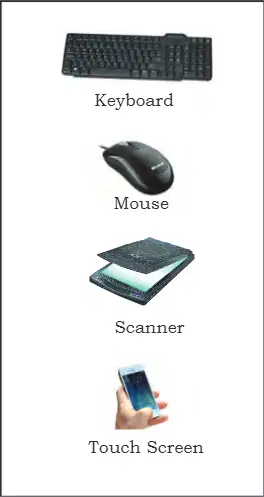
Which of the following is an input device?
Keyboard
Display monitor
Speaker
Printer
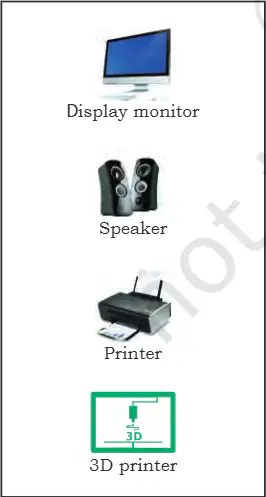
Which of the following is an output device?
Mouse
Scanner
3D printer
Touch screen
The CPU has two main components: Arithmetic Logic Unit (ALU) and ________.
Control Unit (CU)
Memory Unit
Cache
Input Unit
What is the function of the Arithmetic Logic Unit (ALU) in the CPU?
The ALU performs all the arithmetic and logic operations that need to be done as per the instruction in a program.
The ALU manages the storage and retrieval of data from memory.
The ALU controls the input and output devices connected to the computer.
The ALU is responsible for the overall coordination and control of all CPU activities.
Data entered through input devices is permanently stored in the main memory (RAM) of the computer system.
True
False
Which device converts digital information into human-understandable form?
Input device
Output device
CPU
Register
What is the Abacus and what was it used for?
The Abacus is a mechanical device attributed to the invention of almost 3000 years ago, capable of doing simple arithmetic calculations only.
The Abacus is a modern electronic device used for complex scientific calculations.
The Abacus is a type of ancient clock used to measure time.
The Abacus is a musical instrument invented in the 18th century.
Who invented the Pascaline and what was its purpose?
Blaize Pascal invented the Pascaline, a mechanical calculator used to add and subtract two numbers directly and perform multiplication and division through repeated addition and subtraction.
Charles Babbage invented the Pascaline, a device used for storing large amounts of data.
Gottfried Wilhelm Leibniz invented the Pascaline, a machine designed for solving algebraic equations.
Alan Turing invented the Pascaline, a mechanical device used for encrypting messages.

Who invented the Analytical Engine and what was its significance in computing history?
Charles Babbage invented the Analytical Engine, a mechanical computing device for inputting, processing, storing, and displaying the output, considered to form the basis of modern computers.
Ada Lovelace invented the Analytical Engine, a mechanical computing device for inputting, processing, storing, and displaying the output, considered to form the basis of modern computers.
Alan Turing invented the Analytical Engine, a mechanical computing device for inputting, processing, storing, and displaying the output, considered to form the basis of modern computers.
John von Neumann invented the Analytical Engine, a mechanical computing device for inputting, processing, storing, and displaying the output, considered to form the basis of modern computers.
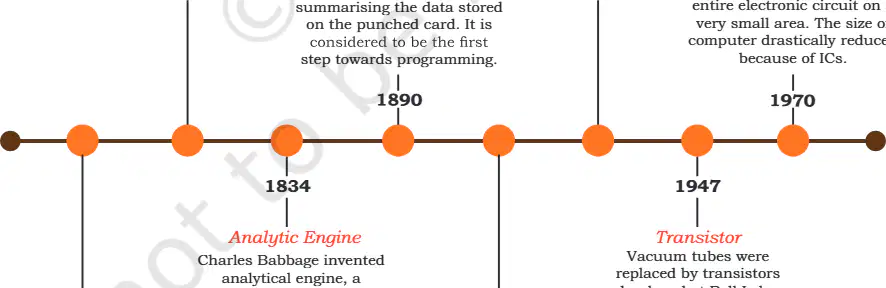
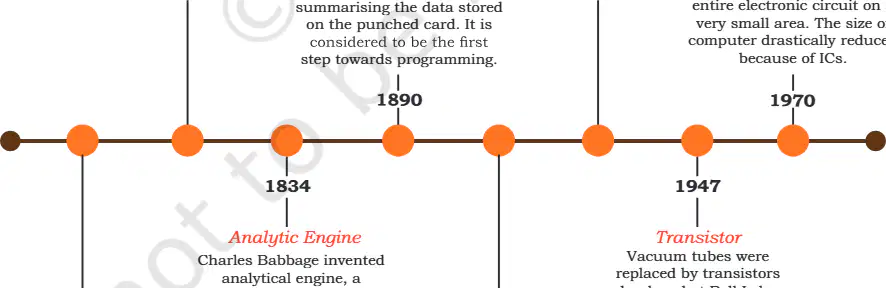
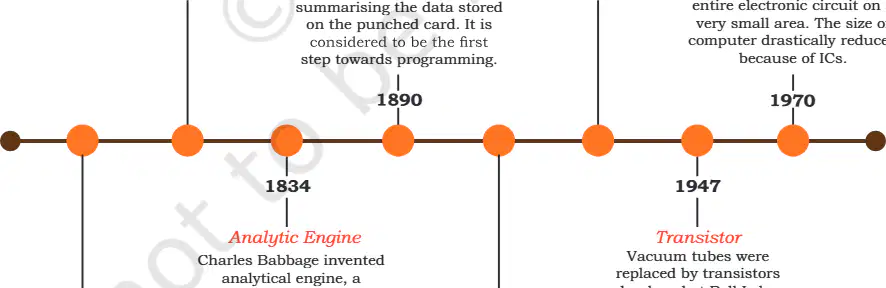
What was the main function of the Tabulating Machine designed by Herman Hollerith?
The Tabulating Machine was designed for summarising the data stored on punched cards and is considered the first step towards programming.
It was used for long-distance communication via telegraph.
It was designed to perform complex mathematical calculations for scientific research.
The main function was to print newspapers automatically.
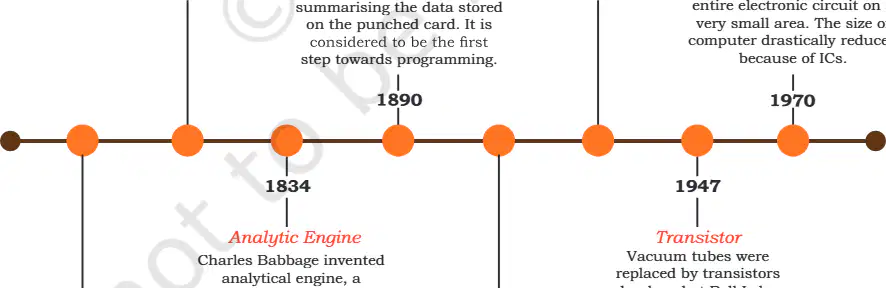
The Turing Machine concept was a general purpose programmable machine that was capable of solving any problem by executing the program stored on the ________.
punched cards
magnetic tape
hard disk
optical disc
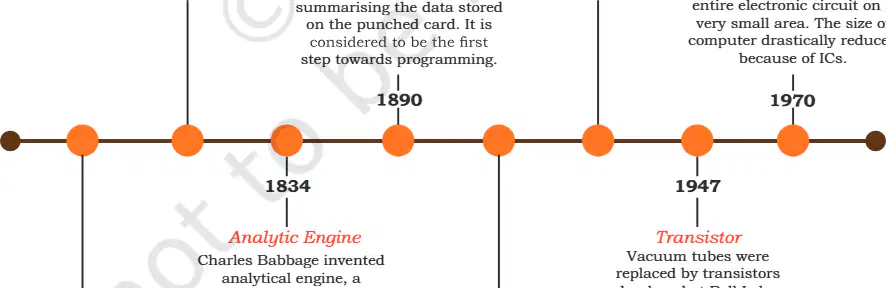
Who introduced the concept of stored program computer and what was it called?
John Von Neumann introduced the concept of stored program computer, which was called EDVAC/ENIAC.
Charles Babbage introduced the concept of stored program computer, which was called Analytical Engine.
Alan Turing introduced the concept of stored program computer, which was called Colossus.
Howard Aiken introduced the concept of stored program computer, which was called Mark I.
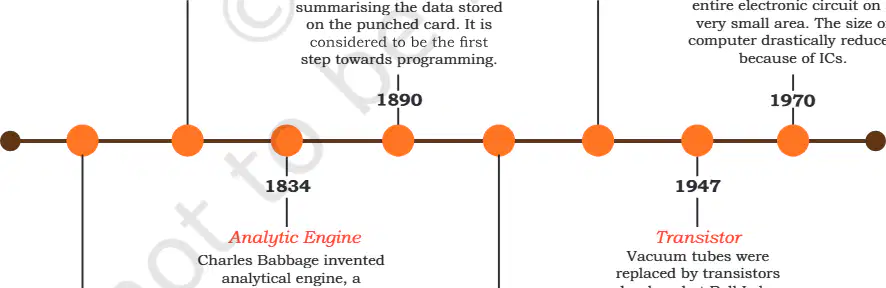
What replaced vacuum tubes in computers in 1947 and what material was used?
Transistors replaced vacuum tubes in computers in 1947, and they were developed using semiconductor materials.
Integrated circuits replaced vacuum tubes in computers in 1947, and they were developed using plastic materials.
Microprocessors replaced vacuum tubes in computers in 1947, and they were developed using metallic materials.
Relays replaced vacuum tubes in computers in 1947, and they were developed using wooden materials.
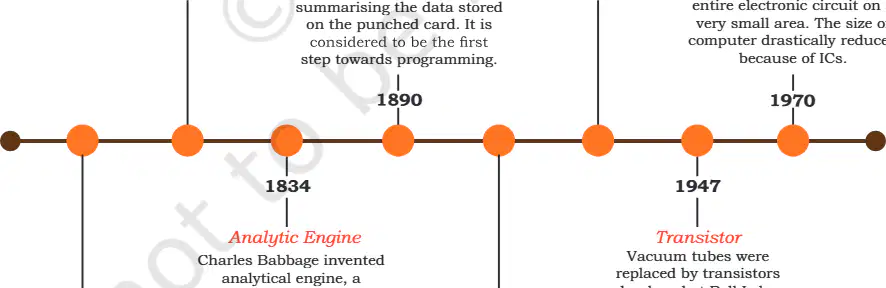
What is an Integrated Circuit (IC) and why was it significant in computer history?
An Integrated Circuit (IC) is a silicon chip which contains an entire electronic circuit on a very small area. The size of computers drastically reduced because of ICs.
An Integrated Circuit (IC) is a mechanical device used to store data. It increased the size of computers.
An Integrated Circuit (IC) is a type of software that controls computer operations. It made computers slower.
An Integrated Circuit (IC) is a large vacuum tube used for calculations. It made computers more expensive.
A punched card is a piece of stiff paper that stores digital data in the form of ______ at predefined positions.
holes
lines
colors
numbers
What is the first binary programmable computer based on Von Neumann architecture?
ENIAC
UNIVAC
IBM PC
Macintosh
Fill in the blank: In 1965, Intel co-founder Gordon Moore introduced Moore’s Law which predicted that the number of transistors on a chip would ______ every two years while the costs would be halved.
double
triple
decrease
remain the same
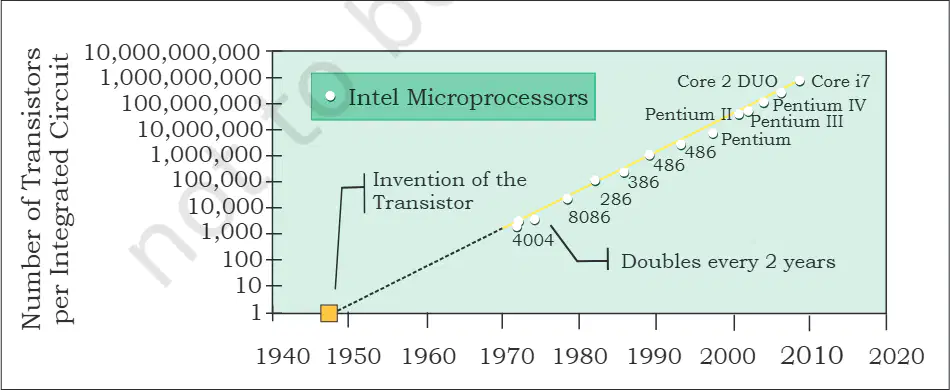
According to Figure 1.6, what trend is observed in the number of transistors per integrated circuit from 1970 to 2020?
The number decreases
The number remains constant
The number increases exponentially
The number increases linearly
Large Scale Integration (LSI) allowed the integration of a complete CPU on a single chip, called a microprocessor.
True
False
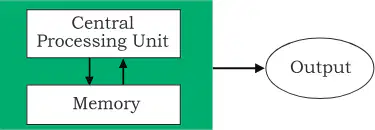
What is the main function of the Central Processing Unit (CPU) in the Von Neumann architecture?
Processing arithmetic and logical instructions
Storing large amounts of data permanently
Transmitting data over a network
Displaying images on the monitor
What is the basic unit of memory in a computer system?
Bit
Byte
Word
Nibble
A 4-bit word is called a ______. Examples are 1001, 1010, 0010, etc.
Nibble
Byte
Bit
Word
A two nibble word, i.e., 8-bit word is called a ______. For example, 01000110, 01111100, 10000001, etc.
Byte
Nibble
Word
Bit
Which of the following is an example of a byte?
1001
01000110
1010
0010

Table 1.1 Measurement units for digital data: 1 KB = ______ Bytes.
1024
1000
512
2048

Table 1.1 Measurement units for digital data: 1 MB = ______ KB.
1024
1000
512
2048

Table 1.1 Measurement units for digital data: 1 GB = ______ MB.
1024
1000
512
2048

Table 1.1 Measurement units for digital data: 1 TB = ______ GB.
1024
1000
2048
512

Table 1.1 Measurement units for digital data: 1 PB = ______ TB.
1024
1000
512
2048
Table 1.1 Measurement units for digital data: 1 EB = ______ PB.
1024
1000
512
2048
Suppose there is a computer with RAM but no secondary storage. Can we install a software on that computer?
No, because secondary storage is required to install software.
Yes, software can be installed using only RAM.
Yes, but only temporary software can be installed.
No, because RAM is not needed for software installation.
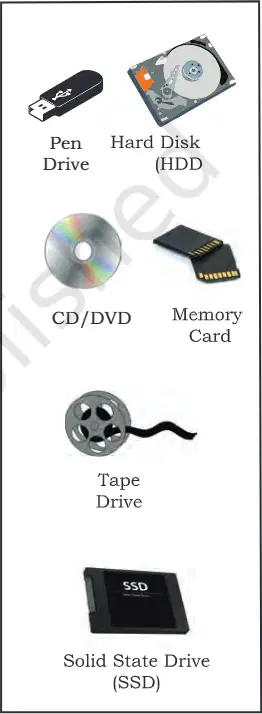
Which of the following is an example of secondary memory? Choose the correct option.
RAM
ROM
Hard Disk Drive (HDD)
Cache
Fill in the blank: Secondary memory is ________ and has a larger storage capacity than primary memory.
non-volatile
volatile
expensive
temporary
Secondary memory can be accessed directly by the CPU.
True
False
What is the main function of a bus in a computer system?
To transfer data between different components of a computer system.
To store data permanently in the computer system.
To perform arithmetic and logical operations.
To display output on the monitor.
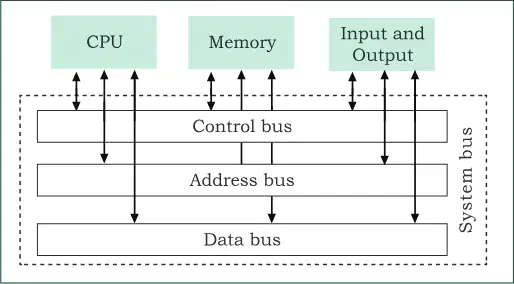
Which bus is responsible for carrying the address of the main memory location from which the CPU wants to read or write data?
Data bus
Address bus
Control bus
System bus
Fill in the blank: The CPU specifies the read or write control signal through the ________ bus.
control
data
address
system
Which of the following statements is TRUE about the data bus?
It is always unidirectional
It is used to transfer control signals
It may be bidirectional
It only connects CPU and memory
A microprocessor is built over an integrated circuit comprising millions of small components like ________, ________, and ________.
resistors, transistors, and diodes
capacitors, inductors, and transformers
relays, switches, and fuses
LEDs, buzzers, and speakers
In earlier days, a computer's CPU used to occupy a large room or multiple cabinets.
True
False
According to Table 1.2, what is the word size of the first generation of microprocessors?
4 / 8 bit
16 bit
32 bit
64 bit

According to Table 1.2, which generation of microprocessors introduced multicore technology?
Fifth generation
First generation
Second generation
Fourth generation

According to Table 1.2, what is the maximum memory size supported by fourth generation microprocessors?
4 GB
64 KB
1 MB
16 MB

Which of the following is an example of a third generation microprocessor?
Intel 8080
Motorola 6800
Intel 8085
Intel 8086

What is the clock speed range of the fifth generation microprocessors according to Table 1.2?
533 MHz - 34 GHz
100 MHz - 1 GHz
2 GHz - 10 GHz
50 MHz - 500 MHz

Activity 1.1: The maximum memory size of microprocessors of different generations are given at Table 1.2. Represent each of the memory size in terms of power of 2.
Which of the following is the correct way to represent memory sizes in terms of power of 2?
Memory sizes are represented as 2n , where n is the number of address lines.
Memory sizes are represented as multiples of 10.
Memory sizes are represented as hexadecimal values only.
Memory sizes are represented as random numbers.
The clock speed of a microprocessor determines how many instructions it can process per second. What is the clock speed of your computer's microprocessor?
2.5 GHz
500 MHz
1.2 GHz
800 MHz

Refer to Figure 1.9: Structure of microcontroller. The main components shown in the diagram and their functions are:
CPU, Memory, I/O Ports, Timers, Serial Communication Interface, all working together to process data and control devices.
Only the CPU, which handles all functions without any other components.
Memory and I/O Ports only, with no processing unit involved.
Timers and Serial Communication Interface are the only main components.
What is structured data?
Data which follows a strict record structure and is easy to comprehend is called structured data.
Data that is always unorganized and random is called structured data.
Data that cannot be stored in tables is called structured data.
Data that is only found in images and videos is called structured data.
According to Table 1.3, what is the attendance percentage of Sohan in July?
65
55
75
85
Which of the following students had the highest attendance in May according to Table 1.3?
Mohan
Sohan
Sheen
Anita
Table 1.3 shows monthly attendance records of students. True or False: Geet had higher attendance in July than in May.
True
False
Fill in the blank: In a computer system, data can be input in the form of ______ consisting of English alphabets, numerals, and special symbols.
text
audio
video
graphics
Think and Reflect: Which of the following is an example of unstructured data?
A video file
A spreadsheet with sales data
A database table
A CSV file with addresses

Fill in the blank: According to the semi-structured data table, Mohan's attendance for the month of July in Class XI is _____
98
85
92
76

Fill in the blank: According to the semi-structured data table, Sohan's attendance for the month of July in Class XI is _____.
65
72
58
80

Fill in the blank: According to the semi-structured data table, Sheen's attendance for the month of July in Class XI is _____
85
78
92
80

Fill in the blank: According to the semi-structured data table, Geet's attendance for the month of May in Class XI is _____
82
75
90
68

Fill in the blank: According to the semi-structured data table, Geet's attendance for the month of July in Class XI is _____.
94
88
76
82
Activity 1.3: Identify which of the following is a tool or instrument commonly used to capture data in digital format at places like banks, automobile showrooms, shopping malls, or tehsil offices.
Barcode scanner
Mechanical scale
Typewriter
Abacus
What is data capturing?
It involves the process of gathering data from different sources in digital form.
It is the process of deleting unnecessary files from a computer system.
It refers to the encryption of data for security purposes.
It is the method of printing documents from a digital device.
What is data storage?
It is the process of storing the captured data for processing later.
It is the process of deleting all data permanently.
It is the process of transmitting data over the internet.
It is the process of analyzing data for patterns.
What is data retrieval?
It involves fetching data from the storage devices, for its processing as per the user requirement.
It is the process of deleting all data from a computer system.
It refers to the creation of new storage devices for data.
It is the encryption of data to prevent unauthorized access.
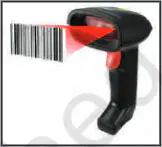
What is the device shown in the figure used for?
Capturing data using barcode reader.
Printing documents.
Scanning fingerprints.
Measuring temperature.
Activity 1.4: Exploring possible ways of recovering deleted data or data from a corrupted device can be done using which of the following methods?
Using data recovery software
Formatting the device
Ignoring the problem
Deleting more files
Activity 1.5: A test file is created and then deleted using Shift+Delete from the keyboard. The file can be recovered using the methods explored in Activity 1.4.
By using file recovery software
By restoring from Recycle Bin
By pressing Ctrl+Z
By restarting the computer
What is the main purpose of software in a computer system?
To make the computer hardware useful and operational.
To increase the physical size of the computer.
To provide power to the computer hardware.
To clean the computer hardware.
Which of the following is NOT an example of system software?
Operating system
Device driver
Photo editor
System utility
Hardware refers to the physical components of the computer system which can be seen and touched.
True
False
A document or image stored on the hard disk or pen drive is referred to as a ________. Once printed, the document or image is called a ________.
soft-copy, hard-copy
hard-copy, soft-copy
printout, digital-copy
file, paper-copy
List any two examples of operating systems mentioned in the text.
Ubuntu, Windows 7/10
Google Chrome, Facebook
YouTube, Instagram
MS Word, PowerPoint
What are the three broad categories of software based on the mode of interaction with hardware and functions to be performed?
System software, Programming tools, Application software
Hardware, Middleware, Firmware
Operating system, Utility software, Device drivers
User interface, Database, Network software
Activity 1.6: Identify any two device drivers installed on your computer from the following options.
Printer driver and graphics card driver
Word processor and spreadsheet
Web browser and email client
Antivirus software and media player
What is the main reason for needing translators in computer programming?
To convert high-level language to machine language
To write code in English
To make computers faster
To create new programming languages
Fill in the blank: Low-level languages are machine dependent and include _______ language and assembly language.
machine
high-level
object-oriented
markup
Which of the following is NOT an example of a high-level language?
C++
Java
Python
Assembly language
Instructions in high-level languages are similar to natural languages.
True
False
What is one major drawback of writing code in assembly language?
It is easy to debug
Code is computer specific
It uses English-like words
It is machine independent
Fill in the blank: Translators are needed to translate high-level language codes into _______ language.
machine
assembly
natural
object-oriented
What is the role of a language translator in the process of converting code in high level language (source code) to code in machine language (object code)?
The language translator converts source code into machine code (object code).
The language translator stores the source code without any changes.
The language translator executes the source code directly without conversion.
The language translator only checks the syntax of the source code.
What are the three types of translators used in computing systems?
Assembler, compiler, and interpreter.
Assembler, loader, and linker.
Compiler, debugger, and optimizer.
Interpreter, editor, and scheduler.
Which translator is used to convert code written in assembly language to machine language?
Assembler
Compiler
Interpreter
Linker
What is the main function of a compiler in program translation?
A compiler converts the source code into machine code. If the code follows the syntax of the language, it is executed by the computer. Once translated, the compiler is not needed.
A compiler directly executes the source code line by line without converting it.
A compiler translates machine code back into source code for debugging purposes.
A compiler is only used to check the spelling and grammar of comments in the code.
How does an interpreter differ from a compiler?
An interpreter translates one line at a time and executes it if correct, repeating for all lines. A compiler translates the whole program at once.
An interpreter translates the whole program at once, while a compiler translates one line at a time.
Both interpreter and compiler translate the program one line at a time.
An interpreter and a compiler both execute the program without translating it.
What is an editor in the context of program development tools?
An editor is a software that allows us to create a text file where we type instructions and store the file as the source code.
An editor is a hardware device used to compile programs.
An editor is a tool that executes the source code directly without saving.
An editor is a debugger that finds errors in the code.
Which of the following is NOT an example of an Integrated Development Environment (IDE)?
Python IDLE
Netbeans
Eclipse
Microsoft Word
What is the function of a debugger in an IDE?
A debugger is the software to detect and correct errors in the source code.
A debugger is used to compile the source code into machine code.
A debugger is used to design the user interface of the application.
A debugger is used to manage database connections.
What is application software?
Software that provides the core functionality of the computer system
Software that works on top of the system software to cater to different requirements of end-users
Software that manages hardware resources
Software that is only used by programmers
Which of the following is an example of general purpose software? Choose the correct option.
School management software
Accounting software
Adobe Photoshop
Customised payroll software
Fill in the blank: The application software developed for generic applications to cater to a bigger audience is called _________.
general purpose software
customized software
system software
embedded software
Customised software is better suited to the needs of an individual or an organisation as they are designed as per special requirements.
True
False

