wayground logo

Free Printable Worksheets

Font size

S
M
L
XL
Worksheets

Algebra 2 1st Semester Exam Review

Total questions: 135

Worksheet time: 9hrs 40mins

Name
Class
Date
1.

What are the domain and the range of the function?

a)

domain (-∞,∞) and range (-∞,∞)

b)

domain (∞,-∞) and range (∞,-∞)

c)

domain (-∞, 3] and range [3,∞)

d)

domain (-∞,1] and range [1,∞)

2.
What is the domain of the function?
a)
(-∞,5]
b)
(-∞,5)
c)
(-∞,2]
d)
(-∞,2)
3.
What is the range of the function?
a)
(-∞,5]
b)
(-∞,5)
c)
(-∞,2]
d)
(-∞,2)
4.

Identify the domain of the function.

a)

(1,)\left(1,\infty\right)

b)

[1,)\left[1,\infty\right)

c)

(2,)\left(2,\infty\right)

d)

[2,)\left[2,\infty\right)

5.

Identify the range of the function.

a)

(1,)\left(1,\infty\right)

b)

[1,)\left[1,\infty\right)

c)

(2,)\left(2,\infty\right)

d)

[2,)\left[2,\infty\right)

6.

Describe the function between x=2x=-2 and x=2x=2  .

a)

Increasing

b)

Decreasing

c)

Constant

7.

Describe the function between x=2x=2  and x=6x=6  .

a)

Increasing

b)

Decreasing

c)

Constant

8.

Identify the relative maximum of the function.

a)

y=2y=-2

b)

y=2y=2

c)

y=4y=-4

d)

None

9.

What transformation takes you from the black graph to the blue graph?

a)

Left 3

b)

Up 3

c)

Down 3

d)

Right 3

10.

What transformation takes you from the black graph to the blue graph?

a)

Reflection over y-axis

b)

Reflection over x-axis

c)

Shift 2 down

d)

Shift 2 up

11.

What transformation takes you from the black graph to the blue graph?

a)

Shift 3 up

b)

Shift 3 down

c)

Shift 3 right

d)

Shift 3 left

12.

Describe the transformation:

g(x)=(x3)2g\left(x\right)=\left(x-3\right)^2  

a)

Shift 3 units up

b)

Shift 3 units down

c)

Shift 3 units left

d)

Shift 3 units right

13.

Describe the transformation:

h(x)=x2+7h\left(x\right)=x^2+7  

a)

Shift 7 units down

b)

Shift 7 units up

c)

Shift 7 units left

d)

Shift 7 units right

14.

Describe the transformation: (click on two answers)

h(x)=(x1)2+5h\left(x\right)=\left(x-1\right)^2+5  

a)

Shift 1 unit left

b)

Shift 1 unit right

c)

Shift 5 units up

d)

Shift 5 units down

15.

Describe the transformation: (click on two answers)

f(x)=x27f\left(x\right)=-x^2-7  

a)

Reflection over the x-axis

b)

Reflection over the y-axis

c)

Shift 7 units up

d)

Shift 7 units down

16.
 If the blue graph is the parent function, what is the equation of the red (transformed) function?
a)
g(x)=x3+1
b)
g(x)=x3-1
c)
g(x)=(x-1)3
d)
g(x)=(x+1)3
17.

The graph shows the function f(x)=x2 in blue and another function g(x) in red. Which could be the equation for g(x)?

a)

A. g(x)=3x2

b)

B. g(x)=-3x2

c)

C. g(x) = x2 - 3

d)

D. g(x) = (x-3)2

18.
If the blue function is f(x)=√x, the red function must be
a)
g(x)=√(-x)
b)
g(x)=√(x-1)
c)
g(x)=√x-1
d)
g(x)=-√x
19.
DOMAIN?
a)
(-∞,∞)
b)
[0,∞)
c)
(-∞,0]
d)
-2, 2
20.
Which equation describes the transformation of shifting f(x)=x3 four units down?
a)
x3+ 4
b)
x3- 4
c)
(x - 4)3
d)
(x + 4)3
21.
Which equation describes the transformation of shifting f(x)=x3 three units left?
a)
x3 + 3
b)
x3 - 3
c)
(x + 3)3
d)
(x - 3)3
22.
a)
f(x) = −(x−2)3−1
b)
f(x) = −(x+2)3−1
c)
f(x) = −(x−2)3 + 1
d)
f(x) = −(x+2)3 + 1
23.
What is the equation of this graph?
a)
f(x) = (x + 2)2 - 3
b)
f(x) = (x - 2)2 - 3
c)
f(x) = |x + 2| - 3
d)
f(x) = |x - 2| - 3
24.

Identify the transformation from the graph of f(x)=x2 to the graph g(x)= -(x+5)2

a)

shifted up five units

reflection in x-axis

b)

shifted down five units

reflection in x-axis

c)

shifted left 5 units

reflection x-axis

d)

shifted right 5 units

reflection x-axis

25.
If the original function is f(x) then state the transformation that takes f(x) to g(x) = |-x + 3|
a)
Reflect over y-axis
Left 3
b)
Reflect over y-axis
Right 3
c)
Reflect over x-axis
Left 3
d)
Reflect over x-axis
Right 3
26.

a)

y= x + 3y=\ \left|x\right|\ +\ 3

b)

y= x 3y=\ \left|x\right|-\ 3

c)

y= x+3 y=\ \left|x+3\right|\

d)

y= x3y=\ \left|x-3\right|

27.

Using the pictured graph, what is f(-3)?

a)

A

-3

b)

B

-1

c)

C

1

d)

D

3

28.

What is g(7) if:

a)

A

-17

b)

B

-13

c)

C

13

d)

D

17

29.
What is f(2)?
a)
3
b)
2
c)
1
d)
None of these
30.

Which of the following graphs is the graph of  f(x)=f\left(x\right)=  

2x3,   x32x-3,\ \ \ x\le3  
3x+10,   x>3-3x+10,\ \ \ x>3  

a)
b)
31.

Use the function  f(x)=f\left(x\right)=  

3x5,   x33x-5,\ \ \ x\le3  

5x10,   x>35x-10,\ \ \ x>3  
to find 
f(8)f\left(8\right)  

a)

19

b)

40

c)

30

d)

9

32.

Solve the system of equations.

a)

(-34, -17)

b)

(8, 4)

c)

(10, 20)

d)

No solution

e)

Infinite solutions

33.

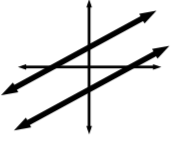
Which graph represents a system of equations with infinite solutions?
a)
b)
c)
d)

None of the above

34.

Which graph represents a system of equations with no solution?

a)
b)
c)
d)

None of the above

35.

Solve the system of equations.

a)

(3, -24)

b)

(0, 4)

c)

(-24, 3)

d)

No solution

e)

Infinite solutions

36.
Solve:
x = -3y - 17
2x + 3y = -7
a)
(1, -20)
b)
(3, 0)
c)
(-5, -2)
d)
(10 , -9)
37.
Solve using elimination. 
 4x + 8y = 20
-4x + 2y = -30
a)
(-7,1)
b)
(2,-5)
c)
(-2,5)
d)
(7,-1)
38.
Select the correct graph for each inequality.
a)
A
b)
B
c)
C
d)
D
39.
Which point below is NOT a part of the solution set?
a)
(0, 0)
b)
(0, 1)
c)
(-100, -3)
d)
(5, 10)
40.
Which point is a solution?
a)
(0, 6)
b)
(-3, 4)
c)
(1, 0)
d)
(-4, 3)
41.

Solve this system of equations using elimination method.

a)
b)
c)
d)
42.

Solve this system of equations using the elimination method.

a)
b)
c)
d)
43.
What is the vertex for
f(x)=4(x-2)2 + 3
a)
(-2, 3)
b)
(2,-3)
c)
(4,3)
d)
(2,3)
44.
Does the parabola
f(x)=4(x-2)2 + 3
open up or down?
a)
up
b)
down
45.
What is the axis of symmetry for 
f(x)=4(x-2)2 + 3
a)
4
b)
2
c)
x = -2
d)
x = 2
46.
What causes the graph of y = x2 to open downward?
a)
multiply the x2 by a fraction
b)
multiply the x2 by a decimal
c)
multiply the x2 by a negative number
d)
multiply the x2 by a number greater than 1
47.

What is the vertex form of a quadratic function?

a)

f(x) = 2a(x-h)2 + k

b)

f(x) = a(x-h)2 + k

c)

f(x) = (x+h)2 + k

d)

f(x) = a(x-h) - k

48.

What steps transform the graph y = x2 to y = 2(x+2)2 - 5?

a)

shrink by 2, shifted 2 units left and 5 down

b)

Stretch by 5, shifted 5 units left and 2 down

c)

Stretch by 2, shifted 2 units left and 5 down

d)

shrink by 5, shifted 2 units left and 2 down

49.

Identify ALL of the transformations performed on f(x)=x2f\left(x\right)=x^2 to create the graph of  g(x)=2(x5)2+10g\left(x\right)=-2\left(x-5\right)^2+10  

a)

reflection

b)

stretch

c)

shrink

d)

left 5, up 10

e)

right 5, up 10

50.

Identify ALL of the transformations performed on f(x)=x2f\left(x\right)=x^2 to create the graph of  g(x)=13(x+2)25g\left(x\right)=\frac{1}{3}\left(x+2\right)^2-5  

a)

reflection

b)

stretch

c)

Shrink

d)

left 2, down 5

e)

right 2, down 5

51.
If given the equation y = 3(x + 5)2 - 4, what is the vertex of the parabola?
a)
(5, -4)
b)
(-5, -4)
c)
(-15, -4)
d)
(15, -4)
52.

What is the axis of symmetry (or the x-value of the vertex) for the following equation?

y = 4x2 - 8x + 9

a)

x = -8

b)

x = 1

c)

x = -1

d)

x = 2

53.

What is the vertex of this parabola?

f(x) = -x2 - 4x + 12

a)

(-2, 16)

b)

(2, 0)

c)

(2, 4)

d)

(-2, 4)

54.
What is the vertex of the quadratic function:
y = x2 - 6x + 11?
a)
(3,2)
b)
(-3,-2)
c)
(-3,2)
d)
(3,-2)
55.

Which is the standard form of a quadratic function?

a)

ax2 + bx + c

b)

a(x - h)2 + k

c)

y - y1 = m(x - x1)

d)

Ax + By = C

56.

Which is the graph of the quadratic?

y = x24x5y\ =\ x^2-4x-5  

a)

A

b)

B

c)

C

d)

D

57.

What is the formula to find the axis of symmetry of a parabola?

a)

x=bax=\frac{-b}{a}

b)

x=bx=-b

c)

x=b2ax=\frac{-b}{2a}

d)

x=b2x=\frac{-b}{2}

58.

Write the equation in standard form:

3x2+8=5x-3x^2+8=5x  

a)

3x2+85x=0-3x^2+8-5x=0  

b)

3x2+5x+8=0-3x^2+5x+8=0  

c)

3x25x+8=0-3x^2-5x+8=0  

d)

3x2+8+5x=0-3x^2+8+5x=0  

59.

Solve the following quadratic equation by factoring:

k2+19k+35=7kk^2+19k+35=7k  

a)

k=12, 35k=12,\ 35  

b)

k=5, 7k=5,\ 7  

c)

k=7, 19k=7,\ 19  

d)

k=7, 5k=-7,\ -5  

60.

Solve the following quadratic equation by factoring:

2p27p+3=02p^2-7p+3=0  

a)

p=12, 3p=\frac{1}{2},\ 3  

b)

p=3, 1p=-3,\ -1  

c)

p=1, 3p=1,\ 3  

d)

p=3, 12p=-3,\ -\frac{1}{2}  

61.

Solve the following quadratic equation by factoring:

4x2+16x=124x^2+16x=-12  

a)

x=12x=-12  

b)

x=1, 3x=1,\ 3  

c)

x=3, 4x=3,\ 4  

d)

x=3, 1x=-3,\ -1  

62.

Solve the following quadratic equation by factoring:

8n2+72n=648n^2+72n=-64  

a)

n=4, 2n=-4,\ -2  

b)

n=8, 9n=8,\ 9  

c)

n=8, 1n=-8,\ -1  

d)

n=1, 8n=1,\ 8  

63.

Solve the following quadratic equation by factoring:

5x2=29x205x^2=-29x-20  

a)

x=45, 5x=\frac{4}{5},\ 5  

b)

x=5, 45x=-5,\ -\frac{4}{5}  

c)

x=4, 5x=4,\ 5  

d)

x=5, 4x=-5,\ -4  

64.

Solve the following quadratic equation by factoring:

4b2+26b=304b^2+26b=-30  

a)

b=5, 32b=-5,\ -\frac{3}{2}  

b)

b=3, 5b=3,\ 5  

c)

b=32, 5b=\frac{3}{2},\ 5  

d)

b=5, 3b=-5,\ -3  

65.

h=16t2+64t+960h=-16t^2+64t+960  

A ball is thrown into the air with an upward velocity of 64 ft/s. Its height, h, after t seconds is given by the function above.
When did the ball hit the ground?

a)

10 seconds

b)

2 seconds

c)

5 seconds

d)

7 seconds

66.

Jason jumped off of a cliff into the ocean in Acapulco while vacationing with some friends. His height as a function of time could be modeled by the function h(t) = –16t2 + 16t + 480, where t is the time in seconds and h is the height in feet. How long does it take Jason to hit the water?

a)

-16 seconds

b)

6 seconds

c)

0 seconds

d)

5 seconds

67.

What is the simplified form of (-9 + 5i) + (3 -2i)

a)

-12 + 31i

b)

-6 + 3i

c)

-11 + 7i

d)

5 - 3i

68.

What is the simplifies form of (11 - 7i) - (-3 + 12i)

a)

8 - 19i

b)

8 + 5i

c)

13- 19i

d)

14 -19i

69.

What is the simplified form of (-6i)(3i)

a)

-18

b)

-18i

c)

18

d)

-18i2

70.

What is the simplified form of (-3 + 2i)(1- 4i)

a)

-2 - 2i

b)

5 + 14i

c)

-11 -10i

d)

-3 -8i

71.

What is the simplified form of (8 -3i)2?

a)

73

b)

16 - 6i

c)

55 + 48i

d)

55 - 48i

72.

What is the simplified form of the above?

a)

7/10 + 11/10 i

b)

13/10 +1/10 i

c)

5/4 - 3/2i

d)

7/10 - 11/10 i

73.

Simplify (11 + 5i)(11 - 5i)

a)

121 -110i

b)

121 + 110i

c)

146

d)

121 - 25i2

74.

Write 9\sqrt{-9}  in the form  a+bia+bi  .


a)

3i

b)

9i

c)

3

d)

9

75.

Simplify. Write your answer in the form  a+bia+bi  .

(2+4i)(12i)\left(2+4i\right)-\left(1-2i\right)  

a)

3+2i3+2i  

b)

12i1-2i  

c)

1+6i1+6i  

d)

1010  

76.

Complete the square for

x2 - 12x + ____

a)

144

b)

36

c)

- 36

d)

24

77.
Complete the square.
x2 + 14x + ____
a)
x2 + 14x - 196
b)
x2 + 14x + 49
c)
x2 + 14x - 49
d)
x2 + 14x + 196
78.

Given the perfect square trinomial, identify the factored form.


x2-18x+81

a)

(x-18)2

b)

(x-9)2

c)

(x+81)2

d)

(x+9)2

79.
Factor: x2 - 30x + 225
a)
(x + 15)2
b)
(x - 15)2
c)
(x + 25)2
d)
(x - 25)2
80.
Complete the square and write the equation in Vertex Form:
f(x) = x2 + 10x + 25
a)
f(x) = (x - 5)2
b)
f(x) = (x + 10)2 
c)
f(x) = (x+5)2
d)
f(x) = x2 - 5
81.

Complete the Square and write in Vertex Form:

f(x) = x2 + 6x + 5

a)

f(x) = (x + 3)2 - 4

b)

f(x) = (x + 6)2 - 4

c)

f(x) = (x + 9)2 - 4

d)

f(x) = (x + 3)2 + 9

82.
Complete the square and write in Vertex Form 
f(x) = x2 + 4x + 9
a)
f(x) = (x+2)2 + 5
b)
f(x) = (x - 2)2 + 5
c)
f(x) = (x+4)2 + 5
d)
f(x) = (x+2)2 - 5
83.

Convert to vertex form: f(x)= 5x2+40x+77.

a)

f(x) = 5(x+4)2 - 3

b)

f(x) = 4(x-4)2 - 5

c)

f(x) = 5(x+4)2 +3

d)

f(x) = 5(x-4)2 + 157

84.
Convert to vertex form.
a)
y=3(x+1)2 - 8
b)
y=3(x-1) 2 - 8
c)
y=3(x+2)2 - 8
d)
y=3(x-2)2 - 8
85.

Identify a, b and c for the following Quadratic:

4x2 - 5x + 6 = 0

a)

a = 6, b = - 5, c = 4

b)

a = 6, b = 4, c = -5

c)

a = 4, b = - 5, c = 6

d)

a = 4, b = 5, c = 6

86.

Identify a, b and c for the following Quadratic:

-8x2 + x + 7 = 0

a)

a = 8, b = 1, c = 7

b)

a = - 8, b = 1, c = 7

c)

a = 7, b = 8, c = 1

d)

a = 1, b = 7, c = - 8

87.

Identify a, b and c for the following Quadratic:

x2 + 2x = 4

a)

a = 1, b = - 4, c = 2

b)

a = 1, b = 2, c = 4

c)

a = 1, b = 2, c = 0

d)

a = 1, b = 2, c = - 4

88.

Use the quadratic formula to find the solutions for

y = -x2 - 5x + 12

a)

No Real Solution

b)
c)
d)
89.

What should you do first in solving this equation?

x2 + 6x - 13 = 3

a)

Factor

b)

Write down: a = 1, b = 6, c = -13

c)

Subtract 3 from both sides.

d)

Add 3 to both sides.

90.

2m2=2m+122m^2=-2m+12  
Solve using the quadratic formula.

a)

x=2,3x=2,-3  

b)

x=3,2x=3,-2  

c)

x=1±13x=1\pm\sqrt{13}  

d)

No Solution

91.
a)
A
b)
B
c)
C
d)
D
92.
Determine the solution to the given linear-quadratic function.
a)
(0, 0)
b)
(3, 0)
c)
(2, -3)
d)
(-3, 2)
93.
Two equations were graphed on the set of axes below.  Which point is a solution to the system of equations ?
a)
(0,3)
b)
(5,0)
c)
(2,-3)
d)
(8,9)
94.

What are the solutions to the graphed system?

a)

(0,2) and (-3,1)

b)

(-2,0) and (2,0)

c)

(0,-2) and (3,1)

d)

(2,2) and (1,0)

95.

What are the solutions to this quadratic/ linear system?

a)

(-2, 0) and (3,0)

b)

No Solutions

c)

-6 and -10

d)

(1,-6)

96.

Which point is a solution to the system of equations: y=x2+2x3y=x^2+2x-3 and y = -x + 1?

a)

(1, 0)

b)

(2, -1)

c)

(-1, 2)

d)

(0, 1)

97.

Which of the following graphs correctly represents:

y=x2

y=-2x+1

a)
b)
c)
d)
98.

Which of the following graphs correctly represents:

y= - x2 + 4

y= - 1/2x+1

a)
b)
c)
d)
99.
f(x)=(x+4)(x-3)(x-2)
List the zeros for this function.
a)
x= -4, x=3, x= -2
b)
x= -4, x=3, x=2
c)
x= -4, x=3, x=2
d)
x=4, x= -3, x= -2
100.
How many zeros does the polynomial function
 P(x) = 3x4+4x-8 have?
a)
1
b)
2
c)
3
d)
4
101.
Identify the zeros:
a)
x=-2, x=-1, x=0
b)
x=-2, x=0
c)
x=-1, x=0, x=2
d)
x=-2, x=0, x=1
102.
a)
The function has an Even degree
b)
The function has a Negative coefficient
c)
The function has an Odd degree
d)
The function has 3 real zeros
103.
a)
Positive Odd
b)
Positive Even
c)
Negative Odd
d)
Negative Even
104.
Over the interval (−1, 2), the graph of the polynomial shown could be described as
a)
decreasing
b)
increasing
c)
quadratic
d)
complex
105.
Determine the y-intercept 
f(x) = x3 - 5x2 - 25x + 125
a)
(0,0)
b)
(0,25)
c)
(0,125)
d)
(0,5)
106.
What is the Degree of this polynomial:
f(x)= x3(x + 3)2(x – 5)
a)
Degree: 6
b)
Degree: 5
c)
Degree: 3
d)
Degree: 2
107.
What does multiplicity of a zero mean?
a)
Look at the number of terms
b)
How many times the zero repeats
c)
Find the sum of all the coefficients
d)
Ratio your x and y
108.
What is the end behavior for the following polynomial function?
ƒ(x) = 4x4 - 3x³ + 7x² + 4
a)
up, up
b)
up, down
c)
down, down
d)
down, up
109.
Identify the degree of the polynomial and the sign of the leading coefficient, using the graph.
a)
Leading Coefficient Positive
Degree - Even
b)
Leading Coefficient Positive
Degree - Odd
c)
Leading Coefficient Negative
Degree - Even
d)
Leading Coefficient Negative
Degree - Odd
110.
Identify the degree of the polynomial and the sign of the leading coefficient, using the graph.
a)
Leading Coefficient Positive
Degree - Even
b)
Leading Coefficient Positive
Degree - Odd
c)
Leading Coefficient Negative
Degree - Even
d)
Leading Coefficient Negative
Degree - Odd
111.

If the graph of a function touches the x-axis, what does that mean about the multiplicity of that zero?

a)

Even

b)

Odd

c)

None

112.

What is the degree of the graphed polynomial?

a)

2

b)

3

c)

4

d)

5

113.

For the pictured polynomial, at which interval is it increasing?

a)

(-1, 2)

b)

(-1, 2) & (4, ∞)

c)

(2, ∞)

d)

(2,4)

114.
For the pictured polynomial, at which interval is it decreasing?
a)
(-∞, 2)
b)
(-2, 0)
c)
(0, ∞)
d)
(-3, 1)
115.
 2x3(x2−2x − 3)
a)
2x6- 4x3 - 6x3
b)
2x5−4x4 − 6x3
c)
-2x5−4x4 − 6x3
d)
-2x6−4x3 − 6x3
116.

Simplify the expression

-6x - 5(10x + 3)

a)

-56x - 15

b)

-56x+15

c)

44x+15

d)

-44x-15

117.

(5x+2)(x2-3x+6)

a)

5x3 - 17x2 +24x +12

b)

5x3 + 17x2 - 24x +12

c)

5x3 - 13x2 + 24x +12

d)

5x3 +13x2 - 24x - 12

118.
(3x + 4y - 3z) - (2x - 6y + 7z)
a)
x + 10y - 10z
b)
-x +10y - 10z
c)
x -10y - 10z
d)
-x -10y - 10z
119.
(4x3-5x2+3x)+(-2x3-x2+6x)
a)
2x3-6x2-9x
b)
2x3+6x2+9x
c)
-2x3-6x2+9x
d)
2x3-6x2+9x
120.
If you were dividing x6 + 4x3 + 2, how many 0's would you need when setting up the top row of your synthetic division?
a)
0
b)
2
c)
4
d)
6
121.

What is the proper way to write the answer for the following problem?

a)

2x3-x2-25x+12

b)

2x4-x3-25x2-12x+0

c)

2x3-x2-25x-12

d)

2x4-x3-25x2-12x-0

122.

Cam divided (x4 + 3x2 - 4x - 2) by factor of (x-2) using synthetic division. His work is shown above. Which best describes his mistake?

a)

Cam wrote the remainder incorrectly.

b)

Cam did not use a zero place holder for the x3 term.

c)

Cam added instead of subtracting the rows.

d)

Cam should have used -2 as his division since the factor was x-2.

123.
If 𝒙2+𝟑𝒙+𝟕 is divided by  𝒙+𝟐, then what is the remainder?
a)
0
b)
-3
c)
9
d)
5
124.
a)
2x3 + 3x + (7/x-4)
b)
2x2 + 3x + 8 + (7/x-4)
c)
2x2 + 3x + 8
d)
2x2 - x + 10 + (6/x-4)
125.
Let f(x) = 3x2 - 9x +2.
Is k = -3 a zero of the function?
a)
yes
b)
no
126.
(2x3 + 5x2 + 9) ÷ (x + 3)
a)
2x2 - x + 3
b)
2x3 - x2 + 3x
c)
2x2 + 11x + 33 + 108/x+3
d)
2x2 - 5x + 12
127.
Is (x-4) a factor of (x3 +x2 -16x-16)?
a)
YES
b)
NO
128.
What is the remainder R when the polynomial p(x) is divided by (x-5)?
p(x) = x- 5x+ 2x - 10
a)
0
b)
2x-10
c)
-2x-10
d)
2x+10
129.
Which binomial is a factor of 
f(x)= x3 + x2 -24x +36?
a)
x + 2
b)
x + 3
c)
x + 6
d)
x + 9
130.
Find all zeros for the polynomial function P(x) = x3 -3x2-5x+15
a)
3, √5 
b)
3, √5, -√5
c)
-3, √5, -√5
d)
-3, 5i, -5i
131.
Find all zeros of the polynomial function P(x) = x3+6x2+9x+54
a)
6, 3, -3
b)
-6, 3, -3
c)
-6, 3i, -3i
d)
6, 3i, -3i
132.
Find all zeros for the polynomial function P(x)= x3-3x2+12x-10
a)
1, 1-3i, 1+3i
b)
1, 1+3i, -1-3i
c)
-1, -1+3i, -1-3i
d)
-1, -5, 2
133.
Find a polynomial function of degree 3 with zeros 3i and -2.
a)
P(x) = x3+2x2+9x+11
b)
P(x) = x3-2x2+9x+18
c)
P(x) = x3+2x2+9x+18
d)
P(x) = x2-3ix+2x-6i
134.
A polynomial function with rational coefficients of degree 4 MUST have at least 1 rational zero.
a)
True
b)
False
135.
A polynomial function with rational coefficients of degree 3 MUST have at least 1 rational zero.
a)
True
b)
False