
 Worksheets
(M) Unit 4 From a Cell to an Organism Summative
Total questions: 26
Worksheet time: 13mins
Name
Class
Date
1.
What is the smallest unit of life?
a)
Tissue
b)
Cell
c)
Organ
2.
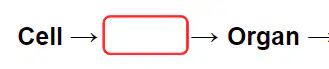
Fill in the missing word for this part of the 5 levels of organization.
a)
Tissue
b)
Organ System
c)
Organism
3.

Fill in the missing word for this part of the 5 levels of organization.
a)
Tissue
b)
Cell
c)
Organism
4.
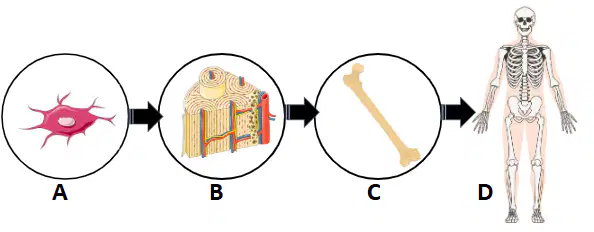
Which picture shows a cell?
a)
A
b)
B
c)
C
5.
What is a group of several organs working together to perform a function called?
a)
Organ system
b)
Cell
c)
Tissue
6.
What are the four major types of tissue found in humans and most animals?
a)
muscle, phloem, nervous, and epithelial
b)
muscle, connective, nervous, and epithelial
c)
muscle, vascular, ground, dermal
7.
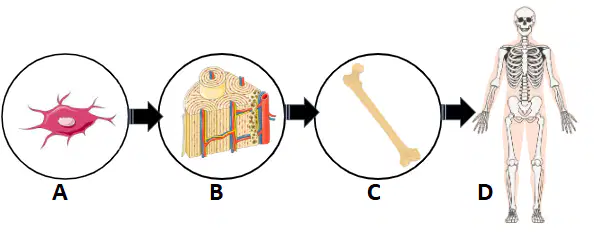
Which picture shows tissue?
a)
A
b)
B
c)
C
8.
What does muscle tissue do?
a)
carries messages to and from the brain
b)
forms the protective outer layer of skin
c)
causes movement
9.
A group of cells that have similar structures and function together as a unit are called?
a)
tissues
b)
organ systems
c)
organisms
10.
What type of tissue protects and allows absorption and secretions?
a)
muscle
b)
nervous
c)
epithelial
11.
What does nervous tissue do?
a)
forms the protective outer layer of skin
b)
carries messages to and from the brain
c)
causes movement
12.
Which body system helps break down food into simple nutrients?
a)
Respiratory
b)
Circulatory
c)
Digestive
13.
The brain is the main organ of which system?
a)
Muscular
b)
Nervous
c)
Respiratory
14.
Which system carries blood to and from body cells?
a)
Nervous
b)
Circulatory
c)
Integumentary
15.
The integumentary system consists of what structure?
a)
Heart
b)
Skin
c)
Muscle
16.
Which system transports or carries oxygen and nutrients to cells and takes carbon dioxide away from cells through the blood?
a)
Digestive
b)
Circulatory
c)
Reproductive
17.
Which system allows the body to take in oxygen and eliminate carbon dioxide?
a)
Respiratory
b)
Skeletal
c)
Digestive
18.
The following structures belong to which system? heart, arteries, veins, blood
a)
Digestive
b)
Circulatory
c)
Muscular
19.
The following structures belong to which system? bones, joints, skull, ribs,
a)
Circulatory
b)
Skeletal
c)
Muscular
20.
How do the muscular and skeletal systems work together to help the body?
a)
They provide nutrients to the body.
b)
They provide structure and movement for the body.
c)
They provide oxygen and carbon dioxide to the body.
21.
Which organ is NOT protected by the skeletal system?
a)
heart
b)
lungs
c)
skin
22.
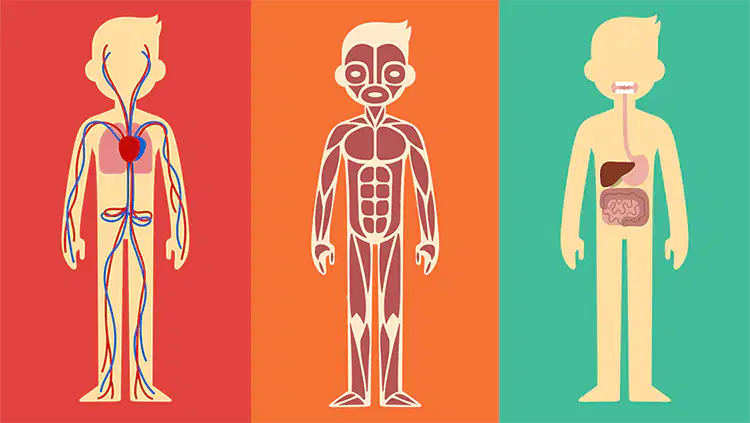
Which body system is shown on the right?
a)
Circulatory System
b)
Muscular System
c)
Digestive System
23.

This image best shows what system?
a)
nervous system
b)
integumentary system
c)
reproductive system
24.
Did you know muscles can only pull? What happens to a muscle when it (pulls) contracts?
a)
the muscle pushes a bone
b)
the muscle pushes on another muscle
c)
the muscle shortens
25.
Your integumentary system consists of all the external coverings of the body. The Epidermis is the outermost layer of the skin. The skin works with the nervous system because it helps us sense our surroundings. It also works with the immune system because it is our.....
a)
particle filer.
b)
first line of defense.
c)
barrier to loss of water.
26.
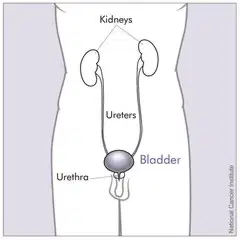
The kidneys and bladder are organs of the _______________ system.
a)
skeletal
b)
integumentary
c)
excretory
100 %

