
Font size
 Worksheets
igcse Chemistry Review
Total questions: 106
Worksheet time: 2hrs 48mins
All matter contains
Atoms
ions
molecules
gases
An object going from a solid to a liquid is
sublimation
deposition
freezing
melting
Which states of matter can change their shape?
liquid
solid
gas
Sublimation is the process of
a gas going to a liquid
a solid going to a gas
a liquid going to a solid
a gas going to a solid
Sublimation is the process of
a gas going to a liquid
a solid going to a gas
a liquid going to a solid
a gas going to a solid
Freezing is the process of a (a) changing to a solid.

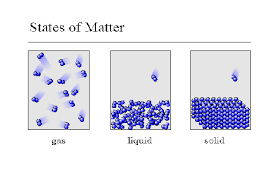
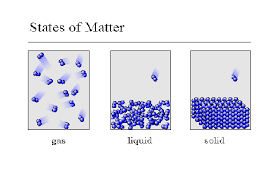
What state of matter is represented in this picture?
solid
liquid
gas

What state of matter is represented in the picture above?
solid
liquid
gas
Which state of matter do the particles slip and slide past each other?
solid
liquid
gas
Moving from the least dense to the most dense, which is the correct order?
liquid, gas, solid
gas, liquid, solid
solid, liquid, gas
Which type(s) of matter have a definite volume?
solid
liquid
gas
Which type(s) of matter take on the shape of the container they are in?
solid
liquid
gas
T or F Condensation is the process of an object moving from the gas phase to the solid phase.
true
false
While an object is melting, what happens to the temperature?
increases
decreases
stays the same
What must be changed during condensation?
temperature
heat energy
While an object is in the liquid state, what must change in order for it to begin to evaporate?
temperature
heat energy
What is happening to an object while it is in the solid phase?
temperature is increasing, kinetic energy is staying the same
temperature is staying the same, kinetic energy is decreasing
temperature and kinetic energy are decreasing
temperature and kinetic energy are increasing

Freezing
Solid to gas
Liquid to solid
Gas to solid

Boiling
liquid to gas
gas to solid
gas to liquid


What is happening when my ice cream changes from a solid to a liquid?
freezing
melting
burning

The state of matter that has no definite size or shape is
Solid
Liquid
Gas

Particles in a ______________________ move quickly and are far apart.
gas
solid
liquid

Particles of a liquid
are tightly packed together and stay in a fixed position.
are free to move around one another but still touch.
Solid to Gas
Deposition
Sublimation
Evaporation
What is condensation?
gas to solid
gas to liquid
liquid to solid
The slower the particles in a substance move,
the colder it is.
the warmer it is.
the more energy it has.

Is this a picture of something hot or cold?
Hot
Cold

Is this a picture of something hot or cold?
Hot
Cold

Definite shape and definite volume
Solid
Liquid
Gas

Has a definite volume but not a definite shape
Solid
Liquid
Gas
Liquid to Gas
Condensation
Evaporation
Sublimation
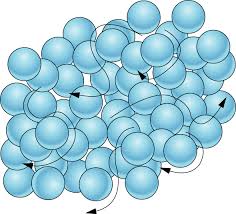
What state of matter?
Solid
Liquid
Gas
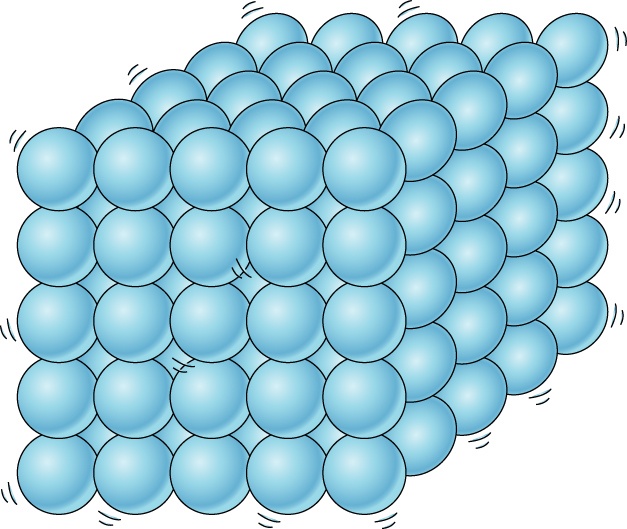
What state of matter?
Solid
Liquid
Gas
Plasma!!!
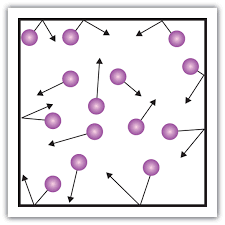
What state of matter?
Solid
Liquid
Gas
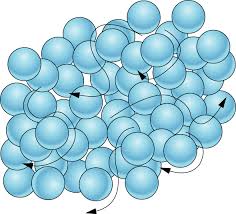
Which is not true about the liquid state of matter?
The liquid state has a definite volume and a definite shape.
The liquid state takes on the shape of its container.
The liquid state has a definite volume and an indefinite shape.
The particles in a liquid can easily move past each other.
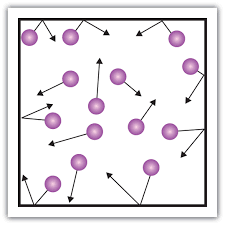
A gas typically consists of:
low energy particles that experience high attractive forces between them.
low energy particles that experience no attractive forces between them.
high energy particles that experience high attractive forces between them.
high energy particles that experience little attractive force between them
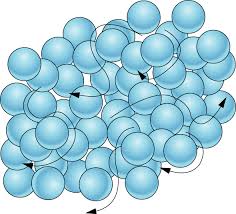
Which of the following statements is true regarding the particle structure of liquids? Particles of a liquid are:
very close together, so the liquid cannot easily change its shape.
fast-moving, so they fill the volume of their container.
relatively close together, so they cannot be easily compressed.
very far apart, so they have plenty of room to move around.
The state of matter in which a material has a definite volume and a definite shape is the:
Solid
Liquid
Gas
Plasma
Which process could cause a material to change state from gas to liquid?
Adding heat
Adding energy
Removing particles
Removing energy
If I add heat to a solid, how will the motion of the particles be affected?
They will move slower
They will stop moving
They will move faster
They will move to a different container
How can you stop the movement of particles?
Increase the temperature
Decrease the temperature
You can't.
Hold them still with your hands.

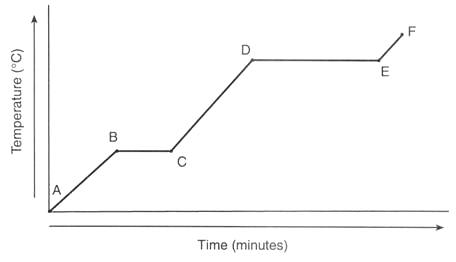

The melting point of the sample is
-60 ºC
-100 ºC
60 ºC
100 ºC

Given the heating curve of a solid being heated at a constant rate, what is the boiling point of this substance?
20°C
50°C
110°C
170°C

Given the heating curve of a solid being heated at a constant rate, how much total time was required to boil this substance after it reached its melting point?
3 minutes
4 minutes
10 minutes
14 minutes

NaCl(s) was heated up starting at an initial temperature of 0°C. The heating curve is shown in the picture. What is the melting point of this substance?
0°C
801°C
1000°C
1465°C

Given the heating curve of water, what is happening to potential and kinetic energy during segment CD?
the potential energy and kinetic energy both increase
the potential energy increases while the kinetic energy decreases
the potential energy is constant while the kinetic energy increases
the potential energy increases while the kinetic energy is constant
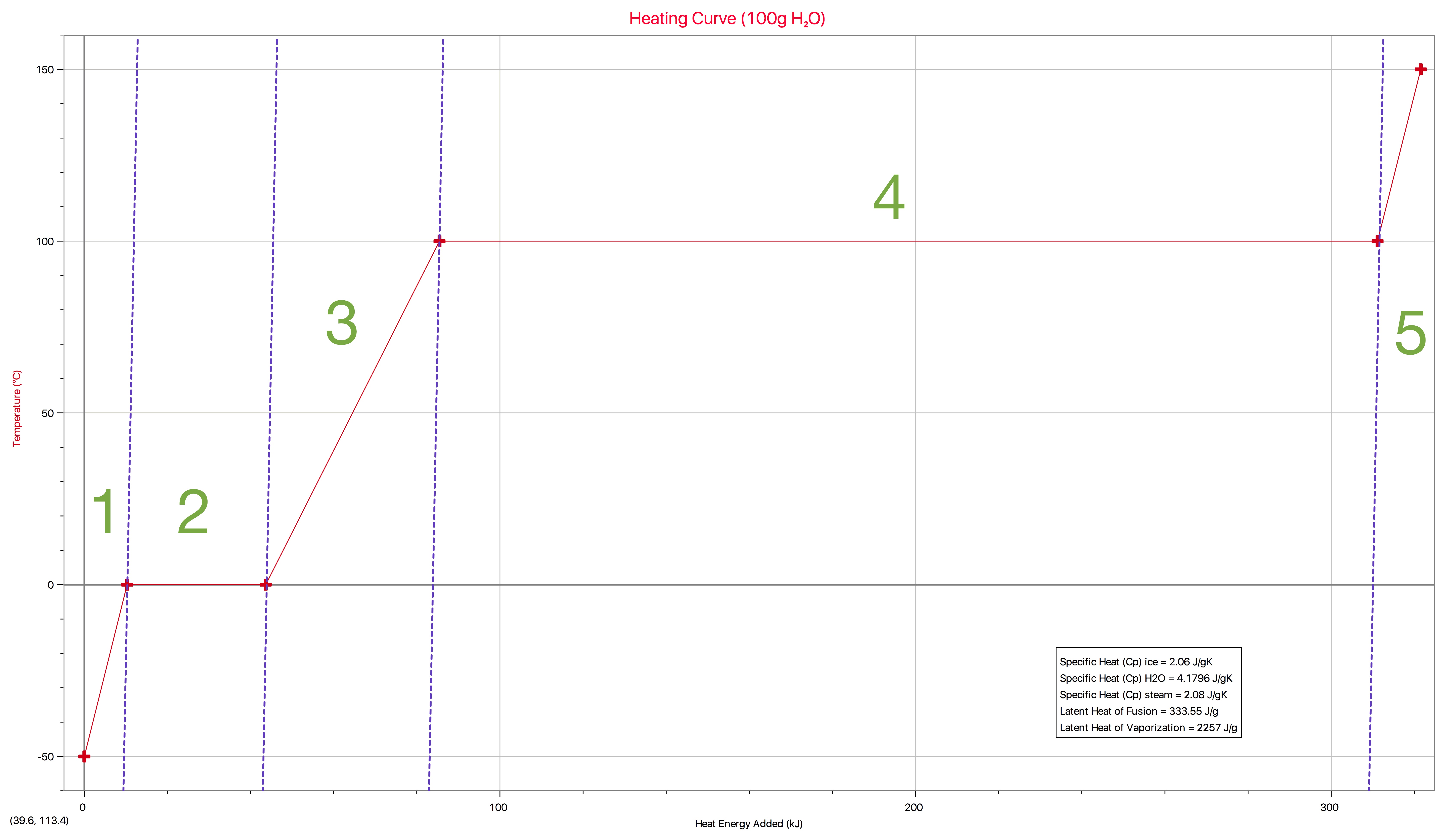

This curve indicates what about the heat energy?
Heat energy is being added or absorbed
Heat energy is being released

In which region(s) of the graph would the substance be melting?
No melting occurs on this graph
Region C-E
Region E-G
Region G-I
Region I-K
What is the freezing point of the substance?
0oC
60oC
120oC
180oC
From point A to point F, the sample is going through an __________ process by __________.
exothermic, releasing heat to the surroundings
exothermic, absorbing heat from the surroundings
endothermic, releasing heat to the surroundings
endothermic, absorbing heat from the surroundings


In the picture the red dots represent...
solvent
solute
solution
diffusion

(6A) Which of the following is true of a liquid?
It takes the shape of its container
It is more compressible than a gas.
It expands to take up the volume of the entire container.
The molecules are in a rigid organized structure.
(6A) States of matter are determined by their:
ONLY the amount of energy contained by their molecules
ONLY the arrangement of their molecules
The arrangement AND energy contained by their molecules
Viscosity

(6A) In the image above, which of those phases has the most energy?
Solid
Liquid
Gas
All of the above

(7A) As the temperature decreases along the phase change diagram, what happens to the energy within the molecules?
The energy decreases, the particles slow down
The energy increases, the particles speed up
The energy decreases, the particles speed up
The energy increases, the particles slow down

(7A) Which statement explains the movement of molecules when a liquid becomes a gas?
The particles move closer together into a more defined shape
The particles move farther apart into a less defined shape
The particles move closer together with no defined shape
The particles move farther apart with a more defined shape

(7A) In which segments of the graph do phase changes occur?
ONLY horizontal segment
ONLY diagonal line segments
BOTH horizontal and diagonal line segments
None of the above

(7A) As temperature increases along the phase change diagram, what happens to the arrangement of the molecules?
The particles slow down, move closer together
The particles slow down, move further apart
The particles speed up, move closer together
The particles speed up, move further apart

(7A) What is happening to the molecules in the substance at point B as a solid turns into a liquid?
Melting
Evaporation
Sublimation
Condensation
(7A) Imagine you left a water bottle outside on a cold winter night where the temperature falls below zero degrees. What phase change would occur to the liquid in the bottle?
Melting
Evaporation
Freezing
Condensation
Which of the following states of matter are compressible?
solid
liquid
gas
Gases are easily compressed because of .......................................
the size of its particles.
the space between the particles in a gas.
the mass of the particles.
Factors that affect gas pressure.
The amount of gas.
The volume.
The temperature.
The mass
You can't use kinetic theory to predict and explain how gases will respond to a change of conditions.
True
False

