wayground logo

Free Printable Worksheets

Font size

S
M
L
XL
Worksheets

ICP Pretest

Total questions: 111

Worksheet time: 2hrs 51mins

Name
Class
Date
1.

At what time does this object have a negative velocity?

a)

3 seconds

b)

7 seconds

c)

11 seconds

d)

never

2.
_____ are measured in units of m/s in Physics.
a)
Speed and velocity
b)
Distance and displacement
c)
Scalars
d)
Vectors
3.

At t= 7s, which cyclist is ahead?

a)

A

b)

B

4.

What is speed?

a)

how far you go

b)

how much distance is covered over a period of time

c)

how fast you accelerate

d)

the change in the location of a object

5.

Total distance divided by total time is

a)

average speed

b)

constant speed

c)

instantaneous speed

d)

acceleration

6.
When you look at the speedometer of your car, it tells you your....
a)
Average speed
b)
Instantaneous speed
7.
During which interval is the object not moving?
a)
B to C
b)
C to D
c)
D to E
d)
only at point A
8.
Acceleration occurs when an object changes its speed or ______.
a)
direction
b)
force
c)
inertia
d)
mass
9.
Acceleration: is the rate of change in ___________.
a)
speed
b)
distance
c)
velocity 
d)
displacement 
10.
A place or object used for comparison to determine if another object is in motion is called a
a)
comparison point
b)
reference point
c)
point of view
d)
motion detector
11.
What is velocity?
a)
the quickness of an object
b)
the location of an object
c)
acceleration
d)
speed in a specific direction
12.

What is the changing of position over time?

a)

motion

b)

reference point

c)

acceleration

d)

speed

13.
Vector quantities need both a magnitude and a _____.
a)
distance
b)
displacement
c)
direction
d)
velocity
14.
After completing one trip on a roller coaster, the roller coaster's ________ is zero.
a)
displacement
b)
reference point
c)
length
d)
distance
15.
What is this graph showing?
a)
Constant Speed
b)
Acceleration (speeding up)
c)
Deceleration (slowing down)
d)
No motion
16.

What is motion?

a)

the stopping of an object to a frame of reference

b)

a change in position relative to a frame of reference

c)

the middle ground between light and shadow, between science and superstition, and it lies between the pit of man's fears and the summit of his knowledge

d)

a change in the time in which it takes to get an office referral

17.
These kind of observation use your senses to observe results.
a)
Qualitative
b)
Quantitative
c)
Scientific
18.
These kind of observations are made using instruments such as rulers, balances and thermometers.
a)
Qualitative
b)
Quantitative
c)
Scientific
19.
It tastes sweet.
a)
Qualitative
b)
Quantitative
20.
The leaf is 5mm wide.
a)
Qualitative
b)
Quantitative
21.
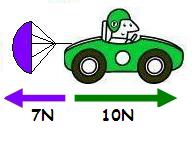
Calculate the net force of the object in the image shown.
a)
20N
b)
35N
c)
5N
d)
25N
22.

What is the net force?

a)

3 N

b)

3 N, right

c)

17 N, right

d)

3 N, left

23.

A ____________ is a push or a pull on an object.

a)

friction

b)

force

c)

magnet

d)

gravity

24.

Forces that have a net force of zero Newtons

a)

Balanced force

b)

Unbalanced force

25.
The sum of all forces acting on an object.
a)
Contact Force
b)
Balanced Force
c)
Unbalanced Force
d)
Net Force
26.
A force is a push or pull measured in what units? 
a)
Meters per second, squared
b)
Kilograms 
c)
Newtons 
27.

When the vectors (arrows) point away what function do you use?

a)

Dividing

b)

Multiplying

c)

Subtracting

d)

Adding

28.

The weight of an object varies with the:

a)

pull of gravity

b)

dimensions of the object

c)

volume of the object

29.

Friction is an example of _____________

a)

contact force

b)

non contact force

c)

both of these

d)

none of these

30.
How would you write 0.0005 in scientific notation?
a)
50 x 10-5
b)
5 x 10⁻⁴
c)
5 x 10³
d)
.5 x 103
31.
How would you write -5.6 x 10⁻³ in standard form?
a)
0.0056
b)
-5,600
c)
0.00056
d)
-0.0056
32.
The rule of scientific notation is to write all exponents with a base of ____.
a)
50
b)
5
c)
100
d)
10
33.

What law is best described by inertia?

a)

1st

b)

2nd

c)

3rd

d)

law of conservation of mass

34.

A person not paying attention while skateboarding hits a rock. The skateboard stops...they don't.

a)

The Law of Inertia (1st law)

b)

The Law of Acceleration (2nd law)

c)

The Law of Conservation of Momentum

d)

Action Reaction Law (3rd law)

35.

What is Newton's First Law

a)

F=ma

b)

Every action has an equal and opposite reaction

c)

An object at rest stays at rest, an object in motion stays in motion.

d)

Friction

36.

A 20 kg bike accelerates at 10 m/s2. what was the force

F = m x a

a)

25 Newtons

b)

20 Newtons

c)

200 Newtons

d)

10 Newtons

37.

Newton's third law states that any action will have a(n) _______ and ______ reaction

a)

Equal and similar

b)

Equal and opposite

c)

Equal and different

d)

Greater and opposite

38.

8 N to the left , and 4 N to the right. Find the net force. Is this balanced

a)

12 N Right No

b)

4 N Left No

c)

12 N Right Yes

d)

4 N Left Yes

39.
Energy due to motion is ____________ energy. 
a)
Potential 
b)
Energy
c)
Kinetic
d)
Friction
40.
__________ is stored energy. 
a)
Potential
b)
Kinetic
c)
None of the above 
d)
All of the above 
41.
____________ is the ability to cause change. 
a)
Energy 
b)
Force 
c)
Friction
d)
Motion
42.
Gravitational potential energy depends on the ________ and ________ of the object. 
a)
Height and mass
b)
Friction and movement
c)
Mass and Movement
d)
Height and Friction 
43.
The baby chickens are kept warm from the heat lamps demonstrates this type of heat transfer. 
a)
conduction
b)
convection
c)
radiation
44.

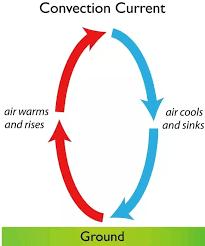
Which of the following is an example of convection?

a)

A hair dryer is drying up your hair.

b)

When the AC or heater changes the temperature.

c)

When a car engine turns hot after being turned on.

d)

When you are making soup and the water is rising and lowering.

45.

In heat transfer, heat always flows from the _______________ substance to the _______________ substance.

a)

Hotter to colder

b)

Colder to hotter

c)

Hotter to hotter

d)

Colder to colder

46.
According to the Law of Conservation of Energy, energy cannot be _________ or ____________. 
a)
destroyed, destroyed
b)
created, saved
c)
created, destroyed
d)
lost, found
47.

units for work are

a)

newtons

b)

joules

c)

meters

d)

seconds

48.
What is the formula for work?
a)
Force = work x distance
b)
Distance = force x work
c)
Work = force x distance
d)
Work = force x mass
49.

A system that does not exchange matter or energy with environment.

a)

Open System

b)

Closed System

c)

Isolated System

d)

Plain System

50.

System that exchanges matter or energy with environment.

a)

Open system

b)

Closed System

c)

Isolated System

d)

Plain System

51.
what is the meaning of conduction
a)
when heat transfers from objects that are not touching
b)
heat rise 
c)
cold fall
d)
when heat transfers from objects that are touching
52.
A measure of the average kinetic energy of the individual particles in an object is called:
a)
thermal energy
b)
conduction
c)
convection
d)
temperature
53.

Which description defines heat?

a)

total thermal energy of an object or substance

b)

change in the temperature of a substance in degrees Celsius

c)

energy transferred between objects at different temperatures

d)

average kinetic energy of the particles that make up a substance

54.
My hands feel warm because 
a)
The temperature is cold outside
b)
The molecules are moving
c)
The heat is transferring 
55.
Average of kinetic energy
a)
Thermal Energy
b)
Temperature
c)
Heat
56.
Heat is the movement of ______.
a)
radiation
b)
thermal energy
c)
cold
d)
fire
57.
All matter is made of _____ that are constanly moving.
a)
insulators
b)
particles
c)
convection
d)
pieces of plastic
58.
Scientists' favorite temperature scale, because it begins at the absolute coldest anything can get. 
a)
Celsius
b)
Fahrenheit
c)
Kelvin
d)
All of them
59.

A temperature scale that is used mostly in United States.

According to it, water freezes at 32 degrees and boils at 212 degrees.

a)

Celsius

b)

Fahrenheit

c)

Kelvin

d)

All of them

60.
There are 3 main scales by which temperature is measured. 
a)
True 
b)
False
61.

How would you describe the way molecules move when the molecules are solid?

a)

the molecules are moving in place.

b)

the molecules are moving around each other.

c)

the molecules are moving away from each other.

d)

the molecules are not moving

62.

what is a liquid?

a)

a substance that flows freely but is of constant volume

b)

a substance or matter in a state in which it will expand freely

c)

firm and stable in shape

63.

what is a gas?

a)

a substance or matter in a state in which it will expand freely to fill the whole of a container

b)

the basic unit of a chemical element

c)

an atom or molecule with a net electric charge due to the loss or gain of one or more electrons.

64.
What state of matter has particles free to move past other particles but still have attraction?
a)
solid
b)
plasma
c)
liquid
d)
gas
65.
What chart should you reference to lookup information about elements?
a)
elemental map
b)
periodic table
c)
table of atoms
d)
none of the above
66.
Protons and neutrons clump together to form the __________ of an atom.
a)
nucleus
b)
centrosome
c)
outer shell
d)
orbital
67.
This subatomic particle of an atom has a NEGATIVE charge.
a)
electron
b)
proton
c)
atom
d)
neutron
68.
A molecule is made up of ____ or more atoms.
a)
1
b)
2
c)
3
d)
4
69.

Mass is a measurement of:

a)

the amount of particles a substance has.

b)

the space an object occupies

70.

Avogadro's hypothesis says that if pressure and temperature are the same then...

a)

equal volumes of gas will have an equal number of particles

b)

smaller particles will occupy less volume

c)

the identity of the gas determines the volume

d)

equal volumes of gas will have a number of particles that depends on whether they are elements or compounds
71.

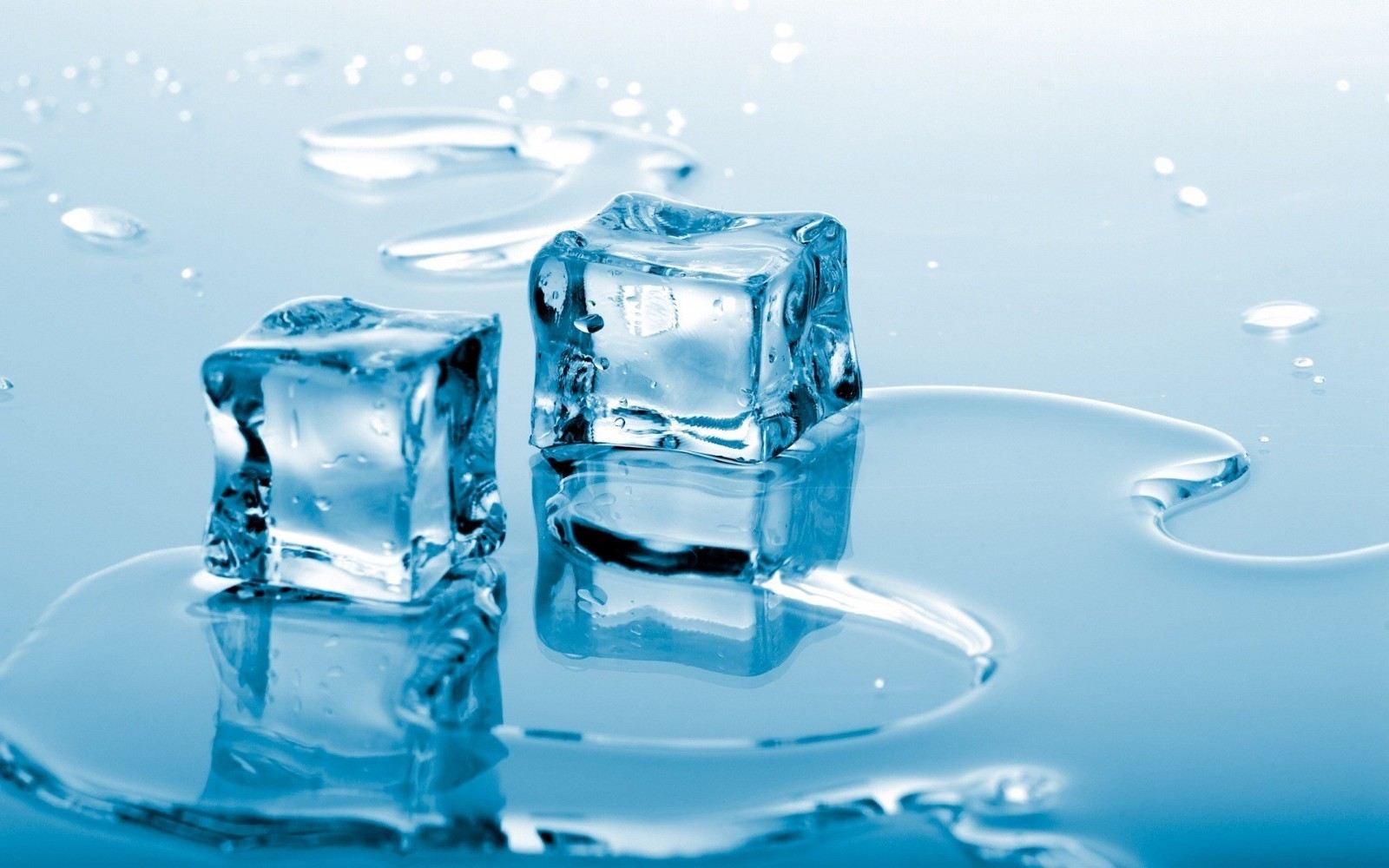
What is happening in this picture of ice melting?

a)

Molecules are speeding up

b)

Molecules are slowing down

72.

What is happening in this picture of water boiling?

a)

Molecules are speeding up

b)

Molecules are slowing down

73.
A substance that contains only one type of atom is a(n)
a)
compound
b)
element
c)
heterogeneous mixture
d)
homogeneous mixture
74.
A mixture that appears to be evenly mixed throughout:
a)
an atom
b)
a compound
c)
a homogeneous mixture
d)
a heterogeneous mixture
75.
If an unknown substance CANNOT be broken down into simpler substances, it is 
a)
a compound
b)
an element
c)
a homogeneous mixture
d)
a heterogeneous mixture
76.
Two classifications of a pure substance are
a)
homogeneous and heterogeneous
b)
atoms and elements
c)
elements and compounds
d)
solutions and colloids
77.
Valence electrons are the...
a)
Innermost electrons
b)
Middle electrons
c)
Outermost electrons
d)
Any electrons
78.
Ionic bonds form between metals and ____.
a)
metalloids
b)
metals
c)
nonmetals
79.

Which of the following describes covalent bonds?

a)

Bonds form because of opposite charges

b)

electrons are shared to fill outer electron shells

c)

Electrons are transferred between atoms

d)

Covalent bonds are magical

80.
What is the formula for density?
a)
density = mass x volume
b)
density = mass / volume
c)
density = mass + volume
d)
density = mass - volume
81.

How do you calculate the number of neutrons? *

a)

Mass = Atomic number - Neutrons

b)

Mass - Atomic number = Neutrons

c)

Atomic number = Neutrons

82.

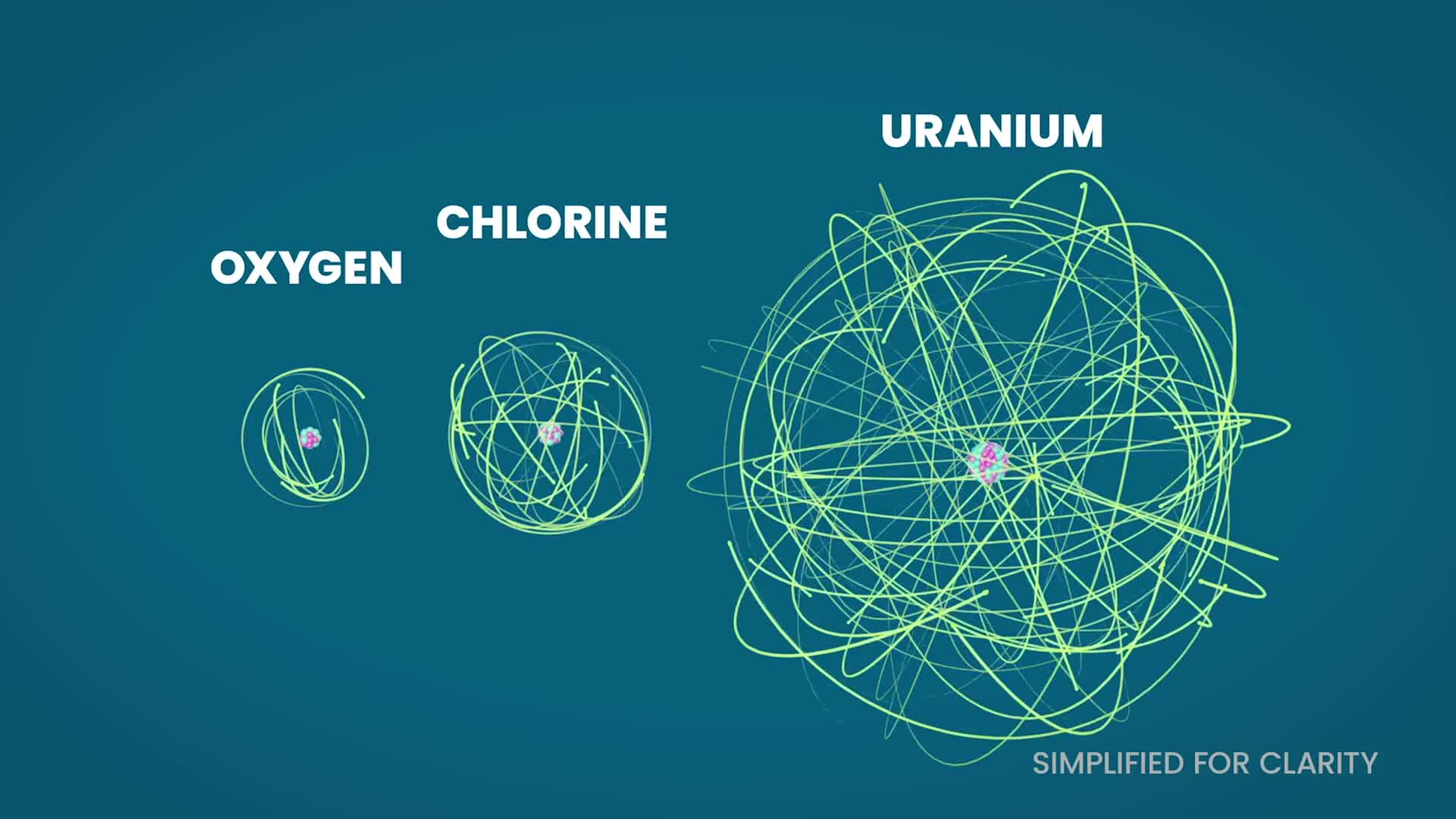
How many valence electrons does the element have?

a)

1

b)

2

c)

3

d)

4

83.

How many protons and electrons does nickel have?

a)

28

b)

58.69

84.

What is the atomic mass?

a)

58.693

b)

28

85.

What do the vertical columns on the periodic table tell us?

a)

The number of orbitals

b)

The number of valence electrons (electrons on the outer most shell)

86.
According the the Law of Conservation of Mass, when is mass conserved?
a)
Mass in only conserved in chemical changes.
b)
Mass is only conserved in physical changes.
c)
Mass is conserved in all physical and chemical changes.
d)
Mass is never conserved because the composition changes.
87.
A change in which NEW substances are formed.
a)
Chemical change
b)
Physical change
c)
Casual change
d)
Formal change
88.
In the equation,          2Mg + O2 ---> 2MgO, which are the reactants?
a)
Mg and O
b)
MgO
c)
Mg and MgO
d)
O and MgO
89.
An element plus additional element reacts to form one product is an example of which type of chemical reaction? 
a)
combustion
b)
decomposition 
c)
synthesis 
d)
single replacement
90.
Describes the number of molecules in a compound and is used to balance a chemical reaction. 
a)
coefficient 
b)
subscript
c)
superscript
d)
SI unit
91.
What type of chemical reaction takes place when fluorine reacts with sodium bromide?
a)
single replacement 
b)
double replacement 
c)
combustion
d)
synthesis 
92.
A compound is reacted and forms two new substances. What type of reaction is this? 
a)
combustion 
b)
synthesis 
c)
decomposition 
d)
single replacement 
93.
Which type of reaction takes place in the presence of oxygen and produces carbon dioxide and water?
a)
double replacement 
b)
decomposition 
c)
combustion 
d)
single replacement
94.
Current is...
a)
moving protons
b)
moving electrons
c)
measured in volts
d)
measured in ohms
95.
Voltage is simply defined as...
a)
what 'pushes' electrons
b)
what 'stops' electrons
c)
moving electrons
96.
Resistance is...
a)
What "slows down" electrons
b)
What "speeds up" electrons
c)
Moving electrons
d)
What "pushes" electrons
97.

What type of wave is this?

a)

Electromagnetic

b)

Mechanical

c)

Both Electromagnetic and Mechanical

98.

Which type of wave can travel through mass and a vacuum?

a)

Electromagnetic

b)

Mechanical

c)

Electromagnetic and Mechanical

99.

What shape are electromagnetic waves?

a)

transverse only

b)

compressional only

c)

both transverse and compressional

100.
The number of wavelengths that pass a point each per second is:
a)
frequency
b)
period
c)
longitudinal 
d)
transverse wave 
101.

The number of waves passing a given point each second is:

a)

Frequency

b)

Wave speed

c)

Wavelength

d)

Amplitude

102.

What is the correct formula for wave speed?

a)

Wave speed = frequency x wavelength

b)

Wave speed = amplitude x wavelength

c)

Wave speed = amplitude x period

d)

Wave speed = frequency x period

103.
The type of waves that require medium to pass:
a)
Mechanical Waves
b)
Electromagnetic Waves
104.
The first person to propose a theory about an atom was
a)
Democritus
b)
Rutherford
c)
Dalton
d)
Aristotle
105.
Rutherford's gold foil experiment provided evidence that...
a)
Negative and positive charges are spread evenly throughout the atom.
b)
Alpha particles have a positive charge.
c)
Gold is not a dense as previously thought.
d)
There is a dense positively charged nucleus at the center of an atom.
106.
Niels Bohr suggested that electrons.......
a)
are found in specific orbits
b)
electrons are scattered throughout the atom
c)
electrons move according to their energy level
d)
electrons are positive
107.
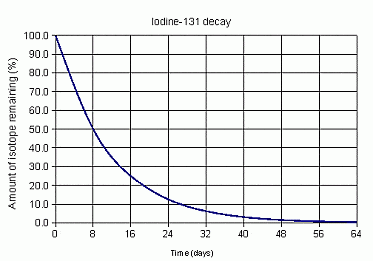
What is the half-life of iodine-131?
a)
32 days
b)
8 days
c)
16 days
d)
24 days
108.
What is Half-life?
a)
The amount of time it takes for some of the nuclei in a sample of the isotope to decay
b)
The amount of time it takes for half the electrons in a sample of the isotope to decay
c)
The amount of time it takes for half the nuclei in a sample of the isotope to decay
d)
the amount of time it takes to double the nuclei in a sample of the isotope to decay
109.
A helium nucleus with two protons and two neutrons is called a(n) ____.  
a)
alpha particle
b)
electroscope
c)
beta particle
d)
gamma ray
110.
The splitting of a nucleus into smaller nuclei is
a)
fusion
b)
fission
c)
half-life
d)
gamma radiation
111.
Two nuclei with low masses are combined to form one nucleus of larger mass is called what?
a)
Nuclear fission
b)
Nuclear fussion
c)
Nuclear half-life
d)
Half-life