

Wayground logo

Free Printable Worksheets

Font size

S
M
L
XL
Worksheets

8th Grade Science Midterm

Total questions: 50

Worksheet time: 25mins

Name
Class
Date
1.

Bryson decides to conduct a scientific experiment with pea plants. Six pea plants are watered with rainwater and six others are watered with tap water. He records the growth rate over the course of six weeks. Which of the following is the independent variable in this experiment? (SC.8.N.1.1)

a)
Bryson
b)
the pea plants
c)
the rate of growth
d)
the type of water
2.

Elizabeth mixes two chemicals together and measures the amount of thermal energy they release as they react. In this experiment, what is the amount of thermal energy released? (SC.8.N.1.1)

a)
a controlled variable
b)
a measured variable
c)
a dependent (outcome) variable
d)
an independent (tested) variable
3.

How is a hypothesis beneficial even when it is NOT supported by the data? (SC.8.N.1.1)

a)
It leads to further investigations.
b)
It helps scientists form a conclusion.
c)
It allows scientists to collect data from an experiment.
d)
It helps scientists decide how many times to repeat the investigation.
4.

Scientists use different types of investigations to develop scientific explanations. In which scenario did a scientist conduct a controlled experiment with independent and dependent variables? (SC.8.N.1.1)

a)
A scientist determined the relative age of a fossil based on its position in a rock layer.
b)
A scientist concluded that a new fertilizer doubled the growth of corn plants in a study.
c)
A scientist identified and classified a new species of fish in the Amazon River in South America.
d)
A scientist discovered a new galaxy in space after analyzing images from the Hubble Space telescope.
5.

Why would a researcher be most likely to choose an observation instead of a controlled experiment? (SC.8.N.1.1)

a)
to observe a subject in its natural environment
b)
to compare the subject to a closely related species
c)
to provide the subject with a structured environment
d)
to seek subject responses for different amounts of stimulus
6.

In 2005, officials in Florida discovered a serious disease that ruined the fruit of orange trees. If left to spread, this disease would destroy Florida's citrus industry. Which response represents a scientific approach to solving this problem? (SC.8.N.1.1)

a)
Environmental groups demand the destruction of all citrus trees.
b)
The governor asks the legislature to help citrus farmers establish new businesses.
c)
The Florida Department of Agriculture investigates the disease to discover its causes and cures.
d)
The legislature authorizes the University of Florida to research methods for producing better tasting citrus fruits.
7.

Which of the following statements best describes the difference between an independent and dependent variable? (SC.8.N.1.1)

a)
Independent variables stay the same and dependent variables are being changed.
b)
There is no difference between an independent and dependent variable.
c)
A dependent variable is the variable being changed, an independent variable is the variable being measured.
d)
An independent variable is the variable being changed, a dependent variable is the variable being measured.
8.

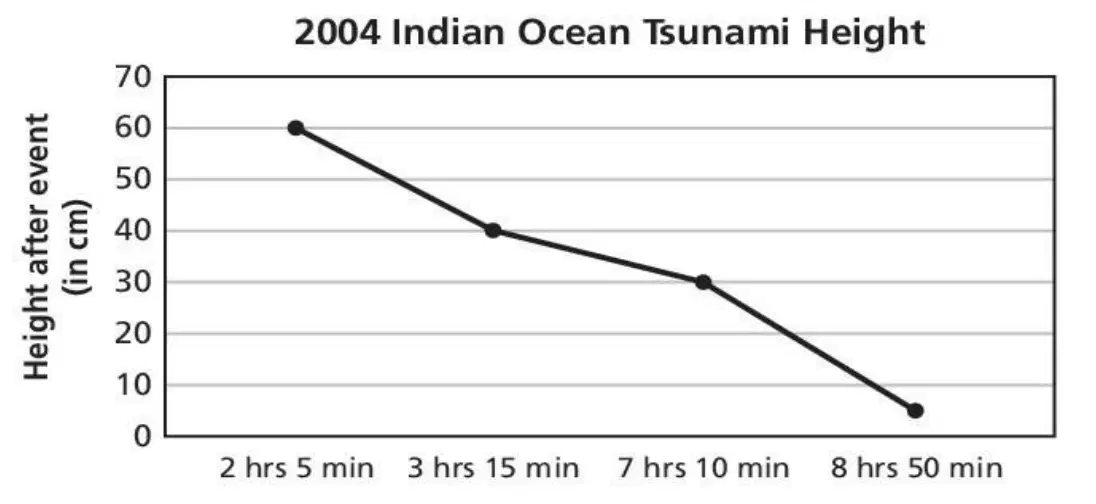
A researcher predicts that rewarding good behavior will positively influence the behavior of eighth-grade students. She asks a teacher to keep all her teaching practices the same from day to day, but begin rewarding good behavior, an approach known as "positive reinforcement." The researcher's results are shown below. Which statement is the best conclusion based on these data? (SC.8.N.1.3)
a)
The results prove the researcher's prediction; positive reinforcement will always work.
b)
The results disprove the researcher's prediction; positive reinforcement will never work.
c)
The results support the researcher's prediction; the behavior of the students in this experiment improved when positive reinforcement was used.
d)
The results failed to support the researcher's prediction; the behavior of the students in this experiment did not improve when positive reinforcement was used.
9.

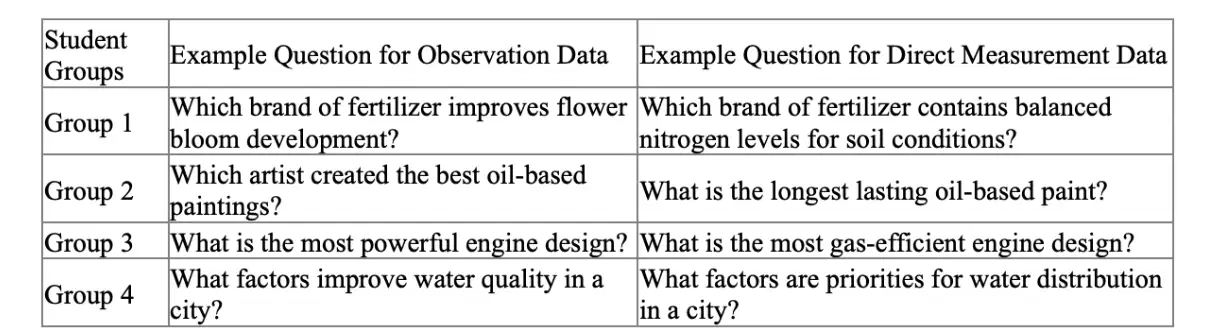
Look at the graph showing wave height data from a large earthquake and tsunami that occurred under the Indian Ocean. This event caused major damage to many coastal communities in the path of the tsunami. How can this data help scientists? (SC.8.N.1.5)
a)
to develop a new type of satellite for tsunami tracking
b)
to predict tsunami wave height over time more accurately
c)
to forecast when tsunamis are most likely to occur
d)
to locate points in the ocean where tsunamis are most likely to form
10.

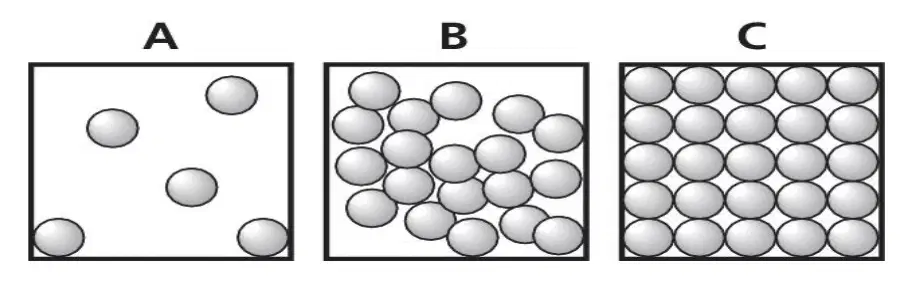
Mrs. Patel put her students into groups to develop example questions that can be investigated using either observation or measurement in science investigations. Her students created the chart below. Which group developed appropriate questions to obtain data? (SC.8.N.1.6)

a)
Group 1
b)
Group 2
c)
Group 3
d)
Group 4
11.

From his observations, Aristotle believed Earth was round and that the planets revolved around it. Approximately 1,500 years later, Nicolaus Copernicus evaluated astronomical data and suggested that Earth revolved around the Sun and that the planets' orbits were circular. Through scientific investigation, less than 100 years later, Johannes Kepler found that planets have elliptical orbits. What does this example demonstrate about scientific reasoning? (SC.8.N.3.2)

a)
Science is more subjective than objective.
b)
Scientific theories are proposed at random.
c)
Science is based on evidence and is open to change.
d)
Scientific concepts accepted today will be wrong in the future.
12.

In science, what is the main difference between a law and a theory? (SC.8.N.3.2)

a)
Laws change frequently and theories rarely change.
b)
Laws are factual statements and theories are just opinions.
c)
Laws provide rules for scientists to follow and theories are the ideas of scientists.
d)
Laws are observations of regular occurrences and theories are explanations for observations.
13.

Consider the work of scientists investigating a popularly held theory. As scientists continue to investigate this particular theory, they begin to find evidence that contradicts one of the main ideas proposed by this theory. Although many previous researchers have supported the theory, the latest research definitely indicates one area of the theory is completely wrong. What should the researchers propose? (SC.8.N.3.2)

a)
They should propose the need for a completely new theory based on the latest research.
b)
They should propose disregarding the new results as they likely result from mistakes in the research.
c)
They should propose modifications to the existing theory that take into account their new discoveries.
d)
They should propose that different scientists conduct the same experiment to verify the original theory is wrong.
14.

A piece of solid wax is placed in a pan and heated on a stove. After a while, the solid wax becomes a liquid. Which one of the following explains why the wax becomes a liquid? (SC.8.P.8.1)
a)
The wax reached its condensation point.
b)
The wax reached its boiling point.
c)
The wax reached its freezing point.
d)
The wax reached its melting point.
15.

These three images represent the particle arrangement in ice, water, and steam. Which of the following correctly identifies the states of matter? (SC.8.P.8.1)

a)
A: steam, B: water, C: ice
b)
A: water, B: steam, C: ice
c)
A: steam, B: ice, C: water
d)
A: ice, B: water, C: steam
16.

Which of these lists correctly shows the phases of matter, in order from the state in which the atoms are furthest apart to closest together? (SC.8.P.8.1)

a)
solid, liquid, gas
b)
gas, solid, liquid
c)
solid, gas, liquid
d)
gas, liquid, solid
17.

What happens to the particles of a liquid when energy is removed from them? (SC.8.P.8.1)

a)
The motion of the particles increases.
b)
The motion of the particles stays the same.
c)
The distance between the particles increases.
d)
The distance between the particles decreases.
18.

Which statement correctly describes the difference between mass and weight? (SC.8.P.8.2)

a)
Mass changes depending on gravity, but weight stays the same.
b)
Weight is based on the gravitational pull on an object, while mass is the amount of matter in the object.
c)
Weight and mass are the same value measured in different units.
d)
Mass is measured in newtons, while weight is measured in kilograms.
19.

Why does an object weigh less on the Moon than on Earth? (SC.8.P.8.2)

a)
The Moon has less mass and therefore pulls objects with less gravitational force.
b)
The Moon has more mass and therefore pulls objects with more gravitational force.
c)
Objects lose mass when taken to the Moon.
d)
The Moon has no gravity at all.
20.

A block of wood with a density of 10 g/cm3 is cut in half. What would the expected density of the two halves be? (SC.8.P.8.3)

a)
The density would remain the same.
b)
The density would be half of the original.
c)
The density would double.
d)
The density would increase by a quarter.
21.

The density of frozen water is lower than that of liquid water. A student places 100 grams of frozen water into 100 grams of liquid water. Which statement is correct? (SC.8.P.8.4)

a)
The frozen water has a density lower than liquid water and will float.
b)
The frozen water has a density higher than liquid water and will sink.
c)
The frozen water has a density lower than liquid water and will sink.
d)
The frozen water has a density higher than liquid water and will float.
22.

When a raw, whole egg is placed into one cup of tap water, it sinks, but when the same egg is placed into one cup of salt water, it floats. Why does the egg float in saltwater? (SC.8.P.8.4)
a)
The egg absorbs the salt, which allows it to float.
b)
The egg's mass is less when placed into the salt water.
c)
The egg's density is much lower than the density of the salt water.
d)
The egg's density is much higher than the density of the salt water.
23.

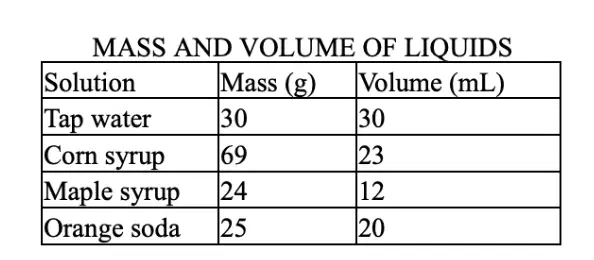
A teacher wants to layer these solutions in a tube. The liquid with the highest density will go first followed by another liquid and the least amount of density will be on the top. Based on the measurements of the various liquids, in what order should the teacher place the solutions in the tube? (SC.8.P.8.4)

a)
tap water, orange soda, maple syrup, corn syrup
b)
corn syrup, maple syrup, orange soda, tap water
c)
tap water, corn syrup, maple syrup, orange soda
d)
maple syrup, orange soda, corn syrup, tap water
24.

A student is given a sample of an unknown solid and asked to identify it. The student begins by making a list of questions to investigate about the sample. Which question would be the least useful in helping the student identify what the sample is composed of? (SC.8.P.8.4)

a)
Is the sample soluble in water?
b)
What is the weight of the sample?
c)
Is the sample attracted to a magnet?
d)
What is the melting point of the sample?
25.

Two common liquids, water and peroxide, are both formed with atoms of hydrogen and oxygen. If both substances discussed above are made of hydrogen and oxygen, how is the make-up of the two substances different? (SC.8.P.8.5)

a)
The number of atoms of each element is different.
b)
The number of protons in the atoms of each element is different.
c)
The number of neutrons in the atoms of each element is different.
d)
The number of electrons in the atoms of each element is different.
26.

C6H12O6 is the chemical formula for glucose, a type of sugar. Which statement is true about glucose? (SC.8.P.8.5)
a)
Glucose is an element, because it can be separated into smaller components.
b)
Glucose is an element, because it is made up of more than one kind of atom.
c)
Glucose is a compound, because it is made of more than one element.
d)
Glucose is a compound, because it is made of protons, neutrons, and electrons.
27.

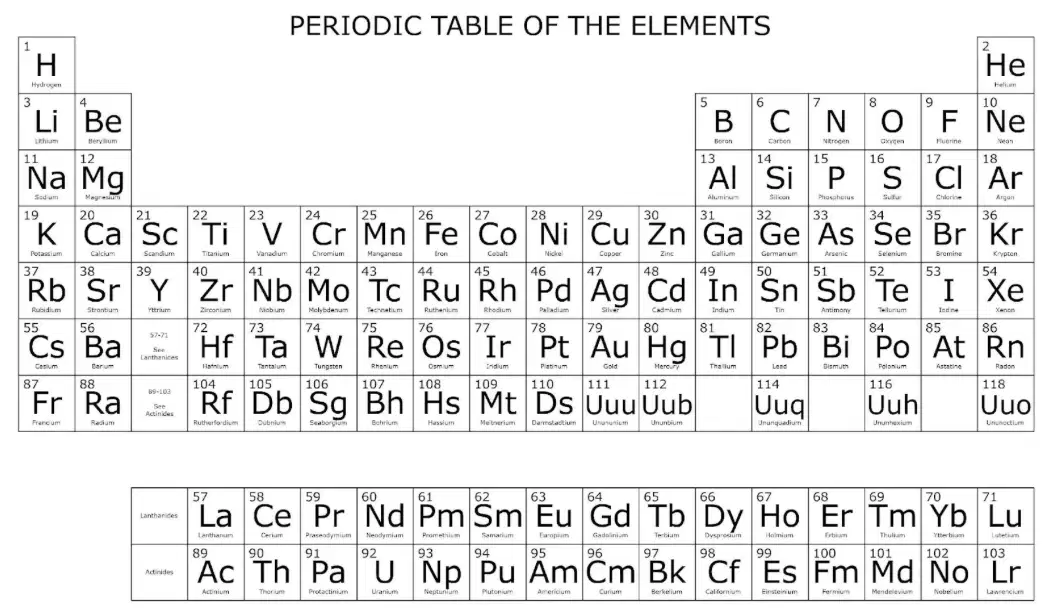
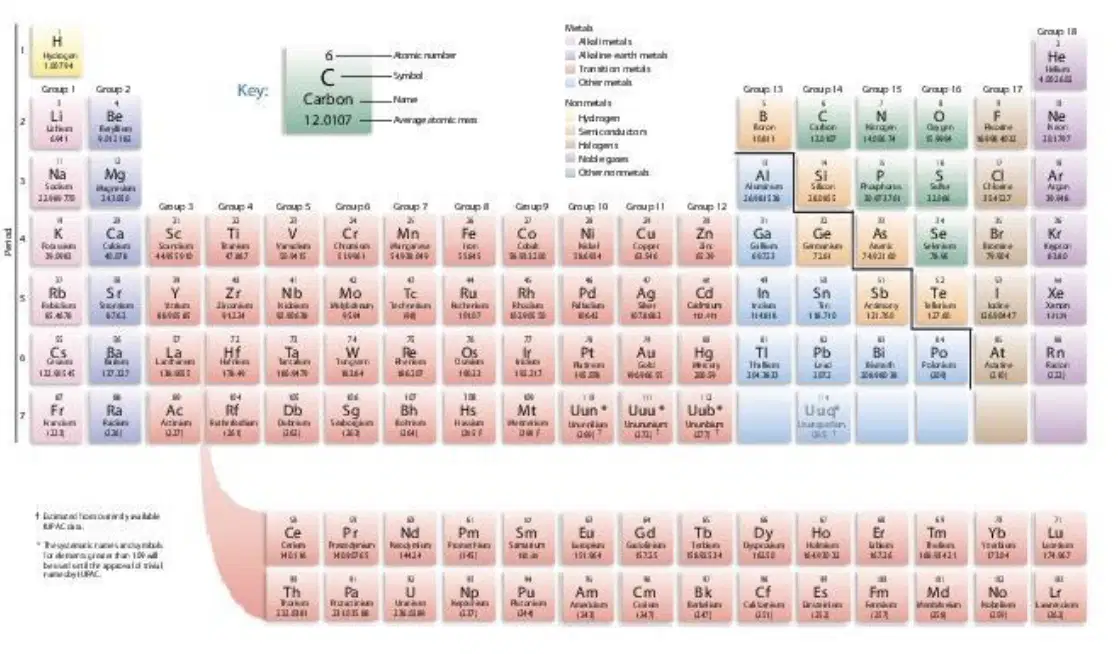
Tin (Sn) and lead (Pb) are both members of the same group as carbon, as shown by the periodic table below. Which of the following elements would also be a member of this group, and why? (SC.8.P.8.6)
a)
Iron, because it is a metal like tin and lead.
b)
Krypton, because it is an inert gas like tin and lead.
c)
Calcium, because it has reactivity similar to that of tin and lead.
d)
Silicon, because it has a conductivity similar to that of tin and lead.
28.

Look at the periodic table. Which element would have chemical properties most similar to those of phosphorus (atomic #15) and why? (SC.8.P.8.6)

a)
sulfur, because both sulfur and phosphorus are solids
b)
lithium, because lithium is in the top row of the periodic table
c)
argon, because argon is at the end of the same row on the periodic table
d)
nitrogen, because nitrogen is located right above phosphorus in the periodic table
29.

Danielle is studying elements in the periodic table and observes that beryllium (Be), magnesium (Mg), calcium (Ca), strontium (Sr), barium (Ba), and radium (Ra) belong to the same group or family. What can she infer about these elements? (SC.8.P.8.6)
a)
They are reactive non-metals.
b)
They have the same atomic number.
c)
Their physical properties are different.
d)
They have similar chemical properties.
30.

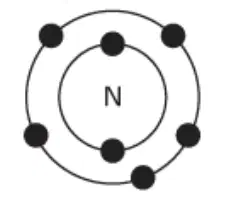
A model of a nitrogen atom is shown below. In this model, what do the black spheres represent? (SC.8.P.8.7)

a)
electrons
b)
neutrons
c)
photons
d)
protons
31.

Audra is looking at a diagram of an atom. Which particle(s) does she see inside the nucleus? (SC.8.P.8.7)

a)
electrons only
b)
protons only
c)
electrons and protons
d)
protons and neutrons
32.

If a sample of gold were reduced to the smallest possible particle of pure gold, which statement would most accurately describe the result? (SC.8.P.8.7)
a)
The sample would be reduced to atoms of gold.
b)
The sample would be reduced to molecules of gold.
c)
The sample would be reduced to protons and neutrons of gold.
d)
The sample would be reduced to electrons and protons of gold.
33.

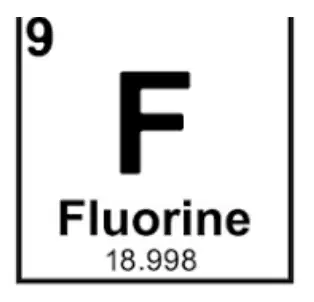
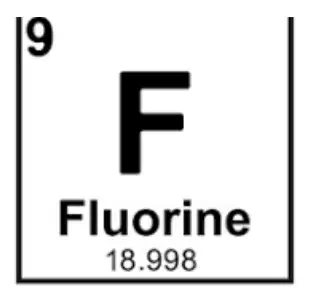
How many protons does Fluorine have? (SC.8.P.8.7)
a)
10
b)
18
c)
19
d)
9
34.

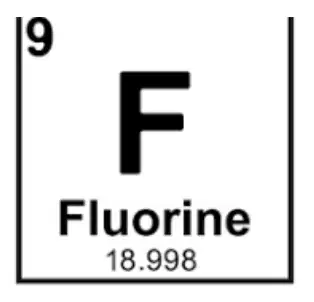
How many neutrons does Fluorine have? (SC.8.P.8.7)
a)
10
b)
18
c)
19
d)
9
35.

How many electrons does Fluorine have? (SC.8.P.8.7)

a)
10
b)
18
c)
19
d)
9
36.

Which statement best illustrates how mixtures and pure substances are different? (SC.8.P.8.9)
a)
Mixtures have color; pure substances are colorless.
b)
Mixtures have various odors; pure substances are odorless.
c)
Mixtures are found on the periodic table; pure substances are not.
d)
Mixtures are physically combined; pure substances are chemically combined.
37.

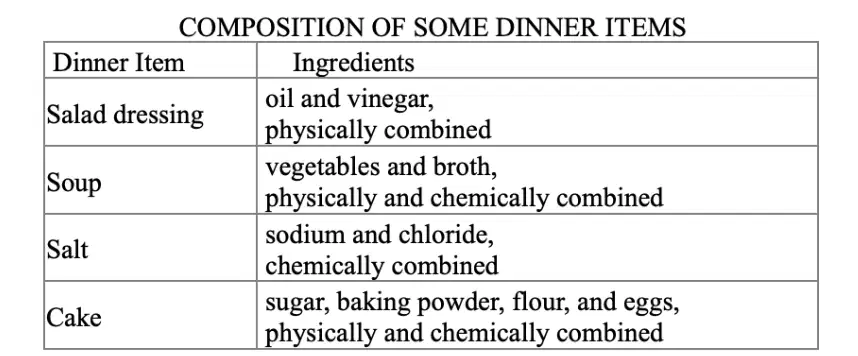
Part of Todd's dinner was salad dressing, soup, salt, and cake.Which of the following dinner items is a pure substance? (SC.8.P.8.9)
a)
Salad Dressing
b)
Soup
c)
Salt
d)
Cake
38.

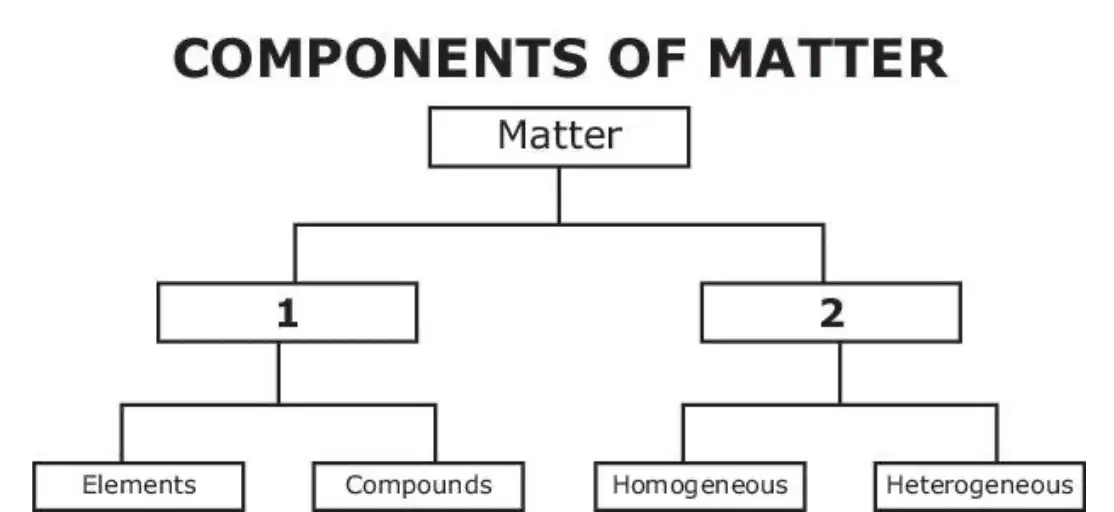
The relationships among various types of matter are shown below. Which label would be most appropriate for Box 2? (SC.8.P.8.9)

a)
atoms
b)
mixtures
c)
solutions
d)
pure substances
39.

Matt and Jillian mixed a measured amount of baking soda with a measured amount of vinegar. The chemical reaction produced a measured amount of acetic acid and an unknown amount of carbon dioxide that was released into the air. Matt was able to figure out how much carbon dioxide was released during the chemical reaction. Which law did Matt most likely use to figure out the amount of carbon dioxide that was produced during the chemical reaction? (SC.8.P.9.1)

a)
universal law of gravity
b)
law of conservation of mass
c)
Newton's first law of motion
d)
law of conservation of energy
40.

What can be concluded about the mass in a sealed container during a chemical or physical change? (SC.8.P.9.1)

a)
In a sealed container, mass will regenerate itself so it remains constant.
b)
In a sealed container, only the mass of solid objects will remain constant.
c)
In a sealed container, the changes that occur will not affect the total mass.
d)
In a sealed container, the mass cannot change because there is no external energy added to the system.
41.

After a piece of paper is burned, the ashes weigh less than the original paper. Which statement best explains this difference in mass? (SC.8.P.9.1)

a)
The particles of the paper change state from solid to gas, so the ashes weigh less than the original paper.
b)
The particles of the paper were chemically changed resulting in new substances that include gases.
c)
Some of the particles of paper have been destroyed, so it weighs less.
d)
Some of the particles of the paper have been transformed into heat.
42.

Which statement correctly describes how a chemical change is different from a physical change? (SC.8.P.9.2)

a)
A chemical change always involves two liquids.
b)
Only a chemical change produces a new substance.
c)
Only a chemical change requires the input of energy.
d)
A chemical change always involves mixing elements.
43.

Which process involves only a physical change? (SC.8.P.9.2)

a)
a nail rusting
b)
an egg cooking
c)
a candle burning
d)
an ice cube melting
44.

Which is the most correct explanation of a physical change that has occurred? (SC.8.P.9.2)

a)
fireworks exploding, because energy is released as light and heat
b)
gasoline burning, because it forms water vapor and carbon dioxide
c)
crushing an ice cube, because the chemical structure of the ice cube is changed
d)
dicing potatoes, because the molecules are separated but remain the same substance
45.
45. A bread recipe states that the dough should be covered and placed in a warm location to rise. Why would the location of the bread need to be warm? (SC.8.P.9.3)
a)
The heat will prevent the dough from spoiling.
b)
The heat will lessen the cooking time of the dough.
c)
The heat will prevent the dough from rising too much.
d)
The heat will increase the rate at which the dough rises.
46.

Which activity represents the best method for increasing the rate of the chemical reaction when combining two chemicals? (SC.8.P.9.3)

a)
Dilute each chemical before combining them.
b)
Change the amount of one of the chemical reactants.
c)
Raise the temperature of both chemicals before the reaction.
d)
Lower the temperature of both chemicals before the reaction.
47.

Storing food in a refrigerator delays the chemical reactions that cause the food to spoil. In this example, which factor is delaying the chemical reactions? (SC.8.P.9.3)

a)
pressure
b)
temperature
c)
type of food
d)
exposure to air
48.

Which of the following shows Al + O₂ → Al₂O₃ as a balanced chemical equation?

a)

Al + O₂ → Al₂O₃

b)

4Al + 3O₂ → 2Al₂O₃

c)

2Al + O₂ → Al₂O₃

d)

4Al + O₂ → Al₂O₃

49.

Which of the following shows C₃H₈ + O₂ → CO₂ + H₂O as a balanced chemical equation?

a)

C₃H₈ + O₂ → CO₂ + H₂O

b)

C₃H₈ + 5O₂ → 3CO₂ + 4H₂O

c)

C₃H₈ + 4O₂ → 3CO₂ + 4H₂O

d)

C₃H₈ + 6O₂ → 3CO₂ + 4H₂O

50.

Which of the following shows H₂ + O₂ → H₂O as a balanced chemical equation?

a)

H₂ + O₂ → H₂O

b)

2H₂ + O₂ → 2H₂O

c)

H₂ + 2O₂ → H₂O

d)

2H₂ + 2O₂ → 2H₂O
