
Font size
 Worksheets
Earth's Atmosphere Introduction
Total questions: 33
Worksheet time: 17mins
Which statement best describes the atmosphere’s relative thickness compared to Earth?
A deep ocean of gas hundreds of miles
A narrow belt only a few miles wide
A vast layer extending thousands of miles
A thin shell about 60 miles thick
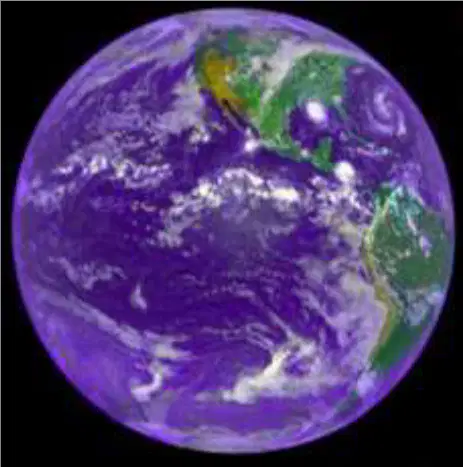
Which comparison helps visualize the atmosphere’s thinness around Earth?
Like a basketball wrapped with a plastic sheet
Like a soccer ball covered in thick foam
Like a globe inside a dense rubber tire
Like a tennis ball painted with heavy tar
Select the roles the atmosphere plays in sustaining life on Earth.
Removes all greenhouse gases completely
Shields surface from harmful solar radiation
Maintains temperatures suitable for liquid water
Provides oxygen and other gases for respiration
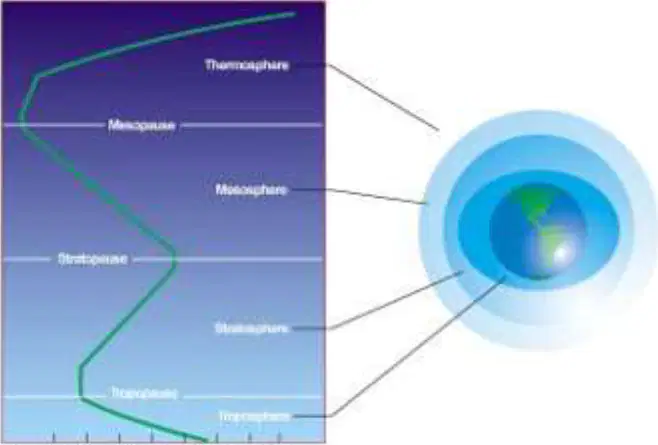
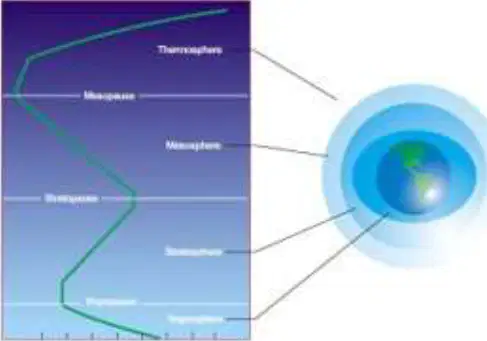
Arrange the atmospheric layers from bottom to top as shown in the diagram.
Troposphere
1st (nearest surface)
Tropopause
2nd boundary layer
Stratosphere
3rd above troposphere
Mesosphere
4th mid-upper layer
Thermosphere
5th outermost layer
Which layer contains most of Earth’s weather and is closest to the surface?
Thermosphere
Troposphere
Stratosphere
Mesosphere
Which statement about the tropopause is accurate?
It is a boundary between troposphere and stratosphere
It is the region with most ozone formation
It is the hottest part of the thermosphere
It is the layer where meteors burn up
Which sequence lists Earth’s atmospheric layers correctly from the ground upward?
Troposphere, Tropopause, Mesosphere, Thermosphere
Troposphere, Mesosphere, Stratosphere, Thermosphere
Mesosphere, Troposphere, Stratosphere, Thermosphere
Stratosphere, Troposphere, Mesosphere, Thermosphere
Troposphere, Stratosphere, Mesosphere, Thermosphere
In a labeled diagram of Earth’s atmosphere, where is the tropopause located?
Lower boundary of the stratosphere far above mesosphere
Surface boundary at sea level
Middle of the mesosphere layer
Transition between troposphere and stratosphere
Upper boundary of the thermosphere
Match each atmospheric layer to its relative position from Earth’s surface in an ordered diagram (bottom to top).
Troposphere
1st (closest to surface)
Stratosphere
2nd
Mesosphere
3rd
Thermosphere
4th (outermost shown)
Select ALL layers that lie above the tropopause in an atmosphere stack diagram.
Troposphere
Stratosphere
Mesosphere
Thermosphere
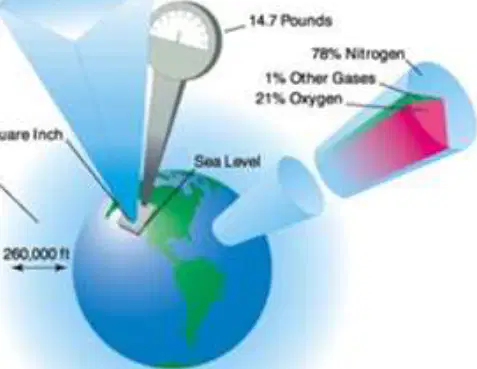
According to the air pressure diagram, which statement best explains why air pressure is higher near the ground?
Thermosphere pushes down with stronger wind speeds
Pressure gauges read lower near sea level by design
More air above the ground increases the column’s weight
Less air above the ground reduces weight of the column
Air at altitude contains more oxygen than nitrogen
Which statement best defines air pressure for an engineering context?
Rate of change of temperature with altitude
Energy stored in a moving air stream
Mass per unit volume of the surrounding air
Force per unit area exerted by air molecules
Which pair lists common units used to report atmospheric air pressure at sea level?
m/s and km/h
Newton and Joule
Kelvin and Celsius
kPa and psi
As altitude increases above sea level, how do air density and air pressure typically change?
Density increases
Pressure remains constant
Density decreases
Pressure decreases
Match each quantity with its description.
Air column weight
Total gravitational force on a column of air
Air pressure
Force per unit area from air molecules
Air density
Mass per unit volume of air
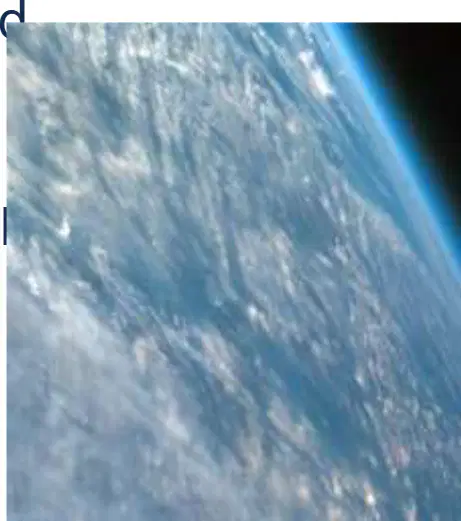
Under standard atmospheric conditions near sea level, which values are approximately correct?
101.3 kPa and 14.7 psi
59 kPa and 15 psi
101.3 psi and 14.7 kPa
0 kPa and 0 psi
Which statement best describes “standard atmospheric conditions” used in aerospace engineering?
A fixed reference for temperature and pressure values
Daily measurements taken at local airports
Average weather for a specific city and season
Maximum possible temperature and pressure in the troposphere
At sea level under standard conditions, what are the approximate temperature and pressure values?
0°C and 101.3 kPa
59°F and 101.3 psi
15°C and 101.3 kPa
15°C and 14.7 kPa
In the troposphere, engineers use the lapse rate. What happens to temperature and pressure as altitude increases?
Pressure increases while temperature decreases
Both remain constant with increasing altitude
Temperature increases while pressure decreases
Both decrease with increasing altitude
In the diagram, air density depends on two atmospheric properties. Which pair directly determines density ρ?
Wind speed and altitude
Altitude and humidity
Pressure and temperature
Humidity and temperature
As altitude increases from sea level, how does air density generally change according to the diagram?
Density stays constant with altitude
Density increases with altitude
Density oscillates with altitude
Density decreases with altitude
Match each symbol from the diagram to its meaning.
ρ
Density (kg/m^3)
p
Pressure (kPa)
T
Temperature (°C)
h
Height (m)
Which statements are correct about the density formula shown in the diagram? Select all that apply.
Temperature must be converted to Kelvin
Lower temperature decreases density
Higher pressure increases density
Adding 273.1°C adjusts Celsius to Kelvin
The constant 0.2869 multiplies pressure
What is the environmental lapse rate in the troposphere typically defined as?
Increase of pressure with altitude
Increase of temperature near the ground
Decrease of temperature with altitude
Constant density across all altitudes
Which formula structure best represents a temperature lapse rate?
M = ρ·V·C_d
dp/dz = −ρ·g
ρ = p/(R·T)
Γ = −ΔT/Δz
For a hydrostatic atmosphere, which pressure lapse rate relation is used?
Γ = −ΔT/Δz
dp/dz = −ρ·g
ρ = p/(R·T)
g = −Δp/Δz
Select the correct formula for air density under ideal-gas conditions.
ρ = T/(R·p)
ρ = Δp/Δz
ρ = g/Γ
ρ = p/(R·T)
Which variables are required to compute air density using ρ = p/(R·T)?
Static pressure p
Specific gas constant R
Absolute temperature T
Gravitational acceleration g
Match each atmospheric variable to its typical SI unit.
Temperature T
kelvin (K)
Pressure p
pascal (Pa)
Density ρ
kilogram per cubic meter (kg/m³)
Lapse rate Γ
kelvin per meter (K/m)
An aircraft climbs from sea level to 2 km where temperature decreases by 13 K. What is the average temperature lapse rate over this layer?
Γ ≈ 9.8 K/km
Γ ≈ 3.3 K/km
Γ ≈ 13 K/km
Γ ≈ 6.5 K/km
A sudden cabin pressure loss occurs at cruising altitude. What is the pilot’s immediate priority to protect occupants?
Begin an emergency descent to denser air
Search for the exact leak location first
Activate supplemental oxygen for everyone
Call air traffic control for vectors
Which scenarios most commonly lead to cabin pressure loss in transport aircraft? Select all that apply.
Window seal failure or breakage
Fuselage structural breach from damage
Minor engine thrust fluctuations
Inoperative cabin lighting circuits
Match each cause with its description.
Fuselage integrity failure
Crack or rupture in pressure vessel
Window failure
Breakage or compromised seals
Pilot reaction to pressure loss
Immediate checklist-driven actions
Supplemental oxygen use
Portable masks or system deployment

