
 Worksheets
2025 summative
Total questions: 94
Worksheet time: 1hrs 16mins

What type of energy transformation do these scenarios fit?
Potential to Kinetic
Chemical to mechanical
Electrical to light
Mechanical to Sound
Light to Heat

What type of energy transformation do these scenarios fit?
Potential to Kinetic
Chemical to mechanical
Electrical to light
Mechanical to Sound
Light to Heat

What type of energy transformation do these scenarios fit?
Potential to Kinetic
Chemical to mechanical
Electrical to light
Mechanical to Sound
Light to Heat

What type of energy transformation do these scenarios fit?
Potential to Kinetic
Chemical to mechanical
Electrical to light
Mechanical to Sound
Light to Heat

What type of energy transformation do these scenarios fit?
Potential to Kinetic
Chemical to mechanical
Electrical to light
Mechanical to Sound
Light to Heat

What type of energy transformation do these scenarios fit?
Wind to Electrical
Chemical to Heat
Electrical to Wind
Mechanical to Heat
Wind to Mechanical

What type of energy transformation do these scenarios fit?
Wind to Electrical
Chemical to Heat
Electrical to Wind
Mechanical to Heat
Wind to Mechanical

What type of energy transformation do these scenarios fit?
Wind to Electrical
Chemical to Heat
Electrical to Wind
Mechanical to Heat
Wind to Mechanical

What type of energy transformation do these scenarios fit?
Wind to Electrical
Chemical to Heat
Electrical to Sound
Mechanical to Heat
Wind to Mechanical

What type of energy transformation do these scenarios fit?
Wind to Electrical
Chemical to Heat
Electrical to Sound
Mechanical to Heat
Wind to Mechanical

What type of energy transformation do these scenarios fit?
Wind to Electrical
Chemical to Heat
Electrical to Sound
Mechanical to Heat
Wind to Mechanical

What type of energy transformation do these scenarios fit?
Wind to Electrical
Chemical to Light
Electrical to Sound
Mechanical to Heat
Wind to Mechanical
Pure substances are divided into two categories
elements and mixtures
elements and compounds
compounds and mixtures
compounds and pure substances
Pure substance that is the more pure is
elements
compounds
mixtures
atom

This chemical formula is called an
atom
element
compound
substance
Which of the following answer choices is NOT a compound?
NaCl
HMg
Si
PbSO
An element cannot be separated
with an atom
socially
chemically
physically

Which answer choice is an element?
X
Y
W
Z

The colors on this picture gives a clue this image is most likely a
element
compound
mixture
molecule
A substance with 1 capital letter or 1 capital letter and a lower case letter is a
atom
new substance
compound
element
Which of the following answer choices is a compound
N
Si3
H2SO4
Sb
A__________ has a least two or more capital letters.
element
compound
mixture
solution
Which of the following answer choices would NOT be listed on the periodic table?
Carbon (C)
Silver (Ag)
Salt (NaCl)
Lithium (Li)
Which of the following can be separated chemically?
compounds only
compounds and elements
elements and mixtures
solutions and mixtures
H2SO4 sulfuric acid is a
atom based
element
corrosive
compound
Magnesium has a chemical symbol of (Mg) is listed as a
element
compound
solution
atom
How many total elements are in the chemical formula of CHN3Au?
3
4
6
5
An element has _______ number of atoms.
one
two or more
four
three or more
Helium(He) + Helium(He) would be considered an
element with 1 atom of Helium
element with 2 atoms of Helium
compound with 2 atoms of Helium
compound with 1 atom of Helium

How many atoms of Oxygen are in this chemical formula?
one
four
two
three

The table listed above is named
solutions table
compound converter
periodic table of elements
Metals found in the Earth
This substance CANNOT be separated physically or chemically
atom
compound
solution
element

Identify which law applies.
Newton's 1st law of motion
Newton's 2nd law of motion
Newton's 3rd law of motion

Identify which law applies.
Newton's 1st law of motion
Newton's 2nd law of motion
Newton's 3rd law of motion

Identify which law applies.
Newton's 1st law of motion
Newton's 2nd law of motion
Newton's 3rd law of motion

Identify which law applies.
Newton's 1st law of motion
Newton's 2nd law of motion
Newton's 3rd law of motion

Identify which law applies.
Newton's 1st law of motion
Newton's 2nd law of motion
Newton's 3rd law of motion

Identify which law applies.
Newton's 1st law of motion
Newton's 2nd law of motion
Newton's 3rd law of motion

Identify which law applies.
Newton's 1st law of motion
Newton's 2nd law of motion
Newton's 3rd law of motion

Identify which law applies.
Newton's 1st law of motion
Newton's 2nd law of motion
Newton's 3rd law of motion

Identify which law applies.
Newton's 1st law of motion
Newton's 2nd law of motion
Newton's 3rd law of motion

Identify which law applies: the pin will remain at rest until a force acts on it.
Newton's 1st law of motion
Newton's 2nd law of motion
Newton's 3rd law of motion
Identify which law applies: When Jane drives to work, she always places her purse on the passenger’s seat. By the time she gets to work, her purse has fallen on the floor in front of the passenger seat.
Newton's 1st law of motion
Newton's 2nd law of motion
Newton's 3rd law of motion
You are waiting in line to use the diving board at your local pool. While watching people dive into the pool from the board, you realize that using a diving board to spring into the air before a dive is a good example of which Newton's law?
Newton's 1st law of motion
Newton's 2nd law of motion
Newton's 3rd law of motion
You know the mass of an object and the acceleration it is going. Which of Newton’s laws of motion will help you calculate the force the object has?
Newton's 1st law of motion
Newton's 2nd law of motion
Newton's 3rd law of motion
Your shopping cart has a mass of 65 kilograms. In order to accelerate the shopping cart down an aisle at 0.3 m/sec2 , which Newton's laws of motion will help you calculate the force you would need to apply to the cart?
Newton's 1st law of motion
Newton's 2nd law of motion
Newton's 3rd law of motion
Identify which law applies: You dribble a basketball while walking on a basketball court.
Newton's 1st law of motion
Newton's 2nd law of motion
Newton's 3rd law of motion
Identify the law: It is easier to push an empty cart in a supermarket than it is to push a loaded one.
Newton's 1st law of motion
Newton's 2nd law of motion
Newton's 3rd law of motion
Identify the law: To dislodge ketchup from the bottom of a ketchup bottle, it is often turned upside down and thrusted downward at high speeds and then abruptly halted.
Newton's 1st law of motion
Newton's 2nd law of motion
Newton's 3rd law of motion
Identify the law: Helicopters create lift by pushing air down, thereby experiencing an upward reaction force.
Newton's 1st law of motion
Newton's 2nd law of motion
Newton's 3rd law of motion
Identify the law: A cyclist can freewheel for a very long way without pedaling, if the road is smooth, and the bicycle wheels have good bearings and are well oiled so there is very little friction.
Newton's 1st law of motion
Newton's 2nd law of motion
Newton's 3rd law of motion
Identify the law: Birds and airplanes also fly by exerting force on the air in a direction opposite that of whatever force they need. For example, the wings of a bird force air downward and backward to get lift and move forward.
Newton's 1st law of motion
Newton's 2nd law of motion
Newton's 3rd law of motion
Identify the law: As a child springs upward from a trampoline, an upward force acts on his/her feet resulting in an acceleration. The force exerted by the child on the trampoline is equal but opposite in direction to the force exerted by the trampoline on the child.
Newton's 1st law of motion
Newton's 2nd law of motion
Newton's 3rd law of motion
The positive particles of an atom are
electrons
positrons
neutrons
protons

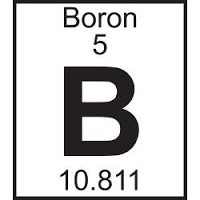
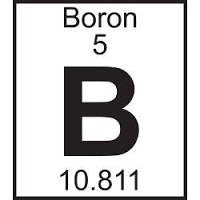


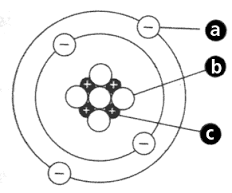


What subatomic particle is the arrow pointing towards?
Proton
Neutron
Electron
The subatomic particle that has no charge is the
Proton
Neutron
Electron
Which statement BEST describes a proton?
A larger mass than an electron and a negative charge
A smaller mass than an electron and a negative charge
A smaller mass than an electron and a positive charge
A larger mass than an electron and a positive charge
The majority of the mass of an atom is found in the
Proton
Neutron
Electron
Nucleus
The smallest unit of matter is a(n)
molecule
element
atom
compound

What subatomic particle is the arrow pointing towards?
Proton
Neutron
Electron
Electrons have a ________ charge.
Positive
Negative
Neutral
What subatomic particle does not contribute significantly to the mass of an atom?
Proton
Electron
Neutron
What subatomic particle determines the element of the atom?
Proton
Neutron
Electron
The two subatomic particles found in the nucleus of an atom are the
Protons and Electrons
Protons and Neutrons
Neutrons and Electrons

What subatomic particle is the arrow pointing towards?
Proton
Neutron
Electron
Protons have a ________ charge.
positive
negative
neutral
What does AMU stand for?
Atoms Matter Understanding
Atomic Matter Uniform
Atomic Mass Unit
Atomic Mass University
What is the only element that does not have a neutron in its nucleus?
Hydrogen
Helium
Oxygen
Nitrogen
Atoms are mostly _________ space.
Crowded
Empty
Outer
Filled


Which subatomic particle is positively charged?
Electron
Neutron
Proton
What does the atomic number of an element represent?
The atomic mass
The number of electrons and neutrons
The number of neutrons
The number of protons
Which of the following is an example of a compound?
Ne
Fe
H2O
O2

